Behavior
What are quick tips for Poodle (Miniature) arthritis?
Consider joint supplements and ensure regular, gentle exercise. Keep your Poodle (Miniature) at a healthy weight to reduce joint strain.

Quick answer
What are quick tips for Poodle (Miniature) arthritis?
Consider joint supplements and ensure regular, gentle exercise. Keep your Poodle (Miniature) at a healthy weight to reduce joint strain.
Poodle (Miniature) arthritis is a common age-related joint disease that affects their mobility and comfort. Understanding this issue is crucial for keeping your dog happy and active.
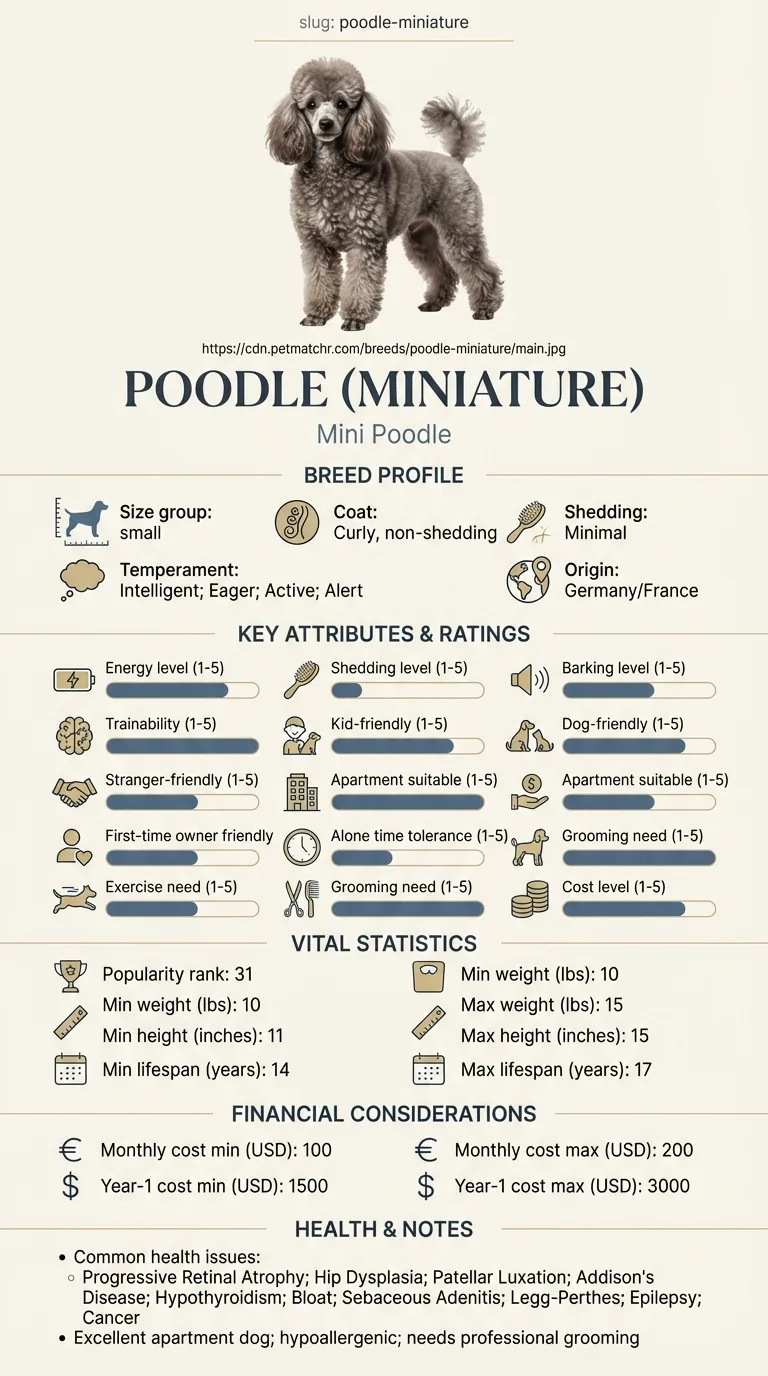
Many Poodle (Miniature) owners, especially those with older dogs, face challenges when managing arthritis. Busy families, single pet parents, and first-time dog owners may find it particularly difficult to navigate treatment options and lifestyle adjustments.
This guide is not medical advice. If your dog shows pain, sudden behavior change, or worsening symptoms, consult a licensed veterinarian.
Some links may be affiliate links. We may earn a commission at no extra cost to you. We only suggest products we believe are helpful for dog owners.
We research and check what we publish, but we do not warrant that any figure, date, price, or statement is accurate, complete, or current, and we accept no liability for any loss, cost, injury, or other harm arising from the use of this site. Use it as one reference among several. You remain responsible for your own decisions and for your dog's care - confirm anything that matters with a licensed veterinarian or another qualified professional before you act on it. Full disclaimer.
Check this first
Recognizing when arthritis in your Poodle (Miniature) becomes an emergency is crucial. If your dog shows severe signs of pain, such as whimpering, reluctance to move, or inability to stand, you should call your vet immediately. Additionally, if you notice swelling in the joints, sudden changes in appetite, or lethargy, these can also indicate a more serious issue requiring urgent care.
If any of these apply, call your vet or an emergency clinic now. The rest of this page is for the cases that are not an emergency.
Poodle (Miniature) arthritis is a common issue that affects many of these small dogs, especially as they age. Owners may notice their Mini Poodle becoming less active, having difficulty jumping, or showing signs of pain when walking or playing. This chronic condition can be frustrating for both dogs and their owners, as it impacts the dog's quality of life and requires ongoing management.
Arthritis is relatively common in Mini Poodles, especially in those over the age of 7. Many owners report seeing signs of stiffness or discomfort in their pets, making it an important health issue to monitor closely.
Poodle (Miniature) arthritis often stems from genetic predispositions. This breed can be prone to joint issues due to their structure and weight. Additionally, they may carry certain hereditary conditions that increase the likelihood of arthritis.
Environmental factors can contribute significantly to arthritis in Mini Poodles. Lack of exercise, excessive weight gain, or injuries can exacerbate joint problems. Poor nutrition and inadequate living conditions may also lead to joint stress and discomfort.
If your Mini Poodle shows signs of severe pain, difficulty moving, or sudden changes in behavior, it's time to talk to your vet. They can provide a proper diagnosis and recommend treatment options, including medication or physical therapy.
Avoid these common mistakes to help your Poodle (Miniature) with arthritis recover more effectively.
Start here: Miniature Poodle Most Common Genetic Disorders: Screening
See all Poodle Miniature health problems, which breeds are prone to arthritis, or the full Poodle Miniature breed guide for temperament, exercise needs and ownership costs.
With consistent care and management, you can see improvements in your Poodle (Miniature) within 4 to 6 weeks.
Success means your Poodle (Miniature) experiences reduced pain, increased mobility, and a happier demeanor, allowing them to enjoy daily activities.
In less severe cases, you can monitor your Poodle (Miniature) for changes. Mild limping or occasional stiffness after exercise can often be managed with rest and a careful exercise regimen. Keeping track of these symptoms is important, and if they persist or worsen, consult your vet for further advice.

When Sarah adopted Bella, her Mini Poodle, she noticed Bella was reluctant to jump onto the couch or play as much. After a vet visit confirmed arthritis, Sarah felt overwhelmed. She began researching how to stop Poodle (Miniature) arthritis and adjusted Bella's diet, incorporated joint supplements, and started gentle daily exercises. With patience and time, Bella became more active and playful, regaining her zest for life.
Key takeaway: Managing arthritis in your Poodle (Miniature) requires a combination of dietary changes, regular light exercise, and veterinary support for the best results.
Signs of arthritis in Poodles (Miniature) include limping, reluctance to jump or climb stairs, and excessive licking of joints. You may also notice changes in their behavior, like increased irritability. Observing these behaviors can prompt early intervention.
To help manage your Poodle (Miniature) arthritis, consider joint supplements like glucosamine and omega-3 fatty acids. Regular, low-impact exercise will keep their joints moving without overexertion. Consulting your vet about pain management options is essential.
Training can help your Poodle (Miniature) arthritis by encouraging controlled movements and reducing strain on their joints. Focus on gentle exercises and activities that promote mobility without causing discomfort. Always keep training sessions short and positive.
Home remedies for Poodle (Miniature) arthritis include providing a warm, comfortable sleeping area and possibly using a heated dog bed. Weight management is crucial, as extra pounds can worsen joint pain. Always discuss any home remedies with your vet first.
Early signs of arthritis in a Poodle (Miniature) include stiffness, limping, or reluctance to jump or play. You might also notice your dog being less active or having difficulty getting up after resting. If you spot these symptoms, it's a good idea to consult your vet.
While arthritis is more common in older dogs, younger Poodles can also develop joint issues due to genetic factors or injuries. If your young Poodle shows signs of pain or discomfort, seek veterinary advice to rule out any underlying conditions.
To help manage arthritis pain in your older Poodle (Miniature), consider joint supplements, weight management, and gentle exercise. Regular vet check-ups can also ensure that your dog gets appropriate pain relief and treatments tailored to their needs.
A diet rich in omega-3 fatty acids can help reduce inflammation and support joint health in a Poodle (Miniature) with arthritis. Look for high-quality dog food that includes these nutrients, and consult your vet for specific dietary recommendations.
Surgery for arthritis in a Poodle (Miniature) is usually considered when other treatments, like medication or physical therapy, do not provide sufficient relief. Your veterinarian will evaluate your dog's overall health and joint condition to determine if surgery is the best option.
Consider joint supplements and ensure regular, gentle exercise. Keep your Poodle (Miniature) at a healthy weight to reduce joint strain.
Regular vet visits every 6 months are recommended for monitoring arthritis in your Poodle (Miniature). This ensures any changes in their condition are addressed quickly.
Yes, smaller breeds like the Poodle (Miniature) can be prone to arthritis, especially as they age. Genetics and previous injuries also play a significant role.
Treating arthritis in Poodles (Miniature) can range from $50 to $200 per month, depending on supplements and veterinary care needed.
A one-page prep sheet for this condition: the signs, the questions to ask, what to get priced. Unlocks here.
You get: Vet visit prep sheet
No spam. One-click unsubscribe. See our privacy policy.
Preview page 1 before you decide.