Health
What are Poodle (Miniature) kidney disease quick tips?
Monitor your Poodle's water intake and encourage hydration. Stick to vet-approved diets specifically designed for kidney health.

Quick answer
What are Poodle (Miniature) kidney disease quick tips?
Monitor your Poodle's water intake and encourage hydration. Stick to vet-approved diets specifically designed for kidney health.
Poodle (Miniature) kidney disease is a serious health issue that can affect your furry friend’s quality of life. Understanding this condition is crucial for your pet's well-being.
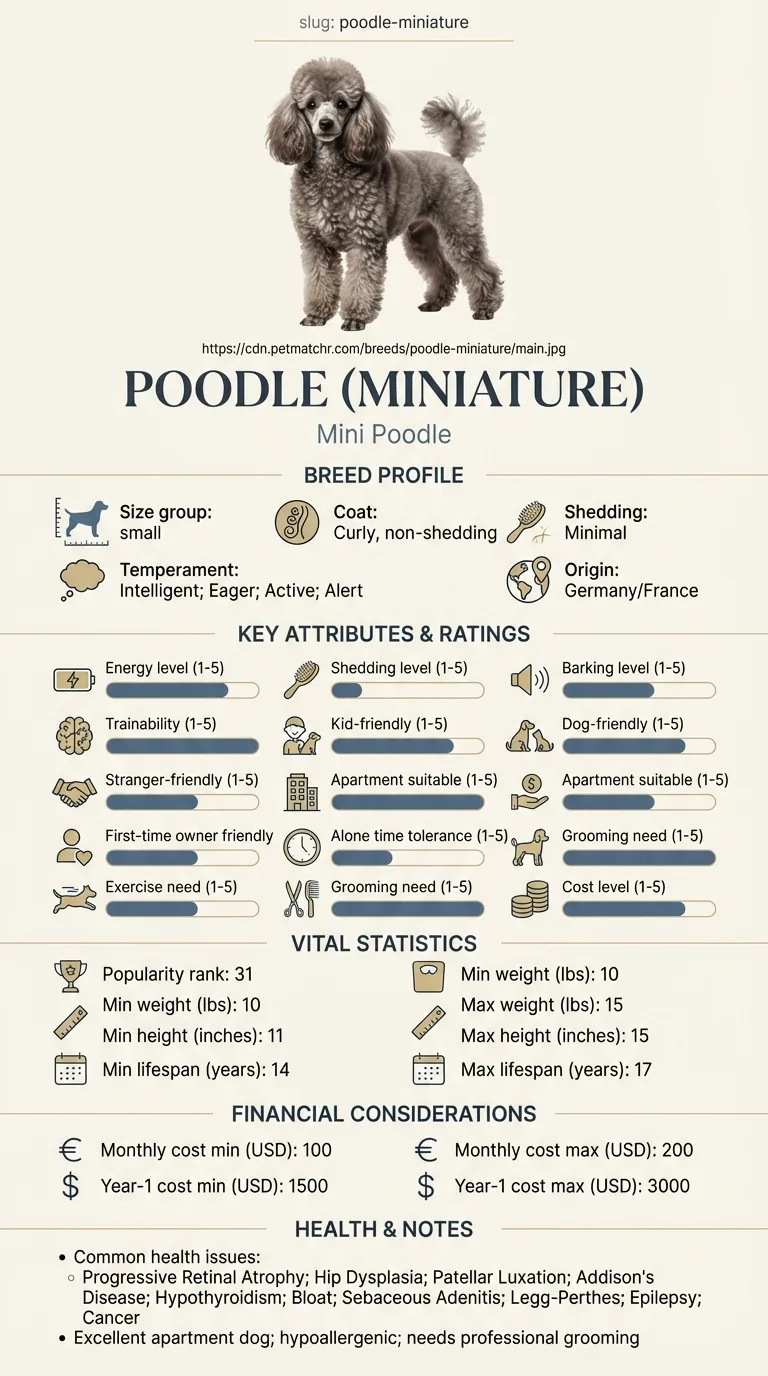
Owners of Poodles (Miniature) often face challenges when their pets develop kidney disease. This issue can be particularly concerning for first-time dog owners who may not be familiar with the signs and how to address them.
This guide is not medical advice. If your dog shows pain, sudden behavior change, or worsening symptoms, consult a licensed veterinarian.
Some links may be affiliate links. We may earn a commission at no extra cost to you. We only suggest products we believe are helpful for dog owners.
We research and check what we publish, but we do not warrant that any figure, date, price, or statement is accurate, complete, or current, and we accept no liability for any loss, cost, injury, or other harm arising from the use of this site. Use it as one reference among several. You remain responsible for your own decisions and for your dog's care - confirm anything that matters with a licensed veterinarian or another qualified professional before you act on it. Full disclaimer.
Check this first
Recognizing when Poodle (Miniature) kidney disease turns into an emergency is crucial for your pet's health. Immediate veterinary attention is necessary when you observe severe symptoms. These include excessive vomiting, significant lethargy, blood in urine, or sudden weight loss. If your Mini Poodle shows any of these signs, don’t wait—call your vet right away.
On the other hand, if your dog is experiencing mild symptoms, it may not be an emergency. Watch for signs like occasional vomiting, decreased appetite, or minor changes in energy levels. These could indicate early kidney issues but can often be monitored at home. Create a plan to track your dog's condition, noting any changes over a few days. If symptoms worsen or persist, consult your vet to reassess the situation.
It's essential to act on red flags quickly. By distinguishing between emergencies and manageable cases, you can ensure your Poodle (Miniature) receives the right level of care at the right time. Always err on the side of caution and don’t hesitate to reach out to your veterinarian if you're unsure.
If any of these apply, call your vet or an emergency clinic now. The rest of this page is for the cases that are not an emergency.
Poodle (Miniature) kidney disease is a serious health issue that can develop over time. Owners may notice symptoms such as increased thirst, frequent urination, and decreased appetite. This condition can be distressing for both the dog and the owner, impacting daily life and overall well-being.
Kidney disease is relatively common in Poodle (Miniature) dogs, especially as they age. Regular veterinary check-ups can help catch this condition early, making it crucial for owners to stay vigilant about their pet's health.
Poodles (Miniature) may be predisposed to kidney disease due to genetic factors. These small dogs can inherit conditions that affect kidney function, leading to potential health issues. Their smaller size can also make them more vulnerable to various health problems, including those related to the kidneys.
Environmental factors like diet, hydration, and exposure to toxins can significantly impact kidney health. A poor diet lacking essential nutrients can stress the kidneys. Additionally, inadequate water intake or exposure to harmful substances may increase the risk of developing kidney disease.
Consult your vet if you notice symptoms like increased thirst, frequent urination, or lethargy. Regular vet check-ups are essential for early detection and management of kidney disease. If your dog is diagnosed, a vet can guide you on the best treatment plan.
Avoiding common pitfalls can help improve your Poodle (Miniature)'s kidney health. Here are some mistakes to steer clear of.
Start here: Miniature Poodle Most Common Genetic Disorders: Screening
See all Poodle Miniature health problems, which breeds are prone to kidney disease, or the full Poodle Miniature breed guide for temperament, exercise needs and ownership costs.
Managing Poodle (Miniature) kidney disease typically requires ongoing veterinary care and lifestyle adjustments. You may start noticing improvements within a few weeks of implementing changes, but it can take several months to see significant health benefits.
Success in managing kidney disease involves stabilizing your dog's condition, maintaining a good quality of life, and minimizing symptoms. You should see your Poodle (Miniature) being more active, eating better, and showing fewer signs of discomfort.
Emma, a busy nurse in Seattle, noticed her Mini Poodle, Max, drinking more water than usual and losing weight. After several vet visits, Max was diagnosed with kidney disease. Emma felt overwhelmed but committed to improving Max's health. She researched dietary changes and began feeding him a special kidney-friendly diet. Alongside this, she created a routine for regular vet check-ups and incorporated gentle exercise to keep Max active. Over time, Max regained energy and seemed happier, relieving Emma's anxiety about his health.
Key takeaway: Managing Poodle (Miniature) kidney disease requires dedication, but with the right diet and regular veterinary care, your dog can lead a fulfilling life.
Poodle (Miniature) kidney disease can be caused by various factors, including genetics, age, and diet. Older dogs are more susceptible, while certain inherited conditions may increase the risk. Regular vet check-ups can help catch issues early.
To manage your Poodle (Miniature) kidney disease, ensure they have a special diet recommended by your vet. Regular hydration is also crucial. You should monitor their behavior and report any changes to your vet promptly.
Signs of kidney disease in your Poodle (Miniature) include increased thirst and urination, vomiting, lethargy, and a decreased appetite. If you notice any of these symptoms, consult your veterinarian for an evaluation.
Treatment options for Poodle (Miniature) kidney disease often involve dietary changes, medications, and possibly fluid therapy. Your vet can suggest the best plan based on your dog's specific condition and needs.
While you can't guarantee prevention, you can reduce the risk of kidney disease by providing a balanced diet, ensuring regular exercise, and scheduling routine veterinary check-ups. Early detection is key to managing health issues.
Early signs of kidney disease in Poodles (Miniature) may include increased thirst, frequent urination, and weight loss. You might also notice a decrease in appetite or changes in behavior. If you observe these symptoms, consult your vet for a proper diagnosis.
Yes, kidney disease can have a hereditary component in Poodles (Miniature). Genetic predispositions to various health issues, including kidney problems, can be more common in certain bloodlines. It's important to research the lineage of your dog and consult with breeders about health tests.
As Poodles (Miniature) age, their risk of developing kidney disease increases. Older dogs may show more severe symptoms and a quicker progression of the disease. Regular veterinary check-ups become crucial as your dog gets older to monitor kidney health.
Feeding a kidney-friendly diet can help manage kidney disease in Poodles (Miniature). Look for low-protein and low-phosphorus foods, and always consult your vet for specific dietary recommendations tailored to your dog's needs.
If you notice symptoms like lethargy, vomiting, or changes in urination habits, take your Poodle (Miniature) to the vet immediately. Regular vet visits are essential for early detection, especially if your dog is older or has a family history of kidney disease.
Monitor your Poodle's water intake and encourage hydration. Stick to vet-approved diets specifically designed for kidney health.
Regular check-ups every 6-12 months are recommended, especially for older dogs or those at risk of kidney disease.
Yes, kidney disease can lead to lethargy and changes in appetite, impacting your Poodle's overall behavior and energy levels.
A one-page prep sheet for this condition: the signs, the questions to ask, what to get priced. Unlocks here.
You get: Vet visit prep sheet
No spam. One-click unsubscribe. See our privacy policy.
Preview page 1 before you decide.