Behavior
What are quick tips for managing Poodle (Miniature) pancreatitis?
Feed a low-fat diet, monitor weight, and ensure regular vet check-ups.

Quick answer
What are quick tips for managing Poodle (Miniature) pancreatitis?
Feed a low-fat diet, monitor weight, and ensure regular vet check-ups.
Poodle (Miniature) pancreatitis is a serious health issue that can lead to severe discomfort and complications. Understanding this condition is crucial for your pup's well-being.
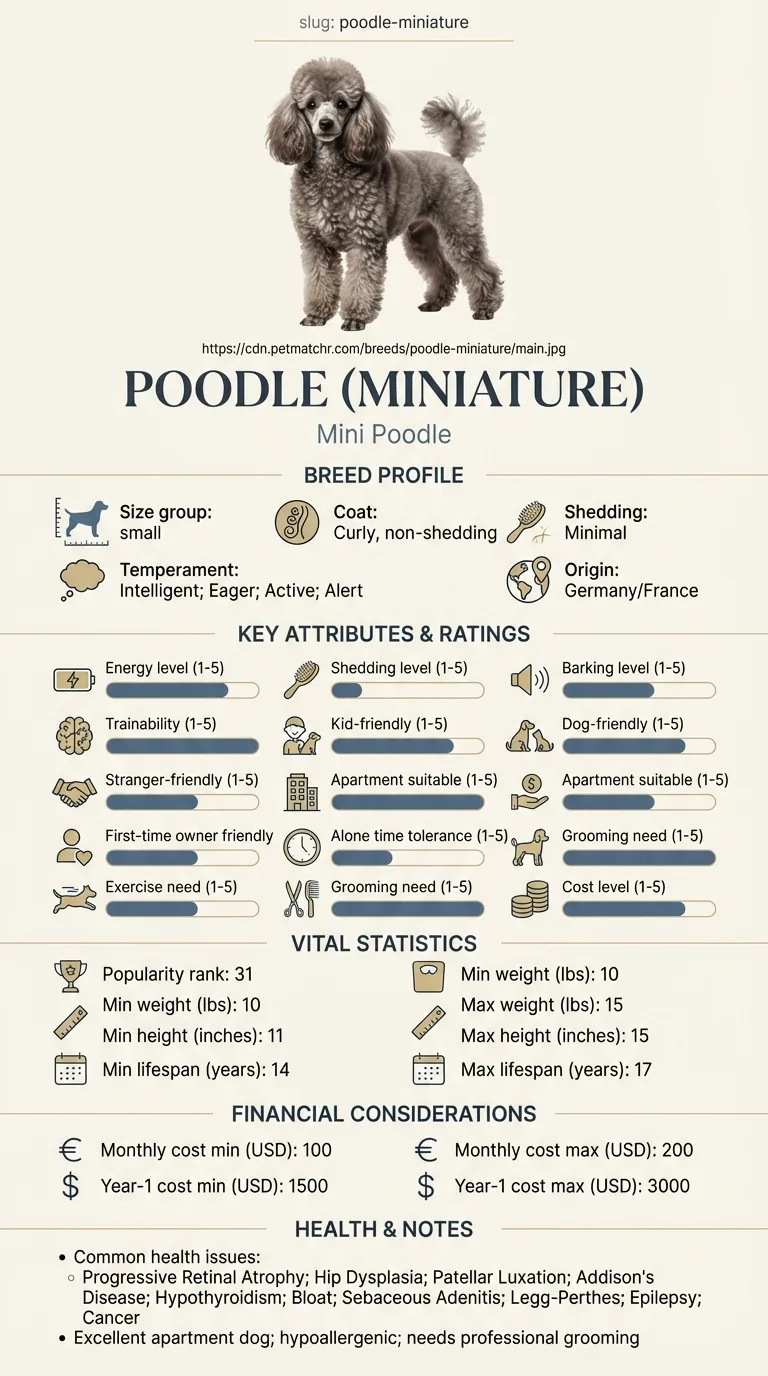
Owners of Poodle (Miniature) dogs often find themselves facing the challenges of pancreatitis, especially those who might not be aware of their dog's dietary needs. New pet parents or those living with older Mini Poodles may struggle with recognizing the symptoms early. Understanding this condition is essential for providing the best care and lifestyle adjustments for your furry companion.
This guide is not medical advice. If your dog shows pain, sudden behavior change, or worsening symptoms, consult a licensed veterinarian.
Some links may be affiliate links. We may earn a commission at no extra cost to you. We only suggest products we believe are helpful for dog owners.
We research and check what we publish, but we do not warrant that any figure, date, price, or statement is accurate, complete, or current, and we accept no liability for any loss, cost, injury, or other harm arising from the use of this site. Use it as one reference among several. You remain responsible for your own decisions and for your dog's care - confirm anything that matters with a licensed veterinarian or another qualified professional before you act on it. Full disclaimer.
Check this first
Red flags for emergency situations include severe abdominal pain, persistent vomiting, and lethargy. If your Mini Poodle shows signs of dehydration, such as dry gums or excessive drooling, it's also time to call your vet. These symptoms can indicate a serious condition that requires prompt medical attention.
On the other hand, if your Poodle (Miniature) is experiencing mild symptoms like occasional vomiting or slight loss of appetite, you may choose to monitor them at home. Make sure to keep them hydrated and observe any changes in their behavior or eating habits. Keeping a diary of their symptoms can help provide valuable information to your vet if needed.
Always trust your instincts as a pet owner. If you're ever in doubt about your dog's condition, it's better to err on the side of caution and consult your veterinarian. Quick action can make a significant difference in your Poodle's recovery and overall health.
If any of these apply, call your vet or an emergency clinic now. The rest of this page is for the cases that are not an emergency.
Poodle (Miniature) pancreatitis is a painful inflammation of the pancreas that can severely impact your dog's health. Day-to-day, this condition can manifest as vomiting, diarrhea, lethargy, and a decreased appetite. These symptoms can be distressing not only for your dog but also for you as an owner, as it often requires immediate veterinary attention.
Pancreatitis is fairly common among Poodles (Miniature) and can occur at any age, although it is more prevalent in middle-aged dogs. It’s important to be aware of the symptoms and triggers, as early detection can make a significant difference in treatment and recovery.
Poodles (Miniature) can be prone to pancreatitis due to their genetic predisposition. Their diet, especially if high in fat, can trigger inflammation in the pancreas. Additionally, their small size can make them more sensitive to dietary changes or overeating.
Environmental factors such as stress and sudden changes in diet can also lead to pancreatitis. If a Mini Poodle experiences anxiety or is given inappropriate treats, it may increase the risk. Lack of regular exercise can contribute to obesity, another risk factor for this condition.
If your Poodle (Miniature) shows symptoms like vomiting, diarrhea, or lethargy, contact your vet immediately. They can assess whether your dog is experiencing pancreatitis and recommend appropriate treatment.
Avoiding certain behaviors can help manage Poodle (Miniature) pancreatitis effectively. Here are common mistakes to watch out for.
Start here: Miniature Poodle Most Common Genetic Disorders: Screening
See all Poodle Miniature health problems, which breeds are prone to pancreatitis, or the full Poodle Miniature breed guide for temperament, exercise needs and ownership costs.
Managing Poodle (Miniature) pancreatitis can take several weeks to months. It's essential to regularly monitor your dog's diet and health. With consistent care, you can expect improvement in symptoms within 4 to 8 weeks.
Success means your Mini Poodle shows fewer symptoms, maintains a healthy weight, and has stable energy levels. Regular vet check-ups will also confirm that your dog's pancreas is functioning properly.
Emily, a first-time dog owner, noticed her Mini Poodle, Bella, frequently had digestive issues. After a vet visit revealed Bella had pancreatitis, Emily felt overwhelmed. She learned to manage Bella's diet by switching to low-fat, vet-recommended food and incorporating smaller, more frequent meals. Over a few months, Bella’s symptoms improved significantly. Emily felt relieved and more confident in her ability to care for Bella's health.
Key takeaway: With proper diet management and vet support, you can successfully manage Poodle (Miniature) pancreatitis, leading to a happier, healthier pup.
Signs of pancreatitis in a Poodle (Miniature) can include vomiting, diarrhea, abdominal pain, and lethargy. You might also notice a decreased appetite or unusual behavior. If you see any of these signs, it's important to consult your vet promptly.
To prevent Poodle (Miniature) pancreatitis, maintain a balanced, low-fat diet tailored for your dog's needs. Regular exercise and weight management are also crucial. Always consult your vet for dietary recommendations.
Treatment typically involves a temporary change to a low-fat diet and supportive care, such as hydration and medications. In severe cases, hospitalization may be required for closer monitoring.
Yes, Poodle (Miniature) pancreatitis can become chronic, leading to recurring episodes. It's vital to work with your vet to manage the condition through diet and lifestyle adjustments.
Switch to a veterinarian-recommended low-fat diet and avoid table scraps. Gradually introduce any new food to monitor for adverse reactions.
Regular vet visits are recommended every six months, especially for dogs with a history of pancreatitis. This helps monitor their health and adjust diets as needed.
Yes, diet changes can significantly help manage Poodle (Miniature) pancreatitis. A low-fat diet is often recommended to reduce the strain on the pancreas. Always consult your vet before making dietary adjustments to ensure they're appropriate for your dog.
Pancreatitis can be more common in older Poodles (Miniature), but it can occur at any age. Factors such as obesity, certain medications, and dietary indiscretion can contribute to its development. Regular check-ups with your vet can help catch issues early.
To help prevent pancreatitis in your Poodle (Miniature), maintain a healthy diet and avoid giving them fatty table scraps. Keeping your dog at a healthy weight and providing regular exercise can also reduce the risk. Always follow your vet's recommendations about diet and care.
If your Poodle (Miniature) shows any signs of pancreatitis, such as vomiting, diarrhea, or extreme lethargy, you should take them to the vet immediately. Quick action can be crucial in managing this condition. Don't wait for symptoms to worsen.
Feed a low-fat diet, monitor weight, and ensure regular vet check-ups.
Avoid high-fat foods and maintain a healthy lifestyle with exercise.
Contact your veterinarian immediately for guidance and possible treatment.
Yes, it can lead to severe health issues if not managed properly. Early intervention is crucial.
A one-page prep sheet for this condition: the signs, the questions to ask, what to get priced. Unlocks here.
You get: Vet visit prep sheet
No spam. One-click unsubscribe. See our privacy policy.
Preview page 1 before you decide.