Health
What are quick tips for managing Poodle (Miniature) heart murmurs?
Maintain regular vet check-ups, monitor for symptoms, and provide a balanced diet. Keeping your dog calm and reducing stress is also important.

Quick answer
What are quick tips for managing Poodle (Miniature) heart murmurs?
Maintain regular vet check-ups, monitor for symptoms, and provide a balanced diet. Keeping your dog calm and reducing stress is also important.
Poodle (Miniature) heart murmurs are a common concern among owners, impacting your dog's health and quality of life.
Typically, first-time dog owners or those unfamiliar with heart health issues may struggle with this problem. It's especially concerning for families who may notice signs of distress in their pets, leading to confusion and worry.
This guide is not medical advice. If your dog shows pain, sudden behavior change, or worsening symptoms, consult a licensed veterinarian.
Some links may be affiliate links. We may earn a commission at no extra cost to you. We only suggest products we believe are helpful for dog owners.
We research and check what we publish, but we do not warrant that any figure, date, price, or statement is accurate, complete, or current, and we accept no liability for any loss, cost, injury, or other harm arising from the use of this site. Use it as one reference among several. You remain responsible for your own decisions and for your dog's care - confirm anything that matters with a licensed veterinarian or another qualified professional before you act on it. Full disclaimer.
Check this first
Understanding when Poodle (Miniature) heart murmurs become an emergency is crucial for your dog's health. While some heart murmurs can be mild and manageable, others indicate serious health concerns. Knowing the difference can save your pet's life.
Red-Flag Signs to Call Your Vet Immediately: - Severe lethargy: If your Mini Poodle is unusually tired and reluctant to move, this could signal a problem. - Difficulty breathing: Signs like rapid panting or gasping for air require urgent attention. - Coughing: Persistent or severe coughing, especially if it interrupts their normal activities, is a red flag. - Fainting or collapsing: If your dog loses consciousness or shows signs of weakness, this is critical. - Swelling in the abdomen: This could indicate fluid buildup or other serious issues.
Mild Cases to Monitor: - If your Poodle (Miniature) has a heart murmur but shows no other symptoms, you can usually monitor them at home. - Keep an eye on their energy levels and appetite, and make sure they are not displaying any signs of distress. - Regular vet check-ups are essential for tracking any changes in their heart health.
It’s important to trust your instincts as a pet owner. If something feels off with your Mini Poodle, don’t hesitate to consult your vet. Early intervention can make a significant difference in outcomes for heart murmurs.
If any of these apply, call your vet or an emergency clinic now. The rest of this page is for the cases that are not an emergency.
Poodle (Miniature) heart murmurs are often quiet and may go unnoticed at first. These murmurs can indicate issues like valve disease, leading to serious health concerns. Owners may notice their Mini Poodle tiring easily, having a decreased appetite, or showing signs of anxiety during vet visits.
Heart murmurs in Poodles (Miniature) are fairly common, especially in older dogs. While not every Mini Poodle will develop this issue, many will experience some form of heart murmur by their senior years.
Poodle (Miniature) heart murmurs can be attributed to genetic predispositions. Certain heart conditions, like valve diseases, are more common in this breed. Understanding these risks can help you monitor your Mini Poodle's health closely.
Environmental factors can also contribute to heart murmurs in Poodles. Stress, poor nutrition, and lack of exercise may exacerbate heart issues. A stable, healthy environment is crucial for your dog's overall well-being.
If you notice persistent coughing, fatigue, or changes in appetite, it's time to consult your vet. They can perform a thorough examination and determine if further testing is needed.
Avoiding certain actions can help manage your Poodle (Miniature) heart murmurs more effectively. Here are common mistakes that owners make, along with safer alternatives.
Start here: Miniature Poodle Most Common Genetic Disorders: Screening
See all Poodle Miniature health problems, which breeds are prone to heart murmurs, or the full Poodle Miniature breed guide for temperament, exercise needs and ownership costs.
You may start to notice improvements in your Poodle (Miniature) within a few weeks of implementing changes. For more noticeable results, aim for at least 2-3 months of consistent care adjustments and follow-up with your vet.
Success looks like your Poodle (Miniature) showing fewer signs of distress or discomfort, increased energy levels, and a more stable heart rhythm. Regular vet check-ups will help confirm any improvements in their heart health.
Maggie was worried when her Mini Poodle, Charlie, was diagnosed with heart murmurs. After some research, she learned about the importance of reducing stress and adjusting Charlie's exercise routine. She gradually introduced light exercises and focused on calming activities, like gentle playtime and cuddling. After a couple of months, Maggie noticed that Charlie seemed more energetic and playful. A follow-up vet visit confirmed that his heart condition had stabilized, providing Maggie with relief and happiness.
Key takeaway: With patience, consistent care, and tailored activities, you can help manage your Poodle (Miniature)'s heart murmurs and improve their quality of life.
Poodle (Miniature) heart murmurs can be caused by various factors, including valve disease or congenital heart defects. Regular vet check-ups are crucial for early detection. If your dog has a heart murmur, it’s important to monitor their health closely.
While you can't completely stop heart murmurs, you can manage their effects. A vet may suggest lifestyle changes, medications, or dietary adjustments to support your dog's heart health. Regular vet visits are key for monitoring and adjusting care as needed.
Training can help reduce stress, which is beneficial for heart health. A calm and structured environment can minimize anxiety, potentially easing some symptoms. However, training alone won't cure heart murmurs.
Feeding a balanced diet with appropriate nutrients is essential. Talk to your vet about specific dietary recommendations to support heart health, which may include omega-3 fatty acids or lower sodium options.
Yes, untreated heart murmurs can lead to more serious conditions like heart failure. Regular monitoring and veterinary care can help manage these risks effectively.
Yes, heart murmurs can be hereditary in Poodle (Miniature) dogs. Some genetic predispositions can lead to valve diseases that cause murmurs. It's essential to check the health history of your puppy's parents when adopting.
Caring for a senior Poodle (Miniature) with heart murmurs involves regular vet check-ups and possibly a heart-healthy diet. Keeping exercise moderate and stress levels low can also help manage their condition. Always follow your vet's recommendations for the best care.
If you suspect your Poodle (Miniature) has heart murmurs, it's best to see a vet as soon as possible. Any signs of distress, such as coughing or fatigue, should prompt immediate veterinary attention. Early diagnosis can lead to better management of the condition.
Treatment for Poodle (Miniature) heart murmurs depends on the underlying cause. Options may include medication, dietary changes, or in some cases, surgery. Your vet will provide the best treatment plan tailored to your dog's specific needs.
Maintain regular vet check-ups, monitor for symptoms, and provide a balanced diet. Keeping your dog calm and reducing stress is also important.
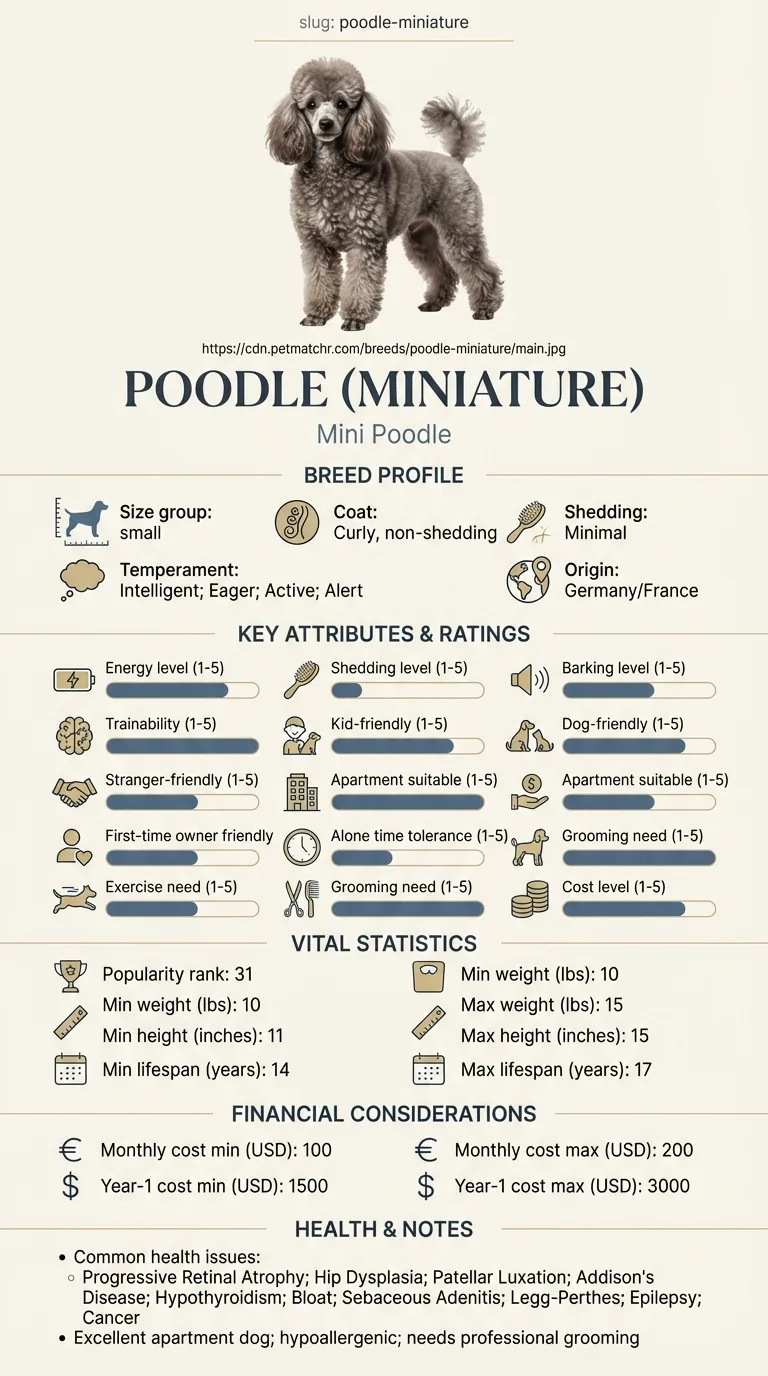
Monthly costs for managing heart murmurs can range from $100 to $200, depending on treatment needs and vet visits.
Besides heart murmurs, common issues include Progressive Retinal Atrophy and hip dysplasia. Regular check-ups can help catch these early.
Yes, training can help reduce anxiety, which is beneficial. Focus on gentle, low-energy activities to avoid overexertion.
A one-page prep sheet for this condition: the signs, the questions to ask, what to get priced. Unlocks here.
You get: Vet visit prep sheet
No spam. One-click unsubscribe. See our privacy policy.
Preview page 1 before you decide.