Health
What are Poodle (Miniature) kidney stones quick tips?
To help prevent kidney stones, ensure your Poodle (Miniature) stays hydrated and eats a balanced diet. Regular vet check-ups are crucial for early detection.

Quick answer
What are Poodle (Miniature) kidney stones quick tips?
To help prevent kidney stones, ensure your Poodle (Miniature) stays hydrated and eats a balanced diet. Regular vet check-ups are crucial for early detection.
Poodle (Miniature) kidney stones can be a serious health issue that affects your furry friend’s well-being.
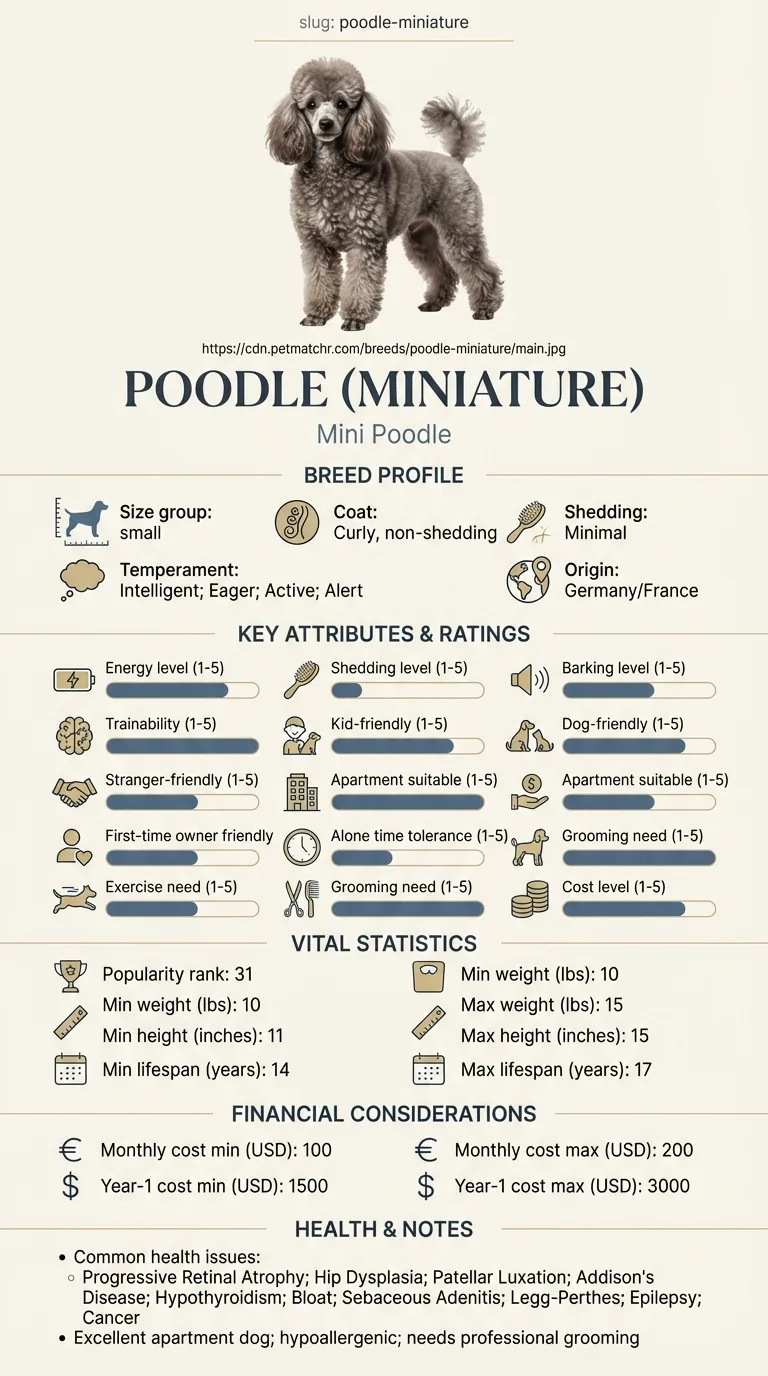
Owners of Mini Poodles often face this issue, especially those who may not be aware of the breed's unique health risks. Busy families or first-time dog owners might find it challenging to recognize the symptoms early.
This guide is not medical advice. If your dog shows pain, sudden behavior change, or worsening symptoms, consult a licensed veterinarian.
Some links may be affiliate links. We may earn a commission at no extra cost to you. We only suggest products we believe are helpful for dog owners.
We research and check what we publish, but we do not warrant that any figure, date, price, or statement is accurate, complete, or current, and we accept no liability for any loss, cost, injury, or other harm arising from the use of this site. Use it as one reference among several. You remain responsible for your own decisions and for your dog's care - confirm anything that matters with a licensed veterinarian or another qualified professional before you act on it. Full disclaimer.
Check this first
Recognizing when Poodle (Miniature) kidney stones are an emergency is crucial for your dog's health. If your dog shows signs of severe pain, such as whining, pacing, or excessive licking of the abdomen, you should call your vet immediately. Other red flags include blood in the urine, difficulty urinating, vomiting, or lethargy. These symptoms suggest that the stones could be causing a blockage or other serious complications.
On the other hand, if your Poodle (Miniature) has mild symptoms like occasional straining to urinate or slightly increased thirst, you can monitor the situation at home. Keep an eye on their water intake and bathroom habits, and consider adjusting their diet to prevent further stones. If symptoms persist or worsen, it's time to consult your vet. Having a plan in place can help you respond effectively without panicking.
In summary, if you notice any severe symptoms, don’t hesitate to reach out to your veterinarian. For mild cases, keep monitoring your dog’s condition and consult your vet if you have any concerns. Being proactive can help ensure your Poodle (Miniature) stays healthy and happy.
If any of these apply, call your vet or an emergency clinic now. The rest of this page is for the cases that are not an emergency.
Poodle (Miniature) kidney stones can cause significant discomfort for your dog. These stones form in the urinary tract and may lead to painful urination, blood in the urine, or frequent trips outside. Pet owners often notice their Mini Poodle straining to urinate or whining during bathroom breaks.
Kidney stones are a relatively common issue in Poodle (Miniature) breeds. While not every Mini Poodle will experience this problem, owners should be aware of the signs and preventive measures.
Poodle (Miniature)s are prone to kidney stones due to their genetic makeup. Their smaller size can lead to urinary tract issues, making them more susceptible to stone formation. Additionally, certain health conditions common in this breed may also contribute to kidney stones.
Environmental factors can influence the likelihood of kidney stones in Poodles. A diet low in moisture can lead to concentrated urine, increasing the risk of stones. Stress and insufficient access to fresh water can also exacerbate this issue.
If you notice symptoms like blood in urine, frequent urination, or signs of pain while urinating, consult your vet immediately. Regular check-ups are vital for early detection and management of kidney stones.
Many Poodle (Miniature) owners unintentionally worsen kidney stone issues through common behaviors. Here are some mistakes to avoid, along with safer alternatives.
Start here: Miniature Poodle Most Common Genetic Disorders: Screening
See all Poodle Miniature health problems, which breeds are prone to kidney stones, or the full Poodle Miniature breed guide for temperament, exercise needs and ownership costs.
With consistent management, you can expect to see improvements in your Poodle (Miniature) within 1 to 3 months. Regular vet visits and diet adjustments will play a crucial role.
Success means your Poodle (Miniature) experiences fewer episodes of discomfort, normal urination patterns, and improved overall health. You'll also feel more confident in managing their care.
Sara, a busy teacher in San Diego, noticed her Mini Poodle, Benny, was straining to urinate. After a vet visit, she learned Benny had kidney stones, a common issue for his breed. Initially overwhelmed, Sara followed the vet's advice on diet changes and scheduled regular check-ups. She also learned how to recognize signs of discomfort in Benny. With patience and dedication, Benny's condition improved, and he became more active and playful. Sara even enrolled in a training course to help her manage Benny's health better.
Key takeaway: With the right care and attention, addressing Poodle (Miniature) kidney stones can lead to a healthier, happier dog.
Poodle (Miniature) kidney stones can develop due to a variety of factors, including genetics, diet, and hydration levels. It's essential to ensure your dog has a balanced diet and plenty of fresh water to reduce the risk. Regular vet check-ups can help in early detection.
To help prevent kidney stones in your Poodle (Miniature), focus on maintaining a healthy diet low in oxalates. Increasing their water intake is crucial; consider offering wet food or adding water to dry kibble. Regular exercise and weight management also play significant roles.
Yes, diet is a crucial factor in managing kidney stones. Work with your vet to choose a high-quality diet that minimizes the risk of stone formation. Special prescription diets are available that can help dissolve certain types of stones.
In some cases, surgery may be required to remove kidney stones, especially if they are large or causing significant pain. Your vet can advise on the best course of action based on the severity of the condition and the type of stones present.
Preventing kidney stones in a Poodle (Miniature) often involves ensuring they stay well-hydrated and eat a balanced diet. Regular vet check-ups can help monitor their health and catch any issues early. Discussing dietary options with your vet can also lead to specific recommendations.
Poodles (Miniature) can develop kidney stones at various ages, but older dogs may be more susceptible due to age-related health issues. Additionally, dogs with a history of urinary tract problems may have a higher risk. Regular vet visits can help manage these risks.
Treatment for kidney stones in your Poodle (Miniature) can vary based on the size and type of stones. Options may include dietary changes, increased hydration, or even surgical removal in severe cases. Always consult your vet for the best course of action.
If your Poodle (Miniature) shows signs of urinary distress, such as frequent urination or blood in the urine, it's time to see a vet. Additionally, if your dog appears lethargic or refuses to eat, don't hesitate to seek professional help. Early intervention is key to successful treatment.
To help prevent kidney stones, ensure your Poodle (Miniature) stays hydrated and eats a balanced diet. Regular vet check-ups are crucial for early detection.
Encourage hydration by providing fresh water at all times and consider adding wet food to their diet. You can also use water fountains to attract their interest.
If your dog displays symptoms like straining to urinate or blood in urine, contact your vet immediately for advice and potential treatment.
A one-page prep sheet for this condition: the signs, the questions to ask, what to get priced. Unlocks here.
You get: Vet visit prep sheet
No spam. One-click unsubscribe. See our privacy policy.
Preview page 1 before you decide.