DogBreedCompass
← Back to breed profile

Poodle (Miniature) Intervertebral Disc Disease (IVDD): What You Need to Know

Poodle (Miniature) intervertebral disc disease (IVDD) can seriously affect your pup's mobility and comfort.

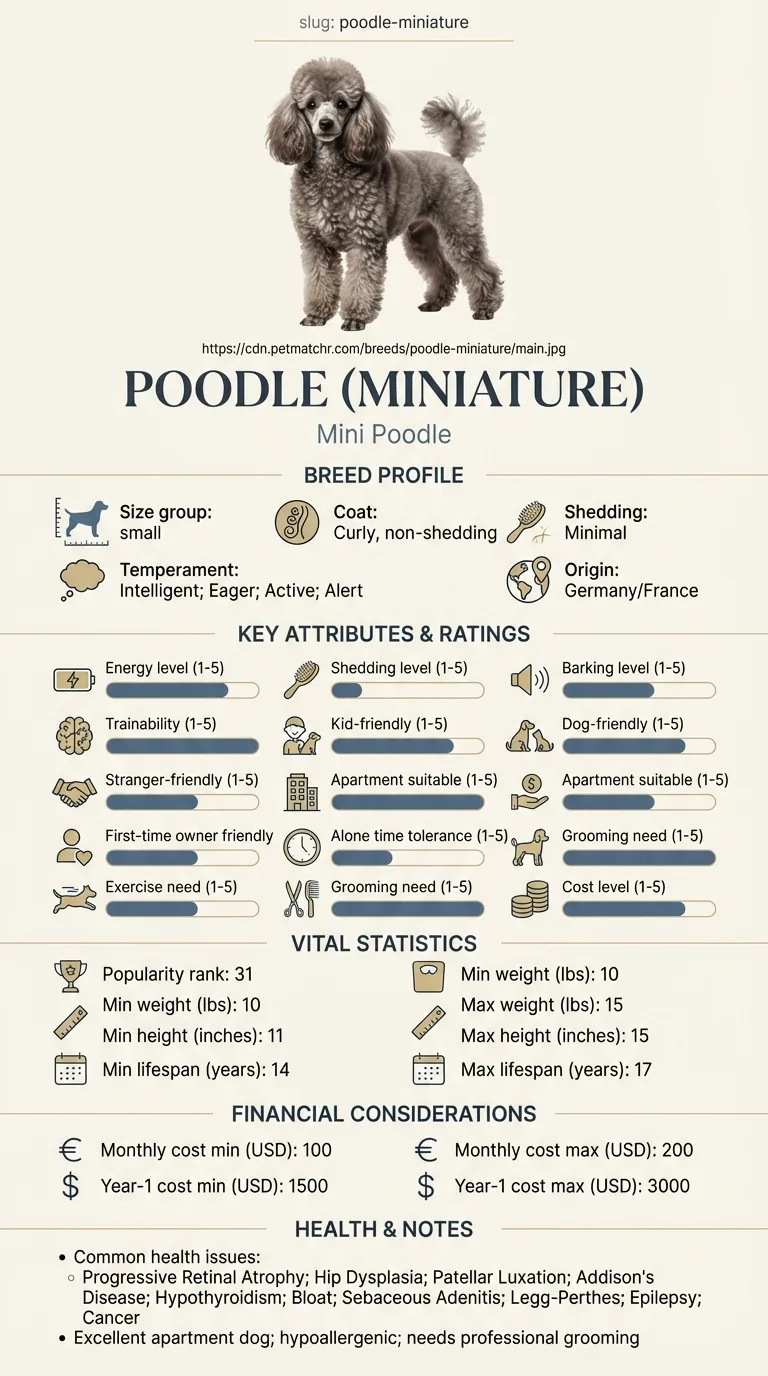
Poodle (Miniature) Intervertebral Disc Disease (IVDD): What You Need to Know infographic

Owners of Miniature Poodles, especially those with older dogs or those with a history of back problems, often face this challenge. Those who are not aware of the symptoms may struggle to identify the issue until it becomes severe.

Important reminder

This guide is not medical advice. If your dog shows pain, sudden behavior change, or worsening symptoms, consult a licensed veterinarian.

Some links may be affiliate links. We may earn a commission at no extra cost to you. We only suggest products we believe are helpful for dog owners.

What this problem looks like

Poodle (Miniature) intervertebral disc disease (IVDD) is a common spinal issue that can lead to pain, mobility problems, and even paralysis. This condition occurs when the discs in the spine degenerate or herniate, causing pressure on the spinal cord. Daily life for a dog with IVDD may include struggles with jumping, climbing stairs, or even discomfort while lying down.

Common triggers

  • Genetic predisposition, especially in Poodles (Miniature)
  • Aging, as older dogs are more prone to disc degeneration
  • Injury or trauma, such as a fall or rough play
  • Excessive weight, which increases strain on the spine

Intervertebral disc disease is relatively common among Miniature Poodles, particularly as they age. Many owners report symptoms in dogs around 5 to 7 years old, but it can occur at any age. Being aware of the signs can help in early detection and management.

Why this happens

Breed factors

Poodle (Miniature) are prone to intervertebral disc disease (IVDD) due to their genetic makeup. This condition often arises in smaller breeds, like Mini Poodles, because of their long backs and short legs. These physical traits can lead to increased pressure on the spine, making them more susceptible to disc issues.

Environment factors

Environmental factors can also contribute to IVDD in Mini Poodles. Activities that involve jumping or rough play can strain their backs. Additionally, obesity can worsen the problem, as extra weight puts more stress on their spine.

What you can try

At-home strategies

  • Limit high-impact activities. Prevent your Mini Poodle from jumping off furniture or running up stairs. Use ramps or steps instead.
  • Maintain a healthy weight. Monitor their diet and ensure they get regular, low-impact exercise like short walks.
  • Provide supportive bedding. A soft, orthopedic dog bed can help relieve pressure on their spine during rest.

When to consider a trainer

If your Mini Poodle shows signs of anxiety or difficulty following commands due to discomfort, consider working with a professional trainer. They can help you teach gentle commands to keep your dog safe and comfortable.

When to talk to your vet

Consult your vet if your Mini Poodle shows symptoms like reluctance to move, yelping in pain, or difficulty walking. These could be signs of serious spinal issues that need immediate attention.

Realistic expectations

Managing Poodle (Miniature) intervertebral disc disease (IVDD) takes around 6 to 12 months. This period allows for treatment adjustments and observing your dog's progress.

Success means your dog shows reduced pain and improved mobility. You should see them engaging in daily activities with a more comfortable demeanor.

Mistakes that make this worse

Avoiding these common mistakes can help manage your Poodle (Miniature)'s intervertebral disc disease (IVDD) more effectively.

  • Ignoring weight management: Overweight dogs put extra strain on their backs. Keep your Mini Poodle at a healthy weight with proper diet and exercise.
  • Skipping regular vet check-ups: Delaying veterinary visits can worsen IVDD symptoms. Regular check-ups can help catch issues early.
  • Allowing excessive jumping: Jumping on and off furniture can lead to injury. Use ramps to help your Mini Poodle access higher surfaces safely.
  • Neglecting exercise: While rest is important, too little exercise can weaken back muscles. Engage in low-impact activities like walking to keep them fit.
  • Using harsh training methods: Punishment can increase anxiety and worsen behavior issues. Opt for positive reinforcement techniques for training instead.
  • Failing to create a safe environment: An unsafe home can lead to accidents. Remove hazards and provide a comfortable space for your dog to relax.

When Poodle (Miniature) Intervertebral Disc Disease (IVDD) is an Emergency

Intervertebral disc disease (IVDD) can be serious, especially for your Poodle (Miniature). It's crucial to recognize the signs that indicate a veterinary emergency. If your dog shows any of the following red flags, you should call your vet immediately:

- Sudden paralysis in the hind legs - Extreme pain when touched or moved - Loss of bladder or bowel control - Severe difficulty walking or standing

These symptoms indicate that your Poodle is in distress and needs urgent medical attention. Don't delay; quick action can make a significant difference in their recovery.

In contrast, some cases of IVDD may be less severe and can be monitored at home. For instance, if your Poodle shows mild signs like slight limping or reluctance to jump, this may not be an emergency. Instead, you can develop a plan with your vet that includes rest and gradual activity. Keep an eye on their condition, and make sure to follow up if symptoms worsen or new ones appear.

Poodle (Miniature) Intervertebral Disc Disease (IVDD): What You Need to Know - When Poodle (Miniature) Intervertebral Disc Disease (IVDD) is an Emergency

Maggie's Journey with IVDD

Maggie, a Mini Poodle, was diagnosed with intervertebral disc disease (IVDD) after weeks of limping and reluctance to jump. Her owner, Sarah, initially felt overwhelmed but quickly learned to manage Maggie's condition. With guidance from a vet, Sarah implemented a treatment plan that included medication, physical therapy, and lifestyle adjustments. After several months of dedication, Maggie regained her playful spirit and was once again chasing her favorite toys.

Key takeaway: Consistency and early intervention are crucial in managing Poodle (Miniature) intervertebral disc disease (IVDD). With proper care, many dogs can lead happy, active lives.

Frequently asked questions

Why does my Poodle (Miniature) have intervertebral disc disease (IVDD)?

Intervertebral disc disease (IVDD) in Poodles (Miniature) is often caused by genetic factors, obesity, and age. Their small size and unique spine structure can put them at higher risk for disc problems. Regular vet check-ups and maintaining a healthy weight are crucial for prevention. This answer relates to Poodle (Miniature) intervertebral disc disease (ivdd).

How can I stop my Poodle (Miniature) from suffering with IVDD?

Preventing IVDD involves a combination of weight management, controlled exercise, and avoiding jumping or rough play. Consider low-impact activities and consult your vet for the best exercise plan. If your dog shows signs of back pain, seek immediate veterinary care.

What are the symptoms of IVDD in Poodles (Miniature)?

Symptoms of IVDD include difficulty walking, reluctance to move, yelping in pain, or noticeable weakness in the back legs. Some dogs may also exhibit changes in behavior, such as increased aggression or withdrawal. If you notice these signs, contact your veterinarian promptly.

What treatment options are available for IVDD in Poodles (Miniature)?

Treatment for IVDD can range from conservative management with rest and pain relief medications to more aggressive options like surgery. Your vet will assess the severity of the condition to recommend the best course of action. Early intervention often leads to better outcomes.

Is IVDD hereditary in Poodles (Miniature)?

Yes, IVDD can be hereditary in Poodles (Miniature) and other breeds. Breeding practices can influence the prevalence of this condition, so it’s essential to get your puppy from a responsible breeder who screens for genetic issues. Regular veterinary care can help monitor potential risks.

What are the signs of intervertebral disc disease (IVDD) in my Poodle (Miniature)?

Signs of IVDD in your Poodle (Miniature) can include difficulty walking, dragging their back legs, or showing signs of pain when moving. You might also notice them hesitating to jump or play as they usually do. If you see any of these signs, it's important to consult your vet right away.

How can I manage my Poodle (Miniature) with intervertebral disc disease (IVDD)?

Managing IVDD often involves a combination of rest, physical therapy, and, in some cases, medication to relieve pain and inflammation. Your vet may suggest specific exercises or even surgery, depending on the severity of the condition. Always follow your vet's guidance for the best care.

Is intervertebral disc disease (IVDD) hereditary in Poodle (Miniature)?

Yes, IVDD can have a hereditary component. Breeding practices can influence the prevalence of this condition. If you're considering getting a Mini Poodle, look for a reputable breeder who screens for genetic health issues.

Can older Poodle (Miniature) dogs get intervertebral disc disease (IVDD)?

Absolutely, older Poodles (Miniature) are at a higher risk for developing IVDD due to the wear and tear on their spine over time. Regular vet check-ups can help catch any issues early and manage them effectively.

What should I do if my Poodle (Miniature) is diagnosed with intervertebral disc disease (IVDD)?

If your Poodle (Miniature) is diagnosed with IVDD, it's crucial to follow your vet's recommendations closely. This may include restricted activity, medication, and possibly physical therapy to aid recovery. Keeping your dog comfortable and avoiding any strenuous activities is key.

Quick answers

View more answers
Behavior

What are some quick tips for managing Poodle (Miniature) IVDD?

To manage IVDD in your Poodle (Miniature), keep them at a healthy weight and limit jumping. Regular gentle exercise is important, but avoid high-impact activities. Observing their behavior for signs of pain can help catch issues early.

Living

How can I make my home safer for a Poodle (Miniature) with IVDD?

To make your home safer, eliminate stairs or provide ramps, and use non-slip mats to prevent slipping. Create a cozy spot for them that's easy to access and avoid clutter that could lead to accidents.

Costs

What are common costs associated with treating IVDD in Poodles (Miniature)?

Costs for treating IVDD can vary widely. Expect to spend anywhere from $1,500 to $3,000 for surgery and recovery, while conservative treatment may range from $500 to $1,500 depending on medications and vet visits.

Related DogBreedCompass guides

Related guides