Behavior
What are Poodle (Miniature) anxiety quick tips?
Use consistent routines and offer plenty of exercise to help manage Poodle (Miniature) anxiety. Consider calming products or techniques to ease their stress.

Quick answer
What are Poodle (Miniature) anxiety quick tips?
Use consistent routines and offer plenty of exercise to help manage Poodle (Miniature) anxiety. Consider calming products or techniques to ease their stress.
Poodle (Miniature) anxiety can be a real challenge for both dogs and their owners.
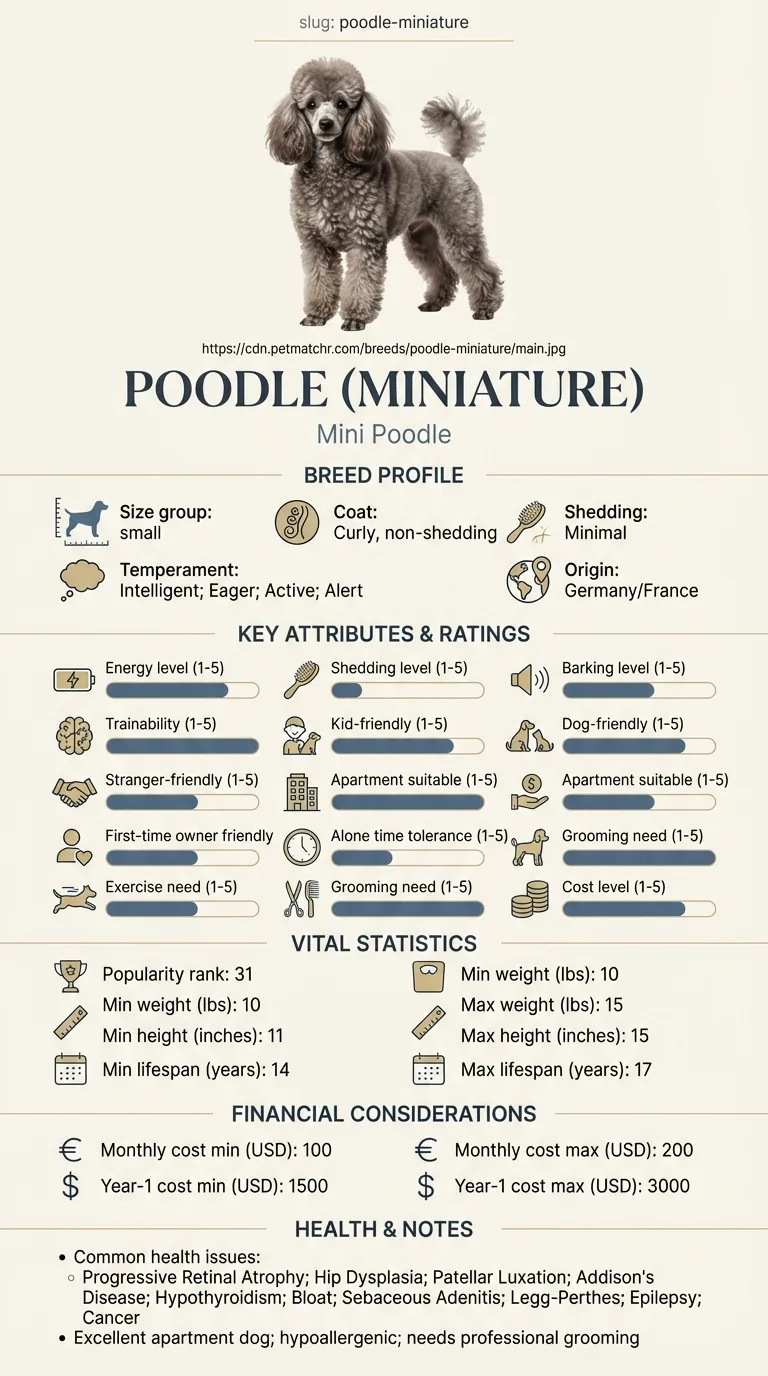
This guide is for Mini Poodle owners experiencing anxiety-related issues in their dogs, especially first-time owners or those living in busy environments.
Poodle (Miniature) anxiety often manifests as excessive barking, restlessness, or clinginess. These dogs may become overly attached to their owners, struggling to be alone. This anxiety can make daily life challenging for both the dog and the owner.
If your Poodle (Miniature) anxiety persists despite your efforts at home, it may be time to consider professional training. A certified trainer can provide targeted strategies to help manage your dog's anxiety effectively.
If your Poodle (Miniature) shows signs of severe anxiety, like aggression or destructive behavior, consult your vet or a behaviorist. They can help identify underlying health issues or recommend specific treatments.
There are various tools and products that can help manage Poodle (Miniature) anxiety. These include calming aids, toys, and training resources.
Making lifestyle adjustments can significantly help manage Poodle (Miniature) anxiety. Start by establishing a consistent daily routine. This predictability can give your Mini Poodle a sense of security and reduce anxiety.
Try to wake up, feed, and walk your dog at the same time every day.
Regular exercise is also crucial. Mini Poodles need moderate exercise, so aim for at least 30 minutes of daily activity. Incorporate walks, playtime, or even agility training to keep them engaged.
This not only tires them out but also helps reduce anxious energy.
Another important factor is how you handle alone time. Mini Poodles generally struggle with separation anxiety, so gradually increase the time they spend alone. Start with short periods and slowly extend them.
Consider leaving them with safe toys or puzzle feeders to keep them occupied.
Additionally, make adjustments to your household routines. Create a cozy spot for your Mini Poodle with their favorite blanket or toy. This space should be calm and inviting, helping them feel secure.
You can also try using calming music or white noise to mask unsettling sounds from the environment.
Finally, consider your own interactions with your dog. Stay calm and reassuring during stressful moments. If they sense your anxiety, it may exacerbate their own.
By making these lifestyle adjustments, you can create a more peaceful environment that helps soothe your Poodle (Miniature) anxiety.
In contrast, if your Poodle seems to regress or if their anxiety worsens, it may be time to escalate your plan. This could mean consulting a professional trainer or veterinarian to adjust your approach. Remember, patience and consistency are key in overcoming Poodle (Miniature) anxiety.

Sarah, a busy nurse in Chicago, noticed her Mini Poodle, Bella, becoming increasingly anxious when left alone. Bella would bark excessively and chew on furniture, making Sarah feel guilty every time she left for work. To help Bella, Sarah started by creating a safe space with cozy blankets and toys, but the anxiety persisted. After a few weeks of frustration, she decided to seek professional help. A dog trainer recommended regular training sessions focused on separation anxiety. They practiced desensitization techniques, gradually increasing the time Bella spent alone. After several months, Bella learned to feel secure when Sarah left and even enjoyed her time with puzzle toys. Now, Sarah can leave without worry, and Bella is a much calmer dog overall.
Key takeaway: Addressing Poodle (Miniature) anxiety often requires a mix of at-home strategies and professional guidance for the best results.
Poodle (Miniature) anxiety can stem from various factors, including genetics, lack of socialization, or previous trauma. These dogs are often sensitive and may struggle with separation from their owners. Identifying the cause is crucial for effective management.
To help stop Poodle (Miniature) anxiety, establish a consistent routine and provide plenty of mental and physical stimulation. Consider using calming techniques like crate training or anxiety wraps. Professional training can also be beneficial.
Yes, Poodle (Miniature) anxiety training can significantly improve your dog's emotional well-being. Positive reinforcement techniques can teach your dog coping strategies and build their confidence. Consistency is key for lasting results.
Absolutely! Consulting a vet is important if you notice signs of anxiety in your Poodle (Miniature). They can provide insights on health issues that might contribute to anxiety and recommend appropriate treatment.
Common signs of Poodle (Miniature) anxiety include excessive barking, destructive behavior, and pacing. They may also show signs of fear, like trembling or hiding. Observing these behaviors can help you identify if your dog is anxious.
Yes, older Poodle (Miniature) dogs may experience anxiety differently. They can become more sensitive to changes in their environment or routine, leading to increased anxiety. It's essential to monitor their behavior and consult a vet for tailored solutions.
To ease travel anxiety for your Poodle (Miniature), start with short trips to help them get used to car rides. Bring familiar items like their favorite blanket or toy, and consider using calming aids like anxiety wraps or pheromone sprays. Gradual exposure can make a big difference.
If one of your dogs shows signs of Poodle (Miniature) anxiety, it's vital to create a safe space where they can retreat when feeling overwhelmed. Monitor interactions and provide positive reinforcement to all dogs to maintain harmony. Consider individualized training for the anxious dog.
Yes, Poodle (Miniature) anxiety training often includes desensitization and positive reinforcement. Gradually exposing your dog to their triggers while rewarding calm behavior can help. Consistent training sessions can build their confidence and reduce anxiety over time.
Use consistent routines and offer plenty of exercise to help manage Poodle (Miniature) anxiety. Consider calming products or techniques to ease their stress.
Look for signs such as excessive barking, destructive behavior, or clinginess to identify anxiety in your Poodle (Miniature).
While not always necessary, professional training can provide valuable tools and techniques for managing anxiety in your Poodle (Miniature). It can also enhance communication between you and your dog.
Anxiety and pain look alike from the outside. Get the prep sheet for this breed's separation-anxiety page and take it to the vet.
You get: Vet visit prep sheet
No spam. One-click unsubscribe. See our privacy policy.
Preview page 1 before you decide.
This guide is not medical advice. If your dog shows pain, sudden behavior change, or worsening symptoms, consult a licensed veterinarian.
Some links may be affiliate links. We may earn a commission at no extra cost to you. We only suggest products we believe are helpful for dog owners.
We research and check what we publish, but we do not warrant that any figure, date, price, or statement is accurate, complete, or current, and we accept no liability for any loss, cost, injury, or other harm arising from the use of this site. Use it as one reference among several. You remain responsible for your own decisions and for your dog's care - confirm anything that matters with a licensed veterinarian or another qualified professional before you act on it. Full disclaimer.
Not sure which breed is right for you? Take our 2-minute quiz to find out.
Take the quiz