Health
Do Papillons get IVDD like Dachshunds?
No. They lack the chondrodystrophic trait behind early disc calcification. Age related disc degeneration is possible, but the explosive young dog rupture pattern is not typical.

Quick answer
Do Papillons get IVDD like Dachshunds?
No. They lack the chondrodystrophic trait behind early disc calcification. Age related disc degeneration is possible, but the explosive young dog rupture pattern is not typical.
Papillons do get sore backs. They mostly do not get the explosive young dog disc ruptures that make headlines in long backed breeds.
Owners whose Papillon has gone stiff, is reluctant to jump, or yelps when picked up, and who have been frightened by material written about a completely different type of dog.
This guide is not medical advice. If your dog shows pain, sudden behavior change, or worsening symptoms, consult a licensed veterinarian.
Some links may be affiliate links. We may earn a commission at no extra cost to you. We only suggest products we believe are helpful for dog owners.
Intervertebral disc disease describes damage to the cushions between the vertebrae, either through a sudden rupture of the disc centre or through slow bulging of a degenerating disc wall. Breeds selected for short legs carry a genetic trait that makes the first version common and early. The Papillon does not carry it. Back problems in this breed are usually mechanical, gradual, and heavily influenced by household habits rather than by disc chemistry.
Disc disease is far less frequently diagnosed in proportionately built toy breeds than in chondrodystrophic ones, where it is among the leading causes of hind limb paralysis. Papillon owners are much more likely to encounter transient back or neck strain than true disc herniation, and much more likely still to encounter a kneecap problem that they initially mistake for a back.
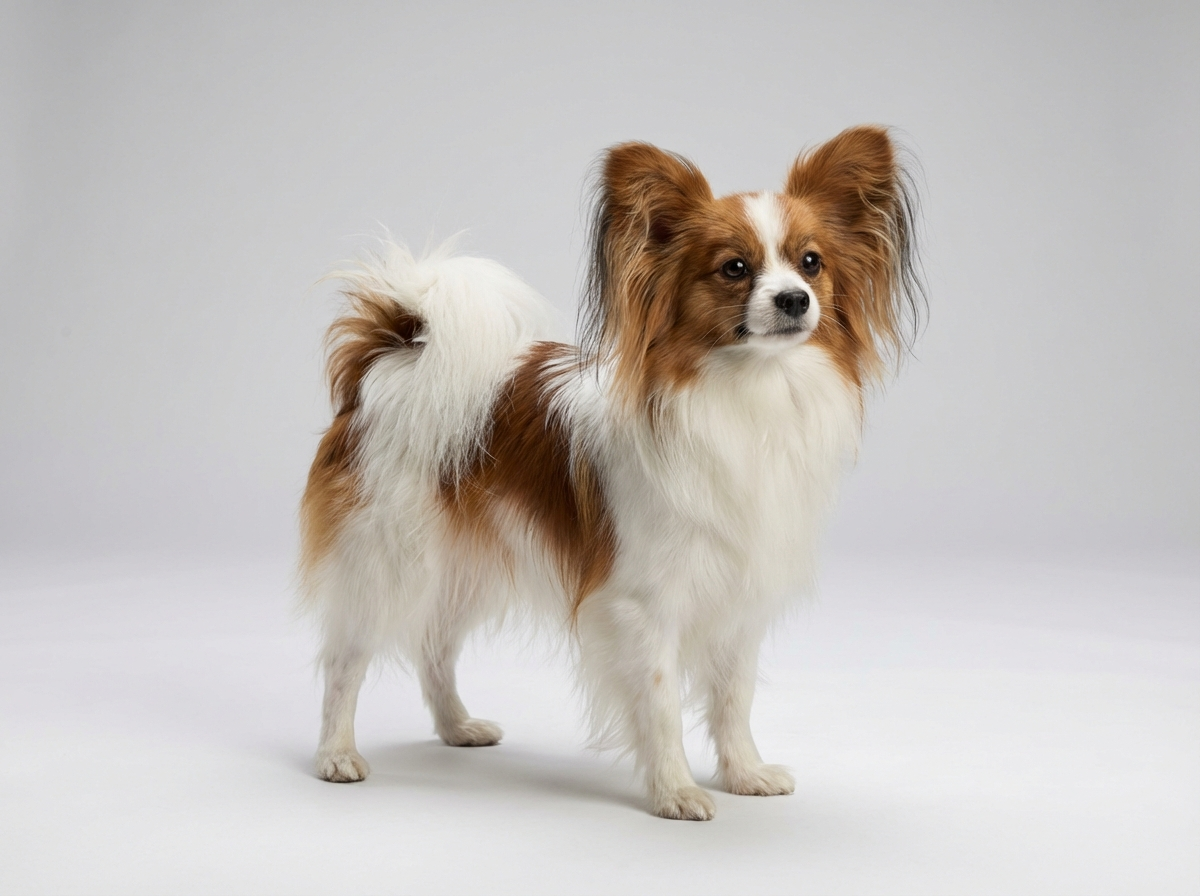
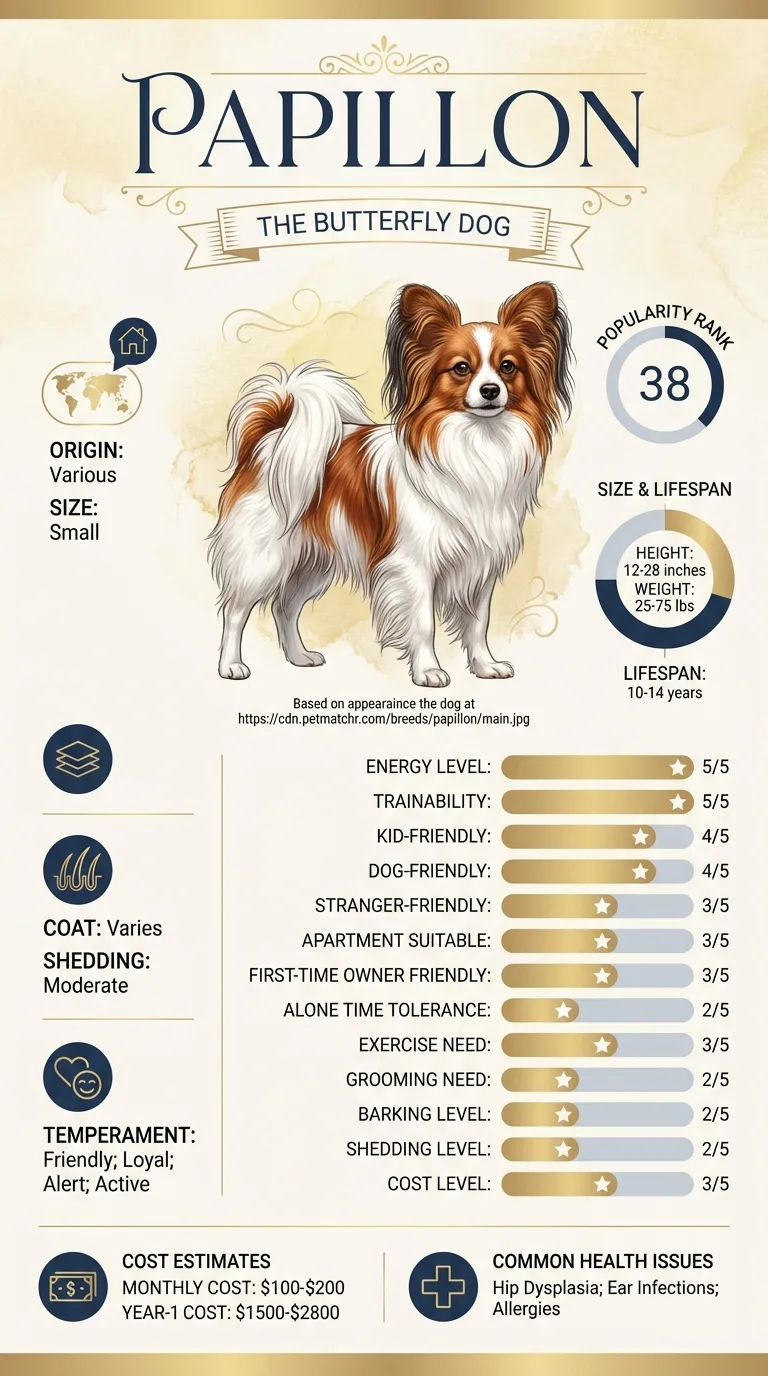
Chondrodystrophy alters cartilage development, shortens the long bones and causes the gel centre of the disc to calcify prematurely. Breeds carrying it have brittle discs by two years old. The Papillon has normal leg proportions for its height of eight to eleven inches and normal disc composition, so its discs age at an ordinary rate. What the breed does bring is a very long lifespan, which gives ordinary age related degeneration more time to accumulate than most dogs get.
Because the chemistry is normal, mechanics dominate. Modern homes are hostile to a nine inch dog: hard smooth floors offering no traction, furniture at nearly twice the dog's height, and stairs with treads deeper than the animal is long. A Papillon that spends a decade launching itself off a sofa onto laminate has absorbed thousands of impacts that a dog living on carpet with a ramp simply has not.
Book promptly for any yelp on being lifted, a hunched or tense posture, reluctance to jump onto surfaces the dog used to manage, or a new stiffness that lasts more than a couple of days. Treat it as an emergency, tonight rather than tomorrow, if your Papillon drags a hind foot, cannot stand, has lost bladder or bowel control, or is crying in pain that will not settle. Where spinal cord function is affected, the time between onset and treatment influences the outcome, so this is not a wait and see situation.
See all Papillon health problems, which breeds are prone to intervertebral disc disease ivdd, or the full Papillon breed guide for temperament, exercise needs and ownership costs.
Simple back strain in a Papillon usually settles within one to three weeks with prescribed rest and pain control. Age related degenerative change does not reverse, and management is a permanent adjustment to the household rather than a course of treatment. Household modifications take an afternoon and pay off across the dog's remaining decade.
Success is a twelve year old Papillon that still moves smoothly, uses its ramp without being asked, has never had an unexplained back episode, and can be picked up by anyone in the family without flinching.
A spinal disc is a tough fibrous ring around a gel centre, sitting between vertebrae as a cushion. It fails in two recognised patterns.
In the first, the gel centre calcifies abnormally early, sometimes within the first year of life. Under load it can burst through the ring and fire into the spinal canal at speed. This is the catastrophic version, it strikes young and middle aged dogs, and it is tightly linked to the chondrodystrophic trait carried by short legged breeds. It is why a three year old Dachshund can go from normal to paralysed inside an hour.
In the second, the ring itself weakens gradually with age, thickens and bulges backward into the canal, compressing the cord slowly. Signs creep in over weeks or months: a stiffer gait, reluctance to use stairs, a wobble in the hind end, difficulty rising. This is the pattern seen across non chondrodystrophic dogs, and it is the one relevant to a Papillon, usually in the second half of a fourteen to sixteen year life.
That distinction matters for what you watch for. In a Papillon, back trouble that comes on over months is the expected picture. Sudden collapse of the hind legs is not typical for the breed, which makes it more alarming rather than less, and it needs immediate assessment rather than reassurance.

In a breed without the disc chemistry problem, mechanical habits do most of the damage. All five of these are fixable this week.
Bruno was six and had begun standing at the edge of the sofa for a second longer than he used to before dropping to the floor. Then he started yelping occasionally when Sam scooped him up one handed. Sam had read about disc disease in small dogs and arrived at the appointment expecting the worst. The examination found tenderness through the mid back, no neurological deficit at all, and normal reflexes. Radiographs showed unremarkable disc spaces for a six year old. The diagnosis was soft tissue strain. The prescription was two weeks of restricted activity with pain relief, then three changes: a set of foam steps at the sofa, a runner along the laminate hallway, and a two handed lift taught to Sam and his flatmate. Bruno is ten now with no repeat episode and still uses the steps every day.
Key takeaway: A Papillon back problem is usually a household problem wearing a medical name. Fix the height, the traction and the lift, and most of the loading disappears without anyone touching a disc.
Not in the way short legged breeds are. Papillons are proportionately built and do not carry the chondrodystrophic trait that causes early disc calcification, so they lack the mechanism behind the dramatic young dog ruptures. They can still develop age related disc degeneration, and they can still injure their backs, but the risk profile is much closer to an average dog than to a Dachshund's.
Most often soft tissue strain from jumping, twisting on slick flooring, or being handled awkwardly. Other causes include muscle spasm, arthritis in the small facet joints as the dog ages, and occasionally a genuine disc problem. Pain in the neck region has its own set of causes and should always be taken seriously in a toy breed.
Back pain usually affects both hind limbs, produces a hunched or tense posture, and makes the dog reluctant to be touched along the spine or picked up. A leg problem is typically one sided and the dog moves normally when standing still. If your Papillon yelps when lifted rather than when walking, think spine.
You do not need to ban the furniture, you need to change the descent. Jumping up is far less damaging than jumping down, because landing generates the impact. Ramps or steps beside the sofa and bed, introduced properly and rewarded, deal with most of the loading without restricting the dog's life.
Restricted activity is a mainstay of managing back pain, but it should be prescribed rather than improvised, and it must be paired with pain control your vet directs. Confining a dog that is in unmanaged pain is not treatment. Get an examination first, then follow the specific rest plan you are given.
Plain radiographs can show narrowed disc spaces, calcification and bony changes, and are a reasonable first step. They cannot show the spinal cord itself, so a dog with neurological deficits usually needs advanced imaging with a specialist. Your vet will decide based on whether the problem is pain alone or pain plus lost function.
No. They lack the chondrodystrophic trait behind early disc calcification. Age related disc degeneration is possible, but the explosive young dog rupture pattern is not typical.
Steps or a ramp for the sofa and bed. A nine inch dog jumping down repeatedly onto hard flooring is the largest routine impact in most homes.
One hand under the chest, the other supporting the rump, lifting both ends together so the spine stays level rather than hanging.
It warrants a prompt appointment. It becomes an emergency if the dog also drags a limb, cannot stand, or loses control of bladder or bowels.
A one-page prep sheet for this condition: the signs, the questions to ask, what to get priced. Unlocks here.
You get: Vet visit prep sheet
No spam. One-click unsubscribe. See our privacy policy.
Preview page 1 before you decide.