Health
Why are small dogs like Papillons more prone to eye injuries?
Their eyes sit at the height of grass, low brush, and other dogs' paws, so ordinary walking and play bring the eye into contact with hazards a taller dog's face never meets.

Quick answer
Why are small dogs like Papillons more prone to eye injuries?
Their eyes sit at the height of grass, low brush, and other dogs' paws, so ordinary walking and play bring the eye into contact with hazards a taller dog's face never meets.
The single biggest eye risk for a Papillon is not a disease at all. It is where the dog's eyes sit relative to the ground it walks through.
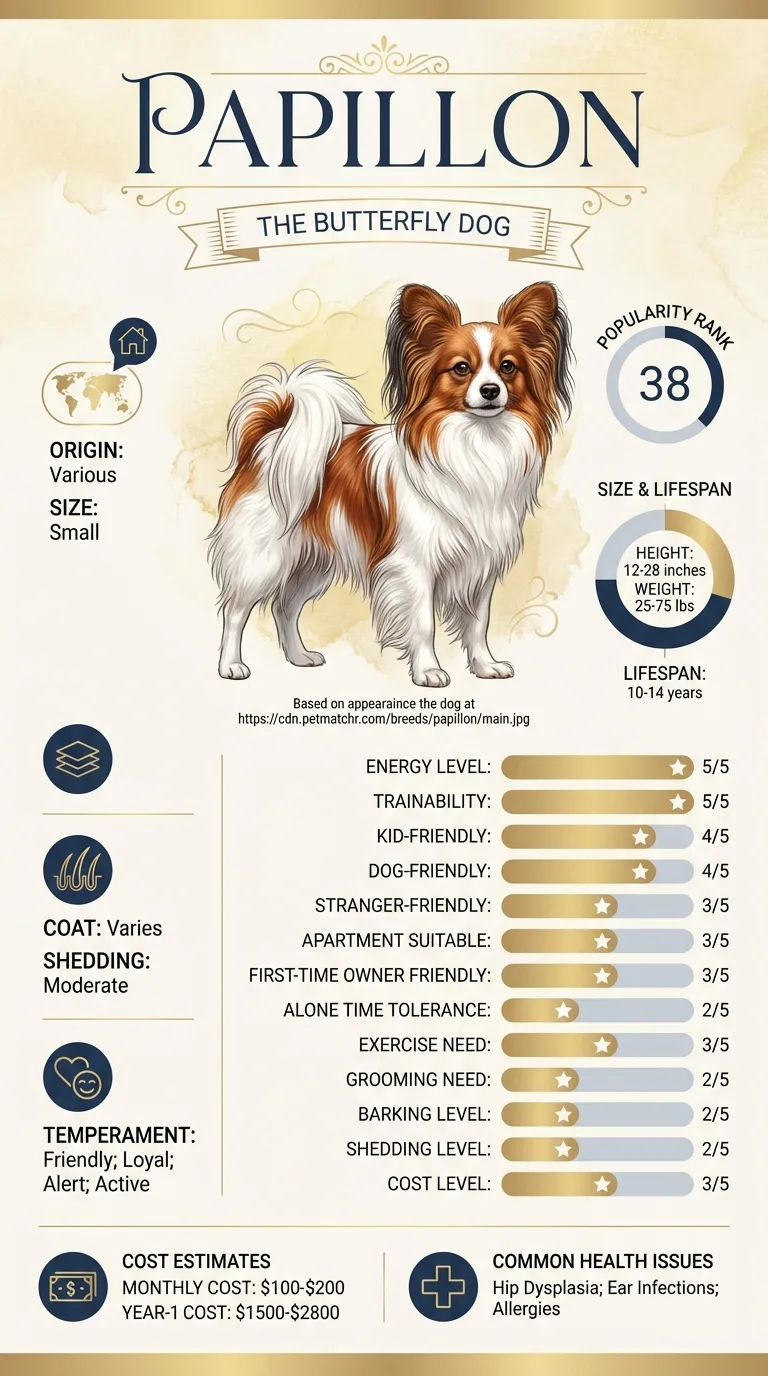
This affects active owners who take their Papillon on regular walks through parks, trails, or long grass, and multi-dog households where rough play with a larger housemate brings paws and toys close to a small dog's face.
This guide is not medical advice. If your dog shows pain, sudden behavior change, or worsening symptoms, consult a licensed veterinarian.
Some links may be affiliate links. We may earn a commission at no extra cost to you. We only suggest products we believe are helpful for dog owners.
For a breed this small, a significant share of reported eye problems are mechanical rather than degenerative: scratches, foreign material, and minor trauma picked up during ordinary walks and play. The underlying driver is not an eye-shape vulnerability but the fact that a dog standing eight to eleven inches tall moves through the world at exactly the height where grass, brush, and other dogs' paws make contact.
Precise breed-specific injury rates are not well documented, but general veterinary experience with small and toy breeds treats minor corneal trauma as one of the more frequent reasons these dogs are brought in for an eye complaint, ahead of primary eye disease in many cases.
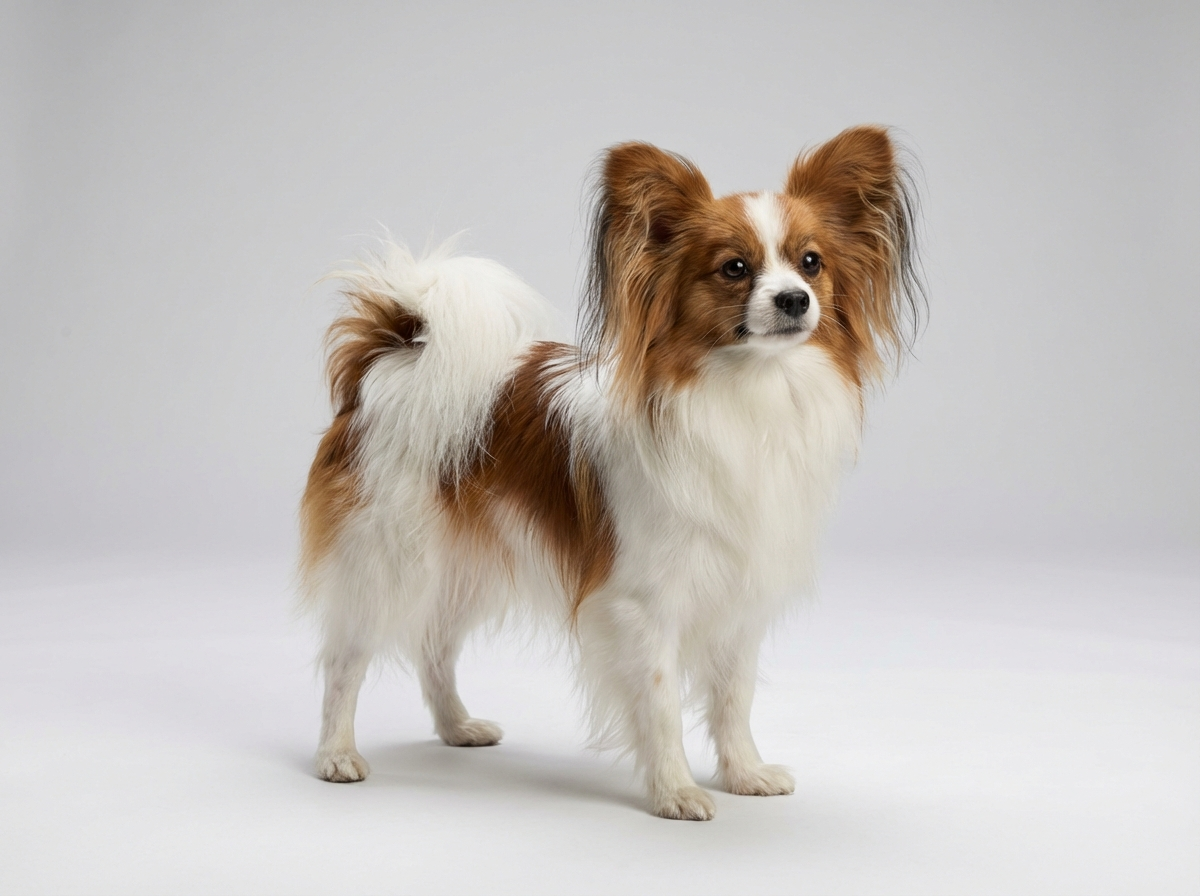
The Papillon's small stature, five to ten pounds and under a foot at the shoulder, is the primary driver here rather than any inherited eye vulnerability. Its eye anatomy is unremarkable for a toy breed; what is remarkable is simply how close to ground level that eye sits during every walk and every play session with another dog.
Tall grass, low shrubs, garden borders, and off-leash dog parks are the main environmental contributors, since these are the settings where the height mismatch between a Papillon and the vegetation or other dogs around it becomes an actual physical hazard rather than a theoretical one.
See a vet the same day for any squint, redness, or pawing at the face that follows a walk through brush or a play session with another dog, since an untreated corneal scratch can progress to a deeper ulcer within a day or two. Persistent tearing with no clear trigger, or a cloudy patch on the eye's surface, also warrants prompt attention.
See all Papillon health problems, which breeds are prone to eye problems, or the full Papillon breed guide for temperament, exercise needs and ownership costs.
A minor scratch caught early typically resolves within a few days of vet-prescribed drops. Ongoing prevention, adjusting walking routes and supervising play, is an indefinite habit rather than something that is ever fully finished.
Success looks like a Papillon that still gets full, active walks and normal play with other dogs, with occasional caution around dense brush and rough play rather than avoidance of either.
A Papillon stands roughly eight to eleven inches at the shoulder, which puts its eyes at the exact height of seed heads, thistles, low shrubs, and the swinging tail or paw of almost any other dog it plays with. A Labrador walking through the same field brushes that vegetation at chest height. A Papillon walks through it at eye height.
This is a straightforward mechanical fact rather than anything specific to the breed's eye shape. The Papillon does not have prominent, poorly protected eyes the way a flat-faced breed does; its eye sits in a reasonably normal orbit for a toy dog. What changes the risk is entirely the geometry of a small body moving through a world built for larger animals.
The result is that corneal scratches and foreign material in the eye, a grass awn, a splinter of bark, a fleck of dried mud, show up in small dogs at a rate that has less to do with eye anatomy and more to do with where the eye travels during a normal walk. A single scratch on the surface of the cornea is a minor injury if it is noticed and treated within a day or two. Left alone, the surface breaks down further, the injury deepens into an ulcer, and a minor scrape becomes a genuinely serious eye problem within a very short window.
Rough play compounds the risk. A Papillon living with a larger dog, or simply playing with another dog of any size, is at eye level for a stray paw or an overexcited nose in a way a bigger dog's face is not. None of this requires any underlying disease. It requires only ordinary contact with an ordinary environment, at a height most owners do not think to account for.
None of this means keeping a Papillon indoors. It means being deliberate about where and how the dog moves through the environments most likely to bring its eyes into contact with something sharp.

If you think your Papillon has eye problems, the plan is three steps: write down what you have seen and when it started, book a veterinary appointment rather than waiting for the next flare, and take video of the behaviour or symptom before you go — the thing you are worried about rarely happens in the consulting room. Screening in the parents covers patellar luxation, progressive retinal atrophy, dental disease.
What the vet visit should produce is a diagnosis and a written plan, not just reassurance: what is being ruled out, what the monitoring interval is, and which signs mean you come back sooner. Ask what the treatment costs across a year rather than per visit, because that is the number that decides whether you are managing this condition or reacting to it.
Between appointments, keep a short log — dates, what you saw, what changed. It is the single most useful thing an owner brings to a follow-up, and for eye problems it is often what separates a clear pattern from a guess.
Soren adopted his Papillon, Miette, into a household that already had a boisterous Labrador. For the first few months, he let them play freely in the backyard, assuming size difference alone would keep Miette safe since the Labrador was gentle by nature. One evening after a particularly excitable game of chase through the yard, Miette began squinting one eye and pawing at her face. Soren checked and saw nothing obvious, no visible redness even, and decided to watch it overnight rather than call the emergency vet line. By morning the eye was noticeably cloudy at one edge. The vet found a small corneal scratch, likely from the Labrador's paw during a fast turn, that had progressed overnight into the start of an ulcer. Treatment resolved it over the following week, but the vet was clear that catching it the evening before would have meant a simpler, shorter course of drops. Soren now steps in earlier during play and checks Miette's eyes as a matter of course after any energetic session, treating the height difference between his two dogs as something to actively manage rather than something that would sort itself out.
Key takeaway: A same-day check after any face-level contact during play or a walk through brush is what keeps a minor scratch from becoming a real eye problem.
Not particularly. A Papillon's eyes are not unusually prominent or poorly protected compared with other toy breeds. The elevated injury risk comes mainly from the dog's small size putting its eyes at the height of grass, brush, and other dogs' paws, rather than from the shape of the eye itself.
Check for visible discharge or debris, but do not try to remove anything embedded in the eye yourself. A squint that started right after walking through vegetation should be seen by a vet the same day, since a grass seed or scratch can worsen quickly if left untreated.
A very minor surface scratch sometimes heals within a couple of days with vet-prescribed drops. It is not something to assume will heal untreated, because a scratch that is actually deeper than it looks can progress to an ulcer within that same window.
It can be, with supervision. The risk is not the larger dog's temperament but the simple physics of a bigger paw or nose moving near a small dog's face during fast, excited play. Supervising and separating dogs when play gets too fast reduces the risk considerably.
Look for one-sided squinting, pawing at the face, excess tearing, or visible redness. Do not attempt to flush the eye with anything other than a vet-approved saline rinse, and do not try to remove visible debris yourself, since this can cause further damage.
You do not need to avoid fields altogether, but sticking to mown paths and avoiding nose-first pushing through tall, seeding grass reduces the single biggest seasonal source of eye injuries in small dogs.
It can contribute in a minor way by holding debris near the eye after a walk, which is a reason to check the eyes after outdoor activity rather than assuming any dust or seed material has fallen away on its own.
Their eyes sit at the height of grass, low brush, and other dogs' paws, so ordinary walking and play bring the eye into contact with hazards a taller dog's face never meets.
Check for squinting or discharge and book a same-day vet visit if it does not settle within a couple of hours, since eye surface injuries can worsen quickly.
A vet-approved sterile saline rinse is fine for general debris. Anything more, including trying to remove an embedded object, should be left to a vet.
Fast, face-focused play raises the odds of an accidental scratch near the eye. Supervised, calmer play is generally lower risk.
A basic vet check and drops for a minor scratch is a modest cost; an ulcer that needs ongoing treatment or specialist referral runs considerably higher, which is the main reason to catch injuries early.
A one-page prep sheet for this condition: the signs, the questions to ask, what to get priced. Unlocks here.
You get: Vet visit prep sheet
No spam. One-click unsubscribe. See our privacy policy.
Preview page 1 before you decide.