Health
Do Papillons get dilated cardiomyopathy?
Rarely. DCM is largely a large and giant breed disease. Papillon heart disease is far more often degenerative valve change appearing in the second half of a long life.

Quick answer
Do Papillons get dilated cardiomyopathy?
Rarely. DCM is largely a large and giant breed disease. Papillon heart disease is far more often degenerative valve change appearing in the second half of a long life.
The heart problem Papillon owners should budget for is a worn out valve, not a worn out muscle. The distinction changes what you monitor and what you buy.
Owners who have read a DCM scare article and are now second guessing their dog food, and owners trying to work out whether a diagnosis they were handed at a general practice actually fits a toy breed.
This guide is not medical advice. If your dog shows pain, sudden behavior change, or worsening symptoms, consult a licensed veterinarian.
Some links may be affiliate links. We may earn a commission at no extra cost to you. We only suggest products we believe are helpful for dog owners.
The phrase Papillon heart disease covers two very different failures that get blurred together in breed lists. Dilated cardiomyopathy, the muscle disease, is a large breed problem that appears on toy breed pages mainly by copy and paste. Degenerative valve disease is the one that genuinely accumulates across a Papillon's unusually long life, and it behaves quite differently on both the timeline and the treatment side.
Cardiac disease of some kind is among the more common findings in senior toy breed dogs, but the muscle version that dominates internet coverage is not what most Papillons get. Ask any small animal cardiologist how many toy breed DCM cases they diagnose in a year versus how many valve cases, and the ratio makes the point.
Body size drives the split. Large dogs carry a heart that must generate force across a much bigger chamber, and several giant breeds carry inherited defects in the proteins that let muscle contract. Small dogs like the Papillon instead inherit a tendency for valve connective tissue to degenerate. The Papillon compounds this by simply living longer than most dogs, so more of its population survives into the decade where valve change accumulates.
Diet has become the dominant environmental question, and it deserves a careful rather than a loud answer. Ongoing investigations have looked at specific formulations in specific dogs, and nothing in that work makes a blanket rule for a toy breed. What household factors demonstrably do is set the workload: portion size, treat volume, and whether the dog spends its evenings barking at the window.
Ask for a cardiac workup if your Papillon is tiring noticeably earlier than it did six months ago, if it coughs at night, or if breathing at rest has quickened. Treat any fainting or collapse as urgent even when the dog recovers instantly, because a syncopal episode can mean the heart briefly stopped supplying the brain. Blue or grey gums, open mouth breathing at rest, or a distended belly in a dog that seems weak are emergency signs and need a clinic the same hour.
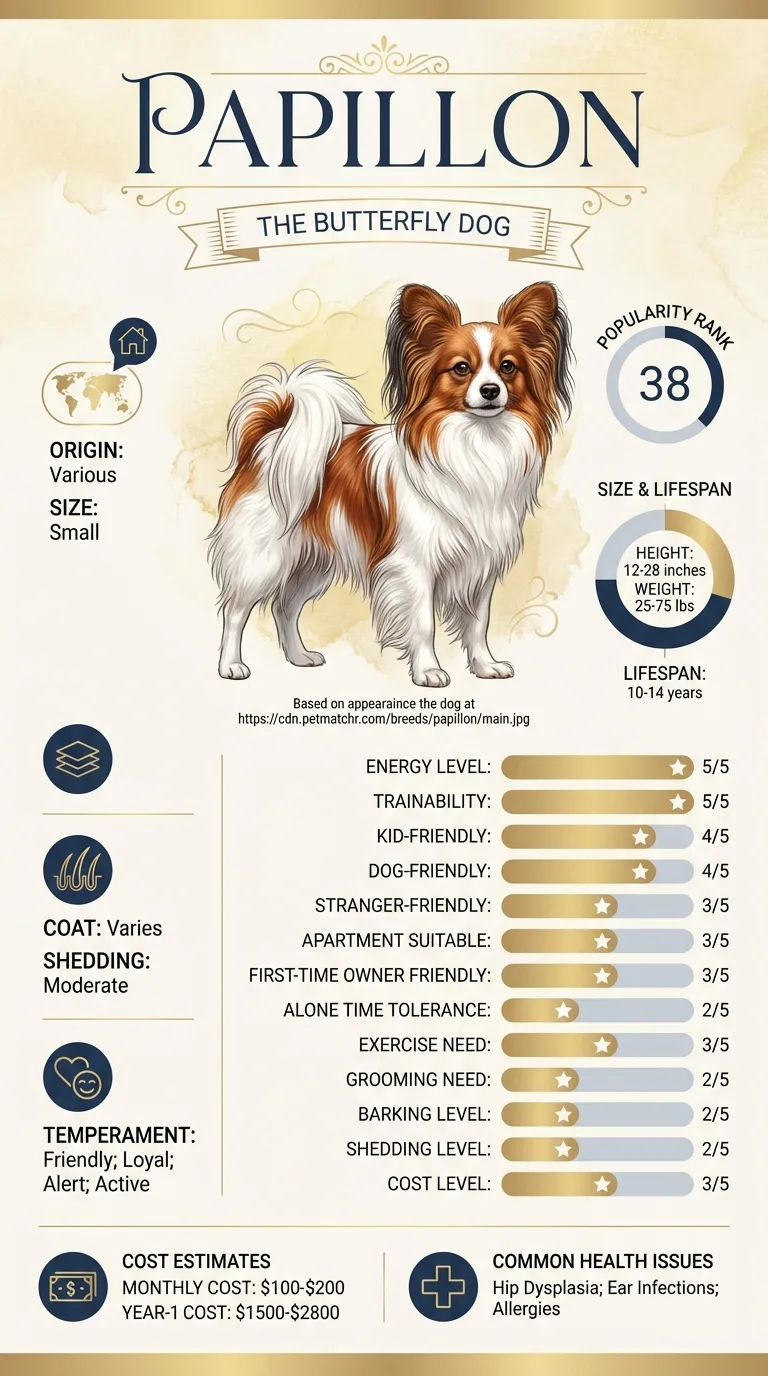
See all Papillon health problems, which breeds are prone to heart disease, or the full Papillon breed guide for temperament, exercise needs and ownership costs.
If the diagnosis really is valve disease, expect a monitoring relationship measured in years, with rechecks every six to twelve months and no daily medication for a long stretch. If it truly is muscle disease, expect a shorter and steeper course and expect a cardiologist rather than a general practice to lead it.
Success is knowing which disease you actually have, having a stage attached to it, and having a recheck already in the calendar. It is not a dog that never develops a murmur, which is not something an owner can control.
Heart disease is not one thing. Broadly, a canine heart fails in one of two ways, and the two look different on an echocardiogram even when the dog looks identical in the waiting room.
In valvular disease, the pump itself is strong but a door leaks. Blood pushed forward slips backward through a thickened mitral valve, the left atrium stretches to hold the returning volume, and over years the chamber enlarges. This is the pattern that dominates in small companion breeds, and it is the pattern a Papillon owner should expect.
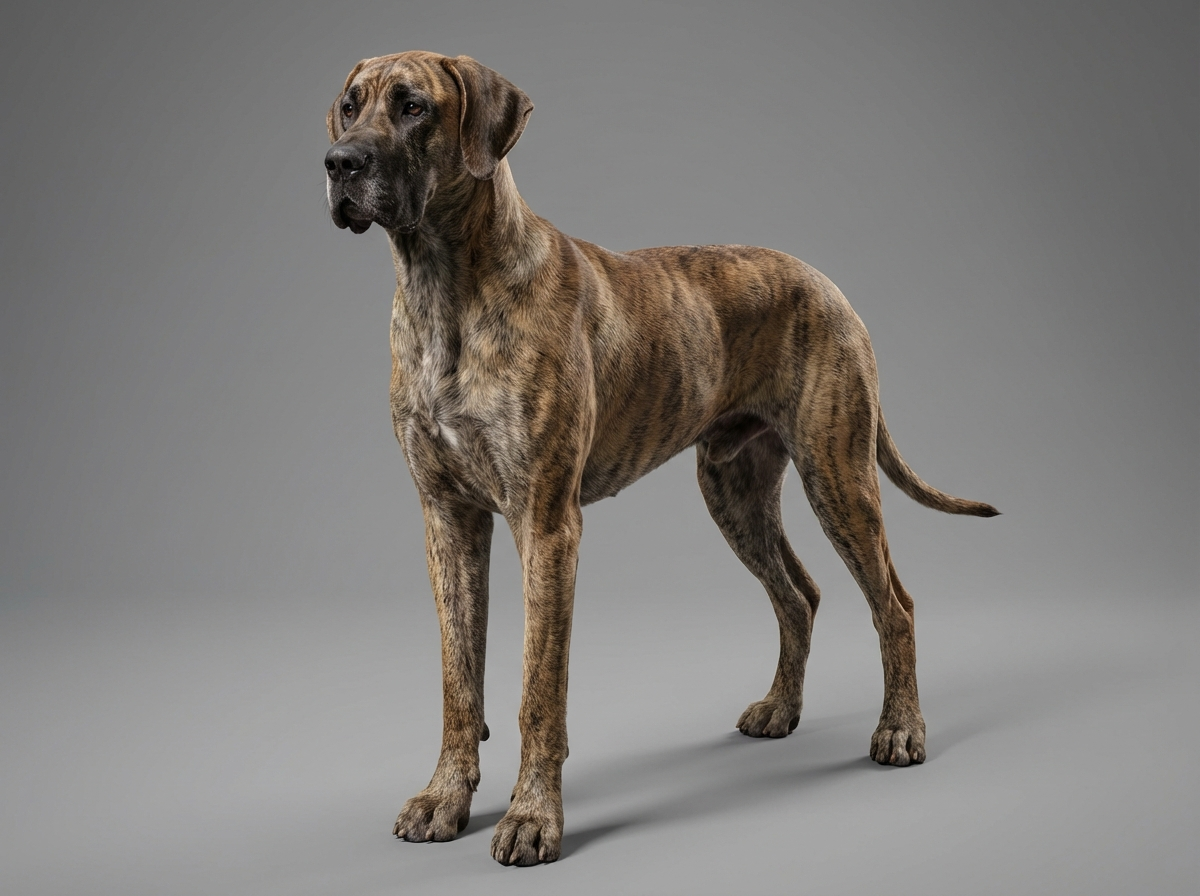
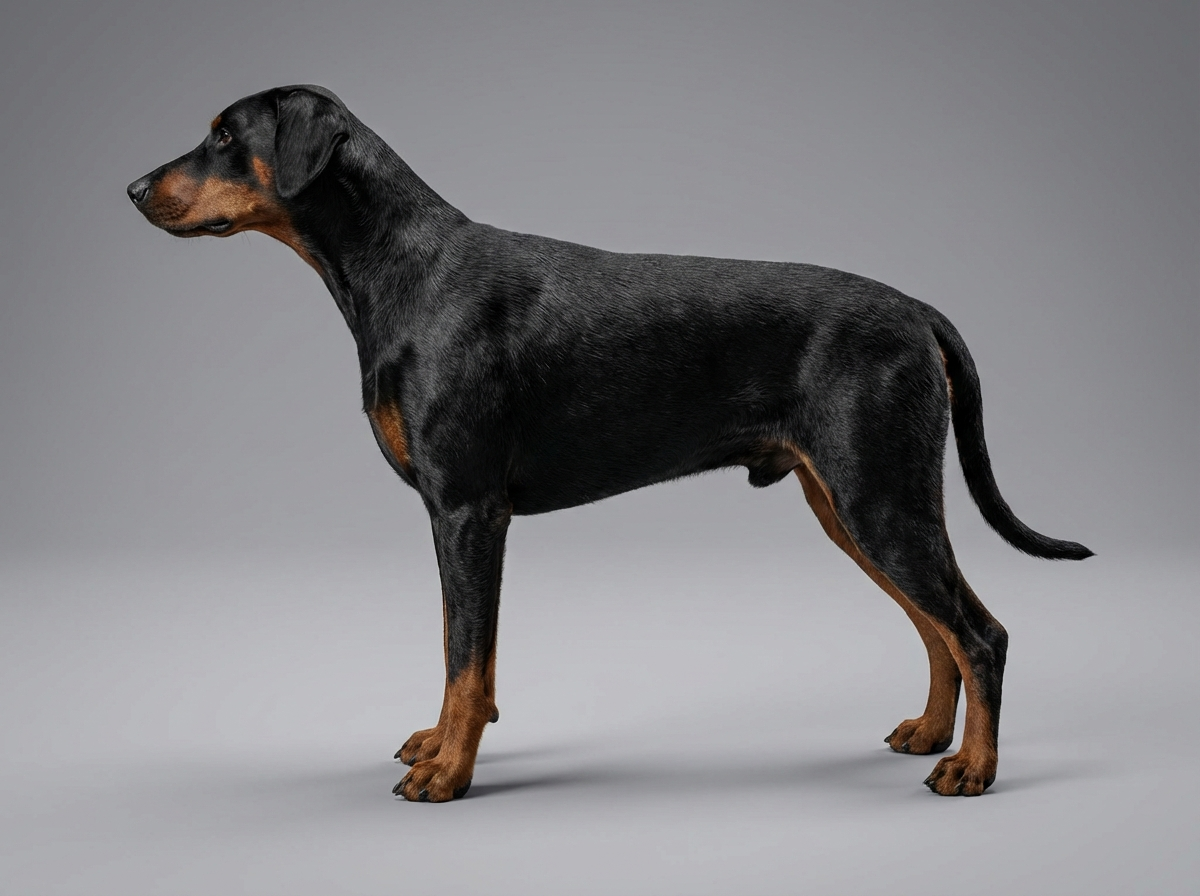
In dilated cardiomyopathy, the doors are fine but the muscle itself is weak. The walls thin, the chambers balloon, contraction weakens, and the decline is usually faster and less forgiving. Dobermans, Great Danes, Irish Wolfhounds and Boxers carry recognised genetic forms. Toy breeds essentially do not.
Why does this matter beyond trivia? Because the management is different. Valvular disease is a long monitoring game with a clear pre-clinical window. DCM tends to be caught late and progresses on a shorter clock. If your Papillon has been labelled with cardiomyopathy without an echocardiogram, that is worth a second look.

Nutritional heart disease is a genuine area of investigation, but it has been badly compressed into slogans. These are the ways Papillon owners lose ground while trying to help.
If you think your Papillon has heart disease, the plan is three steps: write down what you have seen and when it started, book a veterinary appointment rather than waiting for the next flare, and take video of the behaviour or symptom before you go — the thing you are worried about rarely happens in the consulting room. Screening in the parents covers patellar luxation, progressive retinal atrophy, dental disease.
What the vet visit should produce is a diagnosis and a written plan, not just reassurance: what is being ruled out, what the monitoring interval is, and which signs mean you come back sooner. Ask what the treatment costs across a year rather than per visit, because that is the number that decides whether you are managing this condition or reacting to it.
Between appointments, keep a short log — dates, what you saw, what changed. It is the single most useful thing an owner brings to a follow-up, and for heart disease it is often what separates a clear pattern from a guess.
Otto was nine and had a grade two murmur noted at his annual exam. His owner Priya read three articles about grain free diets and heart failure that same week and switched him to a different food the next day. Otto had loose stools for a fortnight and lost interest in dinner. The murmur, of course, did not move. At the recheck Priya finally asked what the murmur actually was, and the answer was mitral regurgitation, the valve pattern, with normal chamber size on radiographs. The cardiologist made two suggestions. Go back to the food Otto had eaten happily for six years, and start counting his sleeping breaths. Three years on Otto is twelve, still on the original diet, still at seven pounds four ounces, and the murmur has moved up one grade. Nothing about his life has changed.
Key takeaway: Get the diagnosis before you change the dog's life around it. In a Papillon, a murmur is usually a valve story, and the fix for a valve story is measurement and weight, not a new bag of kibble.
It is possible but uncommon. Any dog can develop weak heart muscle from causes such as chronic rhythm disturbance, nutritional deficiency or infection. What Papillons do not carry is the inherited breed-linked form seen in Dobermans and Great Danes. If a Papillon is diagnosed with DCM, a cardiologist will usually look for an underlying reason.
Degenerative change in the mitral valve, developing slowly with age. Because Papillons live fourteen to sixteen years, a good number reach the point where a murmur appears. The reassuring half of that sentence is that valve disease has a long quiet stage and responds to monitoring far better than muscle disease does.
This is a question for your own vet, who knows the dog. Investigations into diet associated heart change have focused on particular formulations and mostly larger dogs. Rather than picking a side from headlines, ask your vet to look at what your dog eats alongside its actual cardiac exam findings.
The signs are non specific and easy to dismiss: tiring on walks the dog used to enjoy, a drop in appetite, an increase in resting breathing rate, a fainting episode. None of these is diagnostic on its own. An echocardiogram measures how well the walls are contracting and settles it.
Only if your vet or cardiologist has a reason to run one, such as documented muscle dysfunction on an echo or an unusual diet history. It is a blood test, not a routine screen, and a normal result in a healthy dog changes nothing.
A murmur is proof that blood is moving turbulently somewhere. In a middle aged or older Papillon that usually means valve change, but grading and imaging are what turn a sound into a diagnosis and a stage. Some murmurs never progress far enough to affect the dog's life.
Rarely. DCM is largely a large and giant breed disease. Papillon heart disease is far more often degenerative valve change appearing in the second half of a long life.
Whatever your vet recommends for the specific stage your dog is in. Portion control matters more early on than ingredient panels do.
Most commonly from middle age onward, roughly seven or eight and later, though many dogs in this long lived breed never develop anything meaningful.
Listening to the chest is part of an ordinary annual exam within the breed's usual eighty to one hundred fifty dollar monthly care budget. Imaging is an extra.
A one-page prep sheet for this condition: the signs, the questions to ask, what to get priced. Unlocks here.
You get: Vet visit prep sheet
No spam. One-click unsubscribe. See our privacy policy.
Preview page 1 before you decide.