Health
Is there a known obesity gene in Papillons?
No confirmed Papillon-specific gene has been established; the well-documented POMC variant is specific to Labrador and Flat-Coated Retrievers.

Quick answer
Is there a known obesity gene in Papillons?
No confirmed Papillon-specific gene has been established; the well-documented POMC variant is specific to Labrador and Flat-Coated Retrievers.
Appetite itself can be genetically influenced, separately from how much exercise a dog gets or how disciplined its owner is about portions.
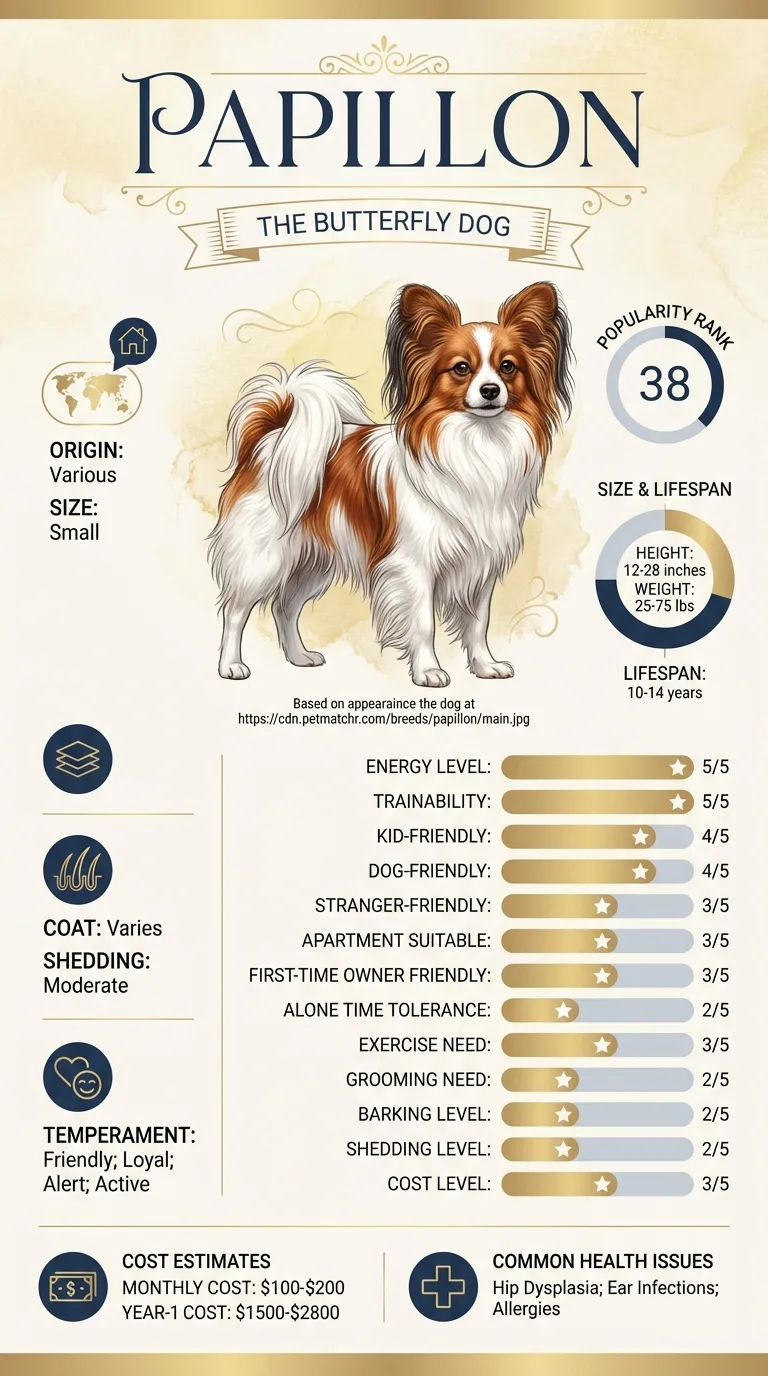
This affects owners who feel they are already doing everything right, measuring food, limiting treats, walking daily, and still have a Papillon that seems to want food constantly and gains weight faster than seems to make sense.
This guide is not medical advice. If your dog shows pain, sudden behavior change, or worsening symptoms, consult a licensed veterinarian.
Some links may be affiliate links. We may earn a commission at no extra cost to you. We only suggest products we believe are helpful for dog owners.
Genetic predisposition to obesity in dogs is a real area of research, best documented through a POMC gene variant identified in Labrador and Flat-Coated Retrievers that strengthens food-seeking drive independent of exercise. No equivalent finding has been confirmed specifically in Papillons. What is well observed is ordinary heritable variation in food motivation between individual dogs of any breed, and the Papillon's own high trainability, often built on food reward, can make that variation more consequential for weight management.
A specific, confirmed genetic marker for obesity risk is documented in certain retriever breeds but not established in Papillons. Individual variation in appetite drive is a widely observed phenomenon across dogs generally, so some degree of it should be expected within the breed even without a named genetic cause.
The Papillon's defining trainability is frequently built on strong food motivation, since food rewards are the most practical tool in reward-based training. In dogs at the stronger end of that food-drive spectrum, the same trait that makes training easy can make portion control harder, independent of any confirmed single gene.
A small dog's daily calorie budget is narrow enough that treats given during training sessions, family table scraps, or imprecise portioning can add up to a meaningful surplus quickly, especially in a dog whose individual appetite drive is already on the stronger end.
Talk to a vet if your Papillon is gaining weight despite measured portions and adequate exercise, since this combination can sometimes point to an underlying medical cause such as a thyroid issue rather than appetite alone, and a vet can rule that out before you assume genetics is the full explanation.
See all Papillon health problems, which breeds are prone to genetic predisposition to obesity, or the full Papillon breed guide for temperament, exercise needs and ownership costs.
Weight management adjustments for a strongly food-motivated dog typically show measurable results within four to eight weeks of consistent, precisely measured feeding.
Success looks like a Papillon maintaining a healthy weight on a food plan that accounts for its actual appetite drive, rather than one that assumes every dog on the same calorie count will feel equally satisfied.
The best-documented example of a single gene influencing canine appetite is a variant in the POMC gene, a gene involved in the signaling pathway that tells the brain a dog has eaten enough. This variant was identified and studied primarily in Labrador Retrievers and, to a lesser extent, Flat-Coated Retrievers, where dogs carrying it showed a measurably stronger drive to seek out food and were more prone to weight gain independent of exercise levels.
This is genuinely useful research, and it establishes something important: appetite drive itself, not just willpower or activity level, has a genetic component in dogs. What it does not establish is that this same variant, or an equivalent one, has been confirmed in Papillons. No such breed-specific finding is part of the documented health picture for this breed, and it would be inaccurate to claim otherwise.
What is true, and does not require a single named gene to explain it, is that individual dogs within any breed vary naturally in how strongly food-motivated they are, in ways that appear at least partly heritable even without a specific identified mutation. A Papillon's high trainability, one of the breed's most consistent traits, is itself often built on strong food motivation, since food rewards are the most common currency in reward-based training. The same trait that makes a Papillon easy to train can, in a dog with an especially strong food drive, also make portion control genuinely harder, not because of laziness on the owner's part but because the dog is working harder against its own signals to get more food.
The practical takeaway is not to look for a specific gene test, since no confirmed Papillon-specific marker exists to test for. It is to recognize that some individual dogs, this breed included, are working against a stronger internal hunger signal than others, and to treat that as a real variable in weight management rather than a sign that measured feeding is being done incorrectly.
None of these strategies require knowing whether a specific gene is involved. They work by managing the practical reality of a dog with a stronger hunger drive, whatever its precise genetic origin.

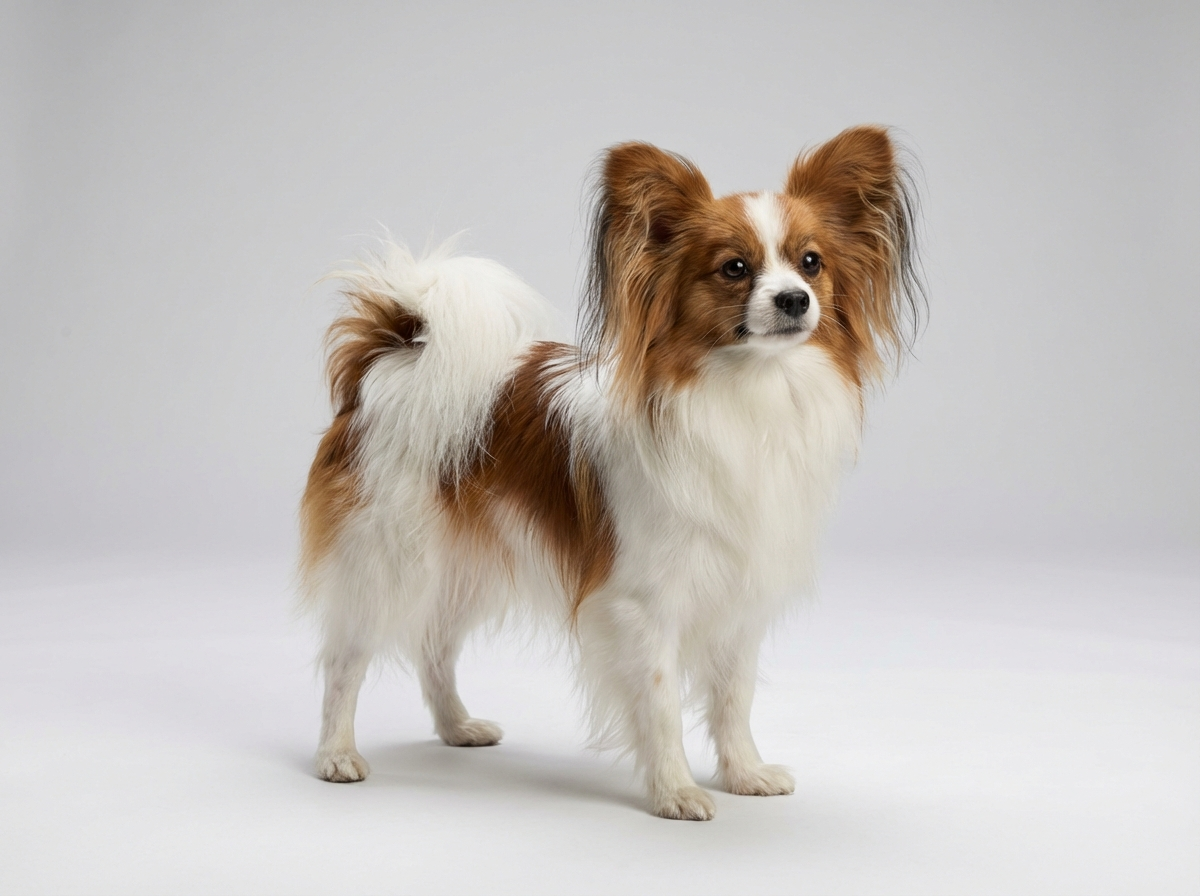
Petra had two Papillons, Zizou and Mochi, fed identical measured portions of the same food and walked the same distance every day. Zizou stayed at a steady, healthy weight without much thought. Mochi, despite eating from the same bag in the same amount, gradually crept up in weight over about a year, all while acting hungrier at every meal and hovering by the kitchen for scraps in a way Zizou never did. Petra assumed at first she was simply misjudging Mochi's portions, so she weighed his food precisely for several weeks. The weight gain continued at roughly the same pace. A vet visit ruled out a thyroid problem, and the vet's explanation reframed the situation for her: some dogs, even within the same breed and the same household, simply run a stronger appetite drive than others, for reasons that are only partly understood and not fully explained by a single known gene in this breed. Rather than continuing to just cut Mochi's food further, Petra restructured his day: his usual kibble ration now doubled as training rewards spread through short sessions, and she added steamed green beans to his bowl for volume without added calories. Mochi's weight stabilized within two months, not because his appetite changed, but because the plan finally worked with it instead of against it.
Key takeaway: A stronger appetite drive in one dog compared to a breed-mate is a real, at least partly heritable difference, and managing it works better by restructuring how food is delivered than by assuming the owner is simply measuring wrong.
This has not been established. The POMC variant is documented primarily in Labrador Retrievers and Flat-Coated Retrievers; there is no confirmed equivalent finding specific to Papillons, and this guide will not claim otherwise.
Individual dogs vary naturally in food motivation and appetite drive, and this variation appears to have a heritable component even without a single named gene behind it in every breed. A Papillon's high trainability is itself often linked to strong food motivation.
Not necessarily. A dog with an unusually strong appetite drive is working against a stronger internal hunger signal, which makes weight management genuinely harder even with careful portioning, not evidence that anything is being done wrong.
Some broad DNA panels include the POMC marker as a general canine test, but a result should be interpreted cautiously in a breed where this variant has not been established as a documented finding, and a vet is the right person to help interpret any result.
Indirectly, yes, in dogs with a particularly strong food drive, since food rewards are the most common tool in reward-based training and can add up if not accounted for in the daily calorie total.
Weighing food precisely, using a portion of the daily ration as training rewards rather than adding extra treats, and tracking weight consistently over time tend to be more effective than relying on the dog to self-regulate.
Eliminating treats entirely is usually unnecessary and can make training harder. Better results generally come from carving treats out of the existing daily food allowance rather than adding them separately.
No confirmed Papillon-specific gene has been established; the well-documented POMC variant is specific to Labrador and Flat-Coated Retrievers.
Yes, appetite drive has a demonstrated genetic component in some breeds and likely varies heritably within most breeds even without an identified single gene.
Individual variation in appetite drive means some dogs experience stronger hunger signals than others on the same calorie intake, independent of owner discipline.
Weigh food precisely, use part of the daily ration for training rewards, and track weight monthly rather than relying on visual estimation.
It is optional and results should be interpreted cautiously in a breed where no specific marker has been confirmed as a documented finding.
A one-page prep sheet for this condition: the signs, the questions to ask, what to get priced. Unlocks here.
You get: Vet visit prep sheet
No spam. One-click unsubscribe. See our privacy policy.
Preview page 1 before you decide.