Behavior
What are some quick tips for managing Havanese obesity?
Monitor your Havanese's food portions and ensure they get regular exercise. Incorporate healthy treats and avoid table scraps to keep their weight in check.

Quick answer
What are some quick tips for managing Havanese obesity?
Monitor your Havanese's food portions and ensure they get regular exercise. Incorporate healthy treats and avoid table scraps to keep their weight in check.
Havanese dogs often face a genetic predisposition to obesity, which can impact their health and happiness. Understanding this issue is crucial for their well-being.
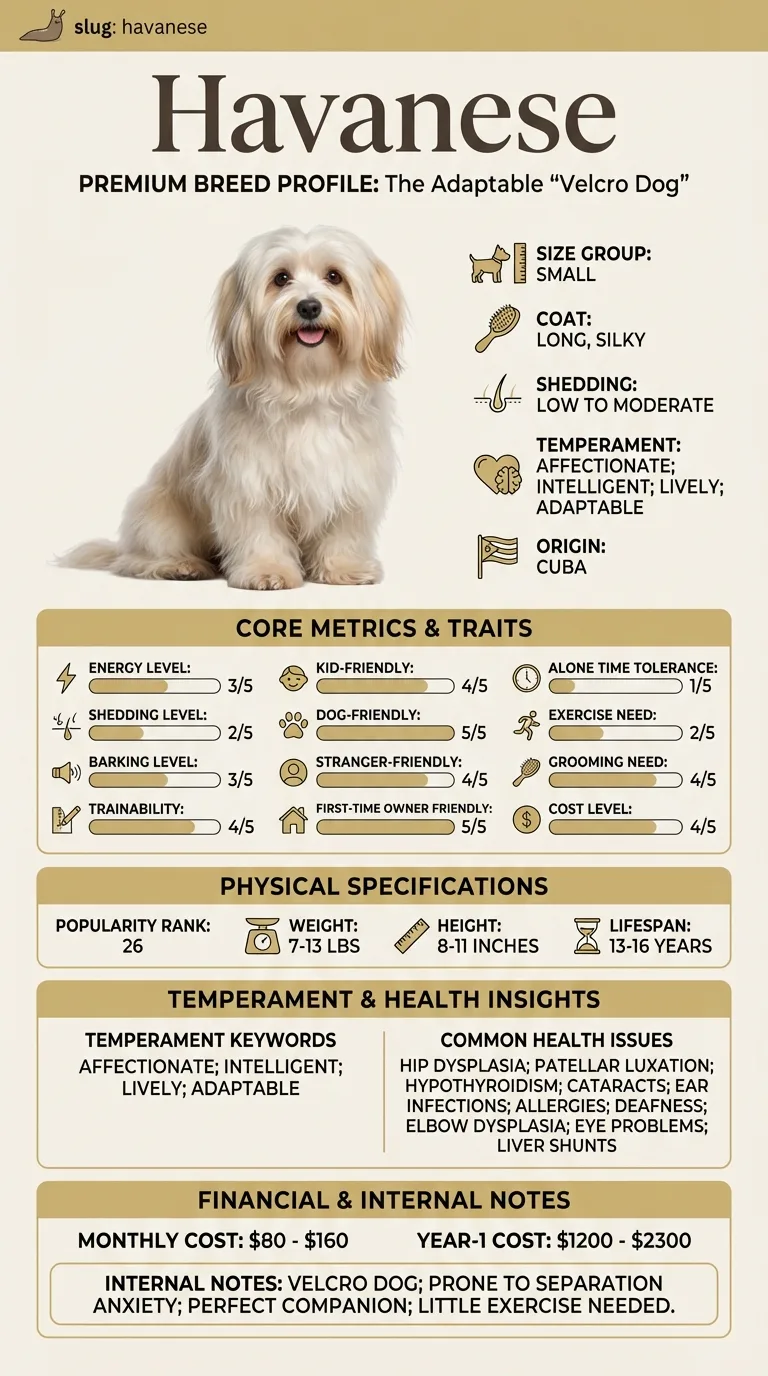
Owners of Havanese dogs, especially first-time pet parents, may struggle with this issue. Busy families or individuals who may not be aware of their dog's specific needs can find this especially challenging, as obesity can lead to serious health problems.
This guide is not medical advice. If your dog shows pain, sudden behavior change, or worsening symptoms, consult a licensed veterinarian.
Some links may be affiliate links. We may earn a commission at no extra cost to you. We only suggest products we believe are helpful for dog owners.
We research and check what we publish, but we do not warrant that any figure, date, price, or statement is accurate, complete, or current, and we accept no liability for any loss, cost, injury, or other harm arising from the use of this site. Use it as one reference among several. You remain responsible for your own decisions and for your dog's care - confirm anything that matters with a licensed veterinarian or another qualified professional before you act on it. Full disclaimer.
Check this first
Recognizing when your Havanese's weight issues are an emergency is crucial. If your dog shows signs of severe lethargy, refuses to eat or drink, or has difficulty breathing, these are red flags. It's essential to call your vet immediately if you notice these symptoms, as they could indicate serious health problems linked to obesity.
If any of these apply, call your vet or an emergency clinic now. The rest of this page is for the cases that are not an emergency.
The Havanese breed has a genetic predisposition to obesity, primarily due to a mutation in the POMC gene, which can lead to an increased appetite. This can be particularly concerning, as obesity can lead to numerous health issues, such as joint problems and diabetes. Owners may notice their Havanese is always eager for food, often begging or scavenging around the house.
Obesity is a common issue among Havanese dogs, as their affectionate nature often leads to indulgent feeding habits. Many owners face challenges in managing their dog's weight, especially given their friendly demeanor that often encourages them to seek food from anyone nearby.
The Havanese breed has a genetic predisposition to obesity due to a mutation in the POMC gene. This mutation can lead to an increased appetite, making it easier for them to gain weight. Additionally, their small size means that even a slight weight gain can have significant health impacts.
Environmental factors also play a role in obesity for Havanese dogs. If they live a sedentary lifestyle with limited exercise or have access to too much food, they are more likely to gain weight. Stress or anxiety can also lead to overeating, especially if they associate food with comfort.
If you notice rapid weight gain or if your Havanese seems lethargic, consult your vet. They can rule out any underlying health issues and may suggest a tailored diet plan to address their genetic predisposition to obesity.
Addressing your Havanese's genetic predisposition to obesity can be tricky. Here are some common mistakes that owners make, along with safer alternatives to help manage your dog's weight effectively.
Start here: Havanese Most Common Genetic Disorders: What to Screen For
See all Havanese health problems, which breeds are prone to genetic predisposition to obesity, or the full Havanese breed guide for temperament, exercise needs and ownership costs.
You can expect to see improvements in your Havanese’s weight and overall health within 4 to 6 months of implementing a consistent diet and exercise routine.
Success means maintaining a healthy weight for your Havanese, which translates to better energy levels, mobility, and a reduced risk of associated health issues.
In milder cases of Havanese genetic predisposition to obesity, you can monitor your dog's weight and eating habits. Watch for gradual weight gain, increased appetite, or slight lethargy. These signs suggest you may need to adjust their diet and exercise routine, but they don't require immediate veterinary attention.

Emily, a first-time dog owner, noticed her Havanese, Bella, was gaining weight rapidly despite a seemingly active lifestyle. After a vet visit, she learned that Bella had a genetic predisposition to obesity due to a POMC gene mutation. Determined to help her furry friend, Emily researched how to stop Havanese genetic predisposition to obesity. She revamped Bella’s diet, switching to smaller, more frequent meals with healthier ingredients. Additionally, Emily made time for daily short walks and play sessions, which Bella loved. Over the next few months, Bella shed the excess weight and became much more energetic.
Key takeaway: With the right diet and exercise plan, you can successfully manage a Havanese's genetic predisposition to obesity, leading to a healthier, happier pup.
The Havanese breed can have a genetic predisposition to obesity due to a mutation in the POMC gene. This gene is associated with appetite regulation, leading to increased hunger and potential weight gain if not managed properly. This answer relates to Havanese genetic predisposition to obesity.
To prevent weight gain in Havanese dogs, monitor their food intake and provide regular exercise. A balanced diet low in calories and high in nutrients is essential, along with daily walks and playtime.
Training your Havanese to follow commands can be beneficial for weight management. Incorporate activities that promote physical movement, like fetch or agility training, while keeping their food rewards in check.
Signs of obesity in Havanese include difficulty in breathing, lethargy, and difficulty in moving around. Regularly check their body condition score to ensure they maintain a healthy weight.
Yes, diets formulated for weight management can help Havanese dogs maintain a healthy weight. Look for options that are lower in fat and calories but still provide essential nutrients.
Common signs of obesity in Havanese include difficulty in breathing, decreased energy levels, and an inability to feel their ribs easily. If you notice your dog struggling to keep up during walks or having trouble getting up after resting, it may be time to evaluate their weight.
A genetic predisposition, like the POMC gene mutation in Havanese, can lead to an increased appetite and difficulty in regulating food intake. This means your dog may naturally eat more than they need, making weight management crucial.
If you notice significant weight gain or if your Havanese shows signs of lethargy, it’s important to consult a vet. They can provide tailored advice on diet and exercise, and rule out any underlying health issues.
Yes, training can be an effective way to manage your Havanese's weight. Incorporating regular exercise and mental stimulation through training can help burn calories and reduce the risk of obesity.
A diet high in fiber and low in calories can be beneficial for Havanese prone to obesity. Consult with your vet to create a balanced diet plan that considers your dog's unique needs and genetic factors.
Monitor your Havanese's food portions and ensure they get regular exercise. Incorporate healthy treats and avoid table scraps to keep their weight in check.
Engage your Havanese in short, fun play sessions throughout the day instead of long workouts. This keeps them active while preventing exhaustion.
A healthy weight for a Havanese typically ranges from 7 to 13 pounds. Regular vet check-ups can help you ensure your dog stays within this range.
If you notice significant weight gain or if your Havanese struggles with weight-related health issues, consult your vet immediately for guidance.
Yes, Havanese are known to be 'Velcro dogs,' often suffering from separation anxiety. It's important to address this behavior to ensure their overall well-being.
A one-page prep sheet for this condition: the signs, the questions to ask, what to get priced. Unlocks here.
You get: Vet visit prep sheet
No spam. One-click unsubscribe. See our privacy policy.
See a sample page before you decide.
Early access list
The free prep sheet covers the same-day warning signs, a symptom log and the questions to ask. We are considering a fuller kit that adds a cost worksheet for the usual tests and treatments (US price ranges with their sources) and a plain-English guide to ways of covering the bill. It is not built yet; this list tells us whether it is worth building.
One email, no spam, unsubscribe anytime. Information only, not veterinary advice.