Health
What does a variant test actually check?
One specific mutation in one specific gene. It reports nothing about any other cause of the same disease.

Quick answer
What does a variant test actually check?
One specific mutation in one specific gene. It reports nothing about any other cause of the same disease.
A clear result on a variant test does not mean your dog is clear of the disease. It means your dog does not carry that one variant.
For Newfoundland owners handed a multi-breed DNA panel with dozens of results, and for anyone deciding which genetic tests are actually worth paying for in this breed.
This guide is not medical advice. If your dog shows pain, sudden behavior change, or worsening symptoms, consult a licensed veterinarian.
Some links may be affiliate links. We may earn a commission at no extra cost to you. We only suggest products we believe are helpful for dog owners.
We research and check what we publish, but we do not warrant that any figure, date, price, or statement is accurate, complete, or current, and we accept no liability for any loss, cost, injury, or other harm arising from the use of this site. Use it as one reference among several. You remain responsible for your own decisions and for your dog's care - confirm anything that matters with a licensed veterinarian or another qualified professional before you act on it. Full disclaimer.
A variant-specific DNA test detects one named mutation in one gene. Retinal degeneration can be caused by mutations in many different genes, with different breeds carrying different ones, so a test named after a particular variant is only meaningful in the breeds where that variant is known to occur. Understanding this turns a confusing panel result into an interpretable one, and it explains why the tests that matter for a Newfoundland are not the ones that dominate commercial panels.
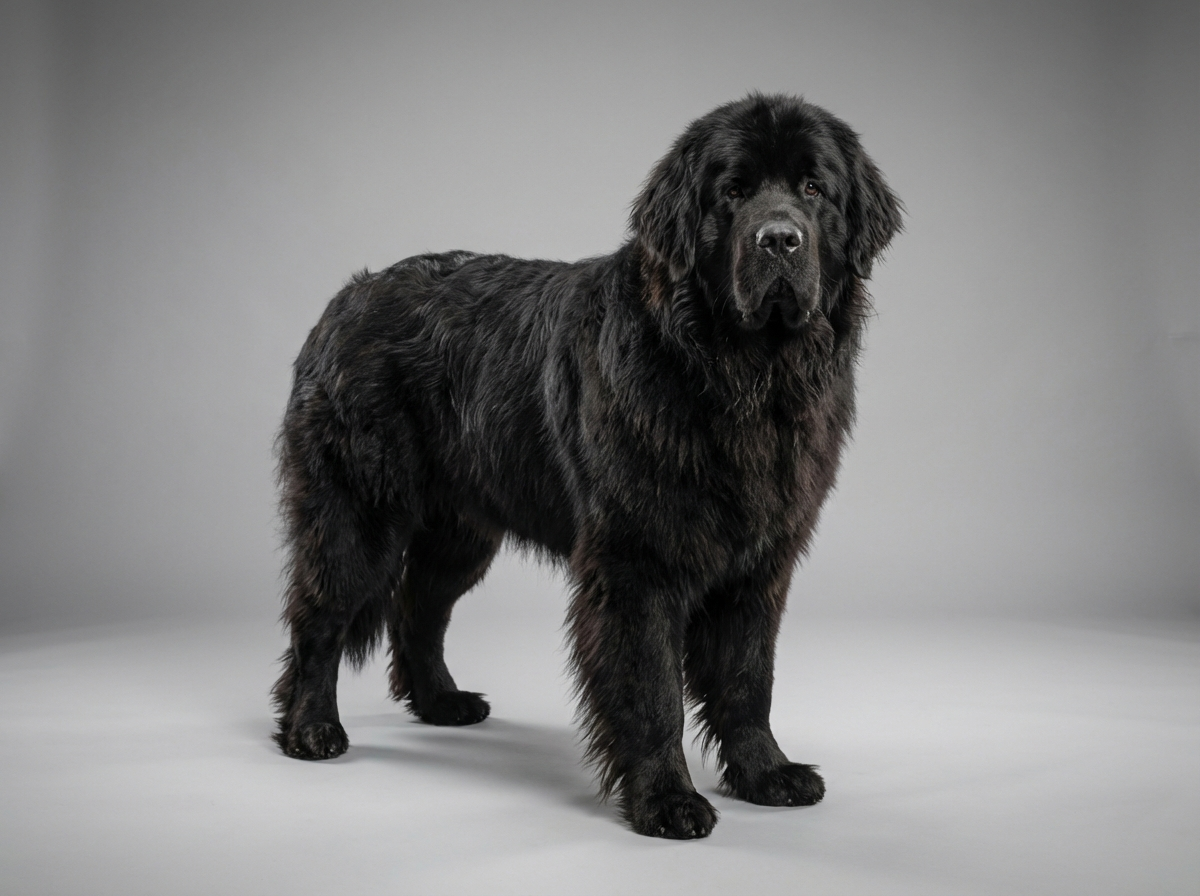
Genetic testing is now widely marketed to owners, and confusion about what results mean is correspondingly common. For the Newfoundland specifically, the documented health issues are hip dysplasia, subaortic stenosis, dilated cardiomyopathy, cystinuria and bloat, and only one of those, cystinuria, is a straightforward candidate for a DNA test.
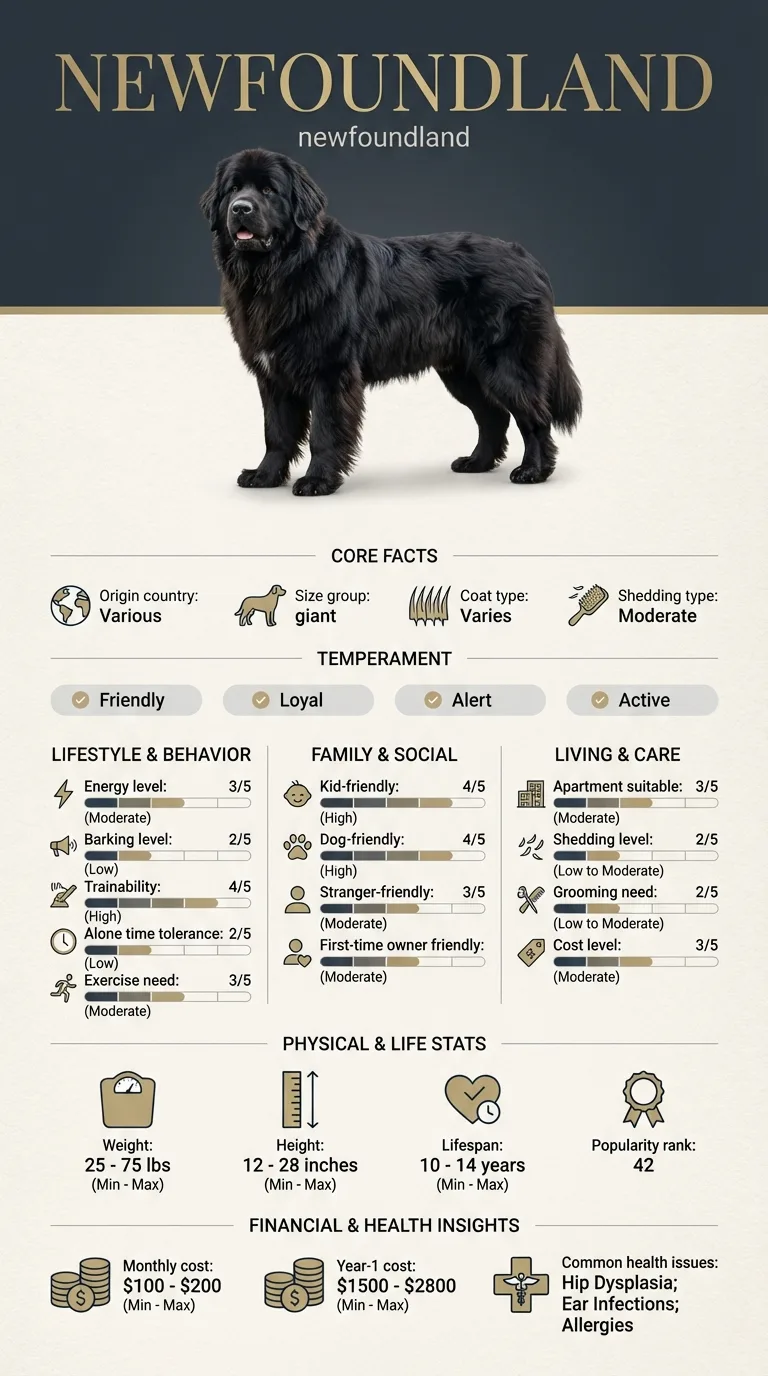
Every breed carries its own set of variants, shaped by the small number of founding dogs behind it and by the breeding decisions made since. That is precisely why a mutation identified in one breed frequently does not exist in another. The Newfoundland's own documented profile points toward orthopaedic, cardiac, urinary and gastric problems rather than inherited retinal disease, and of those only cystinuria is the kind of single-gene defect a swab can settle. The breed's popularity rank of 42 also matters, because a moderately popular breed attracts commercial testing products designed for a broad market rather than for its specific needs.
The environment here is commercial rather than physical. Direct-to-consumer testing is inexpensive, heavily marketed and produces impressive-looking certificates listing large numbers of conditions. Owners receive results without a veterinarian present to interpret them, and the format encourages reading a page of clears as reassurance. Breeders advertising DNA tested puppies without specifying which tests contribute to the same confusion, and buyers rarely feel able to ask which specific variants were checked and why.
Take any genetic result you do not fully understand to a veterinarian, particularly a carrier or at-risk finding, before making breeding decisions or changing your dog's care. Book a clinical appointment regardless of DNA results if your dog shows hesitancy in dim light, bumps into objects, or seems to be losing vision, because a clear test does not rule out disease. Seek same-day care for sudden vision loss, a painful or squinting eye, a cloudy cornea, or a pupil that has changed size or shape, since those indicate conditions that are urgent and unrelated to inherited retinal degeneration.
See all Newfoundland health problems, which breeds are prone to progressive retinal atrophy pra rcd3, or the full Newfoundland breed guide for temperament, exercise needs and ownership costs.
A DNA test result usually returns within two to four weeks of sending a sample. Interpretation should take one conversation with a veterinarian rather than an evening of reading. Screening for the conditions that actually matter in this breed follows a different clock: hip radiographs are taken once the dog is mature, cardiac assessment is repeated across the dog's life, and cystinuria monitoring continues for the whole of an affected dog's life. Genetic knowledge in dogs changes over years, so a panel result is a snapshot of current understanding.
Success is an owner who can look at a certificate and say precisely what it does and does not prove. It means money spent on the screening this breed actually needs, breeding decisions made on results that are relevant to Newfoundlands, and no false reassurance drawn from a page of clears for variants that were never plausible. It is a literacy outcome rather than a medical one, and it is worth more than any single test.
Retinal degeneration is not one disease with one cause. It is an outcome that can be produced by mutations in many different genes, and different breeds carry different mutations. When researchers identify the exact mutation causing the condition in a particular breed, a laboratory can build a test that looks for that specific change in the DNA sequence.
That test is exquisitely accurate at one job: reporting whether this dog carries that particular variant. It is completely blind to everything else. A dog whose retinal degeneration is caused by a different mutation will test clear, and the result will be technically correct and clinically useless.
This is why a variant test carries a breed context. A mutation identified and validated in one breed may be absent from another breed's population entirely. Running such a test on a dog from an unrelated breed usually produces a clear result that was almost guaranteed before the swab was taken.
Commercial multi-breed panels test for many variants at once, which is convenient but generates a long list of clear results whose significance varies enormously. Some of those clears are meaningful; many are simply confirming the absence of something that was never plausible in that breed.
The practical rule is to ask, for any test result, whether that variant is known to occur in this breed. If it is not, the result is noise.

Most misunderstandings about DNA panels come from treating clear as a general clean bill of health rather than as a narrow, specific statement.
The Newfoundland's documented health issues are hip dysplasia, subaortic stenosis, dilated cardiomyopathy, cystinuria and bloat. Of those, cystinuria is the one where a DNA test has a clear and direct role, because it is a specific inherited transport defect and its detection changes both breeding decisions and lifelong management for an affected dog.
The cardiac conditions are heritable but are not screened by a swab in the way a single-gene disorder is. Subaortic stenosis and dilated cardiomyopathy are assessed by examination and imaging, which is why cardiac clearances involve a stethoscope and an ultrasound rather than a cheek sample.
Hip dysplasia is influenced by many genes and by growth environment, so it is assessed by radiographic screening rather than by DNA. Bloat is not a single-gene condition at all and is managed by risk reduction rather than by testing.
So the honest ranking for a Newfoundland buyer or breeder is that a cystinuria test, radiographic hip screening and a cardiac examination by an appropriately qualified veterinarian carry real weight. A broad commercial DNA panel returning dozens of clears for variants found in other breeds carries very little, however impressive the certificate looks.
What a panel can offer is a starting point for a conversation with your veterinarian. What it cannot offer is a substitute for the screening that this breed actually needs.
A couple buying a Newfoundland puppy were shown a laminated certificate listing forty-two genetic conditions, every one marked clear. It was genuinely impressive, and it was the main reason they chose that breeder over another whose paperwork looked far thinner. Their veterinarian asked one question at the first puppy visit: was cystinuria on the list? It was not. Nor were hip radiographs or a cardiac examination in the pack. The forty-two clears were largely for variants identified in breeds unrelated to the Newfoundland, and most of them had been essentially guaranteed before the swab was taken. The other breeder, whose paperwork had looked thinner, had provided three documents: a cystinuria result, hip scores for both parents from a named scheme, and a cardiologist's examination certificate. The puppy they bought has been healthy, and none of this proved to be a disaster. What it taught them, expensively in terms of peace of mind rather than money, was that the length of a certificate and its usefulness are unrelated quantities.
Key takeaway: Count the relevant tests, not the total. Three documents that address a breed's documented problems are worth more than forty-two clears for variants that breed never had.
No. It means your dog does not carry the specific variant that was tested. Retinal degeneration has many genetic causes, and vision loss also has non-genetic causes, so a clear result on one variant is a narrow statement rather than a guarantee.
Variant-specific tests are validated in the breeds where the mutation was identified, and this variant is not associated with the Newfoundland's documented health profile. Ask your veterinarian whether any given variant is known in this breed before paying for the test.
For a recessive condition, a carrier does not develop the disease and is a perfectly healthy dog. The result matters for breeding decisions, not for the dog's own health, and a carrier bred to a clear dog produces no affected puppies.
They can be interesting and occasionally informative, but they generate many results whose relevance to your breed is minimal. For a Newfoundland, money is generally better spent on cystinuria testing, hip radiographs and a cardiac examination.
Cystinuria is the documented Newfoundland condition most suited to DNA testing, since it is a specific inherited defect that affects both breeding decisions and lifelong management of an affected dog.
Because subaortic stenosis and dilated cardiomyopathy are not straightforward single-gene conditions in this breed. They are assessed by physical examination and cardiac ultrasound, which is what a meaningful cardiac clearance consists of.
Take the result to your veterinarian rather than acting on it alone. An at-risk result for a variant that is not established in this breed means something very different from an at-risk result for a well-validated one, and the appropriate monitoring depends entirely on that distinction.
One specific mutation in one specific gene. It reports nothing about any other cause of the same disease.
For a recessive condition, no. Carrier status affects breeding decisions, not the dog's own health.
Cystinuria, which is one of the breed's documented health issues and is a specific inherited defect.
They are not simple single-gene disorders. Cardiac clearance means examination and ultrasound, not a cheek swab.
Usually less than they appear. Most of the clears refer to variants never plausible in this breed. Targeted screening buys more.
A one-page prep sheet for this condition: the signs, the questions to ask, what to get priced. Unlocks here.
You get: Vet visit prep sheet
No spam. One-click unsubscribe. See our privacy policy.
Preview page 1 before you decide.