Behavior
What are quick tips to avoid Great Dane bloat (gdv)?
To avoid Great Dane bloat (gdv), feed smaller meals and prevent exercise right before and after eating. Keeping your dog calm during meal times can also help.

Quick answer
What are quick tips to avoid Great Dane bloat (gdv)?
To avoid Great Dane bloat (gdv), feed smaller meals and prevent exercise right before and after eating. Keeping your dog calm during meal times can also help.
Great Dane bloat (GDV) is a serious condition that can be life-threatening. Understanding it is crucial for all Great Dane owners.
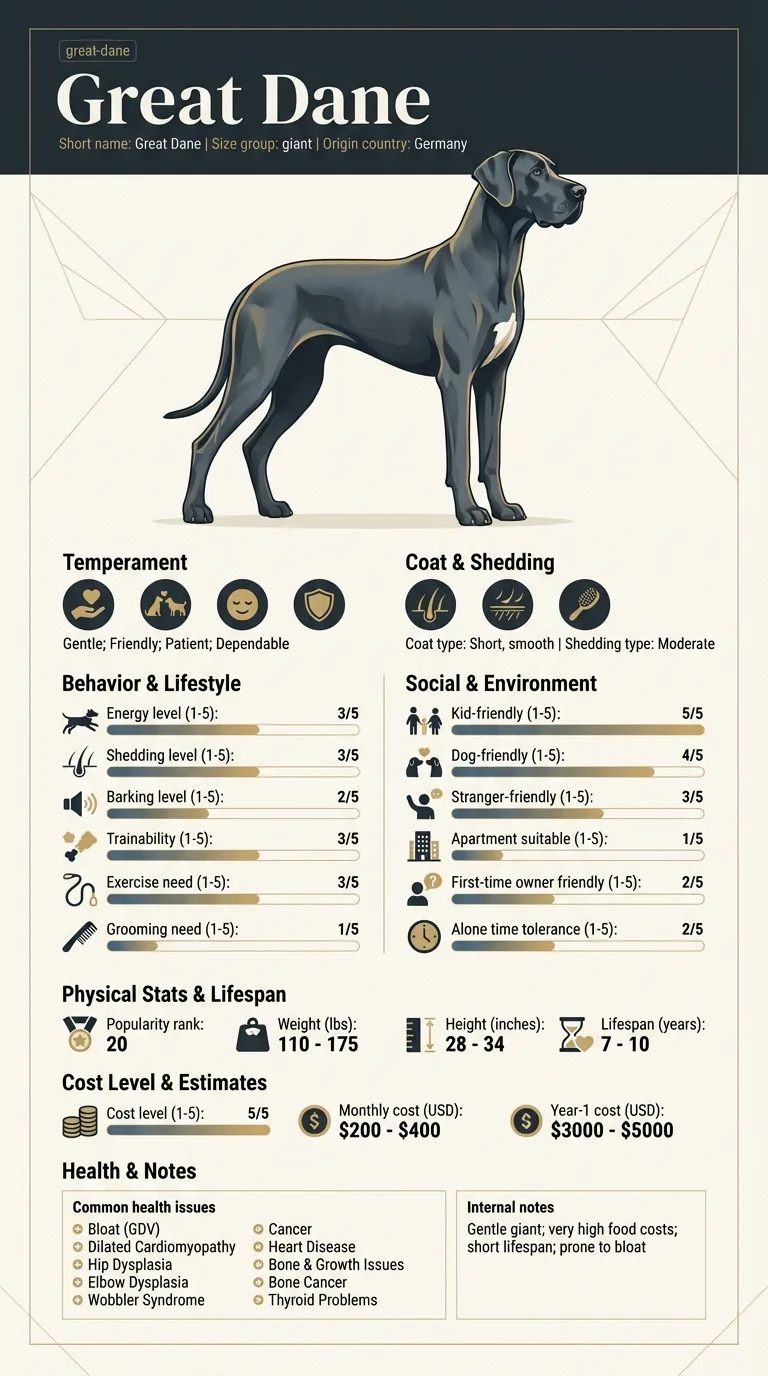
Many first-time Great Dane owners, busy families, or those unaware of this breed's unique health risks often struggle with this issue. If you're a Great Dane owner, understanding the signs and prevention methods is essential for your dog's health.
This guide is not medical advice. If your dog shows pain, sudden behavior change, or worsening symptoms, consult a licensed veterinarian.
Some links may be affiliate links. We may earn a commission at no extra cost to you. We only suggest products we believe are helpful for dog owners.
We research and check what we publish, but we do not warrant that any figure, date, price, or statement is accurate, complete, or current, and we accept no liability for any loss, cost, injury, or other harm arising from the use of this site. Use it as one reference among several. You remain responsible for your own decisions and for your dog's care - confirm anything that matters with a licensed veterinarian or another qualified professional before you act on it. Full disclaimer.
Check this first
Recognizing when Great Dane bloat (GDV) becomes critical can save your dog's life. If your Great Dane shows signs of distress, such as a distended abdomen, excessive drooling, or attempts to vomit without success, these are red flags. Other concerning symptoms include lethargy, rapid breathing, and signs of pain or discomfort. If you notice any of these symptoms, it’s vital to call your vet immediately.
In contrast, some mild cases of bloat may not require emergency action. If your Great Dane has a slightly bloated stomach but is still active, eating, and drinking normally, you can monitor the situation for a short period. Keep a close eye on their behavior and appetite, and consider making adjustments to their feeding routine. Changes like smaller, more frequent meals, and avoiding vigorous exercise after eating can help prevent bloat.
However, if the mild symptoms worsen or if your dog appears to be in pain, do not hesitate to contact your veterinarian. It's always better to err on the side of caution when it comes to potential life-threatening conditions like GDV.
If any of these apply, call your vet or an emergency clinic now. The rest of this page is for the cases that are not an emergency.
Great Dane bloat (GDV) is a serious condition that can occur when the stomach twists, trapping gas and preventing food from leaving the stomach. This often results in a swollen, painful abdomen and can lead to life-threatening complications. Day-to-day, a Great Dane experiencing bloat may show signs of distress, including pacing, restlessness, and attempts to vomit without success.
Bloat is a common issue among Great Danes due to their size and anatomy. Studies show that this breed is particularly prone to GDV, with estimates indicating that around 30% of Great Danes may experience this condition at some point in their lives. It's a critical health concern for owners to be aware of.
Great Danes are giant dogs with deep chests, which makes them more prone to bloat (GDV). Their size can lead to gas buildup in the stomach, causing it to twist. Additionally, their large appetite can contribute to rapid eating, increasing the risk of bloat.
Stressful environments can trigger bloat in Great Danes. Factors like sudden changes in routine, overexertion, or eating too quickly can lead to this dangerous condition. Being in a busy or chaotic household may also heighten their anxiety, increasing the likelihood of bloat.
Consult your vet immediately if your Great Dane exhibits signs of bloat, such as a swollen abdomen, excessive drooling, or restlessness. Regular check-ups are also important to monitor their overall health and any potential risks related to bloat.
Avoid these common mistakes to help manage or prevent Great Dane bloat (GDV).
Start here: Great Dane Most Common Genetic Disorders: What to Screen For
See all Great Dane health problems, which breeds are prone to bloat gdv, or the full Great Dane breed guide for temperament, exercise needs and ownership costs.
You can expect to see improvements in your Great Dane's eating habits and overall comfort within a few weeks of implementing changes. However, it may take several months to fully adjust their routine and prevent bloat effectively.
Success looks like your Great Dane eating calmly without gulping, maintaining a healthy weight, and showing no signs of distress after meals. Regular vet check-ups and awareness of their behavior will help ensure their long-term health.
Emily, a first-time Great Dane owner, noticed her dog Bella seemed uncomfortable after meals. After a few scary episodes of apparent bloat, she learned about the dangers of GDV. With guidance from her vet, Emily adjusted Bella's feeding routine by offering smaller portions multiple times a day and using a slow feeder bowl. Over time, Bella became more relaxed during meals, and Emily felt empowered knowing she was doing her best to prevent bloat.
Key takeaway: By adjusting feeding habits and being proactive, you can significantly reduce the risk of Great Dane bloat (GDV) and ensure your dog's comfort and health.
Bloat can occur due to various factors including rapid eating, high-stress environments, or genetic predispositions. Great Danes are particularly susceptible due to their large size and deep chests. Understanding these triggers can help prevent future episodes.
To help prevent bloat, feed your Great Dane smaller, more frequent meals instead of one large meal. Avoid vigorous exercise before and after meals, and consider using a slow feeder to discourage rapid eating. Staying aware of their eating habits is crucial.
Symptoms of bloat include a distended abdomen, unproductive attempts to vomit, restlessness, and signs of pain. If you notice these symptoms, act quickly to get your dog to a vet. Early detection is vital for the best outcomes.
If you suspect bloat, take your Great Dane to the vet immediately. Do not try to treat this condition at home, as it can rapidly become life-threatening. Quick action can save your dog's life.
Early signs of Great Dane bloat (gdv) include restlessness, a swollen abdomen, excessive drooling, and attempts to vomit without producing anything. If you notice these symptoms, it’s essential to act quickly and consult a vet.
Yes, older Great Danes may be at a higher risk for bloat (gdv). Their digestive systems can become less efficient with age, making them more susceptible to this serious condition.
To help prevent Great Dane bloat (gdv), feed your dog smaller meals throughout the day instead of one large meal. Avoid vigorous exercise before and after meals, and consider using a slow feeder to reduce gulping.
While there isn't a one-size-fits-all diet to prevent Great Dane bloat (gdv), feeding high-quality, digestible foods can help. Consult with your vet for dietary recommendations tailored to your dog's needs.
To avoid Great Dane bloat (gdv), feed smaller meals and prevent exercise right before and after eating. Keeping your dog calm during meal times can also help.
Bloat is quite common in Great Danes due to their size and shape. It's crucial for owners to be aware of the signs and prevention methods.
Treating Great Dane bloat can range from a few hundred to several thousand dollars, depending on the severity and required procedures. Always have an emergency fund for unexpected health issues.
Yes, some Great Danes may inherit a predisposition to bloat. Understanding family health history can help in monitoring your dog's risk.
Training can help create a calm environment during meals, reducing stress and the risk of bloat. Teach your dog to eat slowly and wait patiently.
A one-page prep sheet for this condition: the signs, the questions to ask, what to get priced. Unlocks here.
You get: Vet visit prep sheet
No spam. One-click unsubscribe. See our privacy policy.
See a sample page before you decide.
Early access list
The free prep sheet covers the same-day warning signs, a symptom log and the questions to ask. We are considering a fuller kit that adds a cost worksheet for the usual tests and treatments (US price ranges with their sources) and a plain-English guide to ways of covering the bill. It is not built yet; this list tells us whether it is worth building.
One email, no spam, unsubscribe anytime. Information only, not veterinary advice.