Behavior
What are Labradoodle anxiety quick tips?
To help with Labradoodle anxiety, provide a consistent routine, engage in regular exercise, and consider training techniques. Keeping their environment stable can also reduce stress.

Quick answer
What are Labradoodle anxiety quick tips?
To help with Labradoodle anxiety, provide a consistent routine, engage in regular exercise, and consider training techniques. Keeping their environment stable can also reduce stress.
Labradoodle anxiety can be a challenge for both you and your furry friend.
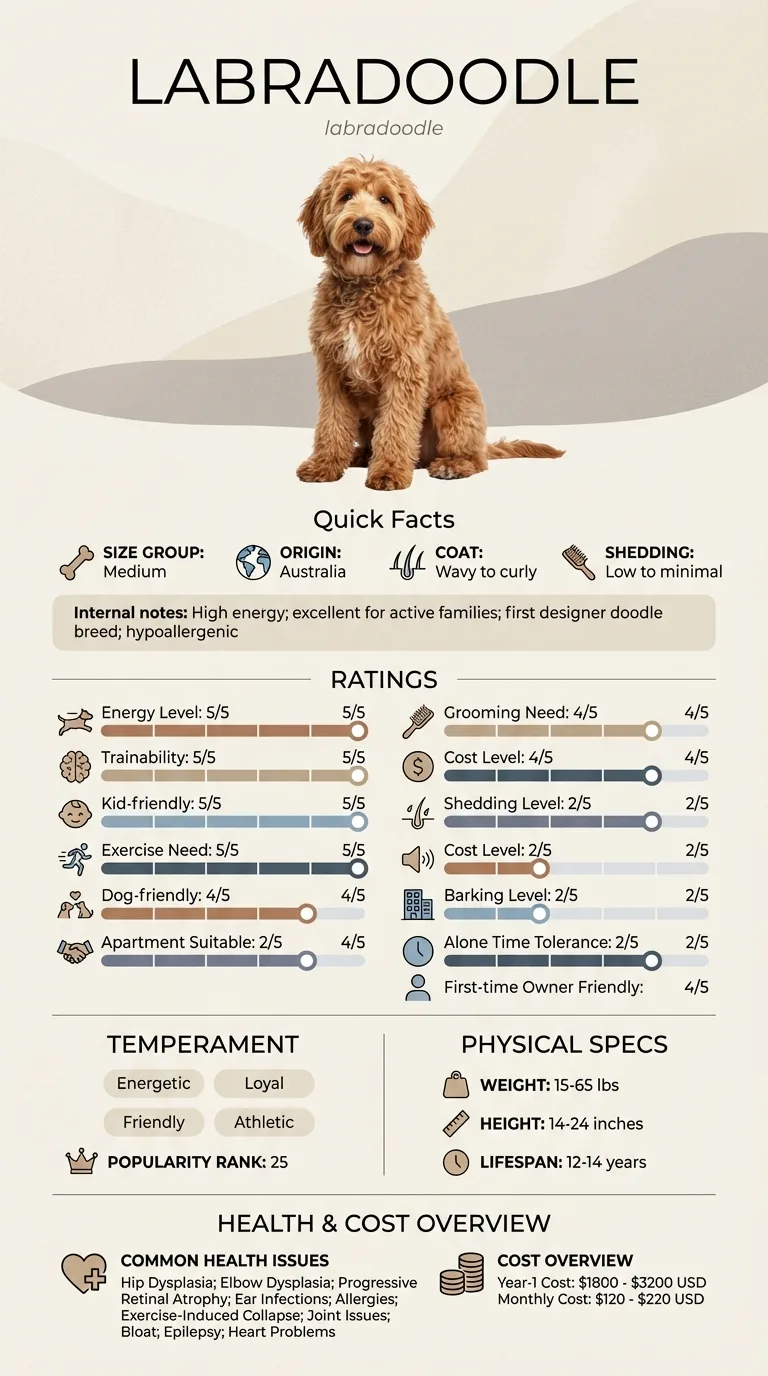
This guide is for Labradoodle owners who notice signs of anxiety in their dogs, such as excessive barking, chewing, or restlessness. If you're looking for practical tips to ease their stress, you're in the right place.
Labradoodle anxiety often shows up as nervousness or fear in everyday situations. This breed can be sensitive, leading to behaviors like excessive barking or destructive chewing when stressed. Understanding this anxiety pattern can help owners provide the right support.
If your Labradoodle's anxiety persists despite your efforts, consider professional training. A certified trainer can provide tailored strategies to help change your dog's emotional response.
Consult your vet or a certified behaviorist if you notice severe anxiety symptoms, such as excessive barking, destructive behaviors, or signs of distress that affect your dog's daily life.
Several tools and products can support you in managing Labradoodle anxiety effectively. These include calming aids, training tools, and comfort items.
Managing Labradoodle anxiety often means making some lifestyle adjustments. Start by creating a consistent daily schedule for your Labradoodle. This includes regular feeding times, exercise sessions, and playtime.
Predictability helps reduce anxiety by giving your dog a sense of security.
Another key factor is exercise. Labradoodles are energetic and need daily physical activity to thrive. Consider increasing their exercise to at least an hour a day.
Activities like walks, fetch, or agility training can help burn off excess energy and calm anxious behaviors.
Also, think about how you structure alone-time. Gradually increase the time your Labradoodle spends alone to help them adjust. Start with short intervals and gradually extend them, always rewarding your dog for calm behavior.
Incorporate interactive toys or puzzles to keep them occupied while you’re away. This can help alleviate feelings of loneliness.
Finally, review your household routines. Make sure to provide a calm environment by minimizing loud noises and chaotic situations. Creating a cozy space with their bed and favorite toys can give your Labradoodle a safe retreat when they feel overwhelmed.
These adjustments can make a significant difference in managing Labradoodle anxiety.
Tracking progress with Labradoodle anxiety can feel daunting, but recognizing micro-wins is essential. Look for small signs of improvement, like your dog being calmer during certain situations or showing less reluctance to interact with visitors. These tiny victories mean your training plan is working.

Even with progress, setbacks can happen. If your Labradoodle suddenly reacts anxiously to things they previously handled well, it might indicate stress or changes in their environment. Stay patient and remember that progress isn't always linear.

If you notice no improvement over a few weeks, or if anxiety worsens, it may be time to reassess your approach. Consult with a trainer or vet, especially if your Labradoodle shows signs of severe stress. They can help guide you toward more effective strategies.

The Johnson family welcomed Charlie, a lively Labradoodle, into their home. From the start, they noticed he was anxious during thunderstorms and when left alone. They tried to comfort him by creating a cozy space with his favorite toys and playing classical music, but it didn't completely resolve his anxiety. After a particularly rough storm left Charlie trembling for hours, they decided to seek professional help. They enrolled him in a Labradoodle anxiety training class where the trainer suggested gradual desensitization techniques and positive reinforcement. Over weeks, Charlie learned to associate storms with treats and calmness. Today, he’s much more relaxed and even enjoys his alone time while the family runs errands.
Key takeaway: With patience and the right training, you can help your Labradoodle overcome anxiety. Don’t hesitate to seek professional help if home remedies aren’t enough.
Labradoodles can experience anxiety due to various factors, including past experiences, lack of socialization, or changes in their environment. Understanding the triggers is essential for effective management. It's important to observe your dog's behavior to identify specific stressors.
Signs of Labradoodle anxiety may include excessive barking, pacing, destructive behavior, or withdrawal. You might also notice your dog trembling or hiding when they're stressed. Being aware of these behaviors can help you address their anxiety early.
To stop Labradoodle anxiety, consistency is key. Training techniques, like desensitization and positive reinforcement, can help. Providing a safe space and engaging in regular exercise also play a vital role in easing their stress.
If your Labradoodle's anxiety is severe or persistent despite your efforts, it's wise to consult a professional dog trainer or a veterinarian. They can offer tailored strategies and, if necessary, discuss medication options. Early intervention can make a significant difference.
Yes, training can significantly help with Labradoodle anxiety. Engaging them in obedience training or specialized anxiety training can build their confidence and reduce stress. Consistent training creates a strong bond and provides structure.
Regular exercise is crucial for managing Labradoodle anxiety. Physical activity helps release pent-up energy and promotes mental stimulation. Aim for daily walks or playtime to keep your Labradoodle calm and happy.
Calming techniques for your Labradoodle can include creating a quiet, comfortable space for them to retreat to, using calming music, or trying anxiety wraps. Each dog is different, so you may need to experiment to find what works best.
Yes, older Labradoodles can develop anxiety, often due to changes in their environment or routine. Health issues or decreased mobility can also contribute to anxiety in senior dogs. It's important to be attentive to their needs and provide a calm space.
To help your Labradoodle cope with travel anxiety, start by acclimating them to their travel crate. Bring familiar toys and blankets to provide comfort. Frequent breaks and positive reinforcement during stops can also ease their stress.
If your Labradoodle shows anxiety around other dogs, it's best to supervise their interactions closely. Gradual introductions to friendly dogs in controlled settings can help. You might also consider consulting a trainer for specific anxiety training tailored to your dog.
Yes, there are various calming products available for anxious Labradoodles, such as anxiety wraps, pheromone diffusers, or calming treats. However, it’s a good idea to consult your vet before trying new products to ensure they are safe and appropriate for your dog.
To help with Labradoodle anxiety, provide a consistent routine, engage in regular exercise, and consider training techniques. Keeping their environment stable can also reduce stress.
Gradually increase the time your Labradoodle spends alone and reward them for calm behavior. Providing toys or puzzles can also keep them occupied while you're away.
Create a safe space for your Labradoodle during storms, such as a cozy bed in a quiet room. Consider using anxiety wraps or calming music to soothe them.
Yes, there are medications available for Labradoodle anxiety if behavioral interventions aren't effective. Consult your veterinarian to discuss the best options for your dog.
Anxiety and pain look alike from the outside. Get the prep sheet for this breed's separation-anxiety page and take it to the vet.
You get: Vet visit prep sheet
No spam. One-click unsubscribe. See our privacy policy.
Preview page 1 before you decide.




This guide is not medical advice. If your dog shows pain, sudden behavior change, or worsening symptoms, consult a licensed veterinarian.
Some links may be affiliate links. We may earn a commission at no extra cost to you. We only suggest products we believe are helpful for dog owners.
We research and check what we publish, but we do not warrant that any figure, date, price, or statement is accurate, complete, or current, and we accept no liability for any loss, cost, injury, or other harm arising from the use of this site. Use it as one reference among several. You remain responsible for your own decisions and for your dog's care - confirm anything that matters with a licensed veterinarian or another qualified professional before you act on it. Full disclaimer.
Not sure which breed is right for you? Take our 2-minute quiz to find out.
Take the quiz