Health
Does every luxating patella need surgery?
No — the decision depends on grade, symptoms, and how much it affects the dog's daily function, not the grade number alone.

Quick answer
Does every luxating patella need surgery?
No — the decision depends on grade, symptoms, and how much it affects the dog's daily function, not the grade number alone.
Two dogs with the same patellar luxation grade can end up on completely different treatment paths, and understanding why helps owners ask better questions instead of just following a recommendation blind.

Owners who've just received a grading result are the ones wrestling with this most directly, especially when a vet presents surgery as an option rather than a clear must-do, and the decision suddenly feels like it's on their shoulders.
This guide is not medical advice. If your dog shows pain, sudden behavior change, or worsening symptoms, consult a licensed veterinarian.
Some links may be affiliate links. We may earn a commission at no extra cost to you. We only suggest products we believe are helpful for dog owners.
We research and check what we publish, but we do not warrant that any figure, date, price, or statement is accurate, complete, or current, and we accept no liability for any loss, cost, injury, or other harm arising from the use of this site. Use it as one reference among several. You remain responsible for your own decisions and for your dog's care - confirm anything that matters with a licensed veterinarian or another qualified professional before you act on it. Full disclaimer.
Once a luxating patella has been diagnosed and graded, the practical question becomes whether to pursue surgical correction or manage the knee conservatively. This decision hinges on more than the numeric grade alone — a vet weighs visible lameness, joint wear already present, the dog's age and weight, and activity demands before recommending a path.
Given how frequently patellar luxation is diagnosed in small breeds generally, the surgery-versus-conservative-care decision comes up often enough that most vets treating French Bulldogs have a well-worn framework for walking owners through it.
The underlying anatomy — a shallow patellar groove and looser supporting tissue — is the same breed-linked issue discussed on the general luxating patella page. What differs here is how that anatomy interacts with an individual dog's weight, activity level, and how much wear has already accumulated by the time a decision needs to be made.
A dog's actual daily life matters as much as its anatomy in this decision: a heavier, more active dog with a Grade 2 luxation may benefit more from surgery than a lean, sedentary dog with the same grade and no visible symptoms.
Revisit the conversation with your vet if a conservatively managed knee starts showing more frequent skipping, visible lameness, or muscle loss in the leg — those are signs the joint may be progressing past the point conservative care can offset.
The decision to operate or not is nuanced, and a few common missteps make it harder than it needs to be.
See all French Bulldog health problems, which breeds are prone to patellar luxation, or the full French Bulldog breed guide for temperament, exercise needs and ownership costs.
The decision itself often takes one or two vet visits including any imaging. If surgery is chosen, plan on six to eight weeks of structured recovery before full activity resumes.
Success means a stable, comfortable knee — whether that's achieved through a well-managed conservative plan or a successful surgical correction — with no ongoing progression of lameness or arthritis.
This decision is best made with your vet, factoring in grade, symptoms, age, and weight, but here's the general shape of the tradeoff.
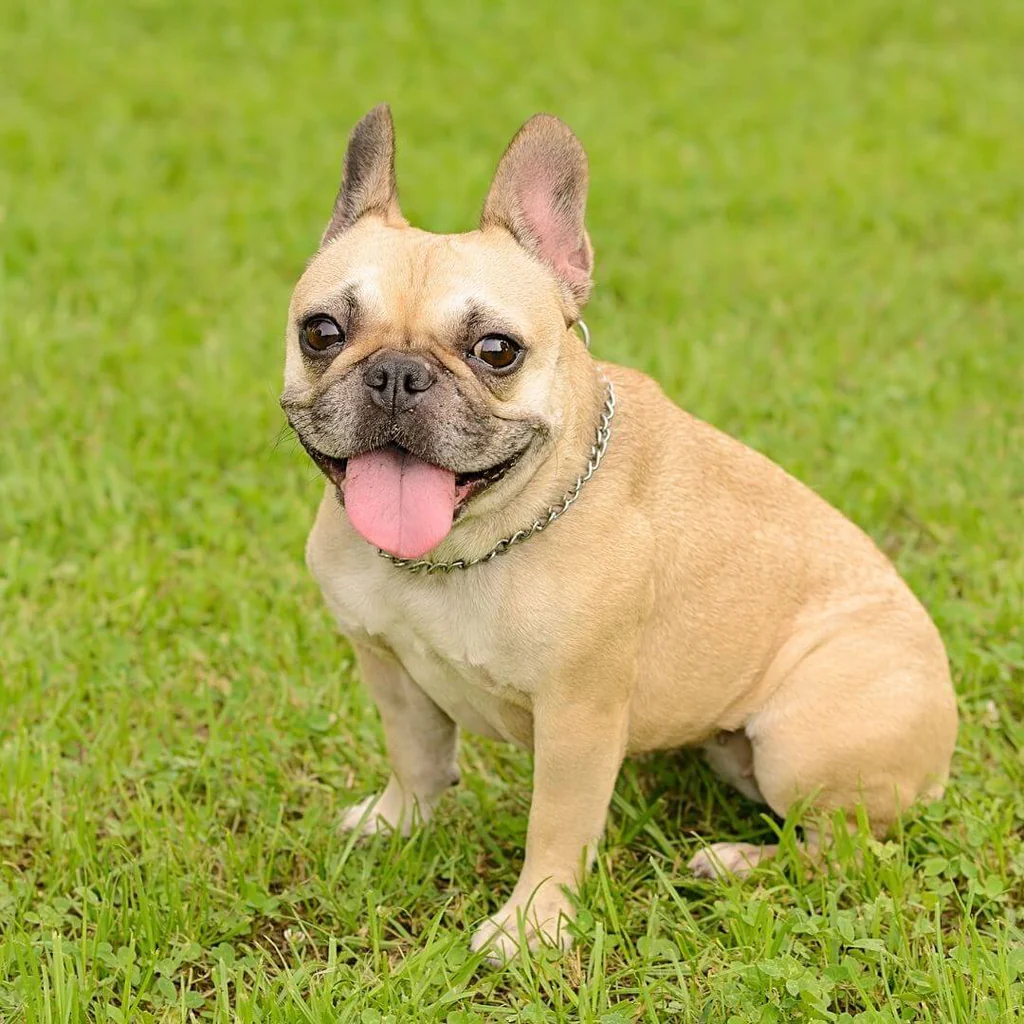
If you think your Frenchie has patellar luxation, the plan is three steps: write down what you have seen and when it started, book a veterinary appointment rather than waiting for the next flare, and take video of the behaviour or symptom before you go — the thing you are worried about rarely happens in the consulting room. Screening in the parents covers brachycephalic obstructive airway syndrome (boas), respiratory disease, heat sensitivity & hyperthermia.
What the vet visit should produce is a diagnosis and a written plan, not just reassurance: what is being ruled out, what the monitoring interval is, and which signs mean you come back sooner. Ask what the treatment costs across a year rather than per visit, because that is the number that decides whether you are managing this condition or reacting to it.
Between appointments, keep a short log — dates, what you saw, what changed. It is the single most useful thing an owner brings to a follow-up, and for patellar luxation it is often what separates a clear pattern from a guess.
Marlowe, a three-year-old Frenchie, had lived with a known Grade 2 luxating patella for over a year, managed with a joint supplement and a careful weight-watch. Then his skip-step started happening several times a day instead of occasionally, and he began holding the leg up longer each time. A recheck showed the grade had progressed and early arthritic changes were visible on X-ray. Rather than continue conservative management and risk more joint wear, Marlowe's family opted for surgical correction. Eight weeks of structured rehab later, his skip-step hasn't returned, and his vet noted the joint looked cleaner on follow-up imaging than it likely would have without the procedure.
Key takeaway: A conservative plan that stops working is a signal to revisit the surgical option, not a reason to simply increase the supplement dose and hope.
They weigh the grade, the degree of visible lameness, the dog's age and activity level, and whether the joint shows signs of progressive wear, rather than using grade alone as an automatic cutoff.
Higher grades left untreated often lead to progressive lameness and earlier arthritis, since the kneecap spends more time out of its proper position under repeated mechanical stress.
Most dogs need about six to eight weeks of restricted activity and structured rehabilitation before returning to full, unrestricted movement.
It's possible but many vets stagger surgeries a few weeks apart so the dog always has one stronger leg to bear weight on during recovery.
Recurrence is possible, particularly in dogs that gain weight or return to high-impact activity too soon, but a well-performed surgery combined with good post-op care has a strong success rate.
Knee braces are used in some cases, especially when surgery isn't an option, but they're generally considered a supportive measure rather than a substitute for surgical correction in higher-grade cases.
Including the procedure, anesthesia, and follow-up rehabilitation, total cost commonly falls between about $2,000 and $4,000 per knee.
No — the decision depends on grade, symptoms, and how much it affects the dog's daily function, not the grade number alone.
Typically six to eight weeks of restricted, structured activity before a full return to normal movement.
Roughly $2,000–$4,000 per knee including the procedure and post-operative rehabilitation.
Yes, many mild, asymptomatic cases are managed successfully with weight control and monitoring alone.
Bracing exists but is generally viewed as supportive rather than a full substitute for surgery in significant cases.
A one-page prep sheet for this condition: the signs, the questions to ask, what to get priced. Unlocks here.
You get: Vet visit prep sheet
No spam. One-click unsubscribe. See our privacy policy.
Preview page 1 before you decide.