Health
What is immune-mediated thyroiditis?
An autoimmune process where the immune system attacks and destroys thyroid tissue, the leading cause of hypothyroidism.

Quick answer
What is immune-mediated thyroiditis?
An autoimmune process where the immune system attacks and destroys thyroid tissue, the leading cause of hypothyroidism.
This distinction matters because it's an active autoimmune process, not simply an aging gland running out of steam, and that has implications for both testing and breeding decisions.
This is most relevant for owners who want to understand the specific cause behind a hypothyroidism diagnosis, and for breeders and prospective buyers interested in the hereditary component this autoimmune process is documented to carry.
This guide is not medical advice. If your dog shows pain, sudden behavior change, or worsening symptoms, consult a licensed veterinarian.
Some links may be affiliate links. We may earn a commission at no extra cost to you. We only suggest products we believe are helpful for dog owners.
Immune-mediated thyroiditis is an autoimmune process in which the body's immune system produces antibodies that gradually destroy thyroid gland tissue, representing the underlying disease mechanism behind most cases of hypothyroidism in dogs. It can be detected through specific antibody testing well before hormone levels drop enough to cause clinical symptoms, and it carries a documented hereditary component relevant to breeding decisions.
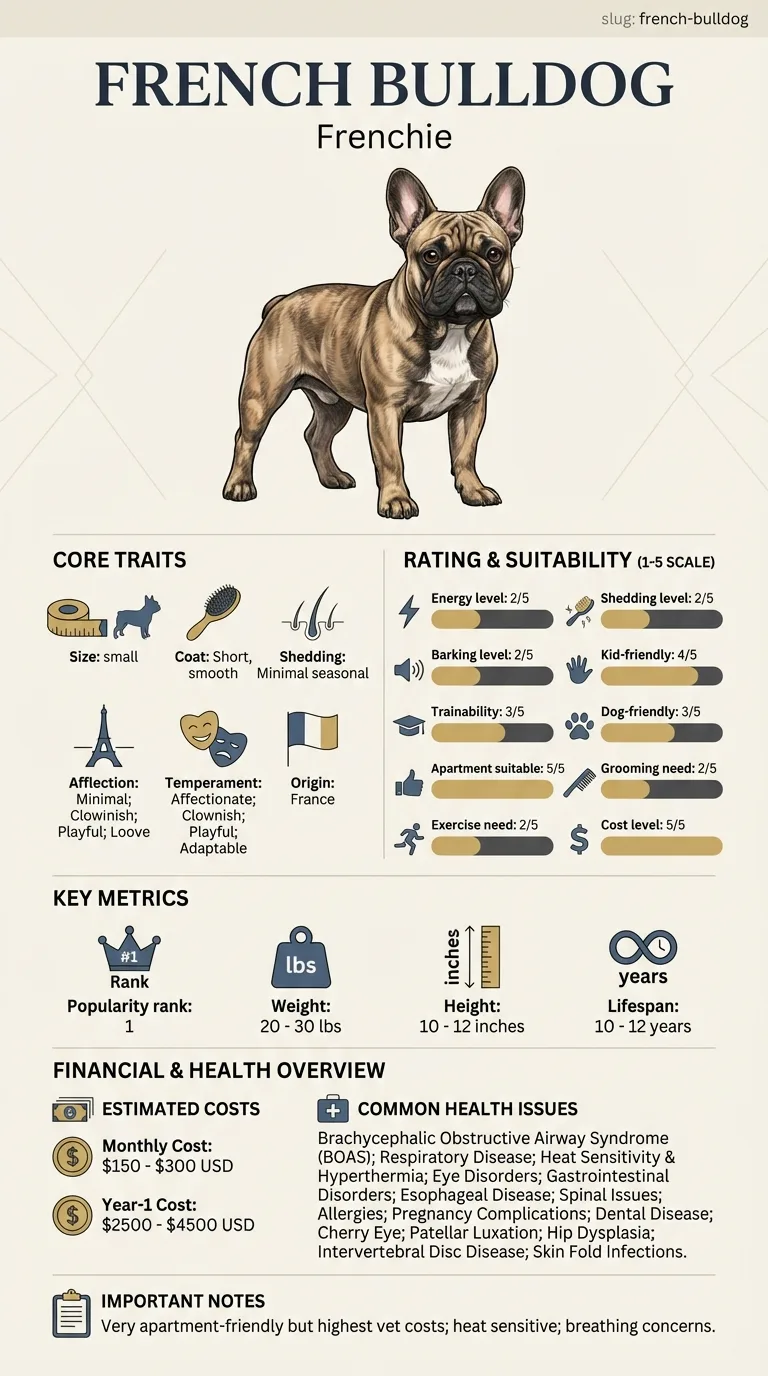
Immune-mediated thyroiditis is recognized as the most common underlying cause of hypothyroidism across dog breeds generally, and it's a relevant consideration in French Bulldogs given the breed's documented rate of hypothyroidism and other autoimmune conditions.
A hereditary predisposition toward this autoimmune process is documented in some breed lines, meaning genetics play a meaningful role in why some dogs develop this specific mechanism of thyroid damage rather than another cause of reduced thyroid function.
There's no well-established environmental trigger for the underlying autoimmune process; it appears to be driven primarily by genetic and immune system factors rather than diet, activity, or other lifestyle variables.
Discuss thyroid antibody testing with your vet if you're considering breeding a dog with a family history of hypothyroidism, or if you want a more complete understanding of the underlying cause behind a hypothyroidism diagnosis.
Because thyroiditis and hypothyroidism are closely linked but distinct concepts, a few common mix-ups can lead to incomplete testing or missed breeding considerations.
See all French Bulldog health problems, which breeds are prone to immune mediated thyroiditis, or the full French Bulldog breed guide for temperament, exercise needs and ownership costs.
The autoimmune process can be underway for months to years before it progresses to clinical hypothyroidism, meaning antibody testing offers a considerably earlier detection window than waiting for symptoms to appear.
Success means understanding the specific underlying mechanism behind a thyroid diagnosis, informing both individual treatment (which remains standard regardless) and, where relevant, informed breeding decisions.
In immune-mediated thyroiditis, the body's immune system produces antibodies that target and gradually destroy thyroid gland tissue, a process that can be underway for months or years before enough functional tissue is lost to cause the hormone shortage recognized as clinical hypothyroidism.
This means a dog can test positive for thyroid autoantibodies well before its actual thyroid hormone levels drop into the abnormal range, offering an earlier window of detection than waiting for symptoms or reduced hormone levels alone.
Because this is an inherited autoimmune tendency in at least some lines, understanding whether a case of hypothyroidism stems from this specific mechanism has real relevance for breeding decisions, distinct from age-related or other, non-immune causes of reduced thyroid function.

If you think your Frenchie has immune-mediated thyroiditis, the plan is three steps: write down what you have seen and when it started, book a veterinary appointment rather than waiting for the next flare, and take video of the behaviour or symptom before you go — the thing you are worried about rarely happens in the consulting room. Screening in the parents covers brachycephalic obstructive airway syndrome (boas), respiratory disease, heat sensitivity & hyperthermia.
What the vet visit should produce is a diagnosis and a written plan, not just reassurance: what is being ruled out, what the monitoring interval is, and which signs mean you come back sooner. Ask what the treatment costs across a year rather than per visit, because that is the number that decides whether you are managing this condition or reacting to it.
Between appointments, keep a short log — dates, what you saw, what changed. It is the single most useful thing an owner brings to a follow-up, and for immune-mediated thyroiditis it is often what separates a clear pattern from a guess.
Andre, a breeding-age male Frenchie, tested with slightly low-normal thyroid hormone levels at a routine screening, prompting his breeder to run the more specific thyroid antibody test as well. It came back positive, indicating the autoimmune process was already underway even though his hormone levels hadn't yet dropped into a clearly abnormal range. Given the documented hereditary component, his breeder decided not to use him for breeding going forward, despite his hormone levels still technically being within a borderline normal range at the time.
Key takeaway: The antibody test caught the underlying autoimmune process earlier than hormone testing alone would have, giving Andre's breeder more complete information for an informed decision.
An autoimmune process in which the body's immune system produces antibodies that gradually attack and destroy thyroid gland tissue, representing the underlying cause behind most cases of clinical hypothyroidism in dogs.
Hypothyroidism describes the resulting shortage of thyroid hormone; immune-mediated thyroiditis describes the specific autoimmune disease process that, in most cases, causes that shortage over time.
A specific antibody test (thyroglobulin autoantibody) identifies the autoimmune process, distinct from a standard thyroid hormone panel that only measures current hormone levels.
Yes, thyroid autoantibodies can be present well before hormone levels drop enough to cause noticeable symptoms, offering an earlier detection window than waiting for clinical signs.
A hereditary component is documented in at least some breed lines, making this relevant information for breeding decisions involving an affected dog.
No, daily thyroid hormone replacement medication remains the standard and effective treatment regardless of whether the underlying cause is this autoimmune process or another mechanism.
It can be worthwhile, particularly for breeding dogs or those with a family history of hypothyroidism, since it offers information beyond a standard hormone panel about the underlying disease process.
An autoimmune process where the immune system attacks and destroys thyroid tissue, the leading cause of hypothyroidism.
Thyroiditis is the disease process; hypothyroidism is the resulting hormone shortage.
A specific thyroid antibody test, distinct from a standard hormone panel.
Yes, a hereditary component is documented in some lines, relevant for breeding.
No, daily thyroid hormone replacement remains the standard treatment either way.
A one-page prep sheet for this condition: the signs, the questions to ask, what to get priced. Unlocks here.
You get: Vet visit prep sheet
No spam. One-click unsubscribe. See our privacy policy.
Preview page 1 before you decide.