DogBreedCompass
← Back to breed profile

Understanding English Springer Spaniel Allergic Reactions

English Springer Spaniels are prone to allergic reactions, which can lead to discomfort and health issues. (English Springer Spaniel allergic reactions)

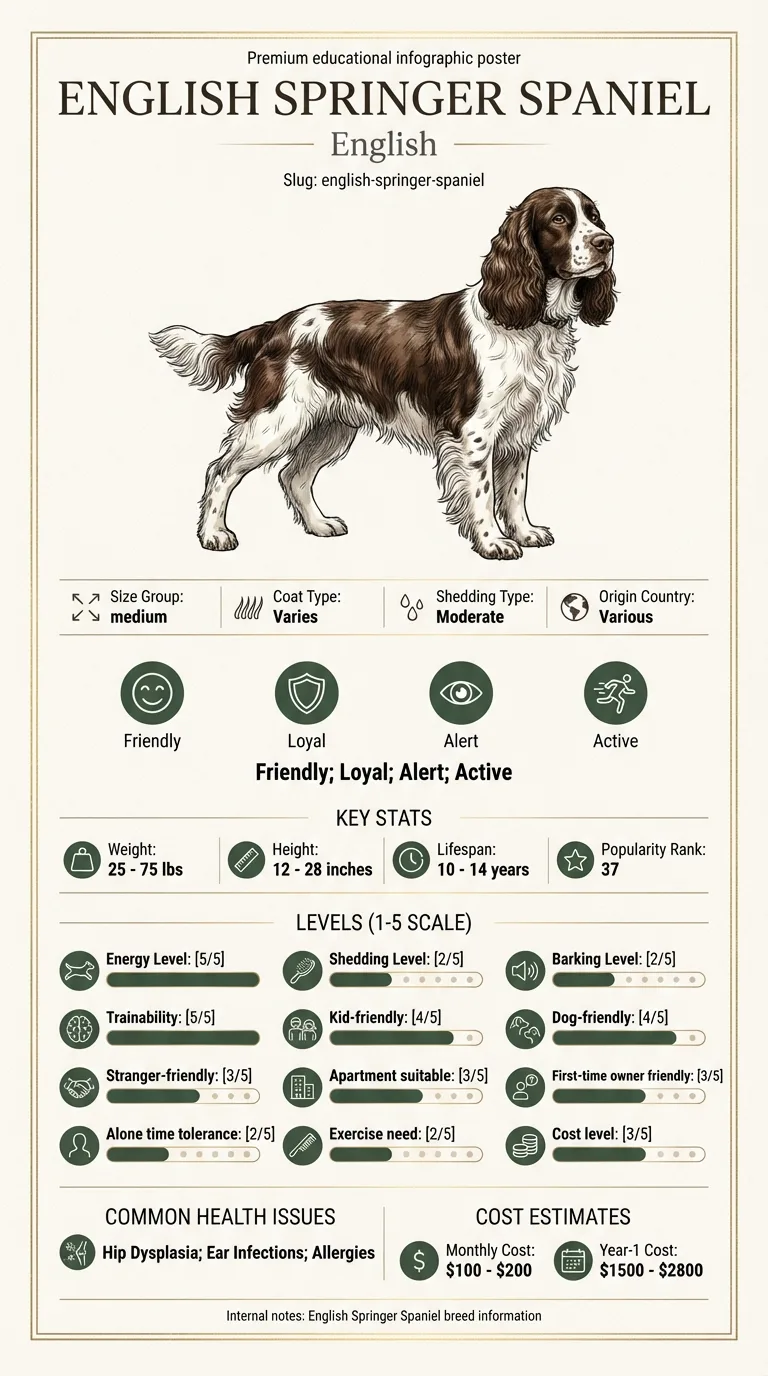
Understanding English Springer Spaniel Allergic Reactions infographic

Many dog owners, especially first-time pet parents, may struggle with understanding and addressing these allergic reactions. If your English Springer Spaniel is frequently scratching or has recurring infections, this information is crucial for you.

Important reminder

This guide is not medical advice. If your dog shows pain, sudden behavior change, or worsening symptoms, consult a licensed veterinarian.

Some links may be affiliate links. We may earn a commission at no extra cost to you. We only suggest products we believe are helpful for dog owners.

What this problem looks like

English Springer Spaniel allergic reactions can manifest as skin irritations, itching, and gastrointestinal issues. These reactions often lead to discomfort and can affect your dog's quality of life. Daily, you might notice your dog scratching more than usual or experiencing digestive upset after eating certain foods.

Common triggers

  • Environmental allergens like pollen, dust mites, and mold
  • Food allergies, particularly to common ingredients like chicken or beef
  • Flea bites, which can trigger intense allergic responses

Allergic reactions in English Springer Spaniels are quite common, with many experiencing some form of allergy during their lifetime. It's reported that these dogs have a significantly higher risk of allergies, contributing to a noticeable percentage of health issues for the breed.

Why this happens

Breed factors

English Springer Spaniels can be prone to allergies due to their genetic makeup. Common issues include sensitivities to specific foods, pollen, dust mites, and certain materials. Their active and outdoorsy nature also increases exposure to allergens.

Environment factors

Environmental factors play a significant role in allergic reactions. Changes in diet, exposure to chemicals in cleaning products, or even seasonal pollen can trigger symptoms. Homes with poor ventilation and high dust levels can exacerbate these issues.

What you can try

At-home strategies

  • Monitor your dog's diet for any changes that might lead to allergies. Keep a food diary to track what they eat and any reactions they have.
  • Regularly bathe your English Springer Spaniel with hypoallergenic shampoo to help remove allergens from their coat. This can be done every 4-6 weeks.
  • Clean your home frequently to minimize dust and allergens. Vacuum carpets and upholstery and consider using air purifiers to improve air quality.
  • Consult with your vet about using antihistamines or other medications to manage symptoms, if recommended.

When to consider a trainer

If your dog's allergic reactions lead to behavioral issues such as anxiety or aggression, a trainer experienced with these problems can help. They can provide strategies to manage anxiety or fear responses related to allergens.

When to talk to your vet

If your English Springer Spaniel shows severe allergic reactions, such as difficulty breathing, excessive itching, or swelling, contact your vet immediately. Additionally, if symptoms persist despite home remedies, a vet can help identify the specific allergens and recommend suitable treatments.

Realistic expectations

You can expect to see improvements in your English Springer Spaniel's allergic reactions within 4 to 8 weeks of implementing changes.

Success means your dog experiences fewer allergy symptoms, such as itching or skin irritation, and you have a better understanding of their triggers.

Mistakes that make this worse

To effectively manage English Springer Spaniel allergic reactions, avoiding common mistakes is essential. Here are some behaviors that can inadvertently make the situation worse, along with safer alternatives.

  • Ignoring symptoms: Some owners dismiss minor allergic reactions, thinking they will resolve on their own. Instead, keep a close eye on your dog's symptoms and consult a vet if they persist.
  • Delayed veterinary care: Waiting too long to seek help can lead to worsening conditions. If your dog shows signs of allergies, like itching or swelling, schedule an appointment promptly.
  • Inconsistent diet: Sudden changes in your dog's food or treats can trigger allergic reactions. Stick to a consistent diet and introduce new foods slowly, monitoring for any adverse effects.
  • Over-bathing: Bathing your English Springer Spaniel too often can strip their coat of natural oils, leading to skin irritation. Bathe them only when necessary, and use vet-recommended shampoos.
  • Neglecting allergens in the home: Not cleaning your home regularly can allow allergens to build up. Regularly vacuum and wash your dog's bedding to reduce exposure to dust and pollen.
  • Ignoring environmental factors: Some owners may overlook outdoor allergens like pollen or dust. Pay attention to pollen counts and limit outdoor time during high allergy seasons.
  • Using human medications: Some owners may try giving their dogs human allergy medications without vet approval. Always consult your vet before administering any medication to ensure it's safe.

When English Springer Spaniel Allergic Reactions Are an Emergency

Not all allergic reactions in your English Springer Spaniel require immediate vet attention. However, some signs can be serious and need urgent care. If your dog exhibits symptoms like swelling of the face or throat, difficulty breathing, or severe vomiting, these are red flags. Call your vet or an emergency animal hospital right away.

On the other hand, mild allergic reactions can often be managed at home. Symptoms such as itching, sneezing, or mild gastrointestinal upset may not require immediate action. Monitor your dog’s condition and consider keeping a checklist of symptoms, treatments tried, and any changes in behavior. If symptoms persist or worsen, consult your vet for guidance.

Remember, when in doubt, it’s always better to err on the side of caution. Allergies can escalate, and what seems mild could develop into a more serious issue. Keeping your vet’s contact information handy can save valuable time in an emergency.

Understanding English Springer Spaniel Allergic Reactions - When English Springer Spaniel Allergic Reactions Are an Emergency

Navigating Allergies with Max, the English Springer Spaniel

When Lisa adopted Max, her English Springer Spaniel, she quickly noticed he was scratching more than usual. After a vet visit, Lisa learned that Max had allergies, which could be triggered by food, pollen, or dust. Determined to help him, she started an elimination diet to identify food allergies and began regular cleaning routines to reduce dust in their home. Over time, she also learned to recognize seasonal triggers. After a few weeks, Max's scratching decreased significantly, and he seemed much happier.

Key takeaway: With patience and the right approach, you can manage your English Springer Spaniel's allergic reactions effectively.

Frequently asked questions

Why does my English Springer Spaniel have allergic reactions?

English Springer Spaniels can have allergic reactions due to various factors, including environmental allergens like pollen, dust mites, or food ingredients. It’s essential to observe your dog for symptoms like itching, redness, or gastrointestinal upset. Consider consulting your vet for specific allergy testing.

How to stop English Springer Spaniel allergic reactions?

To manage allergic reactions in your English Springer Spaniel, start by identifying and avoiding known allergens. Regular baths with hypoallergenic shampoo can help soothe the skin. Additionally, your vet may recommend medications or dietary changes to help alleviate symptoms.

What are common symptoms of allergic reactions in English Springer Spaniels?

Common symptoms include excessive itching, redness of the skin, ear infections, and gastrointestinal issues like vomiting or diarrhea. If you notice any of these signs, it’s crucial to consult your veterinarian for proper diagnosis and treatment options.

Can food allergies cause reactions in English Springer Spaniels?

Yes, food allergies can lead to allergic reactions in English Springer Spaniels. Ingredients like chicken, beef, or grains are common culprits. To determine if food is the issue, consider an elimination diet under your vet's guidance.

Are there specific treatments for English Springer Spaniel allergic reactions?

Treatments may include antihistamines, corticosteroids, or topical treatments to relieve itching. In some cases, immunotherapy may be recommended. Always discuss potential treatment options with your veterinarian to find the best approach for your dog.

What are common allergens for English Springer Spaniels?

Common allergens for English Springer Spaniels include pollen, dust mites, mold, and certain foods. If you notice signs of allergic reactions, consider consulting a vet to identify specific triggers.

How can I tell if my English Springer Spaniel has an allergy or another issue?

Signs of allergies in English Springer Spaniels can include itching, redness, or gastrointestinal upset. If your dog exhibits these symptoms, it's essential to consult your veterinarian for a proper diagnosis.

Are there specific treatments for older English Springer Spaniels with allergies?

Older English Springer Spaniels may require tailored treatments for allergies, such as specialized diets or medications. Always consult your vet to determine the best course of action for your senior dog.

What should I do if my English Springer Spaniel experiences a severe allergic reaction?

If your English Springer Spaniel has a severe allergic reaction, such as difficulty breathing or swelling, seek emergency veterinary care immediately. Quick intervention is crucial for their safety.

Can English Springer Spaniel allergic reactions be managed through training?

While training can help manage some behaviors related to allergies, it is not a substitute for medical treatment. Focus on working with your vet to address the underlying causes of allergic reactions.

Quick answers

View more answers
Behavior

What are some quick tips for managing allergic reactions in English Springer Spaniels?

Keep your home free from dust and allergens, and bathe your dog regularly to remove irritants. Consult your vet for potential allergy testing and medications to help manage symptoms.

Living

How often should I bathe my English Springer Spaniel for allergies?

Bathing your English Springer Spaniel once every 2-4 weeks can help reduce allergens on their skin. Use a gentle, hypoallergenic shampoo.

Health

Are there specific foods to avoid for English Springer Spaniel allergies?

Common allergens include chicken, beef, and wheat. Consult your vet for a tailored diet plan to avoid triggers and manage allergies.

Health

Can I use over-the-counter medications for my dog's allergies?

Some over-the-counter antihistamines may be safe for dogs, but it's crucial to consult your vet for proper dosage and recommendations.

Related DogBreedCompass guides

  • English Springer Spaniel allergic reactions trainingLearn more about specific training techniques to manage allergic reactions in your English Springer Spaniel.
  • English Springer Spaniel separation anxiety guideUnderstand how separation anxiety may affect your English Springer Spaniel and contribute to allergic reactions.
  • English Springer Spaniel behavior problemsExplore general behavior problems that can impact your dog's health and happiness.
  • English Springer Spaniel cost breakdownGet insights on costs associated with owning an English Springer Spaniel, including potential allergy-related expenses.
  • Why does my English Springer Spaniel have allergic reactions?Find out why your English Springer Spaniel may be experiencing allergic reactions and how to address them.

Related guides