Health
What are quick tips for managing English Springer Spaniel heart conditions?
Focus on a healthy diet, regular vet check-ups, and controlled exercise. Avoid high-stress situations to keep your dog calm.

Quick answer
What are quick tips for managing English Springer Spaniel heart conditions?
Focus on a healthy diet, regular vet check-ups, and controlled exercise. Avoid high-stress situations to keep your dog calm.
English Springer Spaniels can face serious heart conditions that affect their quality of life.
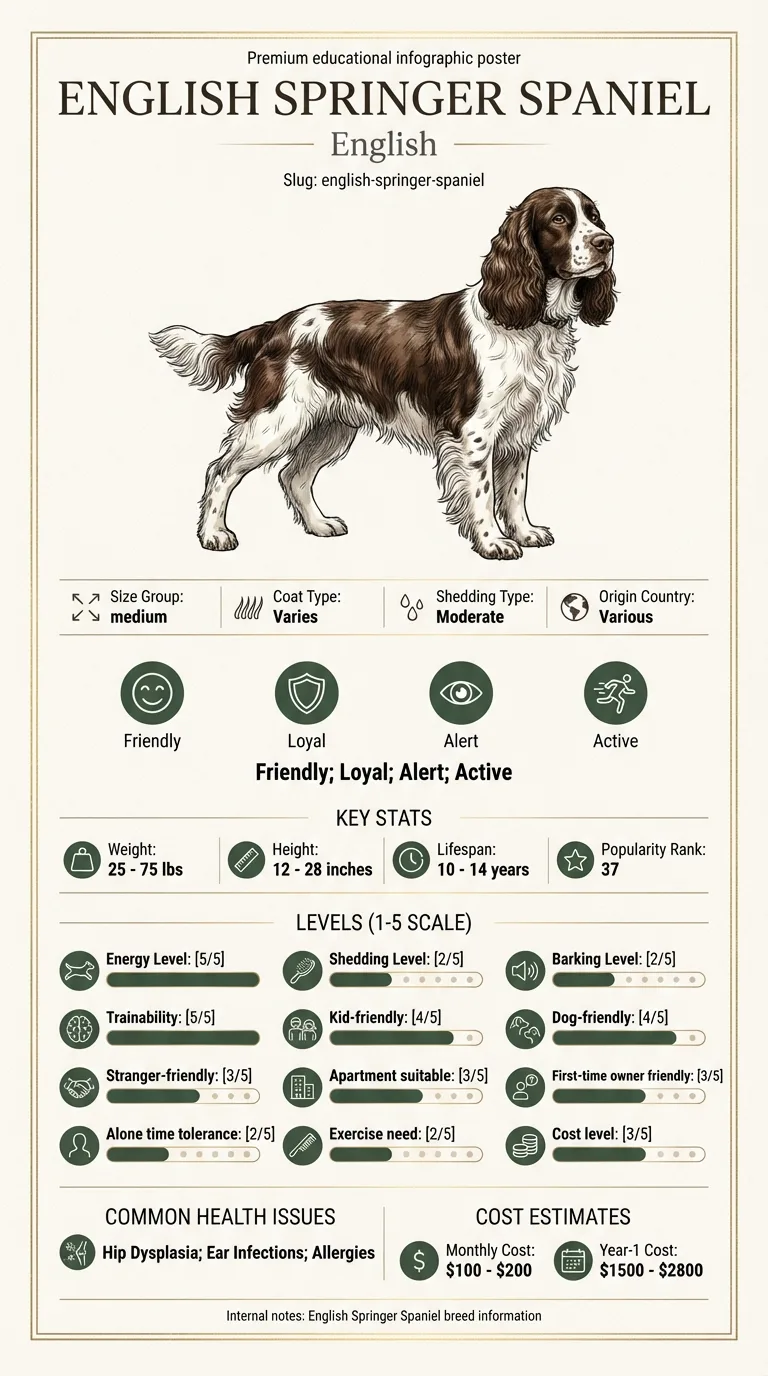
Many English Springer Spaniel owners, especially first-time pet parents, may find themselves overwhelmed by potential health concerns. Those with busy lifestyles may struggle to spot early signs of heart conditions, leading to delayed care.
This guide is not medical advice. If your dog shows pain, sudden behavior change, or worsening symptoms, consult a licensed veterinarian.
Some links may be affiliate links. We may earn a commission at no extra cost to you. We only suggest products we believe are helpful for dog owners.
We research and check what we publish, but we do not warrant that any figure, date, price, or statement is accurate, complete, or current, and we accept no liability for any loss, cost, injury, or other harm arising from the use of this site. Use it as one reference among several. You remain responsible for your own decisions and for your dog's care - confirm anything that matters with a licensed veterinarian or another qualified professional before you act on it. Full disclaimer.
Check this first
Recognizing when your English Springer Spaniel's heart condition is an emergency can save their life. Watch for these red-flag signs: sudden difficulty breathing, collapsing, extreme lethargy, or bluish gums. If your dog shows any of these symptoms, call your vet immediately.
In less severe cases, there are signs you can monitor at home. Look for mild coughing, occasional fatigue after exercise, or changes in appetite. These signs can often be managed with a plan, but it's essential to consult your vet to establish a monitoring strategy. Regular check-ups can help catch potential issues before they escalate.
Remember, if you’re ever in doubt, it’s better to err on the side of caution and seek veterinary advice. Your English Springer Spaniel deserves the best care!
If any of these apply, call your vet or an emergency clinic now. The rest of this page is for the cases that are not an emergency.
English Springer Spaniel heart conditions can lead to serious health issues. These conditions may manifest as lethargy, coughing, or difficulty breathing. If your English is showing signs of distress, it's important to pay attention and consult a vet.
Heart conditions are relatively common in English Springer Spaniels, especially as they age. Regular check-ups can help catch these issues early.
English Springer Spaniels can be predisposed to certain heart conditions due to genetic factors. These medium-sized dogs may inherit heart issues from their lineage, particularly conditions like dilated cardiomyopathy. It's important to know that not every dog will develop these issues, but the risk is higher in some lines.
Environmental factors can also contribute to heart conditions. Poor diet, lack of exercise, and obesity can strain your dog's heart. Stressful living conditions or inadequate health care can further exacerbate these risks, making it crucial to maintain a healthy lifestyle for your dog.
Consult your vet if you notice symptoms like coughing, lethargy, or difficulty breathing. These could indicate heart issues. Regular check-ups are essential to monitor your dog's heart health, especially if they belong to a breed prone to heart conditions.
Avoiding certain behaviors can significantly help manage English Springer Spaniel heart conditions. Here are common mistakes to watch out for:
Start here: English Springer Spaniel Most Common Genetic Disorders: Screening
See all English Springer Spaniel health problems, which breeds are prone to heart conditions, or the full English Springer Spaniel breed guide for temperament, exercise needs and ownership costs.
Addressing heart conditions in your English Springer Spaniel can take several months. Regular vet visits and monitoring will be essential during this time.
Success means your dog shows improved health and vitality, with fewer symptoms and better overall quality of life.
Sarah, a devoted owner of Bella, her English Springer Spaniel, noticed Bella was lethargic and had trouble keeping up during walks. After a vet visit, they discovered Bella had a mild heart condition. Initially anxious about the diagnosis, Sarah committed to a treatment plan that included medication and adjusted exercise routines. Over the next few months, with consistent vet check-ups and care, Bella gradually regained her energy. Now, she joyfully trots alongside Sarah during their daily walks, bringing back the playful spirit they both missed.
Key takeaway: With the right treatment and dedication, managing heart conditions in English Springer Spaniels can lead to a healthier and happier life.
English Springer Spaniels can develop heart conditions due to genetic predispositions, age, and lifestyle factors. Regular vet check-ups are essential for early detection. If you notice any unusual behavior or symptoms, consult your vet promptly.
To help prevent heart conditions, maintain a healthy diet and ensure regular exercise for your English Springer Spaniel. Monitoring their weight and avoiding obesity are crucial. Regular vet visits can also help catch potential issues early.
Signs of heart conditions may include coughing, fatigue, difficulty breathing, or a decrease in exercise tolerance. If your dog exhibits these symptoms, it's important to seek veterinary advice immediately for proper diagnosis and treatment.
Treatment options may include medication, dietary changes, and in some cases, surgery. Your vet will tailor a treatment plan based on the specific condition and severity. Consistent follow-up is important to monitor your dog's health.
While training won't cure heart conditions, it can help manage your dog's overall behavior and stress levels. Incorporating gentle exercises and mental stimulation can contribute positively to their well-being. Always consult your vet before starting any new training regimen.
Yes, older English Springer Spaniels are more prone to heart conditions as they age. Regular vet check-ups become crucial during their senior years to catch any potential issues early. Keeping an eye on their energy levels and behavior changes can also help.
Heart conditions can limit your English Springer Spaniel's ability to exercise. It's important to adjust their activity level based on your vet's advice to prevent overexertion. Gentle walks and low-impact activities can help maintain their health without straining their hearts.
Some heart conditions can be hereditary, particularly in breeds like the English Springer Spaniel. Responsible breeding practices can reduce the risk. It's a good idea to ask breeders about the health history of the puppy's parents.
Treatment options vary based on the specific heart condition but may include medications, lifestyle changes, or surgery. Early diagnosis is vital for the best outcomes, so regular vet visits are essential for monitoring heart health.
Focus on a healthy diet, regular vet check-ups, and controlled exercise. Avoid high-stress situations to keep your dog calm.
Yes, a vet-recommended diet low in sodium and rich in omega fatty acids can support heart health. Always consult with your vet for specific dietary needs.
Moderate exercise is crucial, but it should be tailored to your dog's condition. Short walks and gentle play can help maintain their health without overexertion.
Look for changes in energy levels, breathing patterns, and appetite. Any noticeable decline should prompt a vet visit.
A one-page prep sheet for this condition: the signs, the questions to ask, what to get priced. Unlocks here.
You get: Vet visit prep sheet
No spam. One-click unsubscribe. See our privacy policy.
Preview page 1 before you decide.