Behavior
How to stop English Springer Spaniel anxiety?
To stop English Springer Spaniel anxiety, establish a consistent routine and provide plenty of exercise and mental stimulation.

Quick answer
How to stop English Springer Spaniel anxiety?
To stop English Springer Spaniel anxiety, establish a consistent routine and provide plenty of exercise and mental stimulation.
English Springer Spaniel anxiety can affect your dog's behavior and overall well-being.
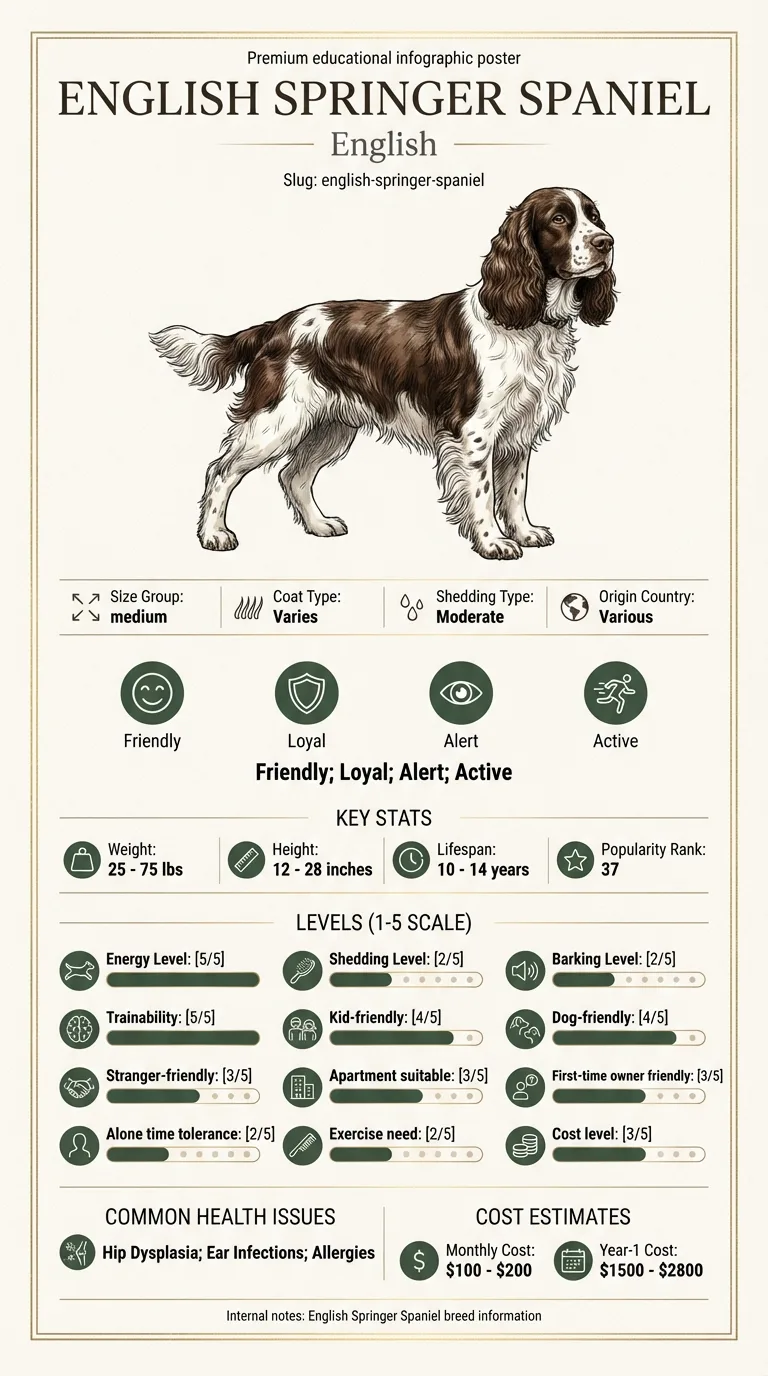
This guide is for dog owners who have English Springer Spaniels experiencing anxiety, and those wanting to learn effective training methods to help their furry friends.
English Springer Spaniel anxiety can manifest in various ways, impacting their daily life and behavior. You might notice your dog becoming overly clingy, pacing, or showing signs of distress when left alone. This anxiety can lead to destructive behaviors, making daily routines challenging for both you and your pet.
If your English Springer Spaniel anxiety persists despite your efforts, consider enrolling them in a training program that focuses on anxiety reduction techniques. A certified dog trainer can guide you and your dog through effective strategies.
If your dog shows severe anxiety symptoms, such as destructive behavior or excessive barking, consult a vet or animal behaviorist. They can assess your dog's needs and recommend appropriate treatments, including medication if necessary.
There are various tools and products that can assist with English Springer Spaniel anxiety management. These items aim to create a calming environment and offer support during stressful times.
Managing English Springer Spaniel anxiety often requires some changes to your daily routine. By adjusting your schedule, you can create a more predictable environment for your dog. This helps reduce anxiety triggers and fosters a sense of security.
First, consider establishing a consistent daily schedule. Regular feeding, walking, and playtimes help your dog know what to expect. This routine can ease anxiety, especially during alone time.
Aim for at least one hour of exercise each day. Activities like fetch or long walks can burn off excess energy and improve your dog's mood.
Next, adjust alone-time windows gradually. If your English Springer Spaniel struggles with separation anxiety, start by leaving them alone for short periods. Gradually increase this time as they become more comfortable being on their own.
You might also try leaving them with a favorite toy or treat to keep them occupied.
Additionally, assess your household routines. Create a calm environment by minimizing loud noises and distractions. Consider using calming music or a quiet space where your dog can retreat when feeling anxious.
Positive reinforcement training can also help your dog feel more secure and confident.
Incorporating these lifestyle adjustments will take time and patience. But with consistent effort, you can greatly reduce your English Springer Spaniel's anxiety and improve their quality of life.
Recognizing progress with English Springer Spaniel anxiety can be a game-changer for you and your pup. Small "micro-wins" are signs that your efforts are paying off. These might include your dog being able to stay calm during short absences, showing less destructive behavior, or even just being more relaxed during car rides.
Celebrate these moments! They indicate that your training is working.

It’s important to remember that setbacks are a normal part of the journey. You might notice your English Springer Spaniel reverting to anxious behaviors during stressful situations, like thunderstorms or when there are changes in your routine. If these moments happen, don't get discouraged.
Instead, use them as opportunities to reinforce your training and build your dog's confidence.

If you aren’t seeing any signs of improvement over several weeks, it might be time to reassess your strategy. Consider consulting a professional trainer who specializes in anxiety issues. They can offer tailored advice and may suggest additional techniques or tools to help your English Springer Spaniel feel more secure.

When Sarah adopted Daisy, her English Springer Spaniel, she quickly noticed that Daisy was anxious during thunderstorms. The dog would shake, whine, and hide under furniture. To help, Sarah created a cozy den for Daisy with her favorite blankets and toys. She also tried playing soothing music during storms, but the anxiety persisted. Eventually, Sarah consulted a dog trainer who specialized in anxiety issues. They worked on desensitization techniques, gradually exposing Daisy to recorded storm sounds at a low volume while rewarding calm behavior. Over time, Daisy became less fearful and learned to stay relaxed during real storms. Now, Sarah can confidently weather any storm with Daisy by her side.
Key takeaway: Creating a safe space and seeking professional guidance can significantly improve English Springer Spaniel anxiety.
English Springer Spaniels can experience anxiety due to various reasons, including changes in their environment or routine. They are social dogs and may feel stressed when left alone for long periods. Identifying triggers in their surroundings can help you manage their anxiety effectively.
Signs of anxiety in an English Springer Spaniel can include excessive barking, pacing, or destructive behaviors. They might also show signs of clinginess or reluctance to engage in activities they usually enjoy. Observing these behaviors will help you understand their emotional state.
To help manage English Springer Spaniel anxiety, establish a consistent routine and provide a safe space for your dog. Gradual desensitization to triggers, along with positive reinforcement training, can also be effective. Consider consulting a professional trainer for tailored strategies.
Yes, training can significantly improve anxiety levels in English Springer Spaniels. Techniques like obedience training and behavior modification can teach your dog coping skills. Regular exercise and mental stimulation are also crucial in reducing anxiety.
There are various products designed to help manage anxiety in dogs, such as anxiety wraps, calming treats, and pheromone diffusers. Always consult with your vet before introducing new products to ensure they are safe and suitable for your dog.
If your English Springer Spaniel's anxiety is severe or persistent despite your efforts, it's time to seek professional help. A veterinarian or a dog behaviorist can provide guidance and may recommend training programs or medications to help manage their anxiety.
If your English Springer Spaniel experiences anxiety when left alone, start with gradual desensitization. Begin by leaving them alone for short periods and gradually increase the time. Consider providing them with a safe space, interactive toys, or a comforting item to ease their stress.
Sudden anxiety in older English Springer Spaniels can be caused by changes in their environment, health issues, or cognitive decline. It's essential to consult your vet to rule out any medical conditions and to discuss behavior modification strategies that may help.
To help your English Springer Spaniel with anxiety during travel, make sure they are comfortable in the car with a secure space. Take breaks during long trips, and bring familiar items like their blanket or toys. Gradual exposure to car rides can also help them adjust.
Having multiple English Springer Spaniels can sometimes help with anxiety, as they may provide companionship and reduce feelings of loneliness. However, it's crucial to monitor their interactions and ensure each dog receives individual attention and training to address their specific anxiety issues.
Signs of anxiety in English Springer Spaniels may include excessive barking, destructive behavior, pacing, or hiding. They might also display changes in appetite or clinginess. If you notice these behaviors, consider consulting a trainer or a vet for guidance on how to help.
To stop English Springer Spaniel anxiety, establish a consistent routine and provide plenty of exercise and mental stimulation.
Use positive reinforcement and gradual desensitization techniques to train your English Springer Spaniel and reduce their anxiety.
Create a safe space for your dog with comforting items and consider using anxiety wraps or calming music to ease their fear during thunderstorms.
Certain calming treats with natural ingredients like chamomile or valerian root can help soothe anxiety in your English Springer Spaniel.
Start by leaving your English Springer Spaniel alone for short periods and gradually increase the time to help them adapt and reduce separation anxiety.
Anxiety and pain look alike from the outside. Get the prep sheet for this breed's separation-anxiety page and take it to the vet.
You get: Vet visit prep sheet
No spam. One-click unsubscribe. See our privacy policy.
Preview page 1 before you decide.
This guide is not medical advice. If your dog shows pain, sudden behavior change, or worsening symptoms, consult a licensed veterinarian.
Some links may be affiliate links. We may earn a commission at no extra cost to you. We only suggest products we believe are helpful for dog owners.
We research and check what we publish, but we do not warrant that any figure, date, price, or statement is accurate, complete, or current, and we accept no liability for any loss, cost, injury, or other harm arising from the use of this site. Use it as one reference among several. You remain responsible for your own decisions and for your dog's care - confirm anything that matters with a licensed veterinarian or another qualified professional before you act on it. Full disclaimer.
Not sure which breed is right for you? Take our 2-minute quiz to find out.
Take the quiz