Behavior
What are quick tips for managing IVDD in English Springer Spaniels?
To manage intervertebral disc disease (IVDD) in your English Springer Spaniel, maintain a healthy weight, provide low-impact exercise, and avoid rough play.

Quick answer
What are quick tips for managing IVDD in English Springer Spaniels?
To manage intervertebral disc disease (IVDD) in your English Springer Spaniel, maintain a healthy weight, provide low-impact exercise, and avoid rough play.
English Springer Spaniel intervertebral disc disease (IVDD) can lead to serious back problems, impacting your dog's mobility and comfort.
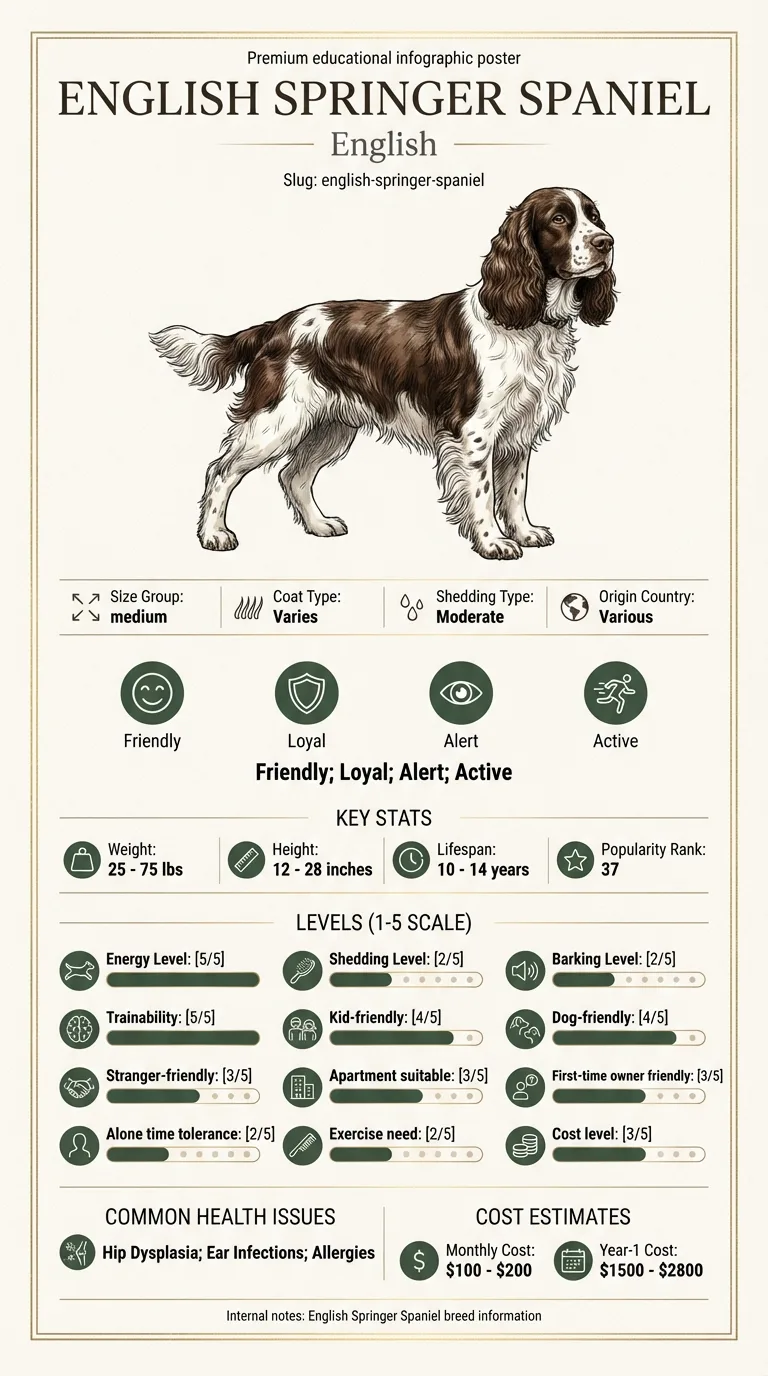
Owners of English Springer Spaniels, especially those with active lifestyles, often face this challenge. Additionally, first-time dog owners may find it difficult to identify and manage the symptoms of IVDD.
This guide is not medical advice. If your dog shows pain, sudden behavior change, or worsening symptoms, consult a licensed veterinarian.
Some links may be affiliate links. We may earn a commission at no extra cost to you. We only suggest products we believe are helpful for dog owners.
We research and check what we publish, but we do not warrant that any figure, date, price, or statement is accurate, complete, or current, and we accept no liability for any loss, cost, injury, or other harm arising from the use of this site. Use it as one reference among several. You remain responsible for your own decisions and for your dog's care - confirm anything that matters with a licensed veterinarian or another qualified professional before you act on it. Full disclaimer.
Check this first
Recognizing when your English Springer Spaniel's intervertebral disc disease (IVDD) is an emergency is crucial. Certain signs indicate that immediate veterinary attention is necessary. If your dog shows severe pain, such as crying out or flinching when touched, or if they are unable to walk or stand, these are red flags. Other urgent signs include loss of bladder or bowel control, or if your dog is dragging their back legs. These symptoms suggest that the condition may be worsening and requires prompt medical intervention.
On the other hand, there are mild cases of IVDD that can be monitored at home. If your English Springer Spaniel is showing slight reluctance to jump or play but is still able to walk normally, you may not need to rush to the vet. In these cases, a careful watch-and-wait approach may be appropriate. Keeping your dog calm and limiting their activity can help manage symptoms. However, always consult your veterinarian for personalized advice and to develop a monitoring plan.
Overall, knowing the difference between an emergency and a manageable case can save your dog's health. If you're ever unsure, it's always safer to call your vet for guidance. They can provide you with the best course of action tailored to your dog’s specific situation.
If any of these apply, call your vet or an emergency clinic now. The rest of this page is for the cases that are not an emergency.
English Springer Spaniel intervertebral disc disease (IVDD) can be a challenging issue for owners. This condition affects the spine, leading to pain, mobility issues, and sometimes paralysis. Daily life may involve watching your dog struggle to jump or play, and even basic activities can become difficult.
Intervertebral disc disease is fairly common in English Springer Spaniels, especially as they age. Many owners report seeing symptoms in their dogs, making awareness and early intervention crucial for managing this condition.
English Springer Spaniels are prone to intervertebral disc disease (IVDD) due to their medium size and active nature. Their high energy levels can lead to rough play and jumping, increasing the risk of spinal injuries. Additionally, certain genetic factors may make them more susceptible to disc issues.
Environmental factors also play a role. If your English is frequently on slippery floors or lacks a safe space to play, this can lead to accidents and injuries. Proper exercise and a safe home environment can help mitigate these risks.
If you notice any signs of pain, such as difficulty jumping, reluctance to walk, or changes in behavior, it's essential to talk to your vet. They can assess your dog's condition and recommend appropriate treatment options.
Avoiding common mistakes can help manage your English Springer Spaniel's intervertebral disc disease (IVDD) more effectively. Here are some pitfalls to watch out for.
Start here: English Springer Spaniel Most Common Genetic Disorders: Screening
See all English Springer Spaniel health problems, which breeds are prone to intervertebral disc disease ivdd, or the full English Springer Spaniel breed guide for temperament, exercise needs and ownership costs.
It can take several weeks to months to manage symptoms and see improvement in your English Springer Spaniel's condition.
Success looks like your dog being more comfortable, showing reduced signs of pain, and regaining some mobility. Regular vet check-ups and following a tailored care plan will help track progress.
When Sarah adopted Max, her English Springer Spaniel, he was full of energy and loved to chase after balls. However, after a few months, she noticed he was hesitant to jump or run. A visit to the vet confirmed that Max had intervertebral disc disease (IVDD). Initially overwhelmed, Sarah learned to manage Max's condition with prescribed medication, physical therapy, and weight management. She created a comfortable space for him to rest and slowly introduced gentle exercises. Over time, Max began to show signs of improvement, enjoying short walks and playing again, although with more caution than before.
Key takeaway: Managing IVDD in English Springer Spaniels requires patience, proper care, and a commitment to regular vet visits to ensure your dog remains comfortable and active.
Intervertebral disc disease (IVDD) in English Springer Spaniels can be caused by genetics, aging, or repetitive strain. Their medium size and activity level make them prone to back and spine issues. Regular check-ups with a vet can help catch problems early.
To help prevent intervertebral disc disease (IVDD), maintain a healthy weight and provide low-impact exercise. Avoid high jumps or rough play that could strain their spine. Regular vet visits are crucial for monitoring their health.
Signs of intervertebral disc disease (IVDD) include difficulty walking, reluctance to move, or signs of pain when touched along the back. If you notice any of these symptoms, consult your vet immediately for a proper diagnosis.
Training for an English Springer Spaniel with IVDD should focus on gentle obedience commands and controlled movements. Avoid vigorous activities and stick to low-impact training that strengthens their core without putting stress on their spine.
Treatment for intervertebral disc disease (IVDD) can include medications for pain relief, physical therapy, or in severe cases, surgery. Your vet will recommend the best course of action based on your dog's specific condition.
Support your English Springer Spaniel's recovery by providing a comfortable, quiet space for rest. Follow your vet's advice on exercise and medication, and consider using ramps to help them avoid jumping.
Early signs of English Springer Spaniel intervertebral disc disease (IVDD) can include difficulty jumping, reluctance to play, or changes in walking. You might also notice your dog showing signs of pain, such as whining when moving. If you see these symptoms, it's best to consult your vet as soon as possible.
Yes, older English Springer Spaniels can experience more severe effects from intervertebral disc disease (IVDD). As dogs age, their spinal discs can degenerate, increasing the risk of injury. Regular check-ups with a vet can help monitor their spine health and address any issues early.
Managing English Springer Spaniel intervertebral disc disease (IVDD) at home involves providing a comfortable resting area and limiting strenuous activities. Gentle exercises, like short walks, can help maintain muscle tone. Always consult your vet for personalized advice on managing your dog's condition.
Not always. Surgery for English Springer Spaniel intervertebral disc disease (IVDD) is often considered when there is severe pain or loss of mobility. Many dogs can benefit from conservative treatments, such as medications or physical therapy, so it's essential to discuss options with your vet.
While not all cases of intervertebral disc disease (IVDD) can be prevented, maintaining a healthy weight and providing proper exercise can reduce the risk. Additionally, avoiding activities that strain the back, like jumping from high places, can help. Regular vet check-ups are also crucial for early detection.
To manage intervertebral disc disease (IVDD) in your English Springer Spaniel, maintain a healthy weight, provide low-impact exercise, and avoid rough play.
Treatment for intervertebral disc disease (IVDD) can range from $500 for conservative management to over $5,000 for surgery, depending on severity.
Yes, besides IVDD, English Springer Spaniels can experience hip dysplasia and ear infections, so regular vet check-ups are important.
Yes, but focus on gentle commands and controlled movements to avoid putting strain on their back.
A one-page prep sheet for this condition: the signs, the questions to ask, what to get priced. Unlocks here.
You get: Vet visit prep sheet
No spam. One-click unsubscribe. See our privacy policy.
Preview page 1 before you decide.