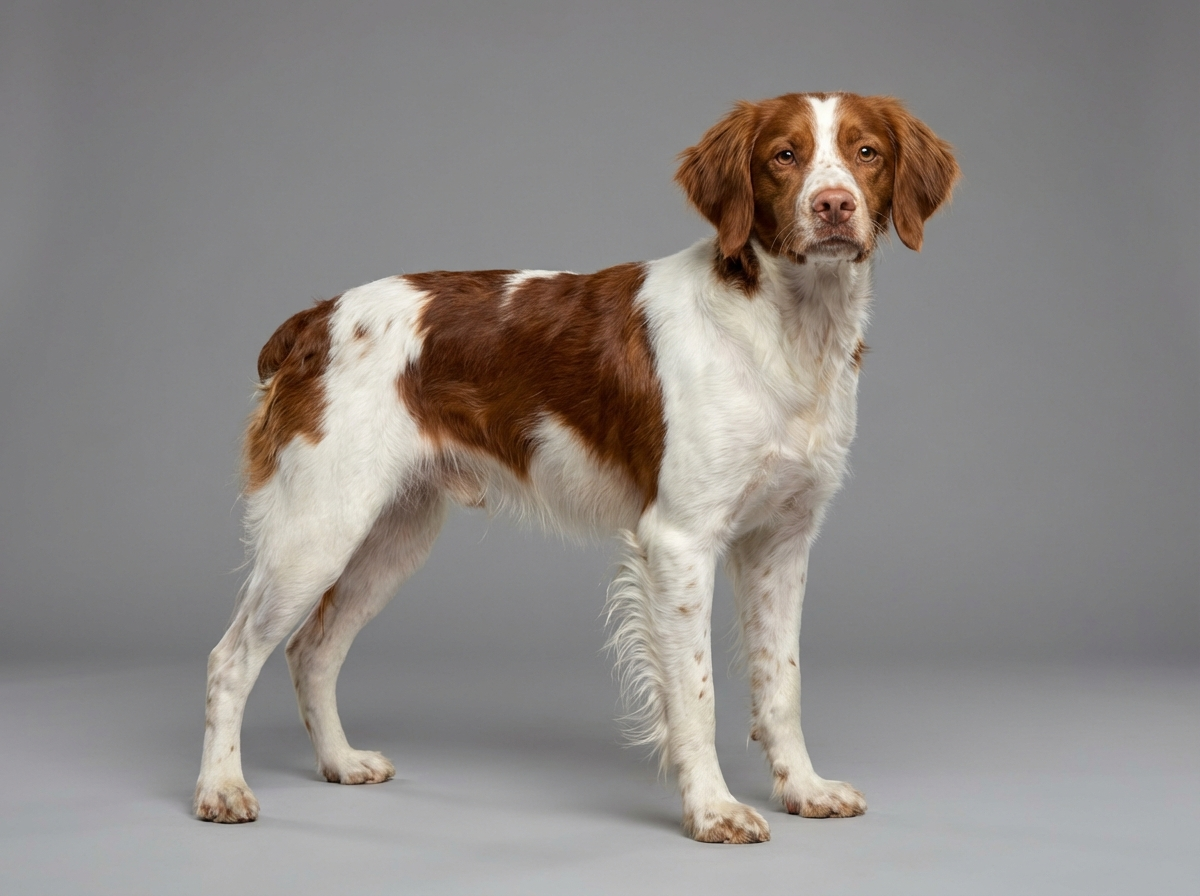
Health
What's the single most important sign of bloat to recognize?
A distended, hard abdomen combined with repeated unproductive retching. Together, these two signs mean go to an emergency vet immediately.

Quick answer
What's the single most important sign of bloat to recognize?
A distended, hard abdomen combined with repeated unproductive retching. Together, these two signs mean go to an emergency vet immediately.
Bloat doesn't give you a full day to decide what to do. It gives you a window measured in minutes to an hour or two before the situation becomes critical.
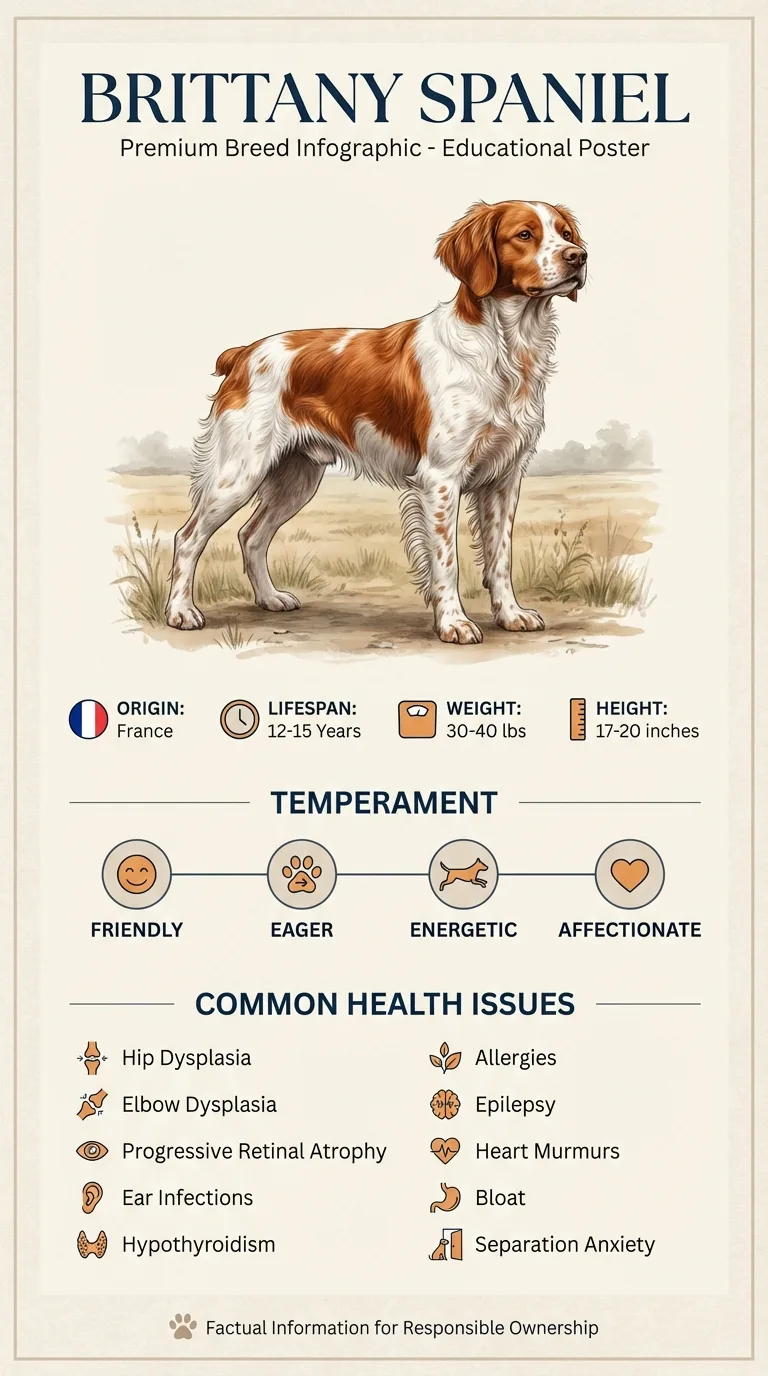
Every Brittany owner needs to know this, but it's especially urgent for owners who are away from home often, at field trials, hunting camps, or boarding situations, where a dog's distress might not be noticed as quickly as it would be on the living room couch.
This guide is not medical advice. If your dog shows pain, sudden behavior change, or worsening symptoms, consult a licensed veterinarian.
Some links may be affiliate links. We may earn a commission at no extra cost to you. We only suggest products we believe are helpful for dog owners.
We research and check what we publish, but we do not warrant that any figure, date, price, or statement is accurate, complete, or current, and we accept no liability for any loss, cost, injury, or other harm arising from the use of this site. Use it as one reference among several. You remain responsible for your own decisions and for your dog's care - confirm anything that matters with a licensed veterinarian or another qualified professional before you act on it. Full disclaimer.
Bloat is documented as a serious, life-threatening health concern for this breed, and recognizing it in the moment matters more than almost any other single piece of knowledge an owner can have. The condition can progress from first symptoms to critical within one to two hours, which makes fast recognition, not careful deliberation, the priority.
Bloat is uncommon on any single given day for any individual dog, but it's documented seriously enough as a breed concern, and severe enough in outcome, that every Brittany owner should be able to recognize the signs immediately rather than learning them for the first time during an actual emergency.
Bloat is listed among this breed's documented health concerns, meaning Brittanys carry a real background risk for this condition regardless of how carefully an owner manages prevention. Recognizing the signs quickly is the one factor entirely within an owner's control once the condition has started.
Stressful situations, being away from a familiar home environment such as at a hunting camp or trial, and any deviation from normal feeding and activity routines can all play a role in when bloat occurs, which is part of why away-from-home vigilance matters as much as at-home prevention.
There is no wait-and-see period for suspected bloat. A distended or hard abdomen combined with unproductive retching, restlessness, or drooling is an immediate emergency: go to the nearest emergency vet right away rather than calling first if the clinic is close, or call while already heading there.
See all Brittany health problems, which breeds are prone to bloat gdv, or the full Brittany breed guide for temperament, exercise needs and ownership costs.
If bloat is caught and treated immediately, dogs can recover well, though hospitalization typically lasts several days. Any delay in recognition and treatment measurably worsens the odds, which is the core reason this page exists.
Success here isn't preventing every case, since some risk is outside an owner's control. It's having the signs memorized well enough that you act within minutes rather than hours if the moment ever comes.
In bloat, the stomach fills with gas and distends, and in the more severe volvulus form, it also twists on itself. That twist cuts off blood flow to the stomach and can trap the spleen as well, while the swollen stomach presses on major blood vessels, reducing blood return to the heart.
This is why bloat can cause a dog to go into shock surprisingly fast: it isn't just stomach discomfort, it's a mechanical event that can shut down circulation to vital organs within a short window. Surgery to untwist the stomach and tack it in place is the only definitive treatment once volvulus has occurred, and every passing hour without treatment worsens the odds.
Any one of these signs on its own is worth an urgent call. Two or more together mean you should already be heading to an emergency vet.

Leah was at a weekend hunting camp with Copper, her four-year-old Brittany, when she noticed him pacing restlessly after dinner instead of settling into his usual crate routine. Within about twenty minutes, his sides looked visibly rounder, and he tried to vomit twice without bringing anything up. Leah had read about bloat symptoms months earlier and recognized the pattern immediately. She didn't wait to see if it would pass; she called the emergency vet number she'd saved for the area and started driving. By the time they arrived, Copper's abdomen was clearly distended, and x-rays confirmed volvulus. Because Leah acted within the first half hour of noticing symptoms, Copper made it into surgery quickly and recovered well over the following days. Her vet later told her that the speed of her response was likely a meaningful factor in how smoothly his surgery and recovery went.
Key takeaway: Recognizing bloat's early signs and acting immediately, rather than waiting to see if symptoms pass, is the single biggest factor an owner controls once the emergency has started.
The progression from first symptoms to a critical state can happen within one to two hours in severe cases. This is not a wait-until-morning condition; suspected bloat needs immediate emergency evaluation.
Bloat, or gastric dilatation, refers to the stomach filling with gas and distending. Volvulus is when the distended stomach also twists, which is the more severe and immediately life-threatening version of the condition.
No. A visibly distended, hard abdomen combined with unproductive retching should be treated as an emergency requiring immediate veterinary evaluation, since waiting risks the condition progressing to a point where survival odds drop significantly.
Vets typically take an x-ray to confirm whether the stomach has twisted, begin stabilizing the dog with IV fluids, and if volvulus is confirmed, move to emergency surgery to untwist the stomach and tack it in place to prevent recurrence.
Untreated volvulus is frequently fatal. Even with prompt surgery, outcomes depend heavily on how quickly treatment started, which is why recognizing symptoms immediately matters as much as anything else you can do.
Emergency GDV surgery, including diagnostics, hospitalization, and aftercare, is one of the more expensive emergency procedures in veterinary medicine, commonly running into several thousand dollars depending on complexity and location.
Without a gastropexy performed during surgery, recurrence is a real risk. The tacking procedure done during emergency surgery is specifically intended to prevent the stomach from twisting again in the future.
A distended, hard abdomen combined with repeated unproductive retching. Together, these two signs mean go to an emergency vet immediately.
Potentially as little as one to two hours before the condition becomes critical, so there is no safe waiting period once symptoms appear.
It's an emergency surgery requiring stabilization, imaging, and often overnight hospitalization, which together make it one of the costlier procedures in emergency veterinary care.
Training your dog to tolerate a calm belly check, and training yourself to recognize your dog's normal resting posture, helps you notice distension or distress sooner rather than later.
No. There is no safe at-home treatment for suspected bloat. Any delay spent trying home remedies reduces the time available for effective emergency treatment.
A one-page prep sheet for this condition: the signs, the questions to ask, what to get priced. Unlocks here.
You get: Vet visit prep sheet
No spam. One-click unsubscribe. See our privacy policy.
Preview page 1 before you decide.