Health
What triggers pancreatitis in dogs?
A high-fat meal, table scraps, or rich treats are the most commonly recognized triggers.

Quick answer
What triggers pancreatitis in dogs?
A high-fat meal, table scraps, or rich treats are the most commonly recognized triggers.
This is an acute, sudden-onset condition — not something that quietly builds for months the way some other conditions do.
Owners whose dog suddenly started vomiting, seemed painfully hunched, or lost interest in food after a high-fat meal, table scraps, or an unusually treat-heavy training session or event.
This guide is not medical advice. If your dog shows pain, sudden behavior change, or worsening symptoms, consult a licensed veterinarian.
Some links may be affiliate links. We may earn a commission at no extra cost to you. We only suggest products we believe are helpful for dog owners.
Pancreatitis is a sudden inflammation of the pancreas, most often triggered by a high-fat meal, table scraps, or a rich treat binge. This breed's high trainability often means frequent food-reward training, and total treat fat intake can creep up unnoticed, especially around competitions and training-heavy events, creating real opportunity for an episode even in an otherwise healthy, well-fed dog.
This isn't documented as a specific breed predisposition for Australian Shepherds, but pancreatitis occurs across the general dog population, and this breed's typically treat-heavy training lifestyle is a real, relevant contributing factor worth managing proactively.
There's no documented genetic predisposition specific to this breed. What the breed contributes is a lifestyle factor: very high trainability commonly leads to frequent food-reward training, creating more opportunity for fat intake to accumulate than in a less intensively trained dog.
A single high-fat meal, table scraps, or an unusually treat-heavy day (competitions, training seminars, holidays) are the most directly recognized environmental triggers for an acute episode.
Seek same-day veterinary care for sudden vomiting, a hunched or painful posture, loss of appetite, or abdominal pain, especially following a high-fat meal or treat binge. This is not a wait-and-see condition — prompt evaluation matters because severity can escalate quickly.
See all Australian Shepherd health problems, which breeds are prone to pancreatitis, or the full Australian Shepherd breed guide for temperament, exercise needs and ownership costs.
Mild episodes often improve within a few days of supportive veterinary care, including fluids and a bland, low-fat diet. More severe cases may require a longer hospital stay and closer monitoring for complications.
Success looks like prompt recognition and treatment of an acute episode, followed by adjusted treat and diet habits that reduce the odds of recurrence, rather than assuming one episode was simply bad luck with no lesson to apply going forward.
A high-drive, highly trainable dog like an Aussie is often worked with a steady stream of small food rewards, and that's genuinely effective training — but it also means total daily fat and calorie intake from treats can quietly stack up, especially around competitions, trials, or intensive training weekends where treat frequency spikes well above the everyday baseline. A single unusually rich meal, a raid on a training-treat bag, or a well-meaning bystander sneaking table scraps at an event can all trigger a sudden pancreatitis episode in a dog that's otherwise perfectly healthy.
This isn't a reason to stop treat-based training, which remains one of the most effective and humane methods available — it's a reason to be deliberate about what treats are made of and how much fat is accumulating across a busy training or competition day, rather than assuming 'it's just treats' means it doesn't add up.
Classic signs include sudden vomiting (sometimes repeated), a hunched or 'praying' posture with the front end down and rear end up, reluctance to lie down normally, abdominal pain when touched, loss of appetite, and sometimes diarrhea. Symptoms typically develop within hours of the triggering meal or event, not gradually over days.
Severity ranges widely, from a mild episode that resolves with supportive veterinary care over a few days, to a severe case that can become life-threatening, sometimes affecting other organs if it progresses untreated. Because that range exists and isn't obvious from symptoms alone at the outset, any suspected pancreatitis episode warrants same-day veterinary evaluation rather than a wait-and-see approach at home.

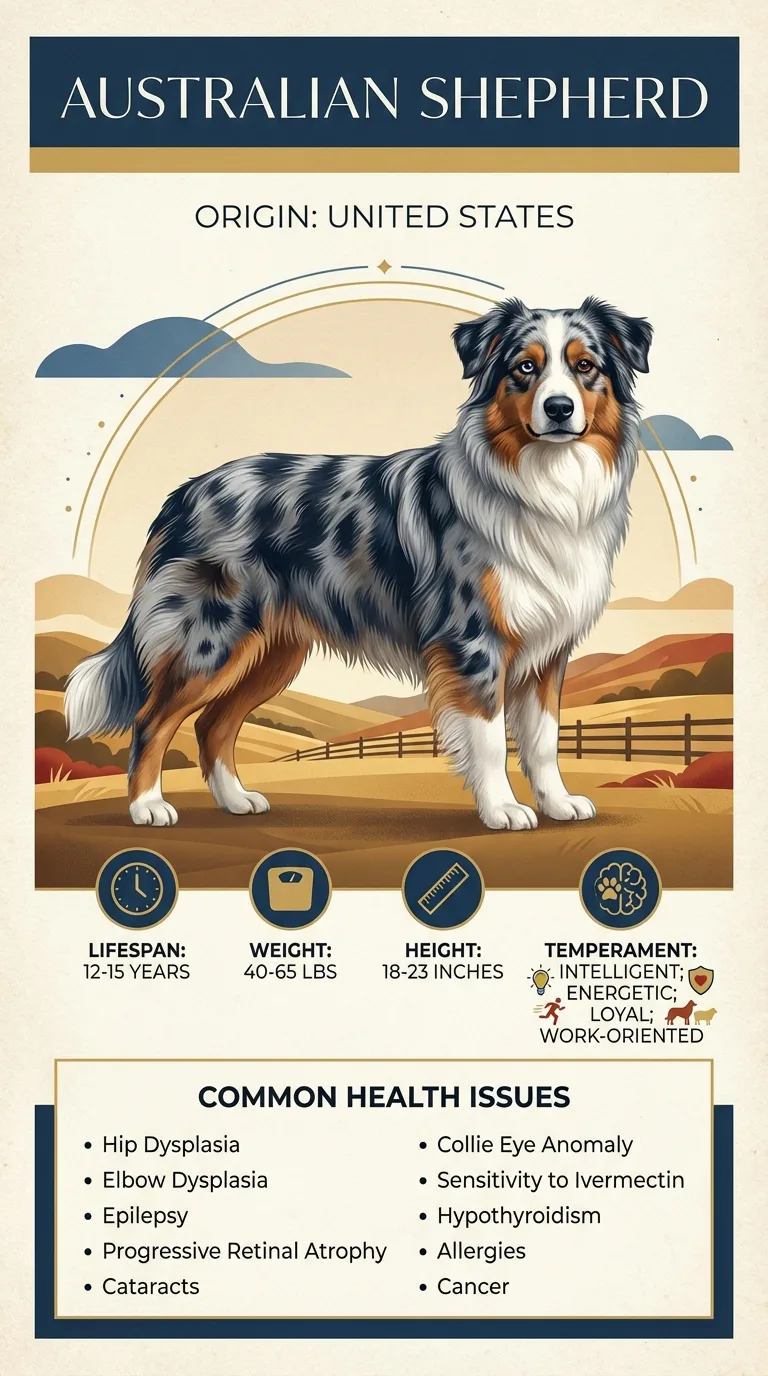
If you think your Aussie has pancreatitis, the plan is three steps: write down what you have seen and when it started, book a veterinary appointment rather than waiting for the next flare, and take video of the behaviour or symptom before you go — the thing you are worried about rarely happens in the consulting room. Screening in the parents covers hip dysplasia, elbow dysplasia, epilepsy.
What the vet visit should produce is a diagnosis and a written plan, not just reassurance: what is being ruled out, what the monitoring interval is, and which signs mean you come back sooner. Ask what the treatment costs across a year rather than per visit, because that is the number that decides whether you are managing this condition or reacting to it.
Between appointments, keep a short log — dates, what you saw, what changed. It is the single most useful thing an owner brings to a follow-up, and for pancreatitis it is often what separates a clear pattern from a guess.
Scout, a talented young Aussie in agility, had a big weekend at a regional trial, where his handler rewarded every successful run generously with high-value treats — far more than his usual daily training amount. That evening, he refused his dinner entirely and seemed to hold himself strangely, front end low and rear end raised. By the next morning he'd vomited twice and wouldn't move from a hunched position. His family took him straight to an emergency vet rather than waiting to see if it passed. Bloodwork confirmed pancreatitis, and Scout spent two days hospitalized on fluids and a bland diet before recovering fully. His handler now tracks total treat volume across a competition day, not just individual reward size, and switched to a lower-fat treat specifically for high-frequency reward days.
Key takeaway: It wasn't one bad treat that caused the problem — it was the accumulated total across an unusually reward-heavy day, which is exactly the kind of risk that's easy to overlook in a breed trained this intensively and this often.
A high-fat meal, table scraps, getting into a bag of rich training treats, or fatty foods from an event or gathering are the most commonly recognized triggers, though some episodes occur without an obvious specific cause.
Sudden vomiting, a hunched 'praying' posture, abdominal pain, loss of appetite, and sometimes diarrhea, typically developing within hours of a triggering event rather than building gradually.
Treat any suspected episode as one — severity varies widely and can become serious quickly, so same-day veterinary evaluation is the right response rather than monitoring at home first.
Not necessarily — talk to your vet about appropriate low-fat treat options and portion awareness rather than eliminating food-reward training, which remains an effective and valuable tool for a highly trainable breed.
Through bloodwork measuring pancreatic enzyme levels, sometimes combined with abdominal ultrasound to assess the pancreas and rule out other causes of the symptoms.
Yes — some dogs experience recurrent episodes, particularly if triggering factors like high-fat treats or table scraps aren't consistently managed afterward, which is part of why ongoing dietary awareness matters even after recovery.
Mild cases often improve within a few days of supportive veterinary care, including fluids and a bland, low-fat diet. More severe cases can require a longer hospital stay and more intensive treatment.
The early signs are set out in the sections above, and they are the reason to book a veterinary appointment rather than wait. Pancreatitis in Aussies is diagnosed by a vet, not from a symptom list, and the sooner it is on record the more options remain open.
The early signs are set out in the sections above, and they are the reason to book a veterinary appointment rather than wait. Pancreatitis in Australian Shepherds is diagnosed by a vet, not from a symptom list, and the sooner it is on record the more options remain open.
A high-fat meal, table scraps, or rich treats are the most commonly recognized triggers.
Sudden vomiting, a hunched posture, abdominal pain, and loss of appetite, developing within hours.
Yes — treat any suspected episode as one requiring same-day veterinary care.
No — switch to appropriate low-fat treats and watch portions rather than eliminating food-reward training.
Yes, particularly if triggering factors like high-fat treats aren't consistently managed afterward.
A one-page prep sheet for this condition: the signs, the questions to ask, what to get priced. Unlocks here.
You get: Vet visit prep sheet
No spam. One-click unsubscribe. See our privacy policy.
Preview page 1 before you decide.