Living
Which breed fits more households?
The Pomeranian, simply on versatility — it handles small spaces and lower activity levels. The Aussie is the better fit only if you can genuinely give it a job and room to move.

Quick answer
Which breed fits more households?
The Pomeranian, simply on versatility — it handles small spaces and lower activity levels. The Aussie is the better fit only if you can genuinely give it a job and room to move.
Australian Shepherd or Pomeranian? On paper they differ most on apartment suitability, and on the scales Australian Shepherd is the heavier at 40–65 lbs. Here is how the two compare on everything that shapes an ordinary week.
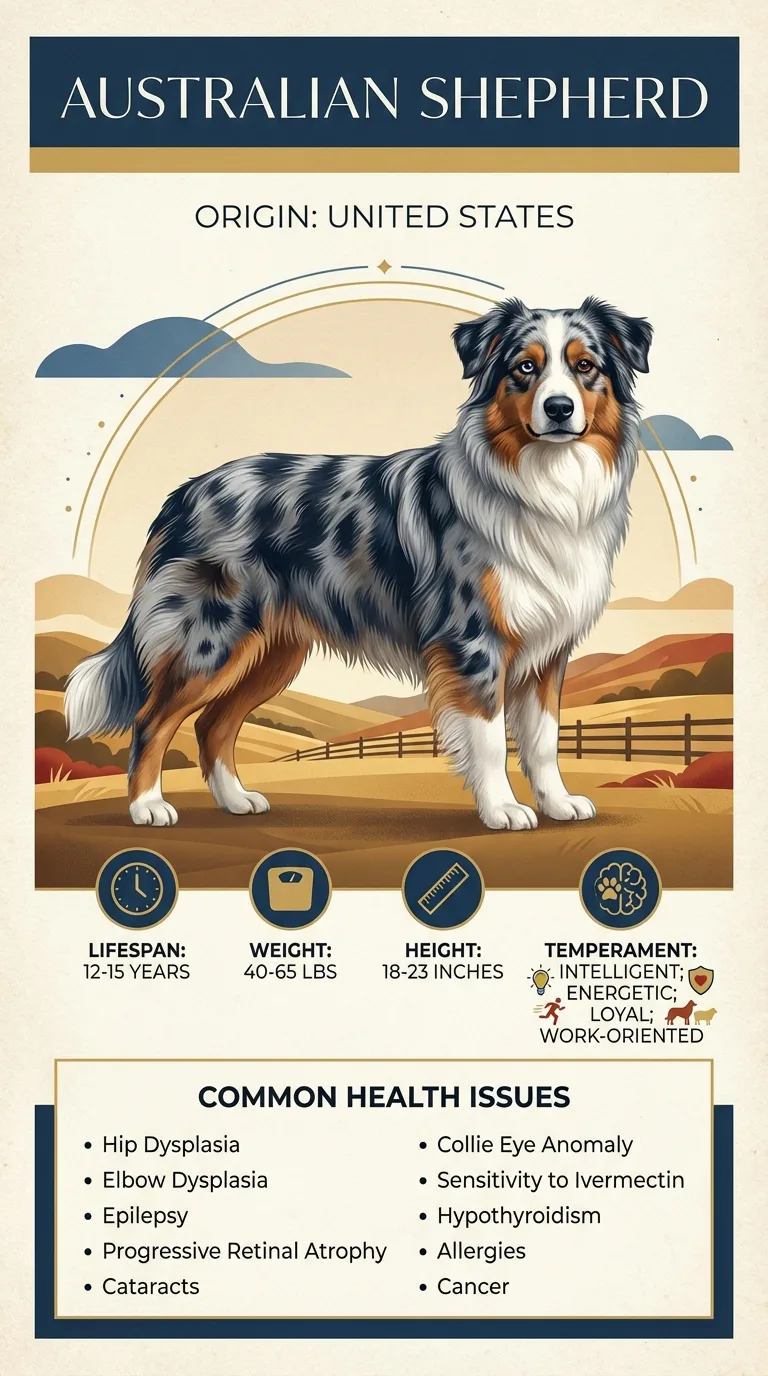
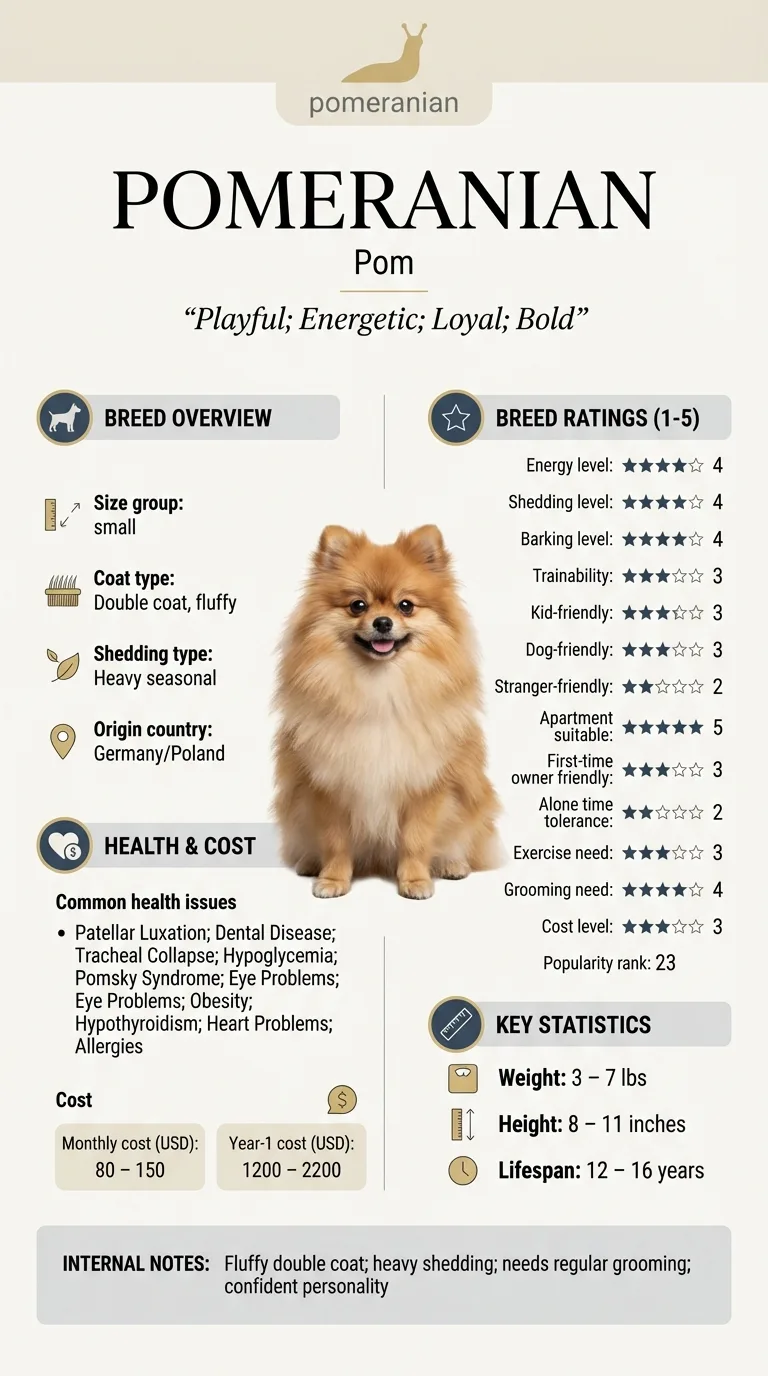
This is for someone already down to Australian Shepherd and Pomeranian and deciding between them. For this pair the decision usually turns on apartment suitability and exercise need, so those are covered first and in most detail. Anyone choosing from a flat has a clear answer here: Pomeranian rates 5/5 against 1/5. There is no origin story here — only what changes about your week.
Between Australian Shepherd and Pomeranian, apartment suitability is what separates them, and Pomeranian is the lower-effort dog of the two to keep.
Choose Australian Shepherd if you do not want a standing grooming appointment, there are young children at home and you already have another dog.
Choose Pomeranian if you are in a flat or a smaller home, this is your first dog and your walking routine is modest.
| Feature | australian shepherd | pomeranian | Winner |
|---|---|---|---|
| Size class | medium | small | Equal |
| Weight | 40–65 lbs | 3–7 lbs | Equal |
| Height | 18–23 in | 8–11 in | Equal |
| Lifespan | 12–15 years | 12–16 years | pomeranian |
| Exercise need | Very high (5/5) | Moderate (3/5) | pomeranian |
| Grooming need | Moderate (3/5) | High (4/5) | australian shepherd |
| Shedding | High (4/5) | High (4/5) | Equal |
| Energy level | Very high (5/5) | High (4/5) | Equal |
| Barking | Moderate (3/5) | High (4/5) | australian shepherd |
| Apartment suitability | Very low (1/5) | Very high (5/5) | pomeranian |
| Good for first-time owners | Low (2/5) | Moderate (3/5) | pomeranian |
| Tolerates being alone | Low (2/5) | Low (2/5) | Equal |
| Trainability | Very high (5/5) | Moderate (3/5) | australian shepherd |
| Good with kids | High (4/5) | Moderate (3/5) | australian shepherd |
| Good with other dogs | High (4/5) | Moderate (3/5) | australian shepherd |
| Friendly to strangers | Low (2/5) | Low (2/5) | Equal |
| Cost level | Moderate (3/5) | Moderate (3/5) | Equal |
| Coat | Medium-length double coat | Double coat, fluffy | Equal |
| Origin | United States | Germany/Poland | Equal |
| Typical monthly cost | $100–$200 | $80–$150 | Equal |
| Typical first-year cost | $1,500–$2,800 | $1,200–$2,200 | Equal |
There's no subtlety to this comparison. The Australian Shepherd weighs 40-65 lbs and stands 18-23 inches; the Pomeranian weighs 3-7 lbs and stands 8-11 inches. At the low end, an Aussie can outweigh a Pomeranian by more than twenty times. This isn't a "which is a bit bigger" pairing — it's a working dog next to a lap dog, full stop, and almost everything else on this page follows from that gap.
The Aussie sits at very high (5/5) for exercise need; the Pomeranian is moderate (3/5). That's still real activity for a dog this small — Poms are not furniture — but it's a fraction of what an Aussie will ask of you. If your idea of exercise is a 20-minute walk and some living-room fetch, the Pomeranian fits. The Aussie wants an hour or more of actual work most days.
Small size doesn't mean small maintenance here. The Pomeranian rates high (4/5) on grooming, a notch above the Aussie's moderate (3/5), thanks to that dense, fluffy double coat that mats if ignored. Shedding is rated identically high (4/5) for both. Don't assume the tiny dog is the low-upkeep one — brushing time per week may actually run longer on the Pomeranian.
The Pomeranian is rated very high (5/5) for apartment life; the Aussie is very low (1/5), the bottom of the scale. Barking tilts toward the Pomeranian too, rated high against the Aussie's moderate. Neither breed handles solitude well — both score low (2/5) for tolerating being alone — so a small space helps the Pomeranian, but a long workday alone is hard on either dog.
The Aussie's trainability rating is very high (5/5); the Pomeranian's is moderate (3/5), still workable but requiring more patience and consistency per lesson. For a first-time owner, though, the Pomeranian rates better overall (3/5 versus 2/5), since its smaller size and lower exercise demands are easier to manage even if obedience training takes longer to click. Patience pays off with either dog, but the stakes of a missed training session are simply lower with the Pomeranian.
The Aussie edges out the Pomeranian with kids (4/5 versus 3/5) and with other dogs (4/5 versus 3/5) — a Pomeranian's small size makes rough play riskier, and its temperament skews more toward one person than the group. With strangers, they're evenly matched at low (2/5), both more reserved than outgoing when someone new walks in. Early socialization helps either breed warm up faster to a full house of guests.
The Pomeranian tends to outlive the Aussie, 12-16 years against 12-15. Their health lists barely overlap — hypothyroidism and allergies show up for both, but the Aussie's risks skew toward hip and elbow joints and inherited eye disease, while the Pomeranian's include tracheal collapse, dental disease and hypoglycemia, issues that come with being a very small dog rather than a working one.
Both carry a moderate (3/5) overall cost rating, but the actual numbers favor the Pomeranian: $80-150 a month against $100-200 for the Aussie, and a first-year total of $1,200-2,200 versus $1,500-2,800. Less dog generally does mean less food and smaller-dose medication, even if grooming bills narrow that gap somewhat. Pet insurance quotes tend to follow the same logic, since premiums are usually weighted by body size, so budget a bit more cushion for the Aussie side of the ledger.
Australian Shepherd weighs 40–65 lbs and lives 12–15 years; Pomeranian weighs 3–7 lbs and lives 12–16 years. The two diverge most on apartment suitability, exercise need and trainability. They are level on tolerates being alone, cost level and shedding, so those cannot decide it. Where the table declares a winner it means less work for the owner, nothing more; descriptive rows are left as ties on purpose. The value here is in the differences between the two columns; treat any single score as approximate.

Dramatically smaller. A Pomeranian weighs 3-7 lbs and stands 8-11 inches; an Aussie weighs 40-65 lbs and stands 18-23 inches. There's no overlap in their size ranges at all.
Not on grooming. The Pomeranian rates high (4/5) for grooming need, slightly above the Aussie's moderate (3/5), because of its thick double coat. Its exercise needs are lower, but its coat care is not.
The Pomeranian, rated very high (5/5) for apartment suitability against the Aussie's very low (1/5). The Aussie needs space and daily mileage a small unit can't provide.
The Pomeranian is the more forgiving pick, rated moderate (3/5) versus low (2/5) for the Aussie. Neither is the easiest breed on this site for a beginner, but the Aussie's working drive raises the bar further.
The Pomeranian runs cheaper: $80-150 a month against $100-200 for the Aussie, and a lower first-year total too ($1,200-2,200 versus $1,500-2,800). Smaller dogs generally cost less to feed and medicate.
Only two show up on both lists — hypothyroidism and allergies. Otherwise their concerns split by body type: joint and eye conditions for the Aussie, dental and tracheal issues tied to small size for the Pomeranian.
The Pomeranian, typically, at 12-16 years against the Aussie's 12-15. It's a small edge, but small dogs often do outlast larger working breeds.
The Pomeranian, simply on versatility — it handles small spaces and lower activity levels. The Aussie is the better fit only if you can genuinely give it a job and room to move.
About $20-50 less per month for the Pomeranian ($80-150 versus $100-200 for the Aussie), driven mainly by food volume.
The Aussie rates very high (5/5); the Pomeranian moderate (3/5). The Aussie needs an hour-plus of real activity most days, the Pomeranian considerably less.
The Pomeranian, at 12-16 years versus 12-15 for the Aussie. Both are solid for their size class.
Secure checkout on Stripe. We never see your card.
7-day money-back guarantee. Instant access.
Health information here is general and is not veterinary advice. If your dog shows pain, sudden behaviour change, or worsening symptoms, consult a licensed veterinarian.
Some links on this site are affiliate links. We may earn a commission at no extra cost to you, and we only suggest products we believe are helpful for dog owners.
We research and check what we publish, but we do not warrant that any figure, date, price, or statement is accurate, complete, or current, and we accept no liability for any loss, cost, injury, or other harm arising from the use of this site. Use it as one reference among several. You remain responsible for your own decisions and for your dog's care - confirm anything that matters with a licensed veterinarian or another qualified professional before you act on it. Full disclaimer.
Match your lifestyle to the right dog.
Take quizNot sure which breed is right for you? Take our 2-minute quiz to find out.
Take the quiz