Health
What's the most important early warning sign of cancer?
Any new lump that grows or changes over a few weeks deserves a prompt vet check rather than being watched indefinitely.

Quick answer
What's the most important early warning sign of cancer?
Any new lump that grows or changes over a few weeks deserves a prompt vet check rather than being watched indefinitely.
A new lump under the skin, a sore that won't heal, or unexplained weight loss in an older Aussie are the kinds of changes that deserve a vet visit within days, not a wait-and-see approach over months.
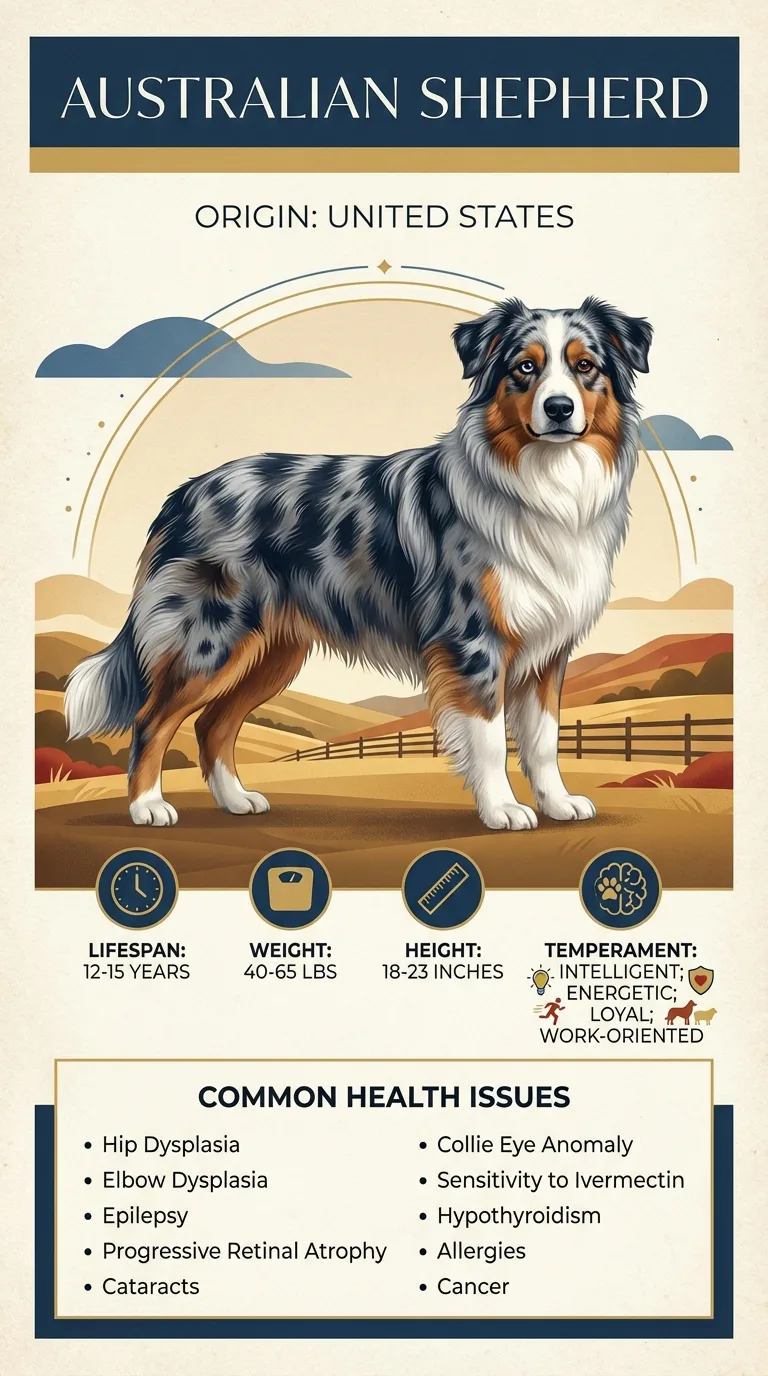
Owners of dogs entering their senior years, generally from about seven onward, face the highest real-world risk, and it's especially hard for owners of a breed known for pushing through discomfort, since early symptoms can be subtle and easy to miss.
This guide is not medical advice. If your dog shows pain, sudden behavior change, or worsening symptoms, consult a licensed veterinarian.
Some links may be affiliate links. We may earn a commission at no extra cost to you. We only suggest products we believe are helpful for dog owners.
We research and check what we publish, but we do not warrant that any figure, date, price, or statement is accurate, complete, or current, and we accept no liability for any loss, cost, injury, or other harm arising from the use of this site. Use it as one reference among several. You remain responsible for your own decisions and for your dog's care - confirm anything that matters with a licensed veterinarian or another qualified professional before you act on it. Full disclaimer.
Cancer is a documented health concern in Australian Shepherds, with risk rising notably from around age seven onward. Early signs are often subtle — a new lump, a sore that won't heal, or gradual weight loss — and catching them early meaningfully widens the range of available treatment options.
Cancer is documented as a health concern specific to this breed, and it becomes a meaningfully more common cause of illness and death as Australian Shepherds enter their senior years, consistent with cancer risk patterns across most dog breeds.
This breed's documented predisposition to cancer means Australian Shepherds carry a somewhat elevated baseline risk compared to some other breeds, though the exact mechanisms behind most canine cancers remain an active area of veterinary research rather than a single well-understood cause.
Age is the single strongest environmental factor, with risk rising steadily from around seven years old. Chronic inflammation, prior injury sites, and general wear on the body over a long, active life may also play a role in some cancer types, though this varies significantly by type.
Talk to your vet promptly for any new or changing lump, a non-healing sore, unexplained weight loss, or persistent lethargy. Sudden collapse, difficulty breathing, or uncontrolled bleeding need emergency evaluation the same day.
See all Australian Shepherd health problems, which breeds are prone to cancer, or the full Australian Shepherd breed guide for temperament, exercise needs and ownership costs.
Diagnosis and staging typically take one to two weeks from the first vet visit. Treatment timelines vary enormously by type, from a single surgery to months of ongoing chemotherapy or radiation.
Success looks different depending on the type and stage: sometimes it's a full cure, and sometimes it's extended, comfortable quality time. Being clear-eyed about which outcome is realistic for your dog's specific diagnosis matters more than a one-size-fits-all hope.
None of these signs guarantee cancer, but each one is common enough across cancer types that they deserve prompt evaluation rather than being written off.
A cancer diagnosis in dogs covers a wide range of outcomes depending on the type, location, and how early it was caught. Some cancers, especially certain skin tumors caught early, are effectively cured with surgery alone. Others, particularly ones that have already spread, are managed for quality of life rather than cured outright.
Your vet will typically recommend staging tests, such as bloodwork and imaging, before recommending a treatment path, since the right approach depends heavily on exactly what type of cancer is involved and how far it has progressed. Being honest about this range upfront helps owners make decisions that fit their dog and their family, rather than assuming every diagnosis means the same grim outcome.

If you think your Aussie has cancer, the plan is three steps: write down what you have seen and when it started, book a veterinary appointment rather than waiting for the next flare, and take video of the behaviour or symptom before you go — the thing you are worried about rarely happens in the consulting room. Screening in the parents covers hip dysplasia, elbow dysplasia, epilepsy.
What the vet visit should produce is a diagnosis and a written plan, not just reassurance: what is being ruled out, what the monitoring interval is, and which signs mean you come back sooner. Ask what the treatment costs across a year rather than per visit, because that is the number that decides whether you are managing this condition or reacting to it.
Between appointments, keep a short log — dates, what you saw, what changed. It is the single most useful thing an owner brings to a follow-up, and for cancer it is often what separates a clear pattern from a guess.
At nine years old, Cody developed a small lump on his side that his owner, Renata, initially assumed was just a fatty deposit common in older dogs. A routine wellness exam six weeks later caught that it had grown slightly, and a needle aspirate led to a biopsy confirming an early-stage tumor. Because it was caught while still localized, surgical removal was curative, and Cody has had no recurrence in the two years since. Renata now does a monthly check of Cody's body at home rather than waiting for his next scheduled exam to notice changes.
Key takeaway: The line between a curable and a much harder diagnosis is often just a matter of weeks and whether someone was checking closely enough to notice the change.
Risk rises meaningfully from around age seven onward, consistent with cancer risk in most dog breeds, though it can occur earlier in less common cases.
No, many lumps are benign, such as fatty tumors, but any new or changing lump should still be checked by a vet, since the only way to tell benign from malignant is testing.
Diagnosis typically starts with a physical exam and often a needle aspirate or biopsy of any suspicious lump, followed by bloodwork and imaging to determine the type and extent if cancer is confirmed.
Some cancers, particularly certain skin tumors caught early, can be effectively cured with surgery. Others are managed rather than cured, depending on type and how advanced it is at diagnosis.
Costs vary enormously by type and treatment path, from a few hundred dollars for a simple tumor removal to several thousand for chemotherapy or radiation over multiple sessions.
Yes, annual wellness exams become more valuable as a dog ages, since many owners first notice something during a routine physical exam rather than at home.
Not always, but it's a common enough sign across many cancer types that it warrants a vet visit rather than assuming it's just aging or reduced appetite.
Any new lump that grows or changes over a few weeks deserves a prompt vet check rather than being watched indefinitely.
From around age seven onward, risk rises meaningfully, making annual wellness exams more important.
Some types, especially caught early, can be cured with surgery, while others are managed for quality of life rather than cured.
Costs range from a few hundred dollars for simple removal to several thousand for chemotherapy or radiation, depending on the type.
Not every lump is cancer, but any new or changing one should be checked by a vet rather than assumed benign.
A one-page prep sheet for this condition: the signs, the questions to ask, what to get priced. Unlocks here.
You get: Vet visit prep sheet
No spam. One-click unsubscribe. See our privacy policy.
Preview page 1 before you decide.