Living
Which is the better overall pick?
It depends entirely on which Poodle size you mean — a Toy Poodle and a Standard Poodle live very differently. Narrow that down first, then this comparison (or the size-specific ones) will actually decide it.

Quick answer
Which is the better overall pick?
It depends entirely on which Poodle size you mean — a Toy Poodle and a Standard Poodle live very differently. Narrow that down first, then this comparison (or the size-specific ones) will actually decide it.
Australian Shepherd or Poodle? On paper they differ most on exercise need, and on the scales Australian Shepherd is the heavier at 40–65 lbs. Here is how the two compare on everything that shapes an ordinary week.
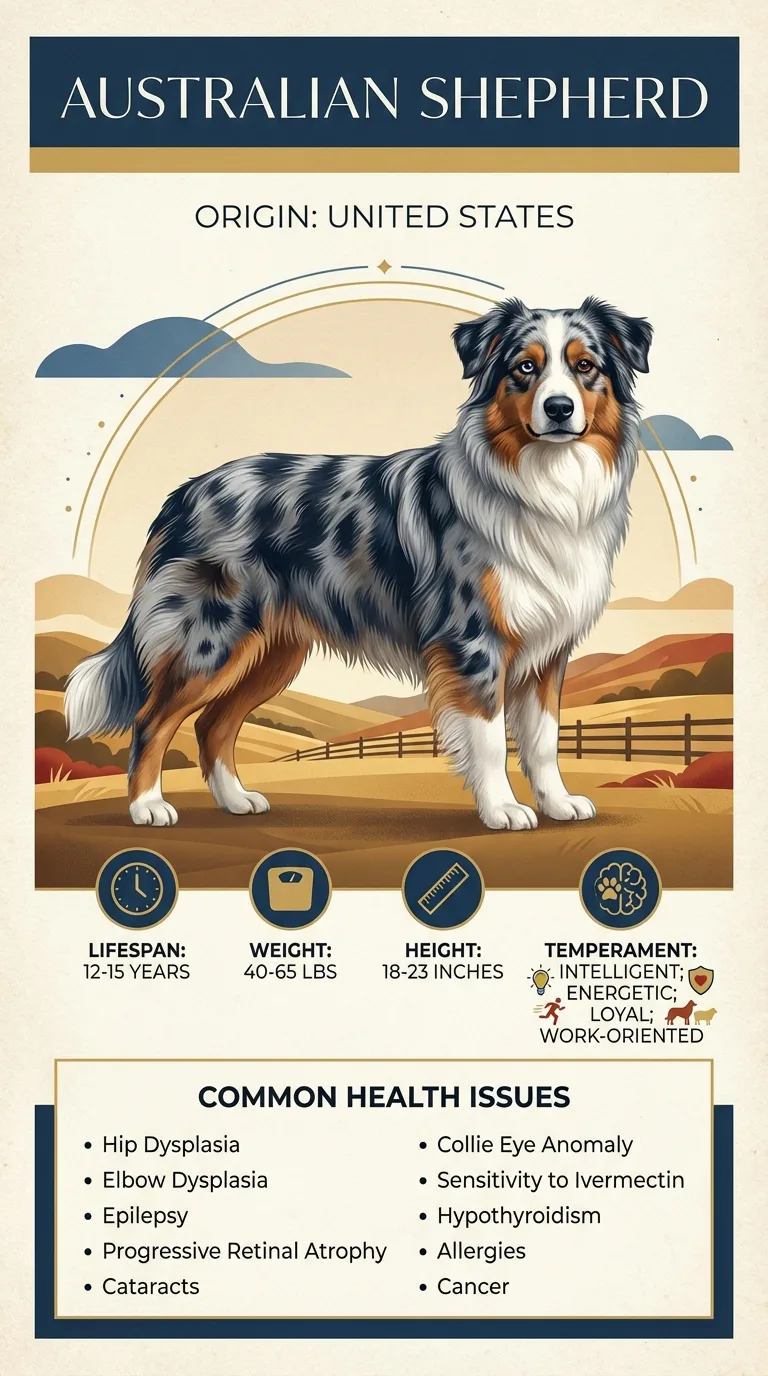
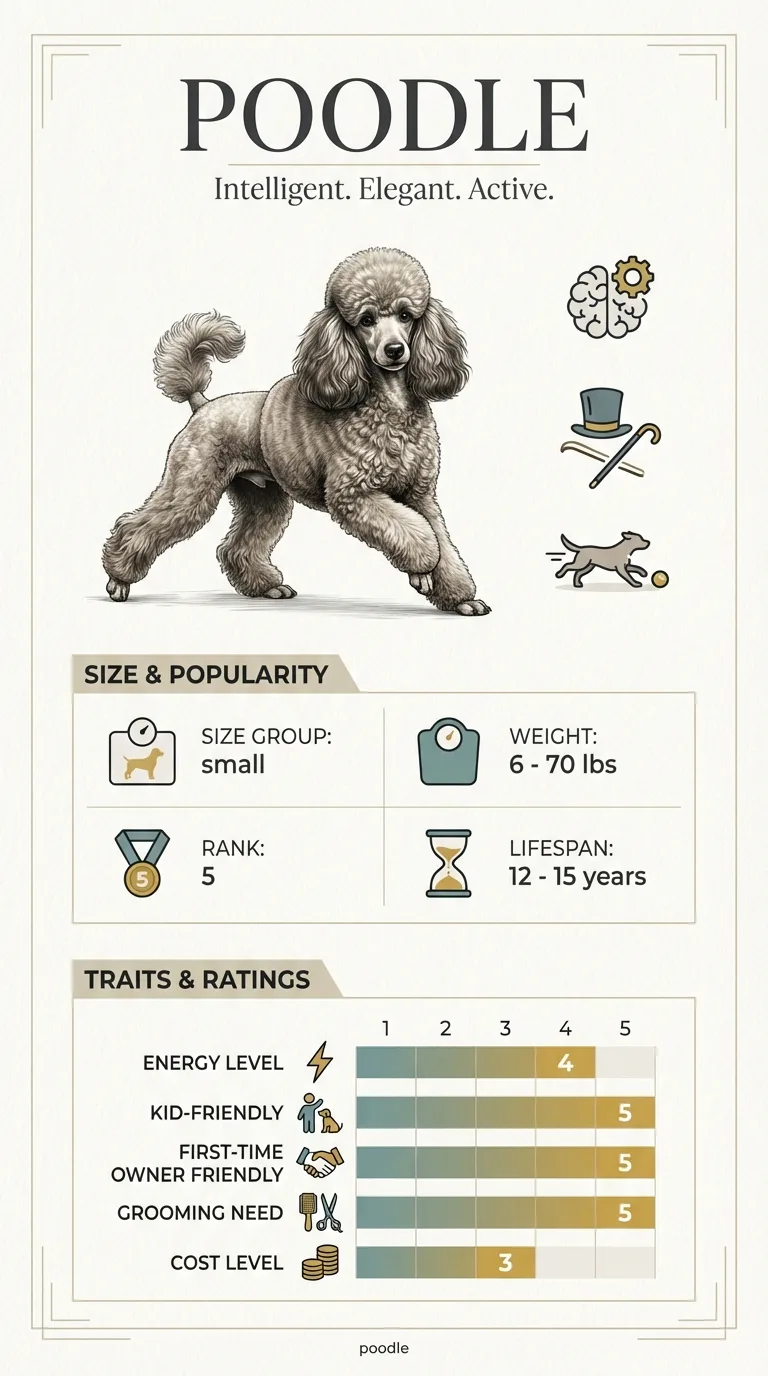
This is for someone already down to Australian Shepherd and Poodle and deciding between them. For this pair the decision usually turns on exercise need and trainability, so those are covered first and in most detail. Anyone choosing from a flat has a clear answer here: Australian Shepherd rates 1/5 against 0/5. Breed history is left out; what follows is what you will actually live with.
Between Australian Shepherd and Poodle, exercise need is what separates them, and Poodle is the lower-effort dog of the two to keep.
Choose Australian Shepherd if you do not want a standing grooming appointment, you already have another dog and you want a dog that picks up training quickly.
Choose Poodle if this is your first dog, shedding is a problem in your house and your walking routine is modest.
| Feature | australian shepherd | poodle | Winner |
|---|---|---|---|
| Size class | medium | small | Equal |
| Weight | 40–65 lbs | 6–70 lbs | Equal |
| Height | 18–23 in | 0–0 in | Equal |
| Lifespan | 12–15 years | 12–15 years | Equal |
| Exercise need | Very high (5/5) | — (0/5) | poodle |
| Grooming need | Moderate (3/5) | Very high (5/5) | australian shepherd |
| Shedding | High (4/5) | — (0/5) | poodle |
| Energy level | Very high (5/5) | High (4/5) | Equal |
| Barking | Moderate (3/5) | — (0/5) | poodle |
| Apartment suitability | Very low (1/5) | — (0/5) | australian shepherd |
| Good for first-time owners | Low (2/5) | Very high (5/5) | poodle |
| Tolerates being alone | Low (2/5) | — (0/5) | australian shepherd |
| Trainability | Very high (5/5) | — (0/5) | australian shepherd |
| Good with kids | High (4/5) | Very high (5/5) | poodle |
| Good with other dogs | High (4/5) | — (0/5) | australian shepherd |
| Friendly to strangers | Low (2/5) | — (0/5) | australian shepherd |
| Cost level | Moderate (3/5) | Moderate (3/5) | Equal |
| Coat | Medium-length double coat | Curly, dense single coat | Equal |
| Origin | United States | — | Equal |
| Typical monthly cost | $100–$200 | $0–$0 | Equal |
| Typical first-year cost | $1,500–$2,800 | $0–$0 | Equal |
"Poodle" without a size label covers a lot of ground — the breed's listed weight range here runs 6-70 lbs, which tells you this comparison is really standing in for three different dogs: Toy, Miniature and Standard. The Australian Shepherd is a fixed point by contrast, 40-65 lbs and 18-23 inches. If you want an exact size match-up, this site's Miniature Poodle and Standard Poodle pages give you real numbers instead of a range this wide.
The Aussie's exercise need rates very high (5/5), a demanding but at least well-defined figure. The generic Poodle listing doesn't carry a comparable number here, since needs vary meaningfully by size — a Toy Poodle and a Standard Poodle are not the same athlete. What's consistent across every poodle size, though, is that they're an active, working-lineage breed, not a lapdog by temperament even when they're lapdog-sized.
This is the one place the generic listing is unambiguous: grooming rates very high (5/5) for the Poodle against moderate (3/5) for the Aussie, driven by that curly, dense coat that needs regular clipping regardless of which poodle size you land on. The tradeoff is shedding — the Aussie's high-shedding double coat sends hair everywhere, while poodles are known for keeping shedding to a minimum across all their sizes.
The Aussie's apartment score is a clear 1/5, very low, and that number doesn't change no matter which poodle you're comparing it to. Poodles in general adapt well to smaller homes, particularly the Toy and Miniature varieties — this site's size-specific pages carry the actual apartment ratings if you want a number to hold a poodle listing to. Toy and Miniature sizes tend to score best for small spaces; a Standard is a bigger ask.
First-time owner suitability rates very high (5/5) for the generic Poodle listing against low (2/5) for the Aussie — a wide gap that reflects the breed's reputation across sizes for being biddable and eager to please. The Aussie's trainability is genuinely excellent too, but it comes bundled with a working drive that asks more of a first-time handler than most poodles do.
With kids, the generic Poodle listing edges the Aussie, very high (5/5) versus high (4/5) — poodles across sizes are known for being gentle and adaptable around children. Detailed ratings for strangers and other dogs aren't broken out at this generic level; check the Miniature or Standard Poodle comparisons on this site if you need those specifics for a particular size.
Lifespan ties at 12-15 years for both breeds. This generic Poodle listing doesn't carry a detailed health-condition list the way the size-specific pages do — Toy, Miniature and Standard Poodles differ enough in known risks (patellar issues scale differently by size, for instance) that lumping them together would be misleading. Check the Miniature or Standard Poodle pages for a real breakdown.
Both breeds carry a moderate (3/5) overall cost rating, and the Aussie's actual numbers are concrete: $100-200 monthly, $1,500-2,800 in year one. The generic Poodle listing doesn't have a comparable dollar figure here, since a Toy Poodle and a Standard Poodle cost very differently to keep — grooming alone can swing hundreds of dollars a year depending on size. Use the Aussie's figures as your fixed anchor and adjust upward for whichever poodle size you're actually weighing it against.
Australian Shepherd weighs 40–65 lbs and lives 12–15 years; Poodle weighs 6–70 lbs and lives 12–15 years. The two diverge most on exercise need, trainability and shedding and 6 other rated axes. Almost every rated axis separates them at least slightly. The comparison marks an easier option only where one exists. Facts like weight and country of origin are not scored. Both dogs are rated from the same dataset, which is what makes the numbers comparable with each other even though any individual dog sits somewhere inside its breed's range.

Because "Poodle" spans three official sizes — Toy, Miniature and Standard — with weights from about 6 to 70 lbs. This page uses a generic listing; for precise figures, check this site's Miniature Poodle or Standard Poodle comparisons instead.
The Aussie, clearly. It rates high (4/5) for shedding with its double coat, while poodles of every size are known for minimal shedding thanks to their curly, dense coat.
Generally yes — the generic listing rates Poodles very high (5/5) for first-time owner suitability against the Aussie's low (2/5). Poodles are famously biddable; the Aussie's working drive needs more direction than most beginners are ready to give.
More. The Poodle rates very high (5/5) for grooming need against the Aussie's moderate (3/5), because that curly coat requires regular professional or at-home clipping, not just brushing.
Yes — both are rated 12-15 years in this comparison. Poodle lifespan can run a bit longer at the Miniature and Toy end specifically, so check the size-specific pages if longevity matters to your decision.
The generic Poodle listing rates slightly higher, very high (5/5) versus high (4/5) for the Aussie, though both are solid family options when properly socialized.
If you already know you want a Toy, Miniature or Standard Poodle, yes — this site's size-specific Poodle comparisons will give you sharper numbers on apartment fit, cost and health than this generic version can.
It depends entirely on which Poodle size you mean — a Toy Poodle and a Standard Poodle live very differently. Narrow that down first, then this comparison (or the size-specific ones) will actually decide it.
The Aussie is a known $100-200 a month. The generic Poodle listing doesn't fix a number since it varies hugely by size — smaller poodles cost less to feed, more to groom.
The Aussie is a firm 5/5, very high. Poodles are genuinely active dogs across all sizes, but exact need scales with size — a Standard needs more than a Toy.
On this page, yes, both land at 12-15 years. Smaller poodle varieties can run a year or two longer, which the size-specific comparisons spell out.
Secure checkout on Stripe. We never see your card.
7-day money-back guarantee. Instant access.
Health information here is general and is not veterinary advice. If your dog shows pain, sudden behaviour change, or worsening symptoms, consult a licensed veterinarian.
Some links on this site are affiliate links. We may earn a commission at no extra cost to you, and we only suggest products we believe are helpful for dog owners.
We research and check what we publish, but we do not warrant that any figure, date, price, or statement is accurate, complete, or current, and we accept no liability for any loss, cost, injury, or other harm arising from the use of this site. Use it as one reference among several. You remain responsible for your own decisions and for your dog's care - confirm anything that matters with a licensed veterinarian or another qualified professional before you act on it. Full disclaimer.
Match your lifestyle to the right dog.
Take quizNot sure which breed is right for you? Take our 2-minute quiz to find out.
Take the quiz