Health
What are quick tips for dealing with genetic disorders in Great Danes?
Start with regular vet check-ups and maintain a healthy diet. Exercise gently and monitor for any signs of discomfort or illness.

Quick answer
What are quick tips for dealing with genetic disorders in Great Danes?
Start with regular vet check-ups and maintain a healthy diet. Exercise gently and monitor for any signs of discomfort or illness.
Great Danes are gentle giants, but they can face serious health issues. Understanding the most common genetic disorders is crucial for their well-being.
New and experienced Great Dane owners alike may struggle with these health concerns. Those who live in urban settings or have limited access to veterinary care might find it even more challenging to manage these disorders.
This guide is not medical advice. If your dog shows pain, sudden behavior change, or worsening symptoms, consult a licensed veterinarian.
Some links may be affiliate links. We may earn a commission at no extra cost to you. We only suggest products we believe are helpful for dog owners.
We research and check what we publish, but we do not warrant that any figure, date, price, or statement is accurate, complete, or current, and we accept no liability for any loss, cost, injury, or other harm arising from the use of this site. Use it as one reference among several. You remain responsible for your own decisions and for your dog's care - confirm anything that matters with a licensed veterinarian or another qualified professional before you act on it. Full disclaimer.
Check this first
Red-flag signs that mean you should call your vet right away include difficulty breathing, severe lethargy, or sudden changes in behavior. If your Great Dane experiences bloating or shows signs of pain, such as whining or restlessness, these are serious issues that require urgent care. Other emergencies include persistent vomiting, blood in urine or stool, or inability to stand or walk.
On the other hand, less severe symptoms may allow you to watch and wait. Mild cases might include occasional coughing or slight lethargy after playtime. In these situations, keep an eye on your dog's behavior and health for changes, but don’t hesitate to consult your vet if symptoms persist or worsen. A monitoring plan can include tracking food intake and activity levels to ensure your Great Dane remains healthy.
Being proactive about your Great Dane’s health can prevent many problems before they escalate. Regular veterinary check-ups and staying informed about common genetic disorders can help you catch issues early, ensuring your furry friend lives a long and happy life.
If any of these apply, call your vet or an emergency clinic now. The rest of this page is for the cases that are not an emergency.
Great Danes are magnificent giants known for their gentle nature, but they are also prone to several genetic disorders. Common issues include bloat (GDV), dilated cardiomyopathy, and hip dysplasia. These disorders can lead to serious health complications, impacting their quality of life and longevity.
These genetic disorders are relatively common in Great Danes due to their size and breeding history. Many owners report dealing with at least one of these issues at some point in their dog's life.
Great Danes are prone to several genetic disorders due to selective breeding. Common issues include dilated cardiomyopathy and hip dysplasia, which are more frequent in larger breeds. Their size also makes them susceptible to bloat, a serious condition that can occur suddenly.
The environment can also contribute to genetic disorders in Great Danes. Poor nutrition, lack of exercise, and obesity can exacerbate existing health issues. Additionally, stress and inadequate veterinary care can lead to worsening of their genetic predispositions.
Consult your vet if your Great Dane shows symptoms like lethargy, unusual breathing, or difficulty with mobility. Early intervention is crucial for managing genetic disorders and maintaining their quality of life.
Avoiding these common mistakes can help improve your Great Dane's health and well-being.
See all Great Dane health problems, which breeds are prone to most common genetic disorders, or the full Great Dane breed guide for temperament, exercise needs and ownership costs.
You can expect to see improvements in your Great Dane's health within 6 to 12 months of implementing regular vet check-ups and appropriate care.
Success means your Great Dane is maintaining a healthy weight, participating in regular exercise, and showing no signs of common genetic disorders like bloat or hip dysplasia.
Sarah, a first-time dog owner, adopted Max, a Great Dane. Initially, she was overwhelmed by the potential health issues her giant pup might face, especially dilated cardiomyopathy and hip dysplasia. After consulting her vet, she learned the importance of a balanced diet and regular exercise. Over the next year, Sarah followed a strict feeding schedule and made sure Max got daily walks and playtime. Gradually, Max became more energetic and lost some extra weight. Sarah's efforts led to fewer vet visits and improved overall health for Max.
Key takeaway: With consistent care and attention, you can significantly reduce the risk of common genetic disorders in your Great Dane.
Great Danes are prone to several genetic disorders, including bloat (GDV), dilated cardiomyopathy, and hip dysplasia. Other issues include elbow dysplasia and wobbler syndrome. Regular veterinary check-ups can help identify these problems early. This answer relates to Great Dane most common genetic disorders.
Genetic disorders in Great Danes often stem from breeding practices that prioritize appearance over health. Inbreeding can increase the likelihood of inherited conditions. It's essential to choose a reputable breeder who screens for these issues.
To reduce the risk of genetic disorders, ensure your Great Dane comes from a responsible breeder. Regular exercise, a balanced diet, and routine vet visits can also promote overall health, reducing the impact of genetic conditions.
Watch for symptoms such as limping, difficulty breathing, bloating, or lethargy. Changes in appetite or unusual behavior can also indicate health issues. If you notice any concerning signs, consult your vet promptly.
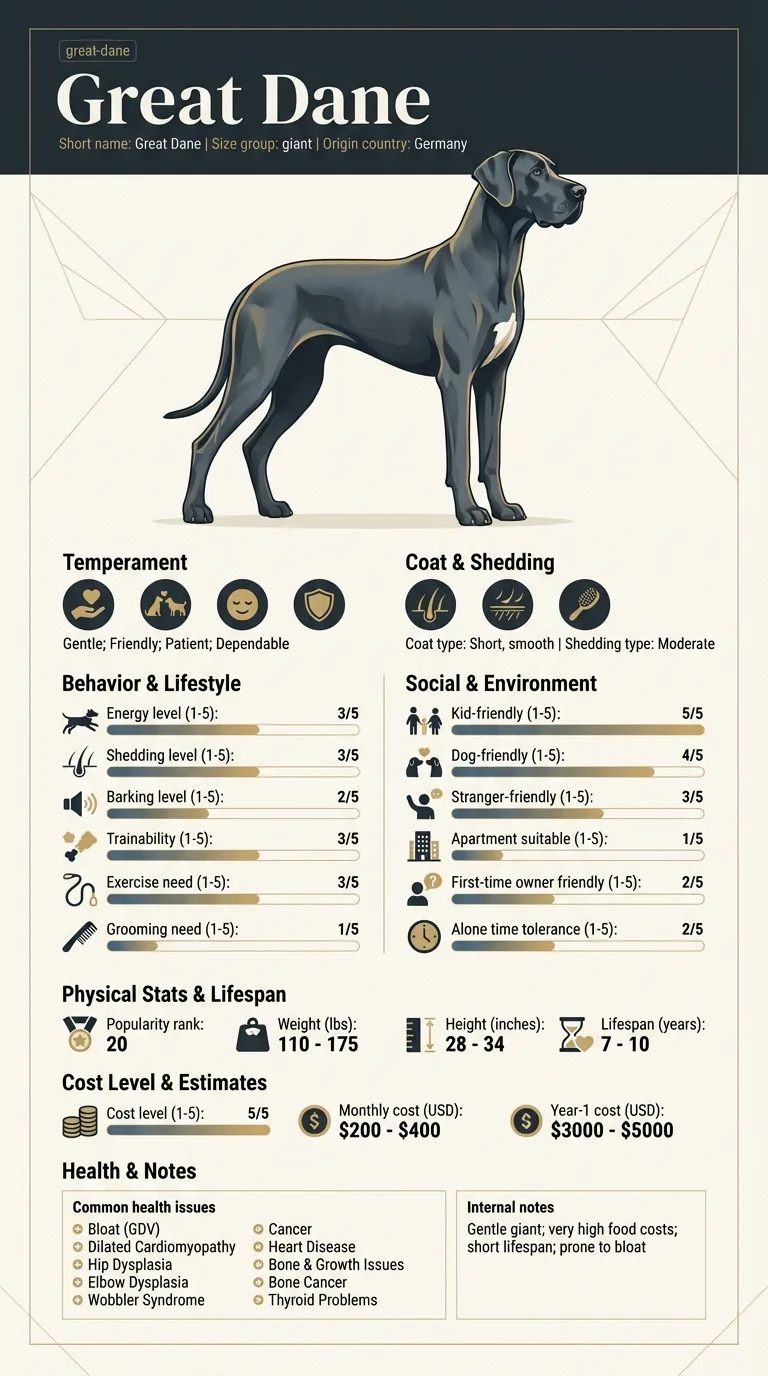
Great Danes typically have a lifespan of 7 to 10 years. Those with genetic disorders may experience a shorter lifespan, depending on the severity of their conditions. Proper care can help manage symptoms and improve quality of life.
Training can help manage behavior related to discomfort from genetic disorders. Positive reinforcement techniques can also create a stronger bond between you and your Great Dane, which can alleviate some anxiety and stress.
If you notice symptoms like limping, excessive panting, or unusual behavior in your Great Dane, consult your vet immediately. Early detection can help manage conditions like dilated cardiomyopathy or hip dysplasia effectively.
Yes, as Great Danes age, they may become more susceptible to genetic disorders such as heart disease or cancer. Regular veterinary check-ups are essential to catch any potential issues early.
Providing a balanced diet and maintaining a healthy weight can support your Great Dane's overall health. Additionally, gentle exercise and mental stimulation can help keep them happy and reduce stress on their joints.
While you can't change genetics, you can minimize risks by maintaining a healthy diet, ensuring regular exercise, and following your vet's advice for preventive care. Early socialization and training can also help manage behavior problems.
Signs of bloat include a swollen abdomen, restlessness, and attempting to vomit without success. To reduce the risk, feed smaller meals throughout the day and avoid vigorous exercise immediately after eating.
Start with regular vet check-ups and maintain a healthy diet. Exercise gently and monitor for any signs of discomfort or illness.
Costs can vary widely, but expenses may range from $200 to $400 monthly for ongoing care, depending on the severity of the condition.
Contact your veterinarian immediately for a thorough examination and diagnosis. Early intervention is key to managing health issues.
Yes, training can assist in managing behavioral issues arising from discomfort. It also strengthens your bond and keeps your dog mentally stimulated.
Look for breeders who conduct health screenings and provide health guarantees. Ask about the genetic history of the puppies' parents.
A one-page prep sheet for this condition: the signs, the questions to ask, what to get priced. Unlocks here.
You get: Vet visit prep sheet
No spam. One-click unsubscribe. See our privacy policy.
Preview page 1 before you decide.