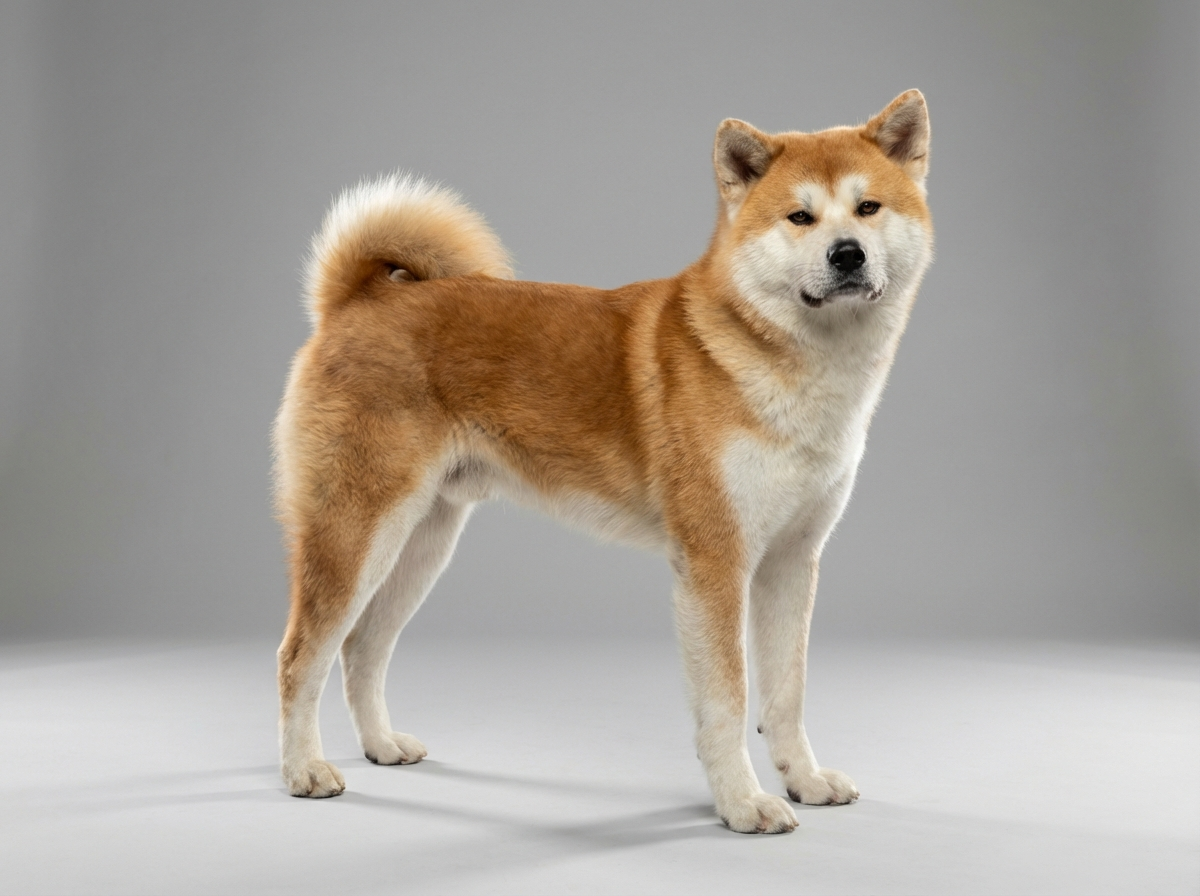
Costs
Akita cost in Las Vegas
About $120–$230/month, $1,800–$3,100 for year one — moderate to above average, driven mainly by desert-heat care needs.

See Akita price across all cities →
Quick answer
Akita cost in Las Vegas
About $120–$230/month, $1,800–$3,100 for year one — moderate to above average, driven mainly by desert-heat care needs.
An Akita in Las Vegas costs about $120–$230 a month, with the first year around $1,800–$3,100 — a moderate-to-above-average budget shaped mainly by desert heat management.
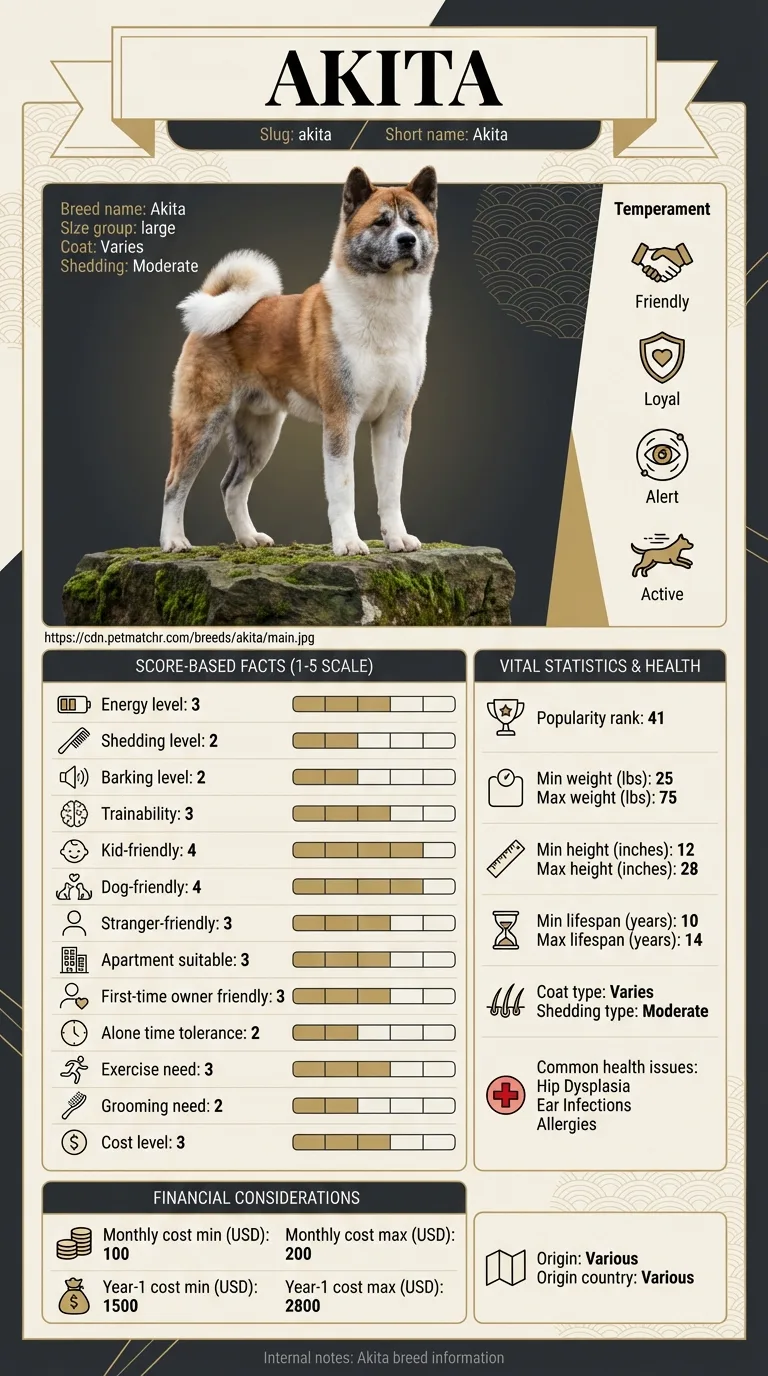
The breed's own risks apply here as anywhere — hip dysplasia and the Akita's tendency toward ear infections are the likeliest sources of an unplanned bill. Las Vegas's extreme summer heat adds its own real risk: heatstroke is a genuine, fast-moving emergency for a dog with this much coat if exercise and outdoor time aren't managed carefully.
Las Vegas's numbers adjust the Akita's typical national cost range upward somewhat for the city's above-average general pricing, with the desert climate cutting parasite costs but adding real summer heat-management needs specific to this heavy-coated breed.
Estimate · source: estimation · confidence: medium · updated 2026-09-05 · not a quote
| Item | Cost range |
|---|---|
One-time setup (initial vet visit, spay/neuter, large-breed gear) Priced at Las Vegas-area rates; this is where the city's somewhat above-average cost of living shows up most clearly in a first-year budget. | $475 - $800 |
| Item | Cost range |
|---|---|
Food Sized for the breed's large adult frame; an AAFCO-compliant food matters more than a specific brand. | $54 - $88 |
Grooming Akitas mostly self-groom; at-home brushing through the coat-blow seasons covers most needs without frequent professional visits. | $12 - $28 |
Flea & tick prevention Lower than most cities on this site — fleas and ticks generally struggle in the dry desert climate here. | $10 - $22 |
Each range starts from a national baseline for this breed's size class and is then adjusted for local cost of living and veterinary pricing. The baselines, and the source each one came from, are listed on our sources page (dataset 2026.09). Two inputs, the purchase price and the emergency reserve, have no published national figure we could verify, so we leave them to you rather than invent them.
These are planning estimates, not quotes. Your own numbers will move with the individual dog, your vet and your insurer. Build a budget with your own figures.
For an Akita in Las Vegas, insurance is worth weighing not just against the breed's hip dysplasia risk but against the real possibility of a heat-related emergency in this climate.
Given both the breed's documented orthopedic risk and the genuine heatstroke danger this climate poses to a heavy-coated dog, buying insurance while the dog is young offers protection against two separate, plausible emergency scenarios rather than just one.
Owners who've built a substantial emergency fund and are confident in their ability to manage summer heat exposure strictly (early or late exercise only, no midday outdoor time) can reasonably self-insure instead of a policy.
Las Vegas's baseline prices run a bit high, but the biggest lever for this specific breed here is managing summer heat well, which is free.
Las Vegas's general cost of living runs somewhat above the national average, driven by the metro's tourism economy and years of rapid growth, though Nevada's lack of a state income tax helps offset that for the broader household budget. Vet, grooming and boarding pricing here track close to what a fast-growing Sun Belt city typically charges.
The real story for an Akita in Las Vegas is climate, not price. Summer temperatures here regularly exceed 100 degrees for extended stretches, and the Akita's dense double coat — built for cold-climate work, not desert heat — makes this breed genuinely more vulnerable to heat stress than a short-coated dog would be. Outdoor exercise needs to shift to very early morning or after sunset during the hottest months, and pavement temperature alone can cause paw burns well before air temperature feels dangerous to a person standing on it.
On the plus side, Las Vegas's dry desert air means fleas and ticks struggle more than they would in a humid climate, keeping that particular line item lower here than in most Southern or coastal cities on this site. That's a real, if modest, saving that doesn't fully offset the added attention (and occasional cooling gear) summer heat management requires for this specific breed.

A Las Vegas Akita owner took their dog for a normal-length midday walk in early summer, not realizing how much hotter the pavement gets than the air temperature suggests. The dog developed sore, blistered paw pads from the heat, requiring a vet visit and several days of limited activity to heal. After that, the owner adopted a strict rule: walks only before 8 a.m. or after 7 p.m. during the summer months, and a quick hand-test on the pavement before any walk in between, which prevented any repeat of the issue for the rest of the season.
Key takeaway: Desert heat damage happens through the paws as much as through the coat — a simple, free habit like testing pavement temperature before a summer walk avoids an entirely preventable vet visit.
Around $120–$230, covering food, routine vet care, grooming and parasite prevention. Nevada's lack of state income tax helps the broader budget, but Las Vegas's tourism-driven, fast-growing economy keeps general prices a bit above the national average.
Roughly $1,800–$3,100, including the initial vet exam, spay/neuter if needed, and large-breed gear on top of ongoing monthly costs.
Not without real precautions — the breed's dense double coat is built for cold climates, not desert heat, which makes heatstroke a genuine risk if exercise happens during the hottest part of the day. Shifting all outdoor activity to very early morning or after sunset during summer is essential, not optional.
Yes, somewhat — fleas and ticks generally do less well in dry desert air than in a humid climate, which keeps this particular line item lower here than in most Southern or coastal cities on this site.
Worth pricing out given the breed's hip dysplasia risk and Las Vegas's somewhat above-average vet pricing — a specialist procedure here costs more than in a lower-cost desert city, which raises the value of a policy purchased while the dog is young.
Around $800 is a reasonable floor given the city's above-average pricing. Given the real heatstroke risk in summer, it's also worth having a same-day emergency vet identified in advance rather than searching for one during an actual crisis.
About $120–$230/month, $1,800–$3,100 for year one — moderate to above average, driven mainly by desert-heat care needs.
This guide is not medical advice. If your dog shows pain, sudden behavior change, or worsening symptoms, consult a licensed veterinarian.
Some links may be affiliate links. We may earn a commission at no extra cost to you. We only suggest products we believe are helpful for dog owners.
We research and check what we publish, but we do not warrant that any figure, date, price, or statement is accurate, complete, or current, and we accept no liability for any loss, cost, injury, or other harm arising from the use of this site. Use it as one reference among several. You remain responsible for your own decisions and for your dog's care - confirm anything that matters with a licensed veterinarian or another qualified professional before you act on it. Full disclaimer.
One sheet with every line item, the emergency fund and when insurance pays off - unlocks on this page.
You get: 12-month budget sheet
No spam. One-click unsubscribe. See our privacy policy.
Preview page 1 before you decide.