DogBreedCompass

Malamute or Rottweiler Mix: Buying a Known Dog or a Range

A Rottweiler Mix rates 2/5 with strangers, 2/5 with other dogs and 2/5 for first-time owners, and lives 9 to 10 years. The Malamute matches only that last figure, and lives three to four years longer.

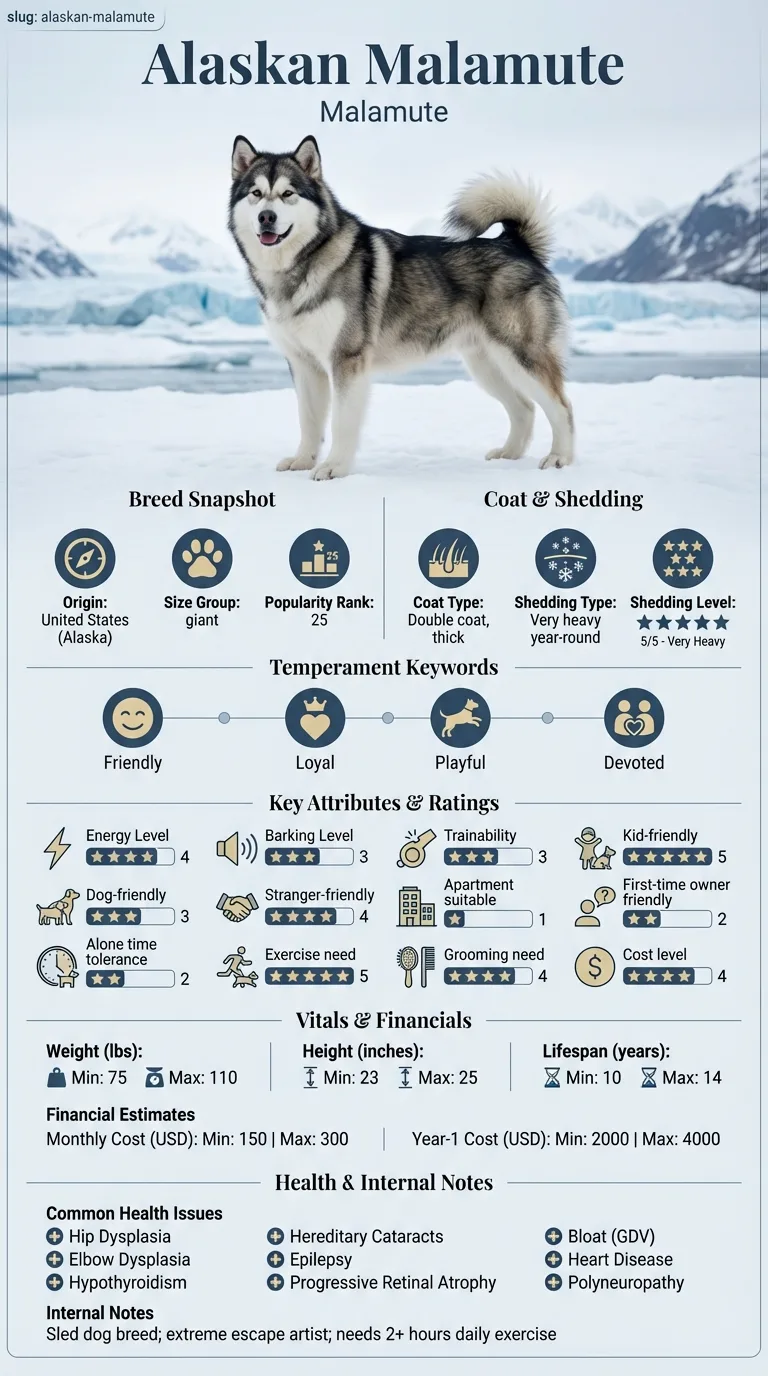
alaskan malamute infographic
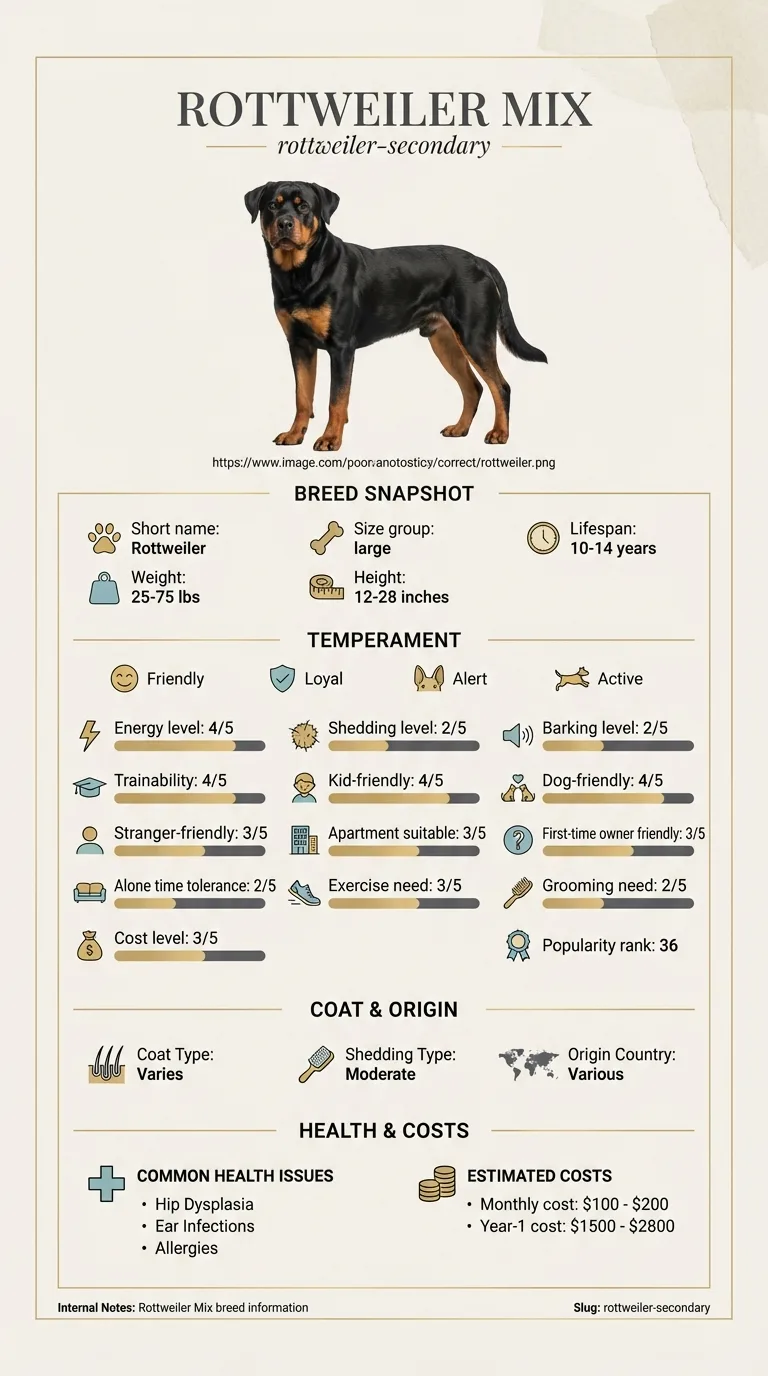
rottweiler secondary infographic

This page is for someone looking at a large guardian-type mix, often in rescue, and weighing it against a purebred working breed — and wanting an honest account of what is knowable in each case.

Quick verdict

The Rottweiler Mix is easier to groom, quieter and more trainable, but it carries the guardian breed's social ratings, a short 9 to 10 year lifespan and a level of uncertainty the Malamute simply does not have.

Choose alaskan malamute if...

Choose the Alaskan Malamute if predictability matters to you — fixed size, fixed coat, fixed temperament — and you have cold weather, secure fencing and two hours a day of physical work to offer.

Choose rottweiler secondary if...

Choose a Rottweiler Mix if you want a steady, trainable, moderate-exercise large dog, you can commit to serious socialisation for a breed type rated 2/5 with strangers, and you are meeting the actual adult rather than guessing from a puppy.

Head-to-head comparison

Featurealaskan malamuterottweiler secondaryWinner
Weight75–110 lbs80–135 lbsalaskan malamute
Height23–25 in22–27 inEqual
Lifespan10–14 years9–10 yearsalaskan malamute
CoatThick double coatShort, dense double coatrottweiler secondary
Grooming need4/52/5rottweiler secondary
Shedding5/5 — very heavy year-round3/5 — moderaterottweiler secondary
Energy level4/53/5rottweiler secondary
Exercise need5/54/5rottweiler secondary
Trainability3/54/5rottweiler secondary
Barking3/52/5rottweiler secondary
Good with kids5/53/5alaskan malamute
Good with other dogs3/52/5alaskan malamute
Friendly to strangers4/52/5alaskan malamute
Apartment suitability1/52/5rottweiler secondary
Good for first-time owners2/52/5Equal
Tolerates being alone2/53/5rottweiler secondary
Typical monthly cost$150–300$110–240rottweiler secondary
Typical first-year cost$2,000–4,000$1,700–3,200rottweiler secondary

Deep dive

What a mix can and cannot tell you in advance

The single practical difference between these two options is how much you know before you commit.

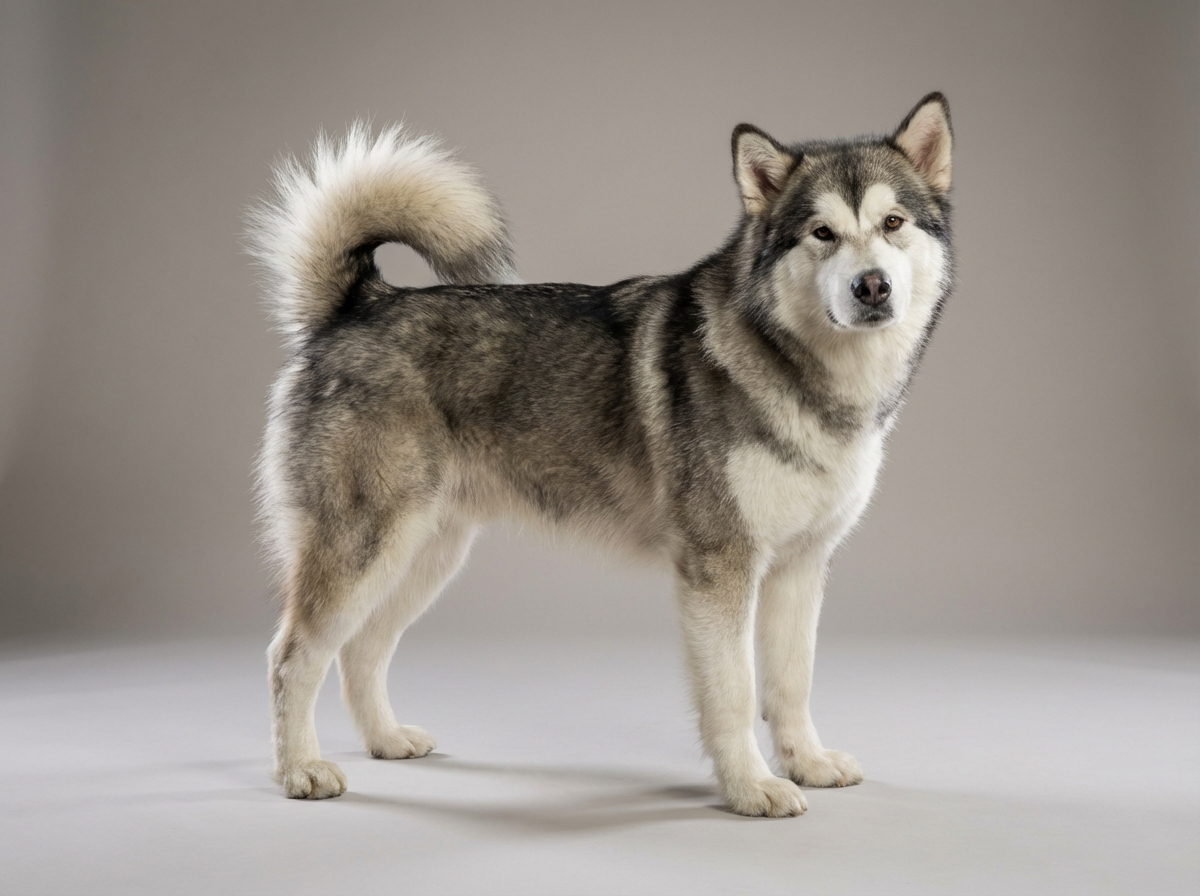
A purebred Malamute is a known quantity. Adult weight between 75 and 110 pounds. A thick double coat that sheds at 5/5 and needs raking two or three times a week. Two hours of daily exercise with physical resistance. An extreme escape artist. Warm with children and visitors, independent under instruction, poor off-lead. A well-informed buyer will find almost nothing surprising about the adult.

A Rottweiler Mix gives you one half of that certainty. The Rottweiler contribution is fairly predictable — substantial size, a short dense double coat, a guardian's reserve, a working dog's trainability, and a specific set of health risks. What the other half contributes is unknown until it appears. Adult size in this record spans 80 to 135 pounds, which is a fifty-five pound range. Coat, energy, prey drive, noise level and sociability all sit inside a range rather than at a point.

There is a genuine upside. Widening the gene pool reduces the odds of inheriting two copies of a recessive problem, and mixes often avoid the extremes of conformation that cause trouble in some purebreds. That is real, and it is not the same as being healthy — a Rottweiler Mix still carries the Rottweiler's cancer, cardiac and orthopaedic tendencies, because those are common rather than rare variants.

The practical conclusion is about where you get the dog. Buying a mixed puppy is buying a range. Adopting a mixed adult from a rescue that has actually assessed it is buying a known dog — the size is settled, the coat is visible, the temperament has been observed around people, dogs and children. For a guardian-type mix, that assessment is worth more than any pedigree.

2/5 with strangers and 2/5 with other dogs: what that requires

These are the two lowest social ratings on the page and they define the ownership more than the size does.

A 2/5 with strangers describes a guardian's reserve. A well-bred, well-socialised Rottweiler-type dog is watchful rather than hostile: it observes, it positions itself, it does not rush to greet. That is a functional trait and it is why the type has been used as a property and stock guardian for a very long time. Its temperament keywords here — confident, loyal, watchful, steady — describe exactly that.

The risk is what happens without deliberate work. A 2/5 stranger rating in an under-socialised dog does not stay neutral; it becomes suspicion, then fence-line reactivity, then a bite risk attached to a hundred-pound animal. Owners of guardian breeds carry an obligation that Malamute owners do not: structured, repeated, positive exposure to unfamiliar people, surfaces, noises and situations through the first two years, and honest management afterwards.

The 2/5 with other dogs is the same story in a different context. Same-sex intolerance is common in the type, escalation can be fast, and the physical consequences of a disagreement involving a dog this size are serious. Dog parks are usually a poor idea. Introductions need doing properly, on neutral ground, with both dogs on lead.

There is a practical administrative point too. Rottweiler-type dogs appear on breed restriction lists in some housing policies and insurance schedules, and a mix that looks like one is often treated as one regardless of its actual ancestry. Check your homeowners policy and your tenancy agreement before committing, not after.

The Malamute's 4/5 with strangers is the opposite problem: it will greet an intruder warmly and is no use whatsoever as a deterrent.

Osteosarcoma, the heart and the cruciate: three specific risks

The Rottweiler Mix's health list is short and every entry on it is worth understanding, because the Rottweiler's genetic contributions are common rather than rare.

Osteosarcoma — bone cancer — is the one that most often decides the end of a Rottweiler-type dog's life, and it is a large part of why the lifespan here is 9 to 10 years. It typically presents as a persistent lameness in a middle-aged or older dog, most often in a front leg near the shoulder or wrist, or a hind leg near the knee. It is frequently mistaken for a strain. The rule worth remembering is simple: in a large guardian-breed dog, a limp that does not resolve within a week or two is a radiograph, not a rest period. Early detection changes the options substantially.

Subaortic stenosis is a congenital narrowing below the aortic valve and the reason cardiac screening matters in this type. It ranges from an incidental murmur to a serious defect that limits exercise and shortens life. If you are buying a puppy rather than adopting, ask whether the Rottweiler parent was examined by a cardiologist.

Cruciate ligament tears are the third, and they are the most common orthopaedic emergency in heavy dogs. A cruciate rupture is painful, usually surgical and expensive, and the single biggest modifiable risk factor is body weight. Keeping a large mix lean is not cosmetic advice.

Hip and elbow dysplasia complete the list, and both are screenable in the Rottweiler parent.

The Malamute's list is longer but lighter at the top: hip and elbow dysplasia, bloat, hypothyroidism, epilepsy, progressive retinal atrophy, hereditary cataracts, zinc-responsive dermatosis and inherited polyneuropathy. Its cancer burden is not comparable, which is most of why it lives three to four years longer.

Exercise, coat and the shape of an ordinary week

On daily effort the Rottweiler Mix is the easier dog by a clear margin, and this is where its appeal sits.

Exercise is 4/5 against 5/5, and energy is 3/5 against 4/5. An adult wants around an hour to ninety minutes, split, with something to think about — the type takes to obedience, tracking, cart-pulling and protection sports readily at 4/5 trainability. It is a steady dog rather than a driven one, and it settles well indoors once the work is done.

The Malamute needs two hours minimum with physical resistance in it, every day, with no indoor substitute and no bad-weather exemption, and a summer routine forced to first and last light by the Arctic coat.

Grooming is 2/5 against 4/5. A short dense double coat needs a rubber curry or deshedding tool once or twice a week and nothing else; there is no matting, no seasonal event of any drama, and no professional appointment. Shedding is 3/5 against 5/5. In a house, that difference is substantial.

Solitude favours the mix too at 3/5 against 2/5 — a normal working day with exercise either side is within range for many of them, whereas a Malamute left the same way starts on the garden.

Cost runs $110–240 a month against $150–300, with both at cost level 4/5 and first years of $1,700–3,200 against $2,000–4,000. The mix's veterinary spending is less predictable, though, because cruciate surgery and cancer treatment are both expensive and both are realistic possibilities in the type.

Where the Malamute wins outright is children — 5/5 against 3/5 — and lifespan. The 3/5 is not a warning about aggression; it reflects a large, physically powerful dog with a reserved temperament that needs supervision around small children rather than a breed that is naturally unsuited to them.

How to choose well, whichever way you go

For the Rottweiler Mix, almost everything depends on whether you can see the adult dog.

If you are adopting, ask the rescue what they have actually observed: how the dog behaves when a stranger enters, how it responds to another dog on a lead, whether it has lived with children, how it handles being left, and whether it has been through a proper assessment or simply been in a kennel. A rescue that answers those questions specifically is giving you more certainty than most puppy purchases can. Ask about any known limp, any murmur heard at intake, and its body condition.

If you are buying a mixed puppy, be clear that you are buying a range. Ask what both parents are, what they weigh, what their temperaments are like around visitors, and what health testing either has had. A breeder producing guardian-type mixes without health testing or temperament assessment is not offering you hybrid vigour; they are offering you a coin toss.

For the Malamute, the questions are conventional and answerable: hip and elbow scores on both parents, eye certification, honesty about any seizure or polyneuropathy history. The harder self-assessment is about your own life — your fence, your climate, your mornings.

Both breeds rate 2/5 for first-time owners, and they are difficult in different ways. The Malamute tests you on containment and compliance; the Rottweiler Mix tests you on socialisation and on managing a powerful, reserved dog responsibly in public. Neither is unmanageable. Both punish drift.

If the deciding factor is time rather than temperament, the mix asks for less of your week. If it is certainty, the purebred is the only one of the two that can offer it.

Alaskan Malamute vs Rottweiler Mix at a glance

A Rottweiler Mix rates 2/5 with strangers, 2/5 with other dogs, and 2/5 for first-time owners, and lives 9 to 10 years. The Malamute matches only that last figure — and lives three to four years longer.

The Rottweiler Mix is easier to groom, quieter, and more trainable than the Malamute, but it carries the guardian breed's social ratings and a short expected life. It also carries a level of uncertainty the Malamute simply does not: as a mix, its adult size, coat, and temperament are a range rather than a known quantity.

Choose the Malamute if predictability matters to you — fixed size, fixed coat, fixed temperament — and you have cold weather, secure fencing, and two hours a day of physical work to offer. Choose a Rottweiler Mix if you want a steady, trainable, moderate-exercise large dog, can commit to serious socialisation, and are meeting the actual adult rather than guessing from a puppy.

Frequently asked questions

Is a Rottweiler Mix healthier than a purebred?

Partly. A wider gene pool reduces the odds of inheriting two copies of a rare recessive problem. But the Rottweiler's main risks — osteosarcoma, cardiac disease, cruciate tears, hip and elbow dysplasia — are common rather than rare, and mixing does not remove them.

How big will a Rottweiler Mix get?

The recorded range is 80 to 135 pounds, which is a fifty-five pound spread. The only reliable guide is knowing what both parents were and what they weighed — or adopting an adult whose size is already settled.

What does a 2/5 stranger rating actually mean?

A guardian's reserve — watchful rather than hostile, observing rather than greeting. Without deliberate socialisation through the first two years it drifts into suspicion and reactivity, which is a serious matter in a dog of this size.

Why is the lifespan only 9 to 10 years?

Size plus cancer. Osteosarcoma is common in Rottweiler lines and is usually what decides the end. The Malamute's 10 to 14 years reflects a much lighter cancer burden despite a comparable adult weight.

Which needs less daily effort?

The Rottweiler Mix. Exercise is 4/5 against 5/5, grooming 2/5 against 4/5, shedding 3/5 against 5/5, and it tolerates a working day better at 3/5 against 2/5.

Do breed restrictions apply to mixes?

Often yes. Housing policies and insurance schedules that restrict Rottweiler-type dogs frequently apply to anything that looks like one, regardless of actual ancestry. Check your tenancy agreement and homeowners policy before committing.

What should I ask a rescue about a Rottweiler Mix?

How it reacts to a stranger entering, how it handles another dog on a lead, whether it has lived with children, how it copes with being left, and whether any limp or heart murmur has been noted. Specific answers are worth more than a pedigree.

Quick answers

View more answers
Living

Malamute or Rottweiler Mix: which should I choose?

The mix if you want a steady, trainable, lower-maintenance large dog and you can commit to serious socialisation — ideally adopting an assessed adult. The Malamute if predictability matters and you can supply two hours of daily physical work.

Costs

Which costs less to keep?

The Rottweiler Mix at $110–240 a month against $150–300, though both rate 4/5 and the mix's veterinary spending is less predictable given cruciate and cancer risk.

Health

What is the most important health rule for a Rottweiler-type dog?

A limp that does not resolve in a week or two deserves an X-ray rather than rest. Osteosarcoma is common in the type and early detection materially changes the options.

Behavior

Which is better with children?

The Malamute at 5/5 against 3/5. The mix's lower score reflects a powerful, reserved dog that needs supervision around small children rather than any natural unsuitability.

Related DogBreedCompass guides

  • Alaskan Malamute breed guideThe Malamute profile covers exercise load, coat raking and the containment work the breed requires.
  • Rottweiler Mix breed guideThe mix profile covers what the Rottweiler side contributes and what remains variable.
  • cruciate ligament injuries in Rottweiler mixesCruciate tears are the most common orthopaedic emergency in heavy dogs and are strongly weight-linked.
  • cancer in Rottweiler mixesCancer is the entry that most often decides the end of a Rottweiler-type dog's life.
  • elbow dysplasia in Alaskan MalamutesElbow dysplasia sits on both lists and is screenable in the purebred parent.
  • Rottweiler rescueRottweiler-type dogs are common in rescue, and an assessed adult removes most of the guesswork.

Related guides

Important reminder

Health information here is general and is not veterinary advice. Cardiac screening, cancer risk and orthopaedic concerns should be discussed with your own veterinarian.

Some links on this site are affiliate links. We may earn a commission if you buy through them, at no additional cost to you.

Find Your Perfect Breed

Match your lifestyle to the right dog.

Take quiz

Find your match

Not sure which breed is right for you? Take our 2-minute quiz to find out.

Take the quiz