Health
Is Legg-Calvé-Perthes disease relevant to Welsh Springer Spaniels?
No — it's documented in small terrier and toy breeds, not in Welsh Springer Spaniels.

Quick answer
Is Legg-Calvé-Perthes disease relevant to Welsh Springer Spaniels?
No — it's documented in small terrier and toy breeds, not in Welsh Springer Spaniels.
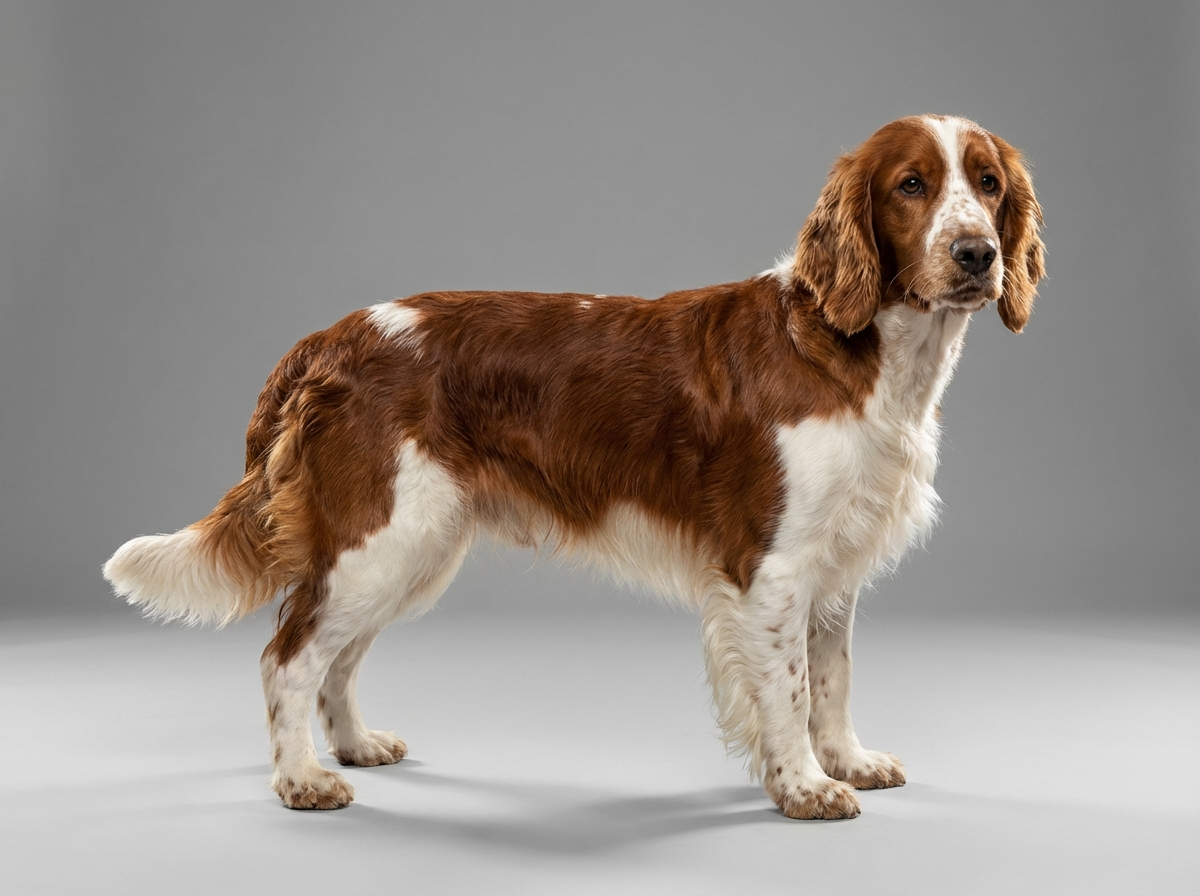
Legg-Calvé-Perthes shows up on general canine hip-disease lists often enough that it's easy to wonder about it, but it's specifically tied to small dog body size, and a 35-55 lb Welsh Springer Spaniel sits well outside that range.
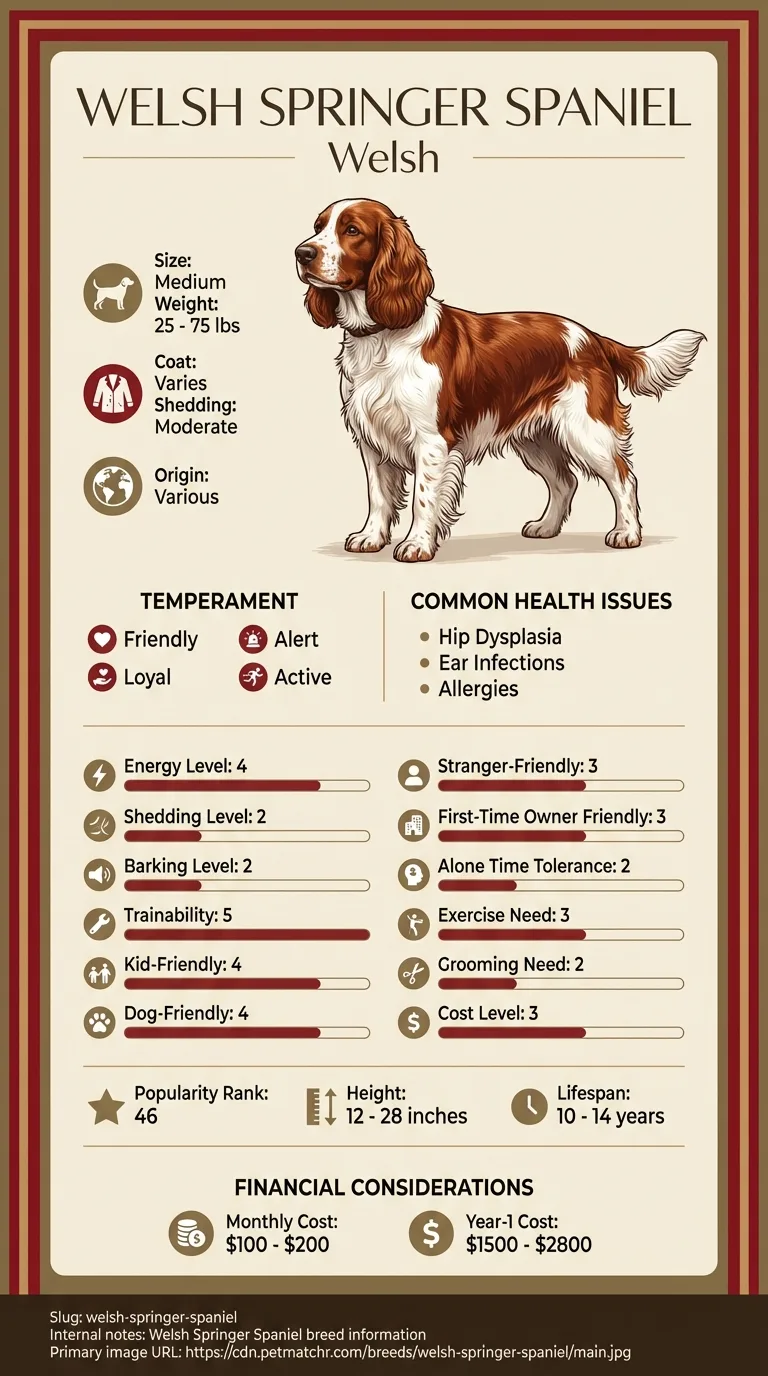
Owners who've read a general list of dog hip diseases, or who know someone with a terrier diagnosed with Legg-Calvé-Perthes, are the ones most likely to want a straight answer about whether it applies to their Welsh Springer.
This guide is not medical advice. If your dog shows pain, sudden behavior change, or worsening symptoms, consult a licensed veterinarian.
Some links may be affiliate links. We may earn a commission at no extra cost to you. We only suggest products we believe are helpful for dog owners.
We research and check what we publish, but we do not warrant that any figure, date, price, or statement is accurate, complete, or current, and we accept no liability for any loss, cost, injury, or other harm arising from the use of this site. Use it as one reference among several. You remain responsible for your own decisions and for your dog's care - confirm anything that matters with a licensed veterinarian or another qualified professional before you act on it. Full disclaimer.
Legg-Calvé-Perthes disease is a well-documented condition in small and toy breeds, caused by disrupted blood flow to the femoral head that leads to bone breakdown and hip collapse, and it isn't established as occurring in Welsh Springer Spaniels. For a Welsh Springer showing hip or leg symptoms, hip dysplasia — a genuinely documented condition in this breed — along with strains and injuries are the far more likely and far more relevant explanations to investigate.
Legg-Calvé-Perthes disease is considered uncommon even within the small and toy breeds where it's documented, and it is not recognized as occurring in Welsh Springer Spaniels at all. That makes it essentially irrelevant to this breed's actual health profile, which instead includes hip dysplasia, ear infections, epilepsy, glaucoma, and hypothyroidism.
Legg-Calvé-Perthes disease has an established genetic and vascular basis that's been studied specifically in small and toy breed lines, particularly West Highland White Terriers and Yorkshire Terriers. There's no established connection between this pathway and Welsh Springer Spaniel genetics, and the breed's larger adult size alone places it outside the population where the condition has been documented.
Because this condition isn't relevant to Welsh Springer Spaniel genetics or size class, there are no meaningful environmental triggers to discuss for it in this breed. The environmental factors worth focusing on instead are the ones tied to hip dysplasia, such as controlling growth-phase exercise intensity and maintaining a healthy weight, since both genuinely affect this breed's documented hip health.
See a vet promptly for any limping that persists beyond a day or two, worsens, or is accompanied by visible discomfort, regardless of what condition you suspect. In a Welsh Springer Spaniel, the vet's workup will reasonably focus on hip dysplasia, soft-tissue injury, or other causes relevant to this breed's actual profile rather than Legg-Calvé-Perthes disease.
A limping Welsh Springer Spaniel can trigger a search that lands on Legg-Calvé-Perthes disease, but several more likely explanations deserve consideration first.

See all Welsh Springer Spaniel health problems, which breeds are prone to legg calv perthes disease, or the full Welsh Springer Spaniel breed guide for temperament, exercise needs and ownership costs.
Because Legg-Calvé-Perthes disease isn't relevant to Welsh Springer Spaniels, there's no diagnostic or treatment timeline to track for it in this breed. If hip symptoms do appear, the realistic timeline shifts to whatever workup a vet recommends for hip dysplasia or another cause, which typically starts with a physical exam and may include X-rays.
Success here means redirecting attention from a small-breed condition that doesn't apply toward the hip and joint issues that are actually documented in Welsh Springer Spaniels. For most owners, that looks like watching gait and mobility as the dog matures and bringing up any real changes with a vet promptly.
It's easy to lump every hip issue together, but Legg-Calvé-Perthes disease and hip dysplasia work in completely different ways. Legg-Calvé-Perthes is a loss of blood supply to the femoral head bone itself, almost always in small or toy breeds under about 25 pounds, usually showing up between four and twelve months of age.
Hip dysplasia, the condition actually documented in Welsh Springer Spaniels, is a developmental laxity and malformation of the hip joint that tends to affect medium and larger breeds and often involves both hips rather than one. The two conditions can look superficially similar from the outside — a dog favoring a back leg — but the underlying bone pathology, the affected breed profile, and the treatment approach are distinct.
For a Welsh Springer Spaniel, the size and breed profile point toward hip dysplasia as the relevant concern, not Legg-Calvé-Perthes.
Marisol, in Boise, noticed her ten-month-old Welsh Springer Spaniel puppy hopping oddly on one back leg after a hike and immediately thought of Legg-Calvé-Perthes disease, since a neighbor's Westie had been diagnosed with it the year before. Her vet examined the leg and found a mild soft-tissue strain rather than any sign of hip joint collapse, and explained that Legg-Calvé-Perthes is a small-breed condition that wouldn't be on the differential list for a dog of this size at all. The vet did flag hip dysplasia as the more relevant long-term watch item for this breed and recommended keeping an eye on the puppy's gait as she finished growing.
Key takeaway: A limping episode in a Welsh Springer Spaniel puppy is far more likely to be a strain, an injury, or early hip dysplasia than Legg-Calvé-Perthes disease, which is a small-breed condition that doesn't apply to a dog in this weight class.
It isn't documented as occurring in Welsh Springer Spaniels. Legg-Calvé-Perthes is characterized in small and toy breeds under roughly 25 pounds, and a 35-55 lb Welsh Springer falls outside the size range where it's been observed.
It's best documented in West Highland White Terriers, Yorkshire Terriers, Manchester Terriers, and Cairn Terriers, along with other small terrier and toy breeds. These breeds share a small adult body size that isn't shared by the Welsh Springer Spaniel.
Given the breed, it's very unlikely; more common explanations include a soft-tissue strain, a minor injury, or early hip dysplasia signs. A vet exam and, if warranted, hip X-rays will identify the actual cause far more reliably than guessing from a small-breed condition.
No, they're different diseases that happen to both affect the hip. Legg-Calvé-Perthes is avascular necrosis of the femoral head bone itself in small dogs, while hip dysplasia is a developmental laxity and malformation of the joint that's genuinely documented in Welsh Springer Spaniels.
In the small breeds where it occurs, signs typically start between four and twelve months of age as the femoral head bone breaks down. That age window matters less for a Welsh Springer, since the size and breed profile rule the condition out regardless of the puppy's age.
Hip dysplasia is the condition genuinely documented in this breed, so watch for bunny-hopping gait, reluctance to jump or climb stairs, or stiffness after rest, especially as the dog matures. Those signs warrant a vet visit and possibly hip radiographs.
Ask the original vet or shelter for the imaging and records so a current vet can review the actual findings rather than the label. Given the breed and typical case details, a re-evaluation for hip dysplasia or another joint issue is usually the more productive next step.
No — it's documented in small terrier and toy breeds, not in Welsh Springer Spaniels.
Hip dysplasia is the genuinely documented hip condition in this breed and the one worth monitoring.
Largely yes, since the condition is tied to small breeds and this is a 35-55 lb medium-sized dog.
No — budget instead for routine hip evaluation and monitoring, which is relevant to this breed.
Training doesn't address joint disease, but a vet-guided exercise plan can support hip health during growth.
A one-page prep sheet for this condition: the signs, the questions to ask, what to get priced. Unlocks here.
You get: Vet visit prep sheet
No spam. One-click unsubscribe. See our privacy policy.
Preview page 1 before you decide.