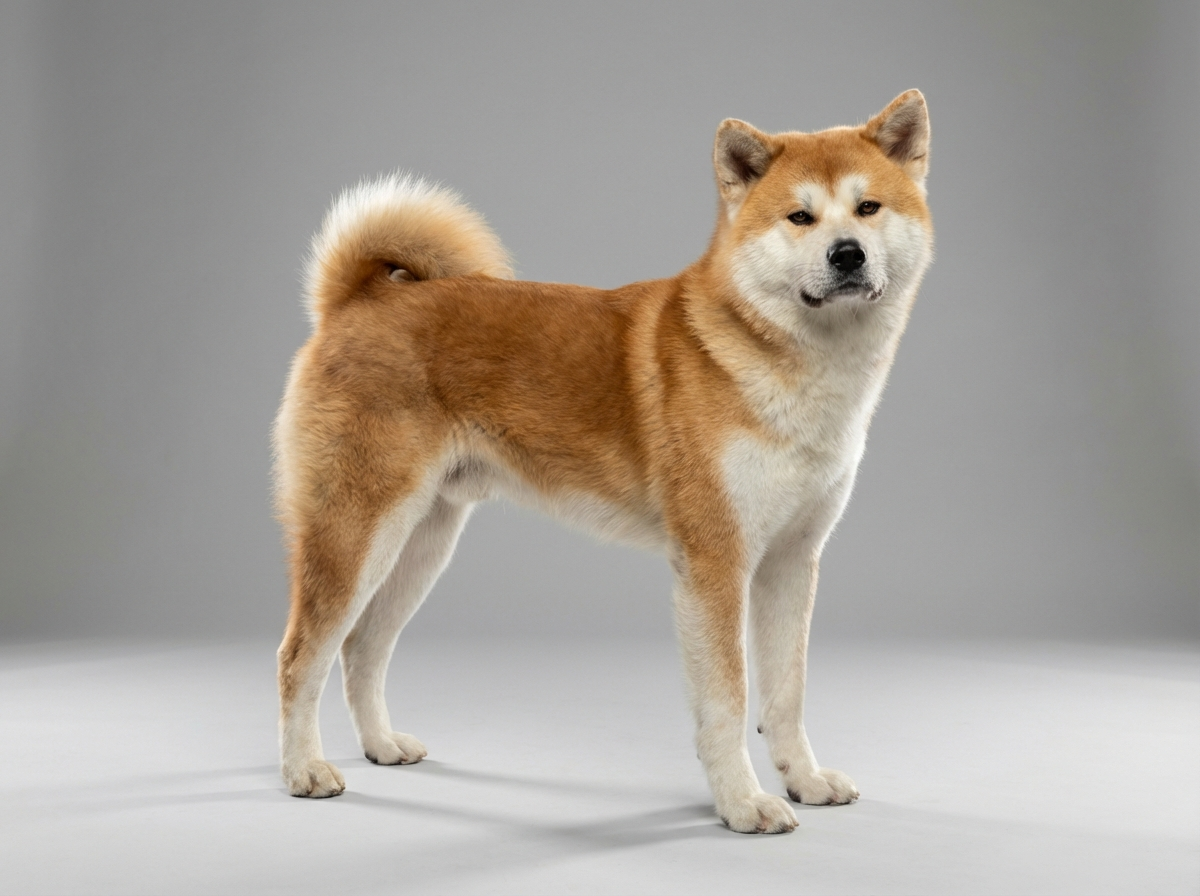
Health
Is Legg-Calvé-Perthes disease a real risk for Akitas?
No — it's a small-breed condition, and the Akita's large size puts it well outside the documented risk group.

Quick answer
Is Legg-Calvé-Perthes disease a real risk for Akitas?
No — it's a small-breed condition, and the Akita's large size puts it well outside the documented risk group.
Legg-Calvé-Perthes disease is one of the more misapplied search terms for large-breed owners, because it's fundamentally a small-dog condition — and the Akita is anything but small.
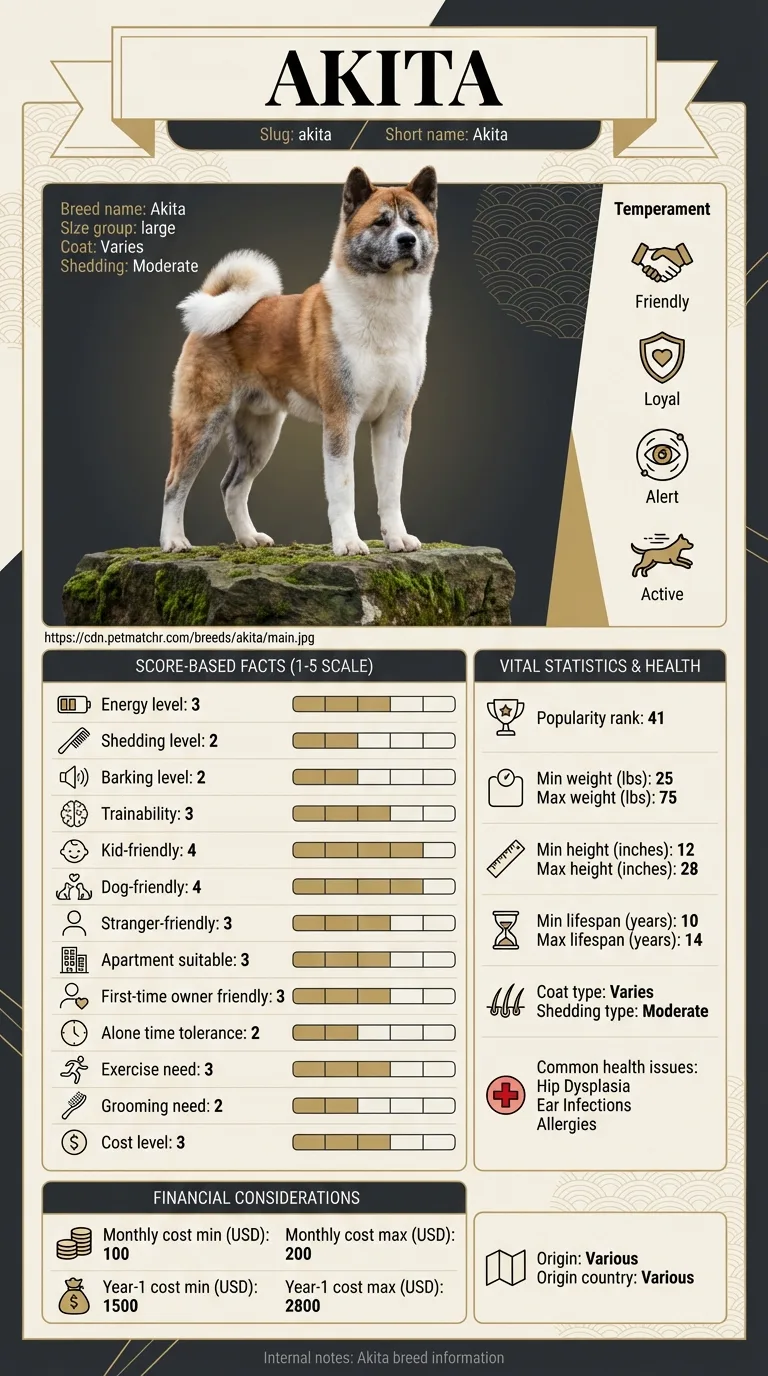
This search usually comes up when an Akita owner notices a young dog limping and finds Perthes disease mentioned in general dog-health material without realizing how tightly it's tied to small-breed body size.
This guide is not medical advice. If your dog shows pain, sudden behavior change, or worsening symptoms, consult a licensed veterinarian.
Some links may be affiliate links. We may earn a commission at no extra cost to you. We only suggest products we believe are helpful for dog owners.
We research and check what we publish, but we do not warrant that any figure, date, price, or statement is accurate, complete, or current, and we accept no liability for any loss, cost, injury, or other harm arising from the use of this site. Use it as one reference among several. You remain responsible for your own decisions and for your dog's care - confirm anything that matters with a licensed veterinarian or another qualified professional before you act on it. Full disclaimer.
Check this first
Whatever the underlying cause, a young Akita that suddenly won't bear weight on a rear leg, cries out when the hip or leg is touched, or shows visible muscle wasting on one side needs prompt veterinary evaluation. In a large breed this is far more likely to reflect hip dysplasia, a growth-plate injury, or a soft-tissue injury than Legg-Calvé-Perthes disease, but the urgency of getting it checked is the same regardless of the eventual diagnosis.
A milder, intermittent limp in a growing Akita puppy is common enough to warrant a scheduled orthopedic exam and X-rays rather than a same-day emergency visit, particularly if the puppy is otherwise eating, playing, and behaving normally between episodes.
The practical takeaway for Akita owners is not to rule out Perthes disease specifically, but simply to get any persistent young-dog lameness properly imaged, since the far more likely large-breed explanations are managed differently.
If any of these apply, call your vet or an emergency clinic now. The rest of this page is for the cases that are not an emergency.
Legg-Calvé-Perthes disease is a condition where the blood supply to the femoral head fails in a young dog, causing the bone to weaken and collapse. It is documented almost exclusively in small dogs under roughly 25 pounds, which makes it an unlikely explanation for lameness in a large breed like the Akita.
Legg-Calvé-Perthes disease is well documented in small breeds such as Yorkshire Terriers and Miniature Pinschers, but it is not recognized as a meaningful concern in large breeds, and there is no established pattern of it occurring in Akitas.
The Akita's relevant breed trait here is actually its size working against this specific diagnosis: Perthes disease is tied to the vascular anatomy of small hip joints, and at 70 to 130 pounds, the Akita's joint size and blood supply pattern don't match the profile seen in affected small breeds. The Akita's genuinely documented hip concern is hip dysplasia, a structurally different problem involving how the joint is shaped rather than its blood supply.
Because Perthes disease isn't a meaningful risk for this breed, environmental triggers specific to it aren't relevant for Akita owners. The environmental factors worth focusing on for a young Akita's joint health are growth-phase nutrition, weight management, and appropriately paced exercise — all of which affect the breed's actual documented risk of hip and elbow dysplasia.
See a vet promptly for any persistent limp in a growing Akita puppy, and the same day if the leg becomes suddenly non-weight-bearing or the puppy shows sharp pain on handling. Your vet's workup will look for large-breed-relevant causes rather than Perthes disease specifically.
Searching for the wrong condition can delay finding the right one. These are the mistakes to avoid if your young Akita is limping.
See all Akita health problems, which breeds are prone to legg calv perthes disease, or the full Akita breed guide for temperament, exercise needs and ownership costs.
Because Perthes disease itself isn't a realistic diagnosis for this breed, there's no meaningful recovery timeline to track for it. If your Akita's limp turns out to be hip dysplasia or a growth-related issue, timelines for those conditions apply instead.
Success here looks like getting a young Akita's limp correctly diagnosed and appropriately treated, rather than time spent researching or worrying about a condition that doesn't meaningfully apply to the breed.
When her seven-month-old Akita, Mochi, started limping on a rear leg, Grace searched online and found Legg-Calvé-Perthes disease listed as a possible cause of puppy hip limping. Worried, she brought Mochi in expecting to discuss that specific diagnosis. Her vet explained that Perthes disease essentially doesn't occur in large breeds like Mochi, and instead ordered hip X-rays, which showed mild hip dysplasia. Grace shifted her focus to weight management and a structured low-impact exercise plan, which suited the actual diagnosis far better than the condition she'd initially read about.
Key takeaway: Breed size matters enormously when narrowing down a diagnosis — for a large breed like the Akita, hip dysplasia, not Legg-Calvé-Perthes disease, is the joint condition actually worth watching for.
It's not documented as a meaningful risk for the breed. Perthes disease is overwhelmingly seen in small dogs under roughly 25 pounds, and the Akita's adult weight of 70 to 130 pounds puts it well outside that pattern.
The leading theory involves the blood vessels supplying the femoral head being more vulnerable to interruption in small, narrow hip joints. Larger, differently proportioned joints like an Akita's don't show the same vulnerability.
Hip dysplasia, elbow dysplasia, panosteitis (growth-related bone inflammation), or a soft-tissue injury are all far more likely explanations for lameness in a growing Akita than Perthes disease.
It's reasonable to mention if you're concerned, but for a large breed, your vet will more likely focus imaging and workup on the conditions actually documented as common in large dogs, especially hip and elbow dysplasia.
Yes — hip dysplasia is specifically listed among the Akita's documented common health issues, and it's a fundamentally different mechanism than Perthes disease: a poorly fitting joint rather than a loss of blood supply to the bone.
A vet exam checking range of motion and pain response, followed by X-rays, is the standard approach, and this workup would identify hip dysplasia or another cause rather than assuming any one diagnosis.
Not with total certainty, but body size is one of the strongest known risk factors for several orthopedic conditions, which is why vets weigh it heavily when narrowing down a differential diagnosis.
No — it's a small-breed condition, and the Akita's large size puts it well outside the documented risk group.
Hip dysplasia, elbow dysplasia, or a growth-related bone issue are far more likely explanations in this breed.
No separate test is needed — standard hip X-rays for lameness will show the actual cause regardless.
No — feed a large-breed growth formula and pace exercise appropriately, the same sound approach regardless of this specific condition.
It doesn't hurt to mention any specific worry, but expect your vet to focus the workup on large-breed-relevant conditions.
A one-page prep sheet for this condition: the signs, the questions to ask, what to get priced. Unlocks here.
You get: Vet visit prep sheet
No spam. One-click unsubscribe. See our privacy policy.
Preview page 1 before you decide.