Health
What is Von Willebrand disease in dogs?
A genetic clotting disorder from a deficiency in von Willebrand factor, a protein needed for stable blood clot formation.

Quick answer
What is Von Willebrand disease in dogs?
A genetic clotting disorder from a deficiency in von Willebrand factor, a protein needed for stable blood clot formation.
Most days, a dog with this condition looks and acts completely normal — it's injury and surgery where the difference actually shows up.
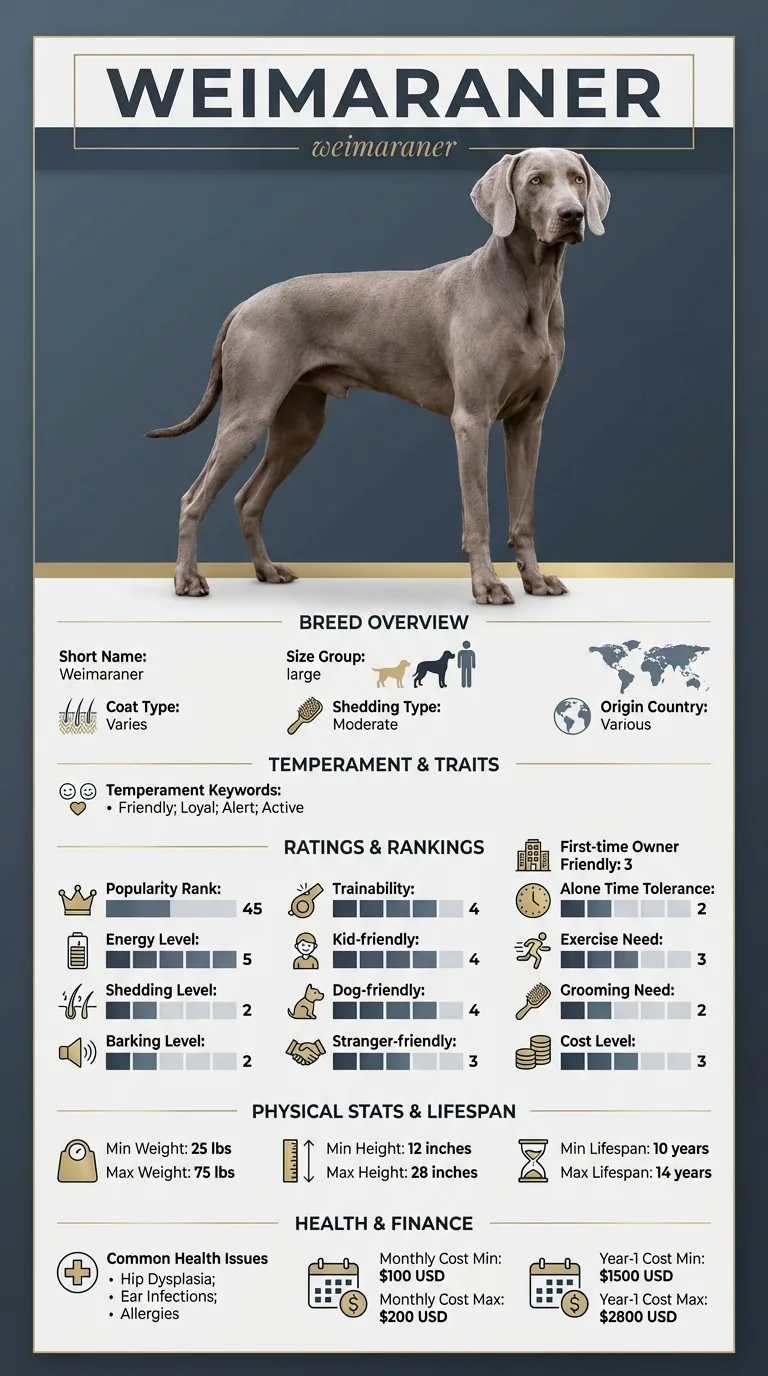
This is most relevant to owners of a diagnosed Weimaraner navigating everyday injury risk, and to anyone planning a surgery, even a routine spay or neuter, for a dog with this documented condition.
This guide is not medical advice. If your dog shows pain, sudden behavior change, or worsening symptoms, consult a licensed veterinarian.
Some links may be affiliate links. We may earn a commission at no extra cost to you. We only suggest products we believe are helpful for dog owners.
Von Willebrand disease is one of the most specifically documented conditions in Weimaraners, a genetic deficiency affecting the blood's ability to clot properly after injury. Most affected dogs show no symptoms in daily life, with the condition mattering most around actual injury or surgery, where advance knowledge of the diagnosis allows appropriate precautions to be planned rather than discovered as a surprise.
Von Willebrand disease is specifically and consistently documented as one of the notable inherited conditions in Weimaraners, making it a well-recognized part of the breed's health profile and a routine consideration in pre-surgical planning for this breed specifically.
Von Willebrand disease is directly documented as an inherited condition in Weimaraners, tied to the breed's specific genetic ancestry rather than being a general risk shared equally across all breeds, which is why it's specifically flagged in this breed's health profile.
As a genetic condition, environmental factors don't cause Von Willebrand disease itself, but the situations that actually reveal its effects — injury, surgery, or any event that challenges the clotting system — are shaped by a dog's activity level and life events rather than the underlying genetic condition changing over time.
Talk to your vet about testing if there's a family history or if you notice prolonged bleeding after a minor injury. Uncontrolled or excessive bleeding after any injury or procedure is an emergency requiring immediate veterinary care.
See all Weimaraner health problems, which breeds are prone to von willebrands disease, or the full Weimaraner breed guide for temperament, exercise needs and ownership costs.
Diagnosis through a blood test is typically completed within days. This is a lifelong condition rather than one with a resolution timeline, requiring ongoing awareness and disclosure at every relevant vet visit rather than active daily treatment.
Success looks like a completely normal daily life for the dog, with the diagnosis simply factored appropriately into every future injury response and surgical decision, rather than causing ongoing symptoms or restrictions in day-to-day activity.
Von Willebrand disease results from a deficiency or dysfunction of von Willebrand factor, a protein essential for platelets to properly stick together and form a stable clot after a blood vessel is injured. Most affected dogs have a mild-to-moderate form and show no obvious symptoms during normal daily life — no visible bruising, no spontaneous bleeding, nothing that would tip off an owner without testing.
Where it shows up is in situations that actually challenge the clotting system: a deep cut that bleeds longer than expected, prolonged bleeding after losing a baby tooth or during a heat cycle, or excessive bruising after a minor injury. Because these signs can be subtle or easily missed, many dogs aren't identified until a specific test is run, either because of a known family history or because of an unexpected bleeding episode during a routine event like a nail trim gone slightly too short.
This is where a Von Willebrand diagnosis genuinely changes practical decisions. Any planned surgery — a routine spay or neuter, a dental cleaning with extractions, an orthopedic procedure — needs to be discussed with your vet in the context of this diagnosis beforehand, not discovered mid-procedure. Depending on the severity and the specific surgery planned, your vet may recommend pre-surgical clotting tests, having compatible blood products available, or in some cases referral to a facility better equipped to manage a bleeding risk during a more involved procedure.
The reassuring side of this is that a known diagnosis is manageable precisely because it's known in advance. A dog whose Von Willebrand status is documented and shared with every vet involved in their care can have surgery planned around that risk, with appropriate precautions in place, rather than facing a surprise complication during an otherwise routine procedure. This is exactly why disclosing the diagnosis at every vet visit, including emergency visits, matters.

If you think your Weimaraner has von willebrand's disease, the plan is three steps: write down what you have seen and when it started, book a veterinary appointment rather than waiting for the next flare, and take video of the behaviour or symptom before you go — the thing you are worried about rarely happens in the consulting room. Screening in the parents covers bloat (gdv), hip dysplasia, hypertrophic osteodystrophy.
What the vet visit should produce is a diagnosis and a written plan, not just reassurance: what is being ruled out, what the monitoring interval is, and which signs mean you come back sooner. Ask what the treatment costs across a year rather than per visit, because that is the number that decides whether you are managing this condition or reacting to it.
Between appointments, keep a short log — dates, what you saw, what changed. It is the single most useful thing an owner brings to a follow-up, and for von willebrand's disease it is often what separates a clear pattern from a guess.
When Ingrid adopted her Weimaraner puppy Freya, her breeder mentioned that Freya's line had a documented history of Von Willebrand disease and recommended testing before any future surgery. A blood test at Freya's next visit confirmed a mild-to-moderate form of the condition. When it came time for Freya's spay, Ingrid made sure her vet knew about the diagnosis well in advance. Her vet ran pre-surgical clotting tests and had compatible blood products on standby just in case, precautions that wouldn't have been in place without that advance knowledge. The surgery went smoothly with slightly longer-than-average but well-managed bleeding, exactly as her vet had anticipated. Freya has lived a completely normal, active life since, with the diagnosis noted at every subsequent vet visit as a routine part of her file.
Key takeaway: This diagnosis rarely changes daily life at all — what it changes is how surgery gets planned, and that planning only works if every vet involved actually knows about it in advance.
A genetic deficiency or dysfunction of von Willebrand factor, a protein needed for platelets to properly form a stable clot after injury. It's one of the most specifically documented inherited conditions in Weimaraners.
Usually not. Most affected dogs, especially with a mild-to-moderate form, look and act completely normal day to day, with the condition only becoming apparent during an injury, surgery, or specific testing.
Through a specific blood test measuring von Willebrand factor levels, often recommended based on family history, breed-specific screening, or after an unexpected bleeding episode prompts investigation.
It doesn't rule out surgery, but it does change how surgery is planned. Your vet may recommend pre-surgical clotting tests, having blood products available, or added precautions depending on the severity and the specific procedure.
Yes, absolutely, including at emergency visits. A documented diagnosis known in advance allows appropriate precautions to be planned, rather than a surprise complication being discovered mid-procedure.
There's no cure, since it's a genetic condition, but it's well managed through awareness, precaution around injury and surgery, and in more severe bleeding episodes, treatment with specific clotting support your vet can provide.
Yes, severity varies, and Weimaraners are most commonly associated with a mild-to-moderate form. Your vet's specific test results and clinical history help determine which category your dog falls into and what precautions are appropriate.
A genetic clotting disorder from a deficiency in von Willebrand factor, a protein needed for stable blood clot formation.
Usually not, most affected dogs look and act completely normal day to day, with effects showing during injury or surgery.
With a specific blood test measuring von Willebrand factor levels, often prompted by family history or an unexpected bleeding episode.
Yes, your vet may recommend pre-surgical clotting tests or precautions depending on the severity and procedure planned.
Yes, disclosing it at every visit, including emergencies, allows appropriate precautions to be planned in advance.
A one-page prep sheet for this condition: the signs, the questions to ask, what to get priced. Unlocks here.
You get: Vet visit prep sheet
No spam. One-click unsubscribe. See our privacy policy.
Preview page 1 before you decide.