Health
What's an early sign of gradual disc disease in a Weimaraner?
Mild back-leg weakness or stiffness that slowly worsens over months, sometimes with occasional paw knuckling.

Quick answer
What's an early sign of gradual disc disease in a Weimaraner?
Mild back-leg weakness or stiffness that slowly worsens over months, sometimes with occasional paw knuckling.
Disc disease in this breed usually isn't a single bad moment — it's years of wear finally catching up.
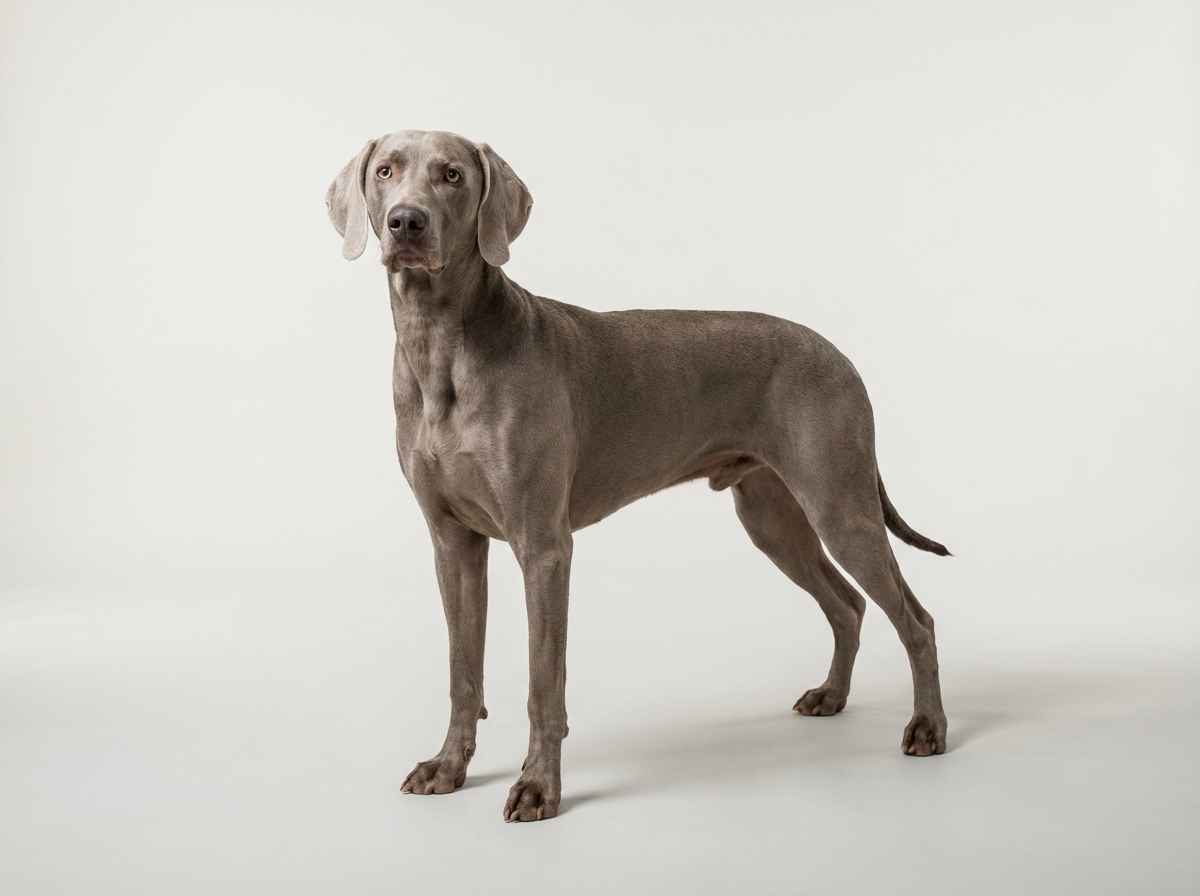
Middle-aged and older Weimaraners are most affected, along with owners who may notice subtle changes in how their dog moves long before anything looks like an obvious injury.
This guide is not medical advice. If your dog shows pain, sudden behavior change, or worsening symptoms, consult a licensed veterinarian.
Some links may be affiliate links. We may earn a commission at no extra cost to you. We only suggest products we believe are helpful for dog owners.
We research and check what we publish, but we do not warrant that any figure, date, price, or statement is accurate, complete, or current, and we accept no liability for any loss, cost, injury, or other harm arising from the use of this site. Use it as one reference among several. You remain responsible for your own decisions and for your dog's care - confirm anything that matters with a licensed veterinarian or another qualified professional before you act on it. Full disclaimer.
Gradual intervertebral disc disease develops slowly over months as disc material bulges toward the spinal cord, producing progressively worsening back-leg weakness and stiffness rather than a sudden collapse. In an active, large breed like the Weimaraner, years of hard exercise contribute to the cumulative wear behind this slower disease process.
Gradual disc disease becomes more common as large, active dogs move into middle age and beyond, reflecting the cumulative nature of spinal wear. It's a recognized concern for large-breed dogs generally, and the Weimaraner's size and activity level place it within that broader risk category.
As a large, athletic breed built for sustained running and hard turns in the field, Weimaraners put substantial cumulative mechanical load on the spine over a decade-plus lifespan, which contributes to the gradual disc wear behind this slower-progressing form of the condition.
Body weight, the amount of high-impact exercise like jumping, and overall activity level throughout a dog's life all influence how quickly cumulative spinal wear translates into a clinically noticeable disc problem.
See your vet for gradually worsening back-leg weakness, stiffness, paw knuckling, or reluctance to jump or climb stairs. Sudden inability to walk, dragging of the back legs, or acute severe pain are more urgent and warrant prompt veterinary attention rather than waiting.
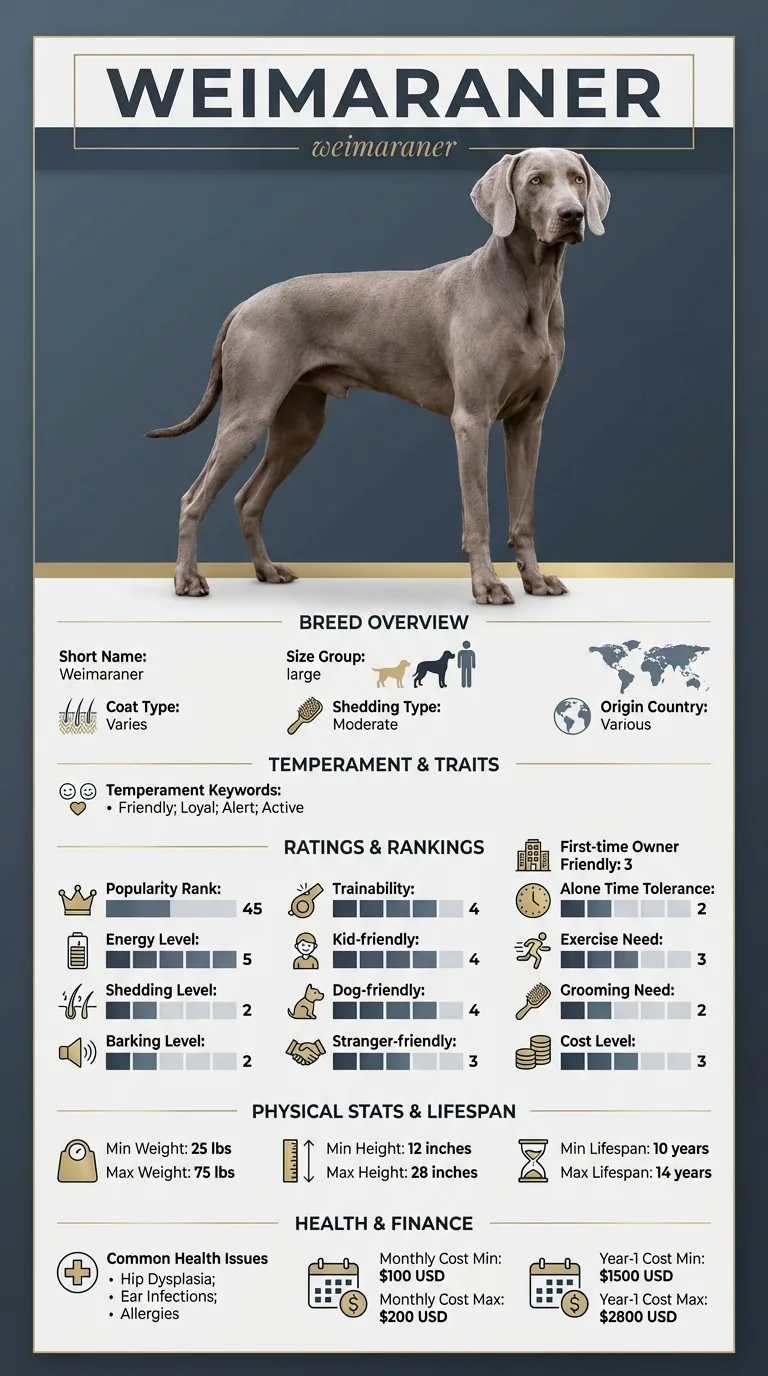
See all Weimaraner health problems, which breeds are prone to intervertebral disc disease ivdd, or the full Weimaraner breed guide for temperament, exercise needs and ownership costs.
Diagnosis typically involves a neurological exam plus advanced imaging within one to two visits. Conservative management often shows improvement within four to six weeks; recovery from surgery, if needed, is measured in months.
Success looks like stabilizing or slowing the progression of weakness, keeping the dog comfortable, and maintaining as much mobility and quality of life as the specific severity allows, rather than expecting a full reversal of existing nerve damage.
Discs act as cushions between the vertebrae, and over years of use, their material can slowly bulge or protrude toward the spinal cord rather than rupturing suddenly. This slower process, sometimes called Type II disc disease, tends to affect middle-aged and older dogs and produces gradually worsening signs — mild back pain, a slightly stiffer gait, weakness in the back legs that gets more noticeable over months rather than appearing overnight.
Because the onset is so gradual, it's often mistaken for ordinary arthritis or simple aging at first. The distinguishing clues tend to be a pattern that's more specifically neurological than a typical arthritic stiffness — subtle incoordination in the back legs, knuckling of a paw when walking, or reluctance to do things like climb stairs that involve bending the spine more than usual.
A vet will usually start with a neurological exam checking reflexes, proprioception, and pain response, since these findings help localize which part of the spine is affected. Advanced imaging like an MRI or CT scan is generally needed to confirm disc disease and rule out other causes of similar symptoms, since X-rays alone often can't show soft disc material well.
Treatment depends heavily on severity. Milder cases are often managed conservatively, with strict rest, anti-inflammatory medication from your vet, and controlled physical rehabilitation. More severe cases, especially with significant weakness or loss of function, may need surgical decompression. The gradual nature of this form of disc disease means many dogs are caught and treated at an earlier, more conservative stage than the sudden version, simply because the slower symptom progression gives owners more time to notice something's wrong.

Storm's owner Dmitri had chalked up his ten-year-old Weimaraner's stiffer mornings to plain old age for the better part of a year. It was only at a routine senior wellness visit, when the vet asked Storm to walk across the room, that anyone noticed a subtle knuckling in his left back paw. A neurological exam and follow-up MRI showed moderate disc bulging in his lower spine. Storm started a conservative plan of strict activity control, anti-inflammatory medication, and twice-weekly rehab sessions. Within six weeks, his gait had visibly improved, and the knuckling resolved almost entirely, though Dmitri now keeps a ramp by the car for good.
Key takeaway: Gradual disc disease hides behind what looks like ordinary aging — a specific gait check at a routine visit can catch it well before it becomes a bigger problem.
The gradual form, more common in middle-aged and older large dogs, involves disc material slowly bulging over months. The sudden form involves an acute disc rupture and rapid onset of symptoms, and is discussed separately since the presentation and urgency differ.
Subtle back stiffness, mild back-leg weakness that worsens slowly, reluctance to climb stairs or jump, and occasionally knuckling of a back paw when walking are common early clues.
With a neurological exam followed by advanced imaging like MRI or CT, since soft disc material generally isn't visible clearly on standard X-rays.
No. Milder cases are often managed conservatively with rest, medication, and physical rehabilitation. Surgery is generally reserved for more severe cases with significant weakness or loss of function.
Not entirely, since some component is related to the natural aging of spinal discs, but maintaining a lean body weight and avoiding repetitive high-impact stress on the spine can reduce cumulative wear over time.
Many dogs improve substantially with appropriate management, especially when caught at an earlier stage. Full recovery depends on severity and how much neurological function was affected before treatment began.
Controlled, low-impact exercise recommended by your vet or a rehabilitation specialist is often part of treatment, but unsupervised hard exercise or jumping should generally be avoided while the condition is active.
Mild back-leg weakness or stiffness that slowly worsens over months, sometimes with occasional paw knuckling.
A neurological exam followed by advanced imaging like MRI or CT, since standard X-rays often don't show disc material clearly.
No, many milder cases are managed with rest, medication, and physical rehabilitation instead of surgery.
Yes, keeping a lean body weight reduces cumulative mechanical stress on the spine over a dog's lifetime.
Controlled, low-impact activity recommended by your vet or a rehab specialist, avoiding unsupervised jumping or hard exercise.
A one-page prep sheet for this condition: the signs, the questions to ask, what to get priced. Unlocks here.
You get: Vet visit prep sheet
No spam. One-click unsubscribe. See our privacy policy.
Preview page 1 before you decide.