Behavior
Which should most people choose?
An active household with a yard and hours of daily exercise to give should look at the weimaraner. A household that wants a lower-energy dog and can handle heavy grooming fits the chow better.

Quick answer
Which should most people choose?
An active household with a yard and hours of daily exercise to give should look at the weimaraner. A household that wants a lower-energy dog and can handle heavy grooming fits the chow better.
Chow Chow or Weimaraner? On paper they differ most on grooming need, and on the scales Weimaraner is the heavier at 55–90 lbs. Here is how the two compare on everything that shapes an ordinary week.
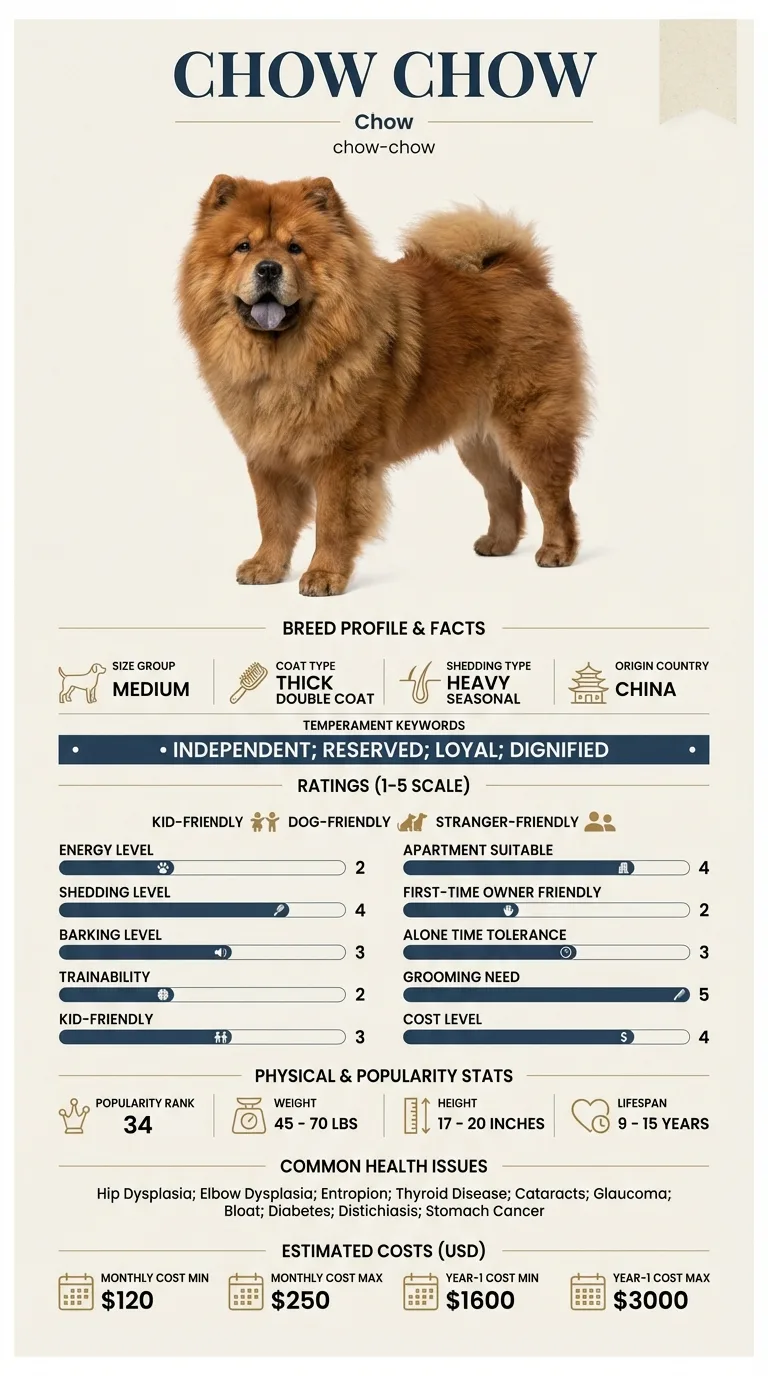
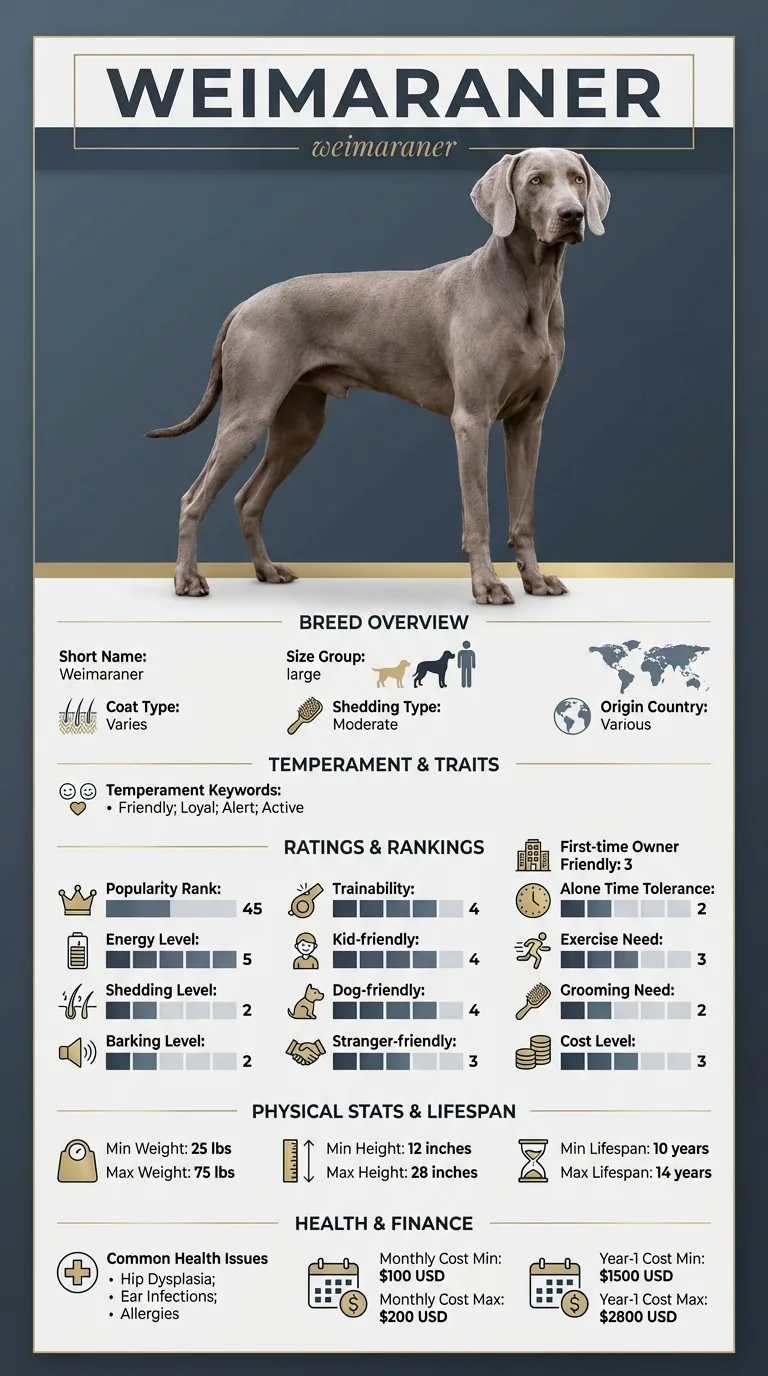
This is for someone already down to Chow Chow and Weimaraner and deciding between them. For this pair the decision usually turns on grooming need and exercise need, so those are covered first and in most detail. Anyone choosing from a flat has a clear answer here: Chow Chow rates 4/5 against 1/5. There is no origin story here — only what changes about your week.
Between Chow Chow and Weimaraner, grooming need is what separates them, and Chow Chow is the lower-effort dog of the two to keep.
Choose Chow Chow if you are in a flat or a smaller home, your walking routine is modest and the dog will be alone during the working day.
Choose Weimaraner if you do not want a standing grooming appointment, shedding is a problem in your house and there are young children at home.
| Feature | chow chow | weimaraner | Winner |
|---|---|---|---|
| Size class | medium | large | Equal |
| Weight | 45–70 lbs | 55–90 lbs | Equal |
| Height | 17–20 in | 23–27 in | Equal |
| Lifespan | 9–15 years | 10–13 years | chow chow |
| Exercise need | Low (2/5) | Very high (5/5) | chow chow |
| Grooming need | Very high (5/5) | Very low (1/5) | weimaraner |
| Shedding | High (4/5) | Low (2/5) | weimaraner |
| Energy level | Low (2/5) | Very high (5/5) | Equal |
| Barking | Moderate (3/5) | Moderate (3/5) | Equal |
| Apartment suitability | High (4/5) | Very low (1/5) | chow chow |
| Good for first-time owners | Low (2/5) | Low (2/5) | Equal |
| Tolerates being alone | Moderate (3/5) | Very low (1/5) | chow chow |
| Trainability | Low (2/5) | High (4/5) | weimaraner |
| Good with kids | Moderate (3/5) | High (4/5) | weimaraner |
| Good with other dogs | Low (2/5) | Moderate (3/5) | weimaraner |
| Friendly to strangers | Low (2/5) | Moderate (3/5) | weimaraner |
| Cost level | High (4/5) | Moderate (3/5) | weimaraner |
| Coat | Thick double coat | Short and sleek | Equal |
| Origin | China | Various | Equal |
| Typical monthly cost | $120–$250 | $110–$240 | Equal |
| Typical first-year cost | $1,600–$3,000 | $1,700–$3,200 | Equal |
Weimaraner is the bigger dog throughout -- 55-90 lbs and 23-27 in tall against the chow's 45-70 lbs and 17-20 in. Size class reflects it plainly: large versus medium. The weimaraner's lean, athletic "gray ghost" build is about as far from the chow's dense, stocky frame as two dogs get. You'll feel that difference the moment you try to lift either dog into a car.
Weimaraner rates very high (5/5) on exercise need, chow low (2/5) -- this is a pointing breed built to run with hunters for hours, and it doesn't downshift well indoors. The chow's low exercise requirement sits at close to the opposite end of the scale. Pick based on your actual daily schedule here, not on which dog looks more impressive.
Chow is the far more demanding coat -- very high (5/5) grooming and high (4/5) shedding -- against the weimaraner's very low (1/5) grooming need and low (2/5) shedding. The weimaraner's short, sleek coat is close to maintenance-free; the chow's thick double coat is a real ongoing project. A quick weekly wipe-down covers the weimaraner; the chow needs a genuine brushing routine to avoid mats forming near the ruff.
Chow rates high (4/5) for apartment suitability; weimaraner rates very low (1/5), tied for the lowest score in this data set. Barking is even, both moderate (3/5), but the weimaraner's health list literally includes separation anxiety, and its very low (1/5) tolerance for being alone backs that up. This is not a small-space, home-alone-all-day breed, and no amount of crate training fully substitutes for company it doesn't have.
Weimaraner rates high (4/5) on trainability against the chow's low (2/5), though both are rated low (2/5) as first-time-owner picks. The weimaraner's temperament word "headstrong" is worth noting -- it's trainable but strong-willed, meaning the training pays off only if it actually happens consistently. Skip the daily structure and that high trainability score won't do you much good; the dog will find its own routine instead.
Weimaraner scores better across social categories -- high (4/5) with kids against the chow's moderate (3/5), moderate (3/5) with other dogs against low (2/5), moderate (3/5) with strangers against low (2/5). Both breeds carry a devoted or loyal streak in their temperament description, but the weimaraner directs that outward more readily than the reserved chow does. A weimaraner tends to greet the whole family with equal enthusiasm; a chow tends to pick a favorite.
Chow's lifespan ceiling is actually higher here, 9-15 years against the weimaraner's tighter 10-13 range -- an unusual result given the weimaraner's better scores elsewhere. Both breeds share hip dysplasia and bloat risk, a serious shared concern given both are barrel-chested. The weimaraner's list adds separation anxiety and Von Willebrand disease; the chow's adds thyroid disease, diabetes and stomach cancer.
Costs run close but slightly favor the chow in year one -- $1,600-3,000 against the weimaraner's $1,700-3,200 -- while monthly costs are nearly identical ($120-250 vs $110-240). The overall cost rating still favors the weimaraner, moderate (3/5) against the chow's high (4/5), largely on the strength of its much lower grooming bill, which holds steady month after month unlike the food costs of a highly active dog.
Chow Chow weighs 45–70 lbs and lives 9–15 years; Weimaraner weighs 55–90 lbs and lives 10–13 years. The two diverge most on grooming need, exercise need and energy level and 4 other rated axes. They are level on barking and good for first-time owners, so those cannot decide it. Where the table declares a winner it means less work for the owner, nothing more; descriptive rows are left as ties on purpose. The value here is in the differences between the two columns; treat any single score as approximate.

Noticeably -- 55-90 lbs and 23-27 in tall against the chow's 45-70 lbs and 17-20 in. The weimaraner is rated a large breed, the chow medium.
The weimaraner, by a wide margin -- very high (5/5) against the chow's low (2/5). This is a hunting breed built for hours of fieldwork, not a short daily walk.
The weimaraner, decisively -- very low (1/5) grooming need and low (2/5) shedding, against the chow's very high (5/5) grooming need and high (4/5) shedding. It's close to the biggest gap in this whole comparison.
Not the weimaraner -- it rates very low (1/5) on alone tolerance, and separation anxiety appears directly on its health-risk list. The chow does noticeably better, moderate (3/5).
Yes -- hip dysplasia and bloat appear on both lists, which matters given both breeds have a deep chest. The weimaraner separately carries separation anxiety and Von Willebrand disease risk; the chow carries thyroid disease and stomach cancer risk.
The chow, on the general cost rating (high, 4/5, versus moderate, 3/5), mostly from grooming. But first-year dollar costs actually run slightly higher for the weimaraner ($1,700-3,200 versus $1,600-3,000), and monthly ranges are close either way.
The chow has the higher ceiling, up to 15 years against the weimaraner's 13, though the weimaraner's 10-13 year range is more predictable.
An active household with a yard and hours of daily exercise to give should look at the weimaraner. A household that wants a lower-energy dog and can handle heavy grooming fits the chow better.
Close either way -- monthly ranges overlap almost entirely ($120-250 vs $110-240), though the weimaraner's first-year cost runs slightly higher.
Weimaraner needs very high (5/5) daily exercise; chow needs low (2/5) -- the widest gap in this comparison.
The chow's range tops out higher (15 years) but the weimaraner's 10-13 year window is tighter and more predictable.
Secure checkout on Stripe. We never see your card.
7-day money-back guarantee. Instant access.
Health information here is general and is not veterinary advice. If your dog shows pain, sudden behaviour change, or worsening symptoms, consult a licensed veterinarian.
Some links on this site are affiliate links. We may earn a commission at no extra cost to you, and we only suggest products we believe are helpful for dog owners.
We research and check what we publish, but we do not warrant that any figure, date, price, or statement is accurate, complete, or current, and we accept no liability for any loss, cost, injury, or other harm arising from the use of this site. Use it as one reference among several. You remain responsible for your own decisions and for your dog's care - confirm anything that matters with a licensed veterinarian or another qualified professional before you act on it. Full disclaimer.
Match your lifestyle to the right dog.
Take quizNot sure which breed is right for you? Take our 2-minute quiz to find out.
Take the quiz