Health
Why is exercise intolerance a bigger concern in this breed?
Weimaraners have a headstrong temperament that doesn't reliably self-limit, combined with a short coat and low body fat that increase overheating risk.

Quick answer
Why is exercise intolerance a bigger concern in this breed?
Weimaraners have a headstrong temperament that doesn't reliably self-limit, combined with a short coat and low body fat that increase overheating risk.
When the dog who never seemed to tire suddenly needs to stop halfway through the usual route, that's not a Weimaraner 'mellowing out'; it's a real signal worth paying attention to, precisely because this breed doesn't self-limit the way some others do.
This affects owners who've noticed a real, sustained change in their Weimaraner's stamina, not an occasional off day, and owners exercising this breed in hot weather who worry about overdoing it.
This guide is not medical advice. If your dog shows pain, sudden behavior change, or worsening symptoms, consult a licensed veterinarian.
Some links may be affiliate links. We may earn a commission at no extra cost to you. We only suggest products we believe are helpful for dog owners.
We research and check what we publish, but we do not warrant that any figure, date, price, or statement is accurate, complete, or current, and we accept no liability for any loss, cost, injury, or other harm arising from the use of this site. Use it as one reference among several. You remain responsible for your own decisions and for your dog's care - confirm anything that matters with a licensed veterinarian or another qualified professional before you act on it. Full disclaimer.
Exercise intolerance is a reduced ability to sustain activity at a previously normal level. In Weimaraners, a genuinely high-energy breed, this is a meaningful change worth investigating, made riskier by the breed's tendency to push through fatigue and heat rather than self-limiting.
A genuine, sustained drop in stamina is not considered typical for this breed given its very high baseline exercise need, which is exactly why it stands out as a meaningful symptom rather than a common, expected part of aging.
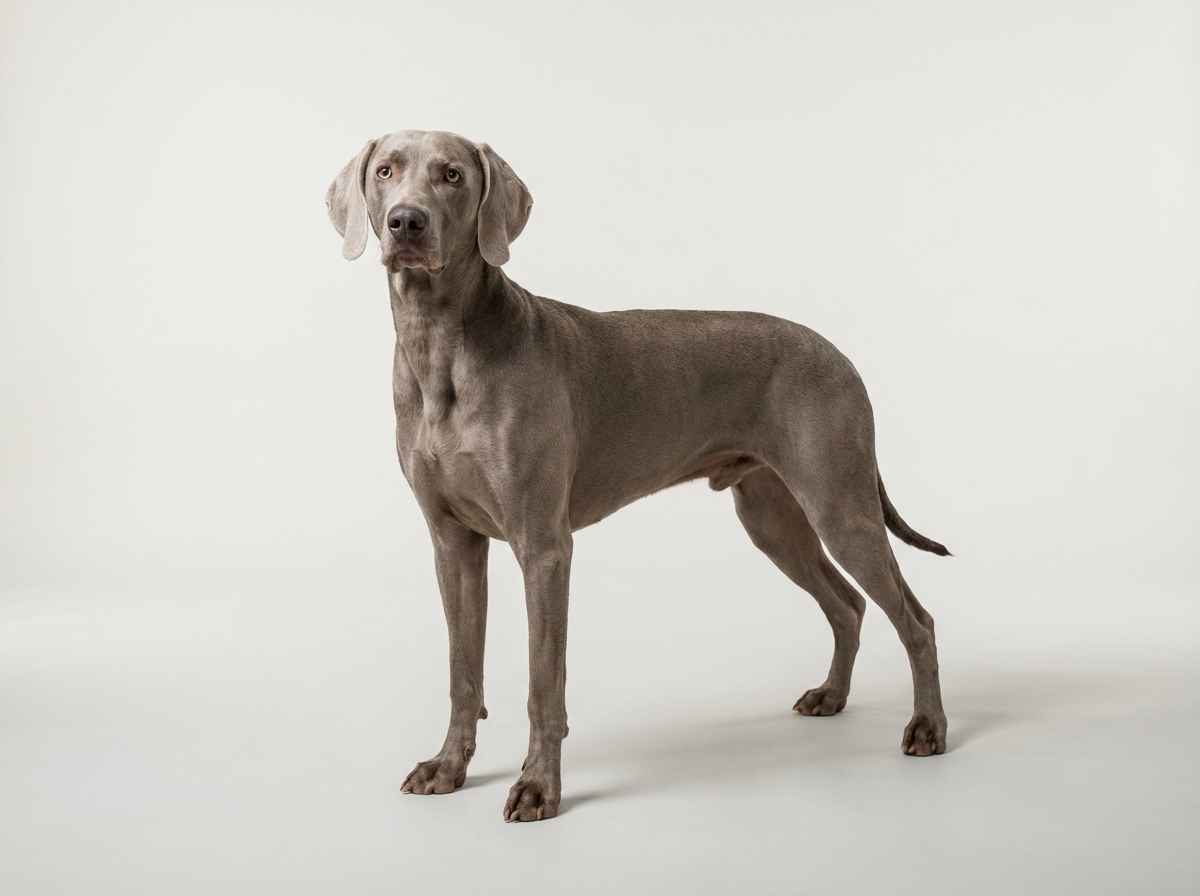
Weimaraners carry a headstrong, driven temperament that doesn't reliably prompt self-limiting behavior, combined with a short, sleek coat and low body fat that reduce heat tolerance compared to heavier-coated breeds. This combination means real limits can be reached, and exceeded, before the dog shows an obvious slowdown.
Warm weather, high humidity, and prolonged high-intensity activity without breaks all increase the risk of heat-related stamina drops specifically. A sudden increase in exercise demands without a gradual conditioning buildup can also produce temporary intolerance.
See your vet for any sustained drop in exercise stamina that isn't explained by an obvious cause like recent inactivity. Excessive panting that doesn't ease with rest, stumbling, bright red or pale gums, or collapse during activity are signs of a genuine emergency and need immediate attention.
See all Weimaraner health problems, which breeds are prone to exercise intolerance, or the full Weimaraner breed guide for temperament, exercise needs and ownership costs.
If a specific cause is identified, timelines vary depending on what's found, from a quick recovery for a heat-related episode to ongoing management for a chronic condition. Improved conditioning after a period of inactivity typically takes several weeks of gradual rebuilding.
Success is a return to your dog's normal stamina baseline, or, if an underlying condition is found, a safe activity level that respects those limits rather than pushing through them.
Many dogs will naturally slow down, lie down, or seek shade when they're getting too hot or tired, a self-protective instinct. Weimaraners, bred for sustained field work and known for a headstrong, driven temperament, are less reliable about this kind of self-limiting behavior; a Weimaraner chasing a ball or working a scent trail will often keep going past the point where a more moderate dog would stop.
Combine that drive with a short, sleek coat and naturally low body fat, both genuine breed traits, and you have a dog that's both less likely to stop on its own and less physically equipped to dissipate heat than a heavier-coated or higher-body-fat breed. This combination is exactly why sudden or worsening exercise intolerance deserves real attention rather than being chalked up to 'getting older' or 'having an off day.'
A true, sustained drop in exercise tolerance, as opposed to one off day, can point to several different underlying issues: early heart or lung changes, anemia, joint pain limiting movement, or simply inadequate conditioning if activity has recently increased. Because this breed won't reliably signal its own limits, the owner has to be the one watching for the pattern.
Because this breed pushes through discomfort, the responsibility for pacing activity safely falls more on the owner than it would with a more self-regulating dog.

Priya's Weimaraner, Ranger, had always been the dog who could run for hours without slowing down, so when he started stopping halfway through their usual five-mile trail run during a particularly warm week, she initially assumed he just wanted a break. But the pattern repeated for several days running, which didn't match his usual behavior at all. A vet visit ruled out a cardiac cause, and her vet pointed out that Ranger's coat and build made him more prone to overheating than Priya realized, especially since he'd never once shown reluctance to keep pushing in past summers. She shifted their runs to early mornings and added mandatory water breaks every mile, and Ranger's stamina returned to normal within the same week.
Key takeaway: The fact that Ranger had never slowed down before made the change genuinely meaningful, not just an off day. Because this breed doesn't reliably signal its own limits, Priya had to notice the pattern herself rather than waiting for an obvious warning sign.
This breed has a headstrong, driven temperament bred for sustained field work, meaning many individuals will keep pushing through fatigue or heat rather than self-limiting the way some other breeds do.
Their short, sleek coat and naturally low body fat offer less insulation and heat buffering than heavier-coated breeds, which combined with their drive to keep going, raises real overheating risk during intense activity in warm weather.
A single day of reduced enthusiasm isn't usually concerning, but a sustained pattern over multiple sessions, especially if it's a genuine change from your dog's normal baseline, is worth a vet visit to investigate.
Possible causes include early heart or lung changes, anemia, joint pain limiting movement, or simply a mismatch between recent activity increases and current conditioning level.
Excessive panting that doesn't ease with rest, bright red gums, stumbling, or repeatedly seeking shade are signs of overheating that warrant an immediate stop to activity and cooling measures.
No. Reluctance to continue, especially a sudden change from their usual eagerness, should be respected and investigated rather than pushed through, given this breed's tendency to override its own limits.
It depends on what's found, ranging from a straightforward vet exam to more significant costs if cardiac or bloodwork diagnostics are needed to identify an underlying cause.
Weimaraners have a headstrong temperament that doesn't reliably self-limit, combined with a short coat and low body fat that increase overheating risk.
Excessive panting that doesn't ease, bright red gums, stumbling, or repeatedly seeking shade.
When it's a sustained pattern over multiple sessions rather than a single off day.
Yes, cooler parts of the day are safer for intense activity, especially in warm climates.
Heart or lung changes, anemia, joint pain, or a mismatch between activity level and current conditioning.
A one-page prep sheet for this condition: the signs, the questions to ask, what to get priced. Unlocks here.
You get: Vet visit prep sheet
No spam. One-click unsubscribe. See our privacy policy.
Preview page 1 before you decide.