Health
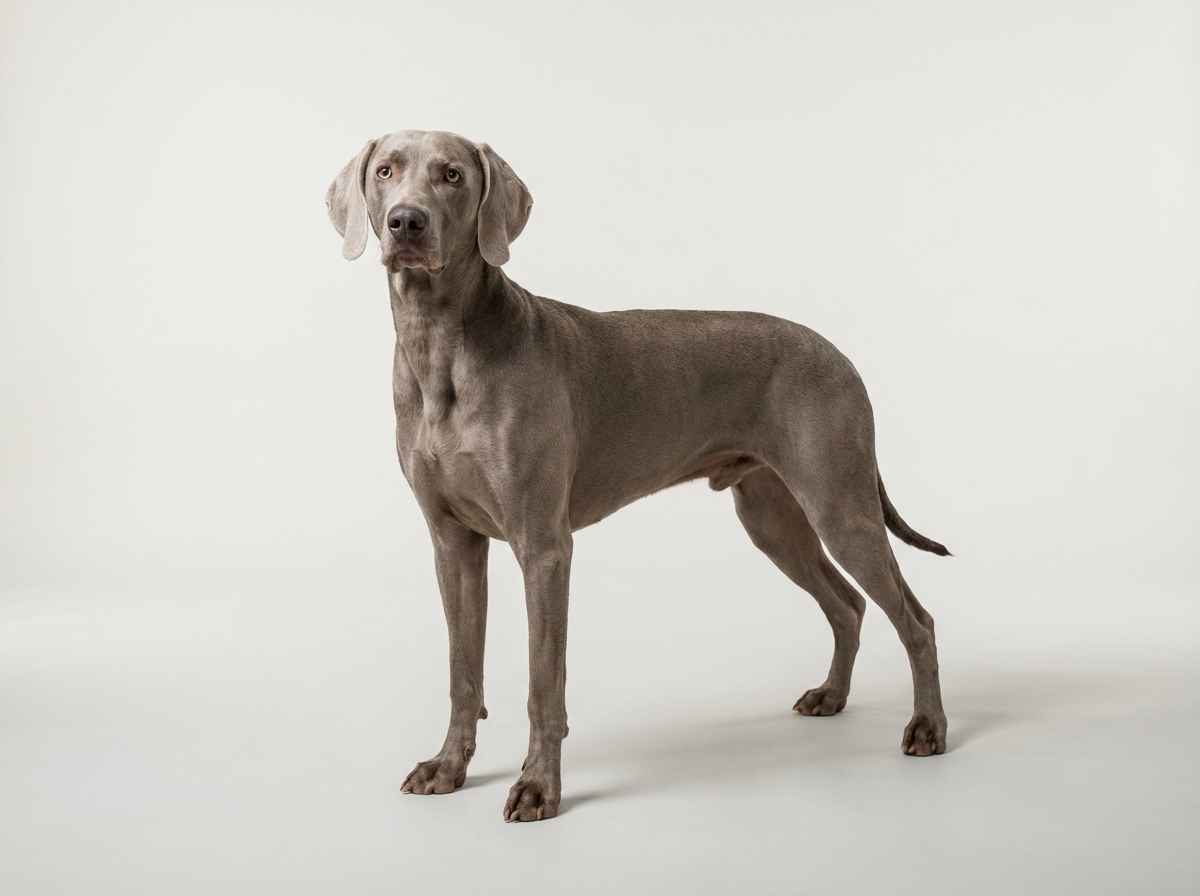
What does a cruciate ligament tear look like in a Weimaraner?
Sudden non-weight-bearing lameness in a back leg, often right after fast running or a hard stop.

Quick answer
What does a cruciate ligament tear look like in a Weimaraner?
Sudden non-weight-bearing lameness in a back leg, often right after fast running or a hard stop.
One second your Weimaraner is running full-speed after a ball, and the next they're holding a back leg up entirely, unwilling to put any weight on it. That abrupt, dramatic onset is the signature of a cruciate tear, not a gradual joint problem.
This affects owners of active, athletic Weimaraners of any age, since this is an acute mechanical injury tied to movement and physical stress rather than a purely age-related condition.
This guide is not medical advice. If your dog shows pain, sudden behavior change, or worsening symptoms, consult a licensed veterinarian.
Some links may be affiliate links. We may earn a commission at no extra cost to you. We only suggest products we believe are helpful for dog owners.
We research and check what we publish, but we do not warrant that any figure, date, price, or statement is accurate, complete, or current, and we accept no liability for any loss, cost, injury, or other harm arising from the use of this site. Use it as one reference among several. You remain responsible for your own decisions and for your dog's care - confirm anything that matters with a licensed veterinarian or another qualified professional before you act on it. Full disclaimer.
A cruciate ligament injury is a sudden, mechanical tear of the knee's main stabilizing ligament, typically occurring during fast, high-impact movement. It's an acute injury rather than a slow degenerative process, common in athletic, medium-to-large breeds like the Weimaraner.
Cruciate ligament injuries are one of the more common orthopedic injuries seen in active, medium-to-large dogs generally, and Weimaraners' high energy and athletic lifestyle put them squarely within that higher-risk activity pattern.
Weimaraners are built for speed, sudden direction changes, and sustained high-intensity activity, all of which place real mechanical stress on the knee's stabilizing ligament during exactly the movements this breed does most.
Excess body weight, poor-traction surfaces, and a sudden burst of high-intensity activity without warm-up all raise the odds of a tear happening in any given moment of activity.
See your vet the same day for sudden non-weight-bearing lameness in a back leg, especially following a burst of activity. Even a milder limp that doesn't improve within a day or two should be evaluated, since a partial tear caught early has more treatment options than one that's progressed to a full rupture.
See all Weimaraner health problems, which breeds are prone to cruciate ligament injuries, or the full Weimaraner breed guide for temperament, exercise needs and ownership costs.
Post-surgical recovery typically involves two to three weeks of strict rest, followed by a gradual, supervised return to normal activity over two to three months total.
Success is a full return to normal activity and comfortable movement after surgery and rehabilitation, though ongoing weight management and activity awareness remain relevant given the increased risk to the opposite knee.
The cranial cruciate ligament stabilizes the knee, preventing the shin bone from sliding forward relative to the thigh bone. It's placed under real stress during exactly the kind of movement Weimaraners are built to do a lot of: sudden direction changes at full speed, hard stops, and explosive jumps, all common during running, retrieving, or field work.
Unlike a torn ligament in a human athlete, which is often a single dramatic trauma, dogs frequently show evidence of gradual ligament weakening (partial fiber damage over time) before a full tear happens during one particular high-stress moment. That's part of why cruciate injuries in dogs cluster around active, middle-aged individuals rather than being purely random.
Excess body weight adds meaningfully to the stress on the ligament during these movements, which is part of why weight management is one of the more effective things an owner can control, alongside avoiding repetitive hard stops and turns on surfaces that don't offer good traction, like slick floors.
Knowing what to expect helps you make faster, more confident decisions if this happens to your dog.

During a weekend hike, Aaron's four-year-old Weimaraner, Blitzen, took off after a squirrel and suddenly pulled up lame, holding his back leg completely off the ground. A vet exam that afternoon confirmed instability consistent with a torn cruciate ligament, and X-rays ruled out a fracture. Blitzen had surgical stabilization the following week. After two weeks of strict crate rest and a gradual, rehab-guided return to activity over about ten weeks, he was back to full exercise, though Aaron now keeps a closer eye on his weight and avoids letting him make hard turns on the tile floors at home.
Key takeaway: The injury happened in a single moment during exactly the kind of activity Blitzen does every day. Aaron didn't wait to see if the limp would resolve on its own, which meant surgery happened before the joint sustained further damage.
Their build for fast running, sudden direction changes, and hard stops puts real mechanical stress on the knee's stabilizing ligament, a pattern common across athletic, medium-to-large breeds generally.
A full tear typically causes a dog to hold the leg up entirely, unwilling to bear any weight. A partial tear often causes a limp with some weight-bearing. Only a vet exam, and sometimes imaging, can confirm which.
For active, larger dogs like Weimaraners, surgical stabilization is usually recommended, since conservative management alone tends to have a higher failure rate and slower, less complete recovery in bigger, athletic breeds.
Recovery typically involves several weeks of strict activity restriction, followed by a gradual return to normal exercise over two to three months, often supported by physical rehabilitation.
There's a meaningfully increased risk to the opposite knee after one ligament tears, since the mechanics that led to the first injury apply to both legs. Some dogs need surgery on both knees over their lifetime, though not always at the same time.
It's one of the more expensive orthopedic procedures for dogs, commonly running into several thousand dollars depending on the surgical technique and region, which is part of why some owners consider pet insurance.
Yes, maintaining a lean body weight reduces the mechanical stress on the knee during high-impact movement, making it one of the more effective controllable risk factors.
Sudden non-weight-bearing lameness in a back leg, often right after fast running or a hard stop.
Usually recommended for active, larger dogs, since conservative management alone tends to have a higher failure rate.
Typically several weeks of strict rest followed by a gradual return to normal activity over two to three months.
Yes, the opposite knee has a meaningfully increased risk of tearing later due to similar mechanical stress.
Commonly several thousand dollars depending on technique and region, making it one of the pricier orthopedic procedures.
A one-page prep sheet for this condition: the signs, the questions to ask, what to get priced. Unlocks here.
You get: Vet visit prep sheet
No spam. One-click unsubscribe. See our privacy policy.
Preview page 1 before you decide.