Behavior
Which sheds more?
The Husky, rated Very high (5/5) versus the Weimaraner's Low (2/5).

Quick answer
Which sheds more?
The Husky, rated Very high (5/5) versus the Weimaraner's Low (2/5).
Siberian Husky or Weimaraner? On paper they differ most on shedding, and on the scales Weimaraner is the heavier at 55–90 lbs. Here is how the two compare on everything that shapes an ordinary week.
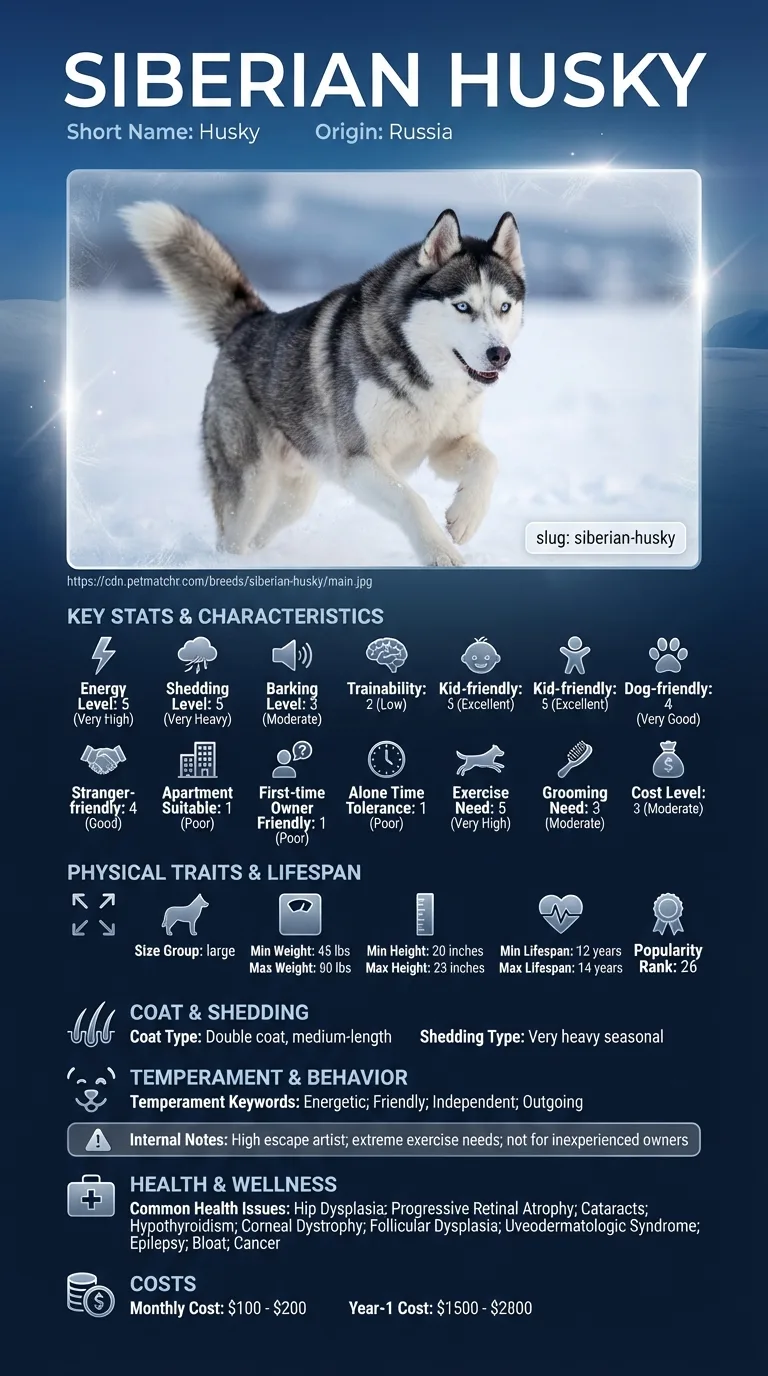
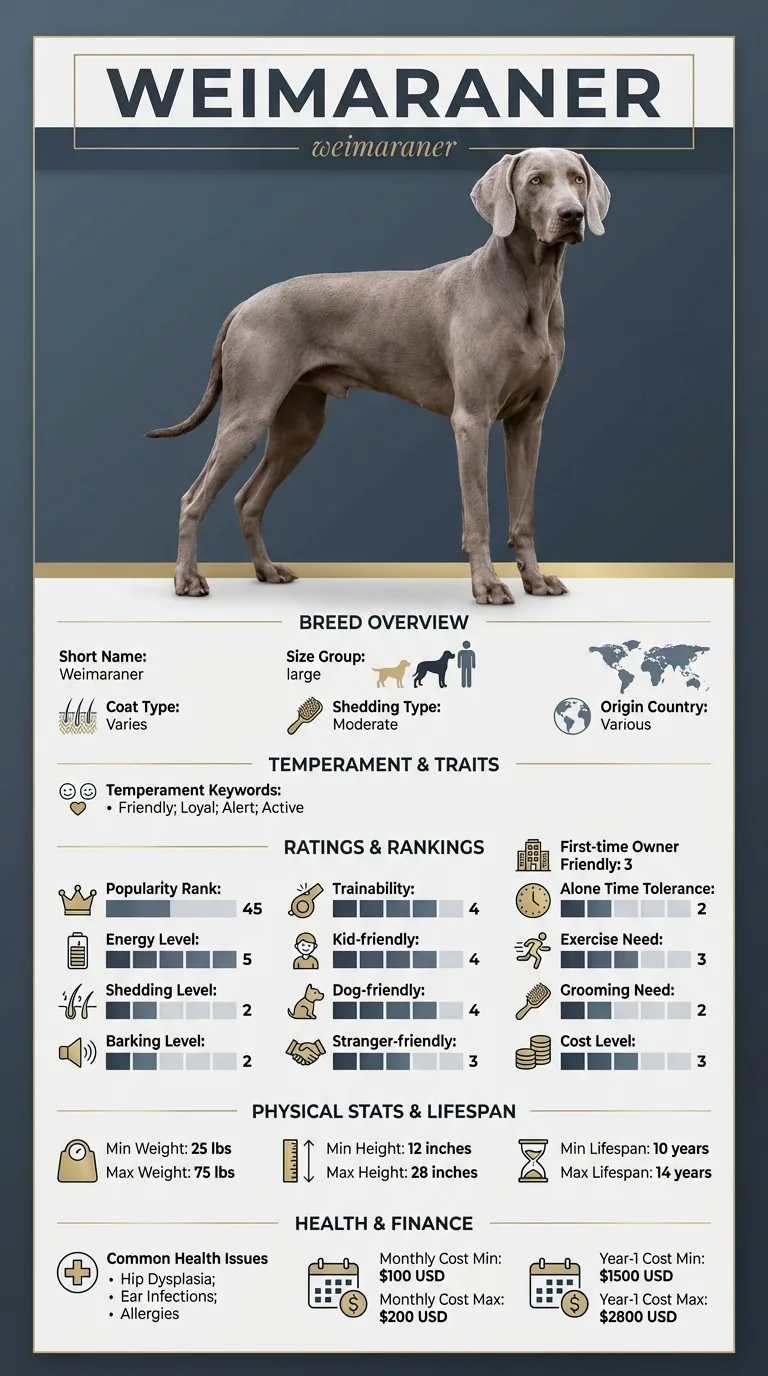
This is for someone already down to Siberian Husky and Weimaraner and deciding between them. For this pair the decision usually turns on shedding and grooming need, so those are covered first and in most detail. Both rate 1/5 for flats, so housing does not settle this one. Breed history is left out; what follows is what you will actually live with.
Between Siberian Husky and Weimaraner, shedding is what separates them, and Weimaraner is the lower-effort dog of the two to keep.
Choose Siberian Husky if there are young children at home, you already have another dog and a smaller dog suits your car, your home or your back.
Choose Weimaraner if you do not want a standing grooming appointment, shedding is a problem in your house and you want a dog that picks up training quickly.
| Feature | siberian husky | weimaraner | Winner |
|---|---|---|---|
| Size class | large | large | Equal |
| Weight | 45–60 lbs | 55–90 lbs | Equal |
| Height | 20–23 in | 23–27 in | Equal |
| Lifespan | 12–14 years | 10–13 years | siberian husky |
| Exercise need | Very high (5/5) | Very high (5/5) | Equal |
| Grooming need | Moderate (3/5) | Very low (1/5) | weimaraner |
| Shedding | Very high (5/5) | Low (2/5) | weimaraner |
| Energy level | Very high (5/5) | Very high (5/5) | Equal |
| Barking | Moderate (3/5) | Moderate (3/5) | Equal |
| Apartment suitability | Very low (1/5) | Very low (1/5) | Equal |
| Good for first-time owners | Very low (1/5) | Low (2/5) | weimaraner |
| Tolerates being alone | Very low (1/5) | Very low (1/5) | Equal |
| Trainability | Low (2/5) | High (4/5) | weimaraner |
| Good with kids | Very high (5/5) | High (4/5) | siberian husky |
| Good with other dogs | High (4/5) | Moderate (3/5) | siberian husky |
| Friendly to strangers | High (4/5) | Moderate (3/5) | siberian husky |
| Cost level | Moderate (3/5) | Moderate (3/5) | Equal |
| Coat | Double coat, medium-length | Short and sleek | Equal |
| Origin | Russia | Various | Equal |
| Typical monthly cost | $100–$200 | $110–$240 | Equal |
| Typical first-year cost | $1,500–$2,800 | $1,700–$3,200 | Equal |
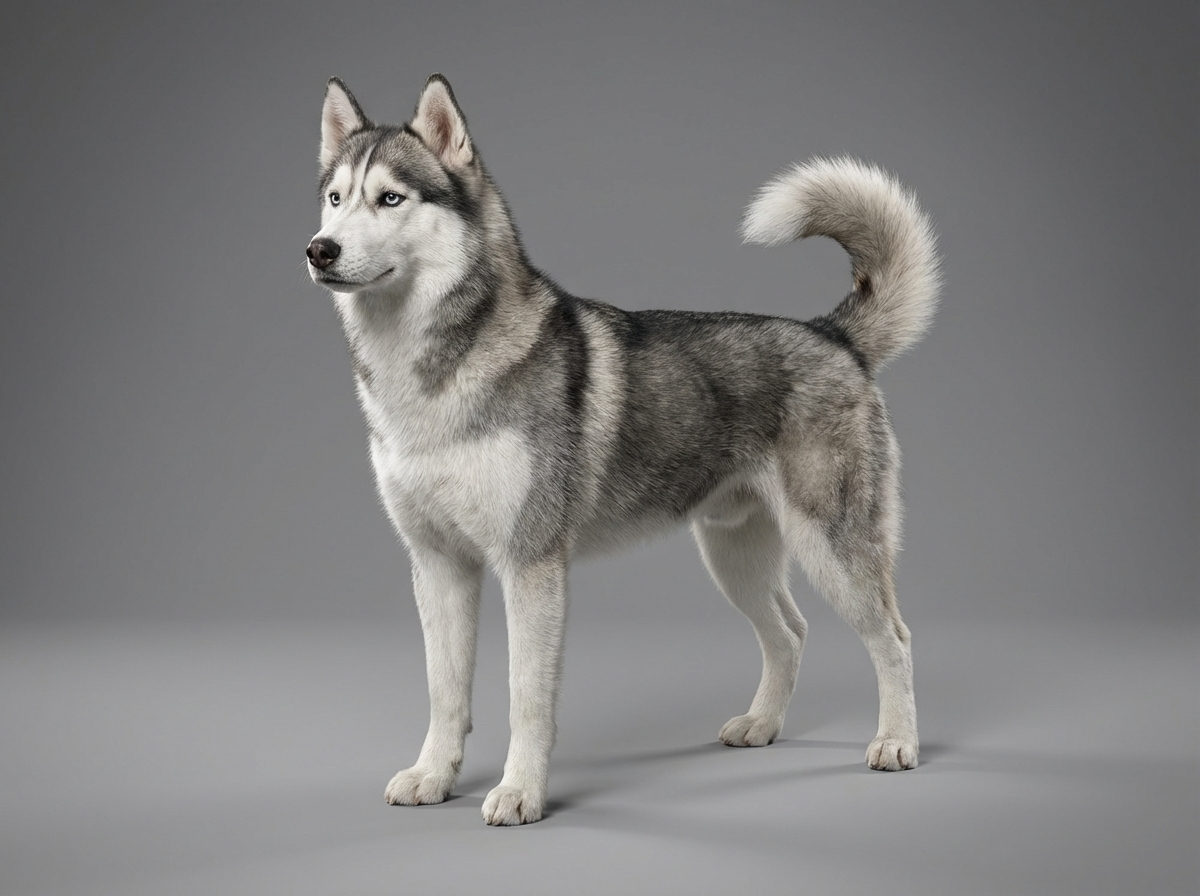
Both breeds sit in the large category, but the Weimaraner runs bigger across the board: 55-90 lbs and 23-27 inches versus the Siberian Husky's 45-60 lbs and 20-23 inches, up to 30 pounds of difference at the top end. The Husky carries a dense double coat built for sub-zero climates, giving it a fuller, fluffier silhouette even at a lighter weight, while the sleek, short-coated Weimaraner looks leaner and more streamlined despite outweighing it. Anyone picturing these two side by side should expect the Weimaraner to physically dominate in a doorway or car trunk, even though the Husky often reads as the larger dog visually.
There's no daylight between these two on raw energy: both rate Very high (5/5) for exercise need and Very high (5/5) for energy level. A Siberian Husky was bred to pull sleds for hours across distance, while the Weimaraner was bred to hunt all day in the field, different jobs, same relentless stamina requirement. Neither breed suits an owner hoping for a low-key companion. The practical difference shows up in style: Huskies often prefer to run and roam (their Independent streak makes recall a real challenge), while the more Devoted, handler-focused Weimaraner tends to want to work alongside its person rather than range off alone.
Grooming and shedding pull in opposite directions here. The Weimaraner needs only Very low (1/5) grooming thanks to its short, sleek coat, while the Husky's double coat requires Moderate (3/5) upkeep. Shedding flips the intensity even further apart: the Husky rates Very high (5/5), with seasonal blowouts that leave fur everywhere, against the Weimaraner's comparatively tame Low (2/5). A Husky owner should expect regular vacuuming and a de-shedding tool in permanent rotation, especially twice yearly during coat blow. The Weimaraner, by contrast, is close to a wash-and-go breed, with brushing sessions more about polish than necessity.
Neither breed is suited to apartment life; both rate Very low (1/5) for apartment suitability and Very low (1/5) for tolerating being alone, a rare full tie on both fronts. Both also share Moderate (3/5) barking, though Huskies are famous for vocalizing in howls and talking rather than straightforward barking, which can be just as disruptive to neighbors. The Weimaraner's health list even flags Separation Anxiety directly, underscoring how much both breeds depend on companionship and space. Anyone in a small apartment with long solo hours should look elsewhere; these are yard-and-activity dogs first, indoor companions second.
Trainability is where these two really diverge: the Weimaraner rates High (4/5) against the Husky's Low (2/5), and first-time-owner suitability follows the same pattern, Low (2/5) for the Weimaraner versus Very low (1/5) for the Husky. The Husky's Independent temperament trait explains the gap directly; this is a breed bred to make its own decisions on the trail, which translates to selective listening at home. The Weimaraner's Devoted, Alert nature makes it more responsive to direction, even with its Headstrong streak. Neither is an easy first dog, but the Weimaraner offers a meaningfully shorter learning curve for training.
The Husky edges ahead with kids, Very high (5/5) against the Weimaraner's still-strong High (4/5), and also leads with other dogs, High (4/5) versus Moderate (3/5), plus friendliness to strangers, High (4/5) versus Moderate (3/5). The Husky's Friendly, Outgoing temperament tags support this pack-oriented, people-loving reputation. The Weimaraner is more selectively social, its Alert trait suggesting a dog that's watchful of newcomers even while remaining Devoted to its own family. For households that host often or have multiple pets, the Husky's broader social ease may be the more comfortable fit day to day.
The Husky holds a lifespan edge, 12-14 years versus the Weimaraner's 10-13, but carries a notably longer list of health concerns: Hip Dysplasia, Progressive Retinal Atrophy, Cataracts, Corneal Dystrophy, Follicular Dysplasia, Uveodermatologic Syndrome, and Epilepsy, on top of Bloat and Cancer. Eye conditions dominate that list in a way distinctive to the breed. The Weimaraner's shorter list is still serious: Bloat (GDV) and Hip Dysplasia appear in both breeds, while Hypertrophic Osteodystrophy and Von Willebrand Disease are Weimaraner-specific. Both share Bloat risk, which matters for large, deep-chested dogs, slow-feed bowls and split mealtimes are worth considering for either.
Cost level ties at Moderate (3/5) for both breeds, and the monthly figures land close, $100-$200 for the Husky against $110-$240 for the Weimaraner. First-year costs show a real gap, though: $1,500-$2,800 for the Husky versus $1,700-$3,200 for the Weimaraner, likely reflecting the Weimaraner's larger average size and higher food volume. Neither breed carries the grooming-driven costs seen in coated toy breeds, but both will need investment in secure fencing and enrichment given their Very high exercise needs; an underexercised dog of either breed tends to generate its own additional costs through destructive behavior.
Siberian Husky weighs 45–60 lbs and lives 12–14 years; Weimaraner weighs 55–90 lbs and lives 10–13 years. The two diverge most on shedding, grooming need and trainability. They are level on tolerates being alone, apartment suitability and barking, so those cannot decide it. The comparison marks an easier option only where one exists. Facts like weight and country of origin are not scored. Both dogs are rated from the same dataset, which is what makes the numbers comparable with each other even though any individual dog sits somewhere inside its breed's range.

The Siberian Husky, rated Low (2/5) trainability against the Weimaraner's High (4/5). The Husky's independent streak makes it more likely to ignore commands than to refuse them out of stubbornness.
The Husky sheds heavily, Very high (5/5), especially during seasonal coat blows, while the Weimaraner sheds only Low (2/5).
No, both rate Very low (1/5) for apartment suitability and Very low (1/5) for tolerating being alone, making them a poor match for small-space living.
The Husky, rated High (4/5) friendly to strangers versus the Weimaraner's Moderate (3/5), consistent with the Husky's outgoing, pack-oriented nature.
Bloat, both the Husky and the Weimaraner carry it on their health list, a serious concern for large, deep-chested dogs that calls for slow feeding and monitoring after meals.
The Husky, rated Very high (5/5) with kids versus the Weimaraner's High (4/5), though both are solid family choices given proper supervision.
The Weimaraner, at $1,700-$3,200 versus the Husky's $1,500-$2,800, largely reflecting its larger size and higher food costs.
The Husky, rated Very high (5/5) versus the Weimaraner's Low (2/5).
The Weimaraner, rated High (4/5) trainability versus the Husky's Low (2/5).
The Husky, at 12-14 years versus the Weimaraner's 10-13 years.
The Weimaraner, at up to 90 lbs versus the Husky's 60 lb max.
Secure checkout on Stripe. We never see your card.
7-day money-back guarantee. Instant access.
Health information here is general and is not veterinary advice. If your dog shows pain, sudden behaviour change, or worsening symptoms, consult a licensed veterinarian.
Some links on this site are affiliate links. We may earn a commission at no extra cost to you, and we only suggest products we believe are helpful for dog owners.
We research and check what we publish, but we do not warrant that any figure, date, price, or statement is accurate, complete, or current, and we accept no liability for any loss, cost, injury, or other harm arising from the use of this site. Use it as one reference among several. You remain responsible for your own decisions and for your dog's care - confirm anything that matters with a licensed veterinarian or another qualified professional before you act on it. Full disclaimer.
Match your lifestyle to the right dog.
Take quizNot sure which breed is right for you? Take our 2-minute quiz to find out.
Take the quiz