Health
What breed is Pug Dog Encephalitis named after and why?
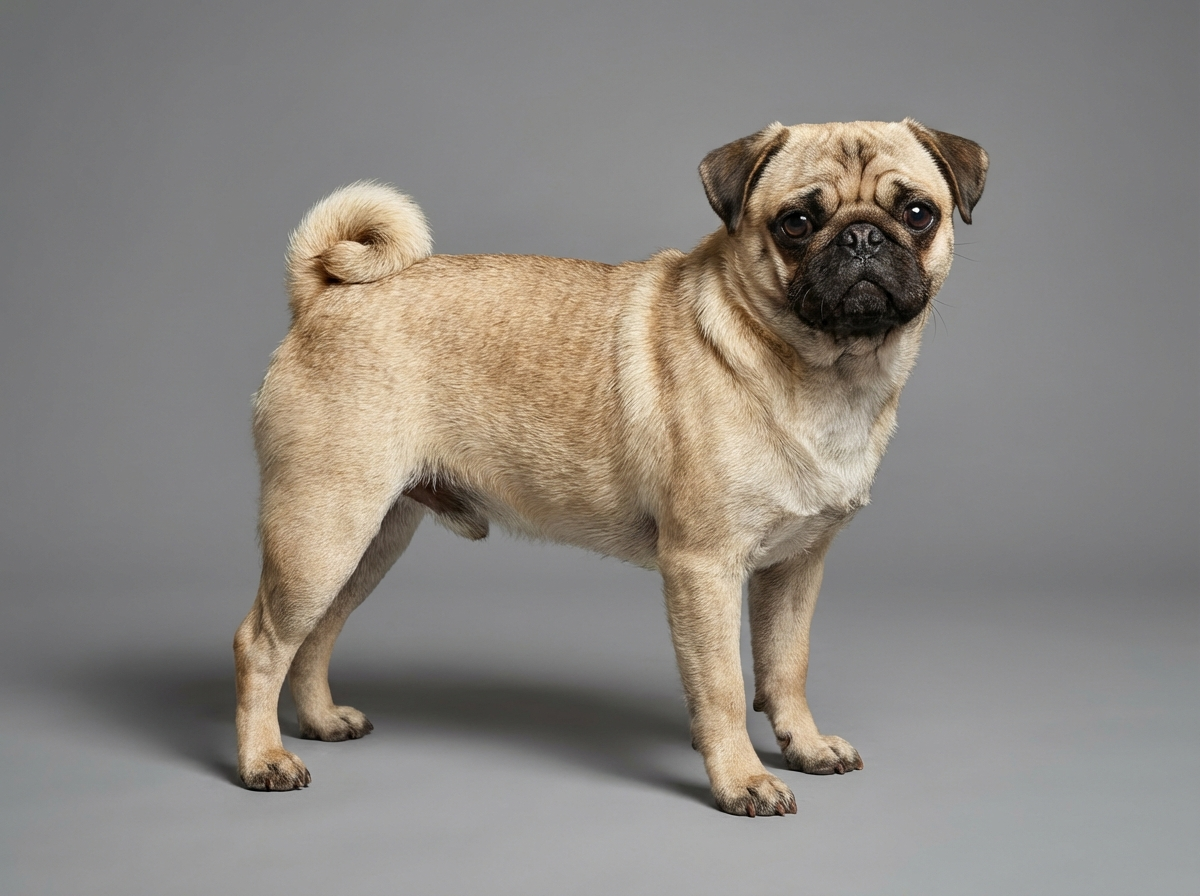
Pugs specifically, because the condition is documented almost exclusively in this breed rather than occurring broadly across dogs.

Quick answer
What breed is Pug Dog Encephalitis named after and why?
Pugs specifically, because the condition is documented almost exclusively in this breed rather than occurring broadly across dogs.
Pug Dog Encephalitis isn't a condition borrowed from general veterinary neurology and applied to Pugs — it's named after this breed specifically because it occurs here in a way it essentially doesn't elsewhere.
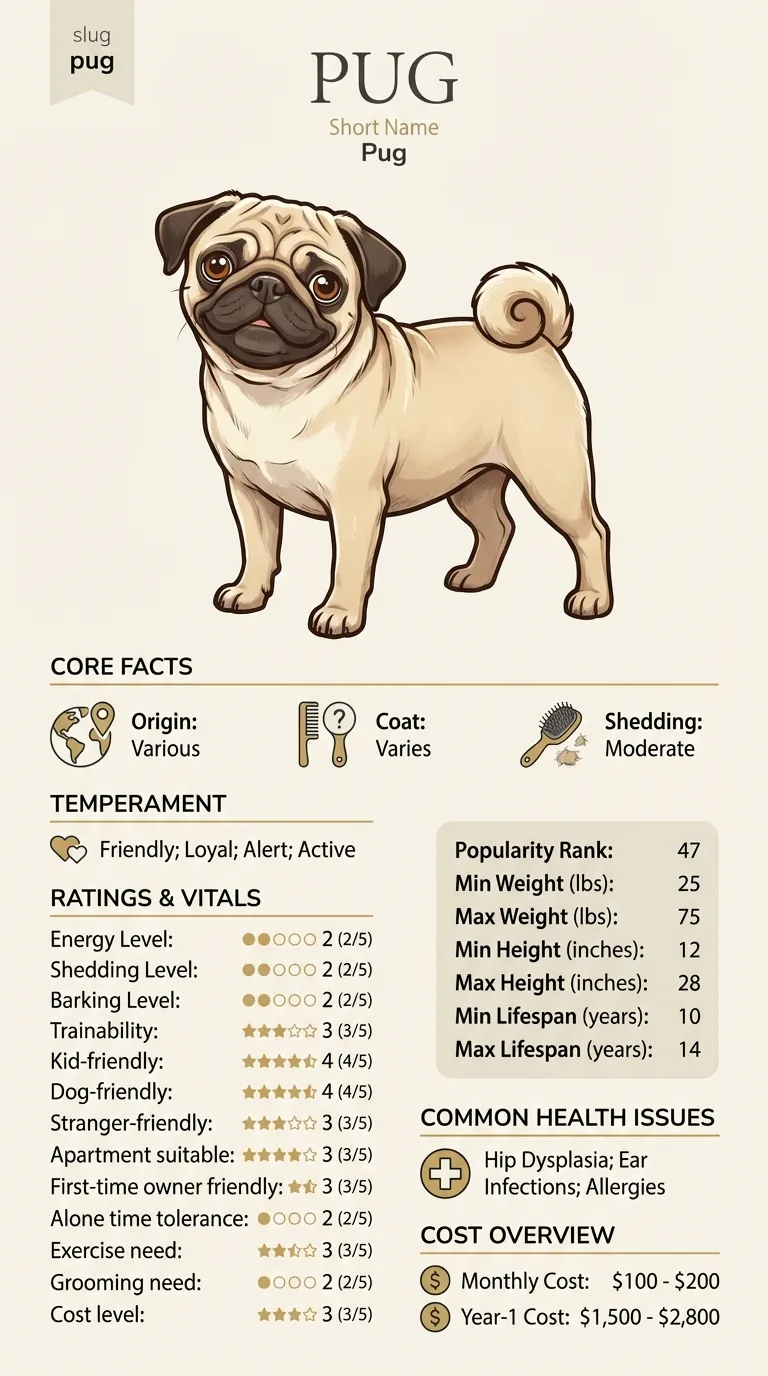
Owners who've noticed sudden seizures, disorientation, or personality changes in their Pug and are trying to understand why neurologic disease gets singled out as a breed-specific concern.
This guide is not medical advice. If your dog shows pain, sudden behavior change, or worsening symptoms, consult a licensed veterinarian.
Some links may be affiliate links. We may earn a commission at no extra cost to you. We only suggest products we believe are helpful for dog owners.
We research and check what we publish, but we do not warrant that any figure, date, price, or statement is accurate, complete, or current, and we accept no liability for any loss, cost, injury, or other harm arising from the use of this site. Use it as one reference among several. You remain responsible for your own decisions and for your dog's care - confirm anything that matters with a licensed veterinarian or another qualified professional before you act on it. Full disclaimer.
Pugs face a substantially elevated risk of neurologic disease compared to other breeds, driven largely by Pug Dog Encephalitis, an immune-mediated inflammatory brain disease documented almost exclusively in this breed. Symptoms vary widely depending on which brain region is affected and can include seizures, personality changes, and unsteady movement.
Comparative research has documented Pugs at meaningfully elevated risk of neurologic disease relative to other breeds, with Pug Dog Encephalitis specifically representing one of the more serious and breed-defining conditions within that elevated risk category.
Pug Dog Encephalitis is documented almost exclusively in this breed, strongly suggesting a genetic predisposition specific to Pugs, though the precise mechanism triggering the immune system's attack on brain tissue isn't fully understood even with this strong breed association.
No specific environmental trigger has been clearly established for this condition. It appears to arise from an internal immune process rather than being caused by exposure to any external factor, infection, or injury.
Seek immediate veterinary care for any seizure, sudden disorientation, significant personality change, unsteady movement, or vision loss. These symptoms always warrant prompt, thorough evaluation given how serious the range of possible underlying causes can be, and this is not a wait-and-see situation.
See all PUG health problems, which breeds are prone to neurologic disease, or the full PUG breed guide for temperament, exercise needs and ownership costs.
Diagnosis typically involves imaging and fluid analysis over one to two weeks once symptoms prompt a workup. Treatment response and disease course vary considerably — some dogs stabilize with meaningful symptom control, while others progress over months despite treatment.
Success looks different for each affected dog — for some, it's an extended period of good quality of life on managed medication; for others, given the seriousness of this disease, it's honest, compassionate decision-making guided closely by a veterinary neurologist as the disease progresses.
Pug Dog Encephalitis, more formally known as necrotizing meningoencephalitis, is an inflammatory disease in which the body's immune system attacks brain tissue directly, causing progressive inflammation and tissue damage. It typically appears in young to middle-aged dogs and progresses over weeks to months, though the speed and severity vary considerably between individual cases. Because it's an immune-mediated attack on brain tissue rather than an infection or injury, it behaves differently from most other neurologic problems a vet might otherwise consider first.
Symptoms reflect wherever in the brain the inflammation happens to be most active, which is part of why the presentation can look so different from one affected dog to the next — seizures, circling, personality changes, blindness, and unsteady movement have all been documented, sometimes in combination and sometimes appearing gradually over time. This variability is exactly why any unexplained neurologic symptom in a Pug deserves prompt, thorough evaluation rather than being assumed to be a more common and less serious issue.
This is one of the more serious diagnoses discussed on this site, and it deserves honesty: treatment can meaningfully help some dogs, but this disease doesn't have a reliable cure.

If you think your Pug has neurologic disease, the plan is three steps: write down what you have seen and when it started, book a veterinary appointment rather than waiting for the next flare, and take video of the behaviour or symptom before you go — the thing you are worried about rarely happens in the consulting room. Screening in the parents covers brachycephalic airway syndrome (boas), pug dog encephalitis, corneal ulcers.
What the vet visit should produce is a diagnosis and a written plan, not just reassurance: what is being ruled out, what the monitoring interval is, and which signs mean you come back sooner. Ask what the treatment costs across a year rather than per visit, because that is the number that decides whether you are managing this condition or reacting to it.
Between appointments, keep a short log — dates, what you saw, what changed. It is the single most useful thing an owner brings to a follow-up, and for neurologic disease it is often what separates a clear pattern from a guess.
At four years old, Sadie the Pug had a single seizure that lasted less than a minute — alarming, but her owner, Ben, assumed it might be an isolated event. When a second seizure happened two weeks later alongside noticeable disorientation, Ben's vet referred them to a veterinary neurologist immediately. MRI and spinal fluid analysis confirmed Pug Dog Encephalitis. Sadie started immunosuppressive treatment right away. Her neurologist was direct with Ben about the seriousness of the diagnosis and the lack of a cure, while also being clear that meaningful periods of stability were possible with treatment. Sadie has had no further seizures in the eight months since starting treatment, and her personality and mobility have stayed stable. Ben checks in with her neurologist regularly, aware that this disease's course can still change.
Key takeaway: Recurring or worsening neurologic symptoms in a Pug deserve a full specialist workup given how specifically this breed is associated with a serious, immune-driven brain disease that other breeds rarely face.
It's an inflammatory brain disease, formally called necrotizing meningoencephalitis, in which the immune system attacks brain tissue directly. It's documented almost exclusively in Pugs, which is why it carries the breed's name, and it typically appears in young to middle-aged dogs.
Seizures, circling, personality or behavior changes, unsteady movement, and vision loss have all been documented, sometimes appearing gradually and sometimes together. The exact combination depends on which part of the brain the inflammation affects most.
No, there's currently no cure. Immunosuppressive medication aims to calm the immune attack and can meaningfully help some dogs, but this remains a serious, often progressive disease without a reliable long-term resolution.
MRI imaging of the brain looking for a characteristic inflammation pattern, combined with cerebrospinal fluid analysis to confirm inflammatory changes and rule out infection, are the standard diagnostic tools, typically requiring referral to a veterinary neurologist.
The exact reason isn't fully understood, but it's documented almost exclusively in this breed, strongly suggesting a genetic predisposition unique to Pugs rather than a random or environmental cause affecting dogs broadly.
Response to treatment varies considerably between individual dogs, and earlier diagnosis and treatment initiation generally offer a better chance at meaningful symptom control, though outcomes can't be predicted with certainty for any individual case.
Not automatically, since seizures can have several causes, but given how specifically this disease is associated with the breed, a thorough neurologic workup rather than assuming a more benign cause is a reasonable and important step.
Pugs specifically, because the condition is documented almost exclusively in this breed rather than occurring broadly across dogs.
MRI of the brain, which can reveal a characteristic inflammation pattern, combined with cerebrospinal fluid analysis.
MRI and spinal fluid analysis together often run several thousand dollars given the specialized imaging and neurologist involvement required.
Most commonly in young to middle-aged dogs, though the exact age range can vary between individual cases.
No — treatment targets the immune system's attack on brain tissue with immunosuppressive medication, which is a different approach than treating an infection.
A one-page prep sheet for this condition: the signs, the questions to ask, what to get priced. Unlocks here.
You get: Vet visit prep sheet
No spam. One-click unsubscribe. See our privacy policy.
See a sample page before you decide.
Early access list
The free prep sheet covers the same-day warning signs, a symptom log and the questions to ask. We are considering a fuller kit that adds a cost worksheet for the usual tests and treatments (US price ranges with their sources) and a plain-English guide to ways of covering the bill. It is not built yet; this list tells us whether it is worth building.
One email, no spam, unsubscribe anytime. Information only, not veterinary advice.