Behavior
What are quick tips for Poodle (Miniature) excessive barking?
Provide daily exercise and mental stimulation to prevent boredom-induced barking. Use positive reinforcement to reward quiet behavior during training.

Quick answer
What are quick tips for Poodle (Miniature) excessive barking?
Provide daily exercise and mental stimulation to prevent boredom-induced barking. Use positive reinforcement to reward quiet behavior during training.
Poodle (Miniature) excessive barking can be a frustrating issue for many dog owners. This behavior often stems from anxiety, boredom, or a need for attention.
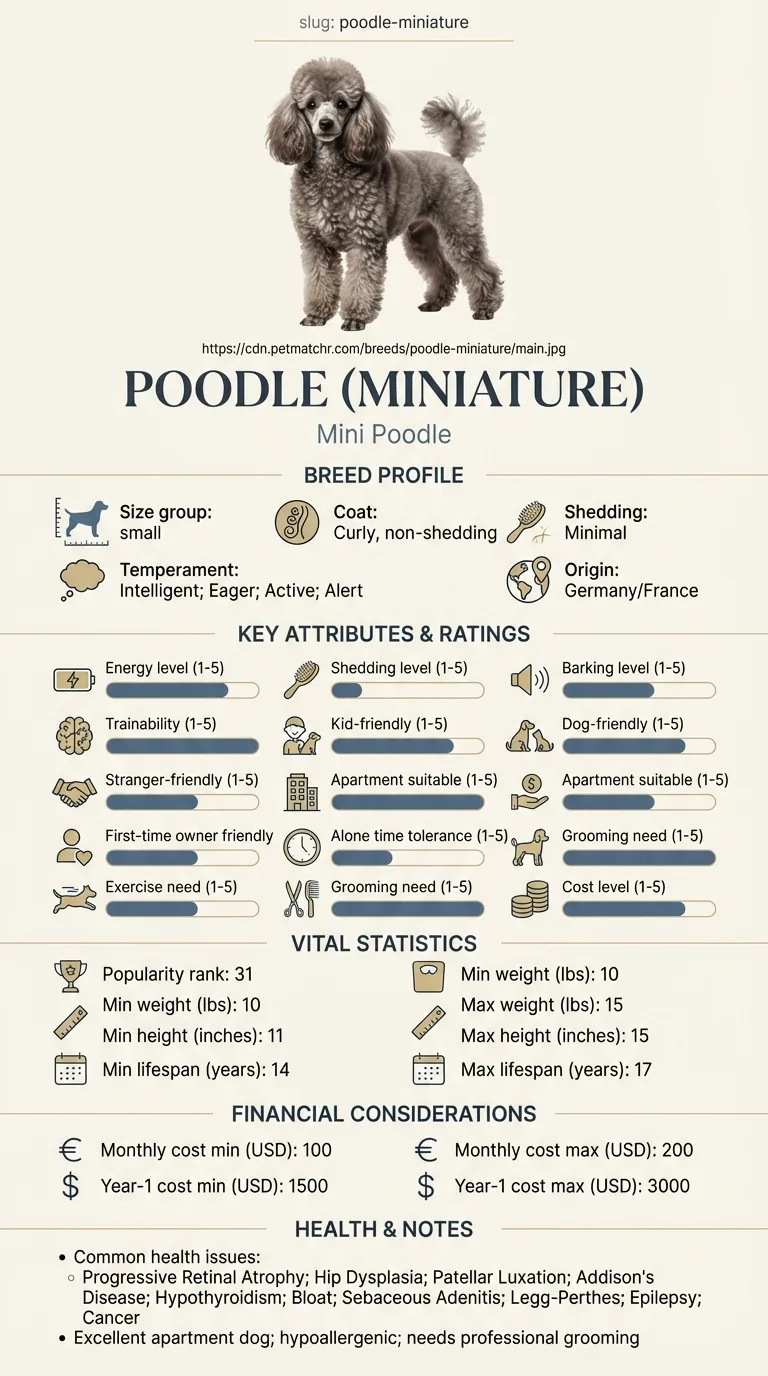
Many first-time dog owners or busy families may find themselves overwhelmed by a barking Mini Poodle. Those living in apartments or close quarters may struggle even more, as excessive noise can lead to conflicts with neighbors.
This guide is not medical advice. If your dog shows pain, sudden behavior change, or worsening symptoms, consult a licensed veterinarian.
Some links may be affiliate links. We may earn a commission at no extra cost to you. We only suggest products we believe are helpful for dog owners.
We research and check what we publish, but we do not warrant that any figure, date, price, or statement is accurate, complete, or current, and we accept no liability for any loss, cost, injury, or other harm arising from the use of this site. Use it as one reference among several. You remain responsible for your own decisions and for your dog's care - confirm anything that matters with a licensed veterinarian or another qualified professional before you act on it. Full disclaimer.
Poodle (Miniature) excessive barking can be a daily challenge for owners. These small, intelligent dogs often bark at various stimuli, from passing cars to unexpected noises. While barking is normal for dogs, Mini Poodles can take it to an extreme, which can be frustrating for you and your neighbors.
Excessive barking is relatively common in Mini Poodles, ranking around 3 on a scale of 1 to 5 in barking behavior. This breed is known for being alert, which can lead to more frequent barking if not properly managed.
Poodle (Miniature) excessive barking can stem from their alert nature. As intelligent and active dogs, they may bark to communicate or get attention. Their eagerness to please can also lead them to bark when they sense a need for action or alertness.
Environmental factors play a significant role in barking behavior. If your Mini Poodle is left alone frequently or lacks mental and physical stimulation, they may bark out of boredom or anxiety. Additionally, changes in their surroundings, like new neighbors or loud noises, can trigger excessive barking.
If your Poodle (Miniature) continues to bark excessively despite your efforts, consider consulting a professional trainer. They can provide tailored strategies and behavioral training to address the issue effectively.
If the excessive barking seems sudden or is accompanied by other signs of distress, consult your vet. This could indicate underlying health issues or anxiety that may need medical attention.
Start here: Miniature Poodle Most Common Genetic Disorders: Screening
See all Poodle Miniature health problems, which breeds are prone to excessive barking, or the full Poodle Miniature breed guide for temperament, exercise needs and ownership costs.
It may take about 4 to 8 weeks to see significant improvements in your Poodle (Miniature) excessive barking.
Success means your dog barks less frequently and only in appropriate situations, like alerting you to a stranger or expressing excitement.
Avoid these common mistakes to help manage your Poodle (Miniature)'s excessive barking effectively.
Understanding when your Poodle (Miniature) excessive barking is an emergency is crucial for your pet's well-being. There are clear signs that warrant immediate attention from a vet, while other cases can be managed with patience and a plan.
If your Mini Poodle is barking excessively and shows signs of distress or discomfort—such as panting, pacing, or inability to settle—it's time to call your vet. This may indicate underlying health issues or anxiety that needs professional intervention. Other red flags include sudden changes in behavior, aggressive barking, or if the barking is accompanied by other concerning symptoms like vomiting or lethargy.
On the other hand, if your Poodle (Miniature) is barking due to boredom, excitement, or as a response to environmental stimuli, you can monitor the situation. Create a structured routine that includes regular exercise and mental stimulation. Training sessions focused on commands and positive reinforcement can also help reduce excessive barking over time. Keep track of the barking triggers and adjust your strategy as needed.

Meet Sarah, a busy nurse living in a small apartment with her Mini Poodle, Bella. Bella had a habit of barking at every noise, from the mailman to birds outside. It was exhausting for Sarah, especially after long shifts. After researching, she learned how to stop Poodle (Miniature) excessive barking through consistent training and positive reinforcement. She set aside 10 minutes each day for focused training sessions and rewarded Bella with treats for quiet behavior. Over a few weeks, Bella started to understand when barking was appropriate, and Sarah enjoyed a much quieter home.
Key takeaway: With patience and consistent training, even a barking Mini Poodle can learn to be calm and well-mannered.
Poodles (Miniature) may bark excessively due to boredom, anxiety, or a need for attention. They are intelligent and active dogs that require mental and physical stimulation. If their needs aren't met, they may resort to barking to express their frustration.
To reduce excessive barking, ensure your Mini Poodle gets enough exercise and mental engagement. Training them with positive reinforcement techniques can also help, rewarding quiet behavior. Consistency is key; practice regularly to reinforce good habits.
Using commands like 'quiet' can be effective for managing barking. When your Poodle barks, calmly say 'quiet' and wait for them to stop before offering a treat. Gradually increase the time they must be quiet before receiving their reward.
Yes, boredom is a common cause of excessive barking in Poodles (Miniature). These dogs need regular exercise and mental challenges to stay engaged. Interactive toys or puzzles can help keep their minds occupied.
Excessive barking can indicate anxiety, particularly if your Poodle barks when left alone. If this is the case, consider increasing their alone time gradually or seeking professional help for separation anxiety. Addressing the root cause is essential for effective management.
Training a Poodle (Miniature) to stop excessive barking can take a few weeks to several months, depending on the individual dog and the consistency of training. Regular practice and patience are crucial to seeing improvements.
Poodle (Miniature) excessive barking can be triggered by various factors, such as boredom, loneliness, or the presence of strangers. They may also bark to get your attention or alert you of potential threats. Understanding these triggers can help you address the barking effectively.
If your Poodle (Miniature) is barking excessively and showing signs of restlessness, pacing, or destructive behavior, they may be experiencing anxiety. Pay attention to their body language and consider if there are any changes in their environment that could be causing stress.
Yes, if an older Poodle (Miniature) suddenly starts barking excessively, it could indicate health issues, such as pain or cognitive decline. It's important to consult your vet to rule out any underlying medical problems if you notice a change in their barking habits.
Absolutely! Training can significantly help reduce Poodle (Miniature) excessive barking. Positive reinforcement techniques, such as rewarding quiet behavior and providing distractions, can effectively teach them to bark less.
If your Poodle (Miniature) barks at other dogs, it may be due to excitement or fear. Gradual desensitization and controlled socialization can help them become more comfortable around other dogs, reducing their barking over time.
Provide daily exercise and mental stimulation to prevent boredom-induced barking. Use positive reinforcement to reward quiet behavior during training.
A Mini Poodle typically needs about 30 minutes of exercise daily. Regular walks and playtime can help reduce excessive barking.
Introduce your Poodle to new people slowly and reward them for calm behavior. This can help reduce barking at strangers over time.
Consider interactive toys or treat-dispensing puzzles that keep your Poodle engaged and distracted, reducing the likelihood of barking.
Behaviour changes often start with pain. The prep sheet for this page covers what to rule out, and what to ask.
You get: Vet visit prep sheet
No spam. One-click unsubscribe. See our privacy policy.
See a sample page before you decide.