Behavior
What are some Poodle (Miniature) eye problems quick tips?
Ensure regular vet check-ups and keep your Poodle's eyes clean. Avoid rough play that might lead to injury. Monitor their eyes for any signs of discomfort or changes.

Quick answer
What are some Poodle (Miniature) eye problems quick tips?
Ensure regular vet check-ups and keep your Poodle's eyes clean. Avoid rough play that might lead to injury. Monitor their eyes for any signs of discomfort or changes.
Poodle (Miniature) eye problems can be a serious concern for owners.
New and experienced Poodle (Miniature) owners alike may find themselves worried about their dog’s eye health, especially if they notice signs of discomfort or changes in vision.
This guide is not medical advice. If your dog shows pain, sudden behavior change, or worsening symptoms, consult a licensed veterinarian.
Some links may be affiliate links. We may earn a commission at no extra cost to you. We only suggest products we believe are helpful for dog owners.
We research and check what we publish, but we do not warrant that any figure, date, price, or statement is accurate, complete, or current, and we accept no liability for any loss, cost, injury, or other harm arising from the use of this site. Use it as one reference among several. You remain responsible for your own decisions and for your dog's care - confirm anything that matters with a licensed veterinarian or another qualified professional before you act on it. Full disclaimer.
Check this first
Red flags indicating an emergency include sudden blindness, excessive tearing, blood in the eye, or signs of pain, like pawing at the face. If your Mini Poodle displays any of these symptoms, do not wait. Reach out to your veterinarian immediately.
In less severe cases, it’s wise to keep an eye on your dog’s behavior. Mild symptoms, such as occasional squinting, slight redness, or a bit of discharge, might not require urgent care. Instead, monitor these conditions for a few days. If they persist or worsen, then it's time to consult your vet.
Always trust your instincts. If you feel that something isn’t right, it’s better to err on the side of caution. Your Mini Poodle relies on you to ensure their well-being.
If any of these apply, call your vet or an emergency clinic now. The rest of this page is for the cases that are not an emergency.
Poodle (Miniature) eye problems can show up in various ways, including excessive tearing, redness, and sensitivity to light. These issues might indicate underlying conditions like Progressive Retinal Atrophy or other health concerns. Owners often notice these symptoms daily, and they can lead to discomfort for the dogs.
Eye problems are relatively common in Poodle (Miniature) breeds, often due to their genetic background. Many owners will encounter some form of eye issue throughout their pet's life, especially as they age.
Mini Poodles can be prone to certain eye issues due to their genetics. Conditions like Progressive Retinal Atrophy and other inherited disorders are common in this breed. Their small size and unique eye structure can make them more vulnerable to injuries and infections.
Environmental factors can also contribute to eye problems. Dust, allergens, and exposure to harsh chemicals can irritate a Mini Poodle's eyes. Additionally, inadequate grooming can lead to tear stains and other related issues.
Consult a vet if your Mini Poodle shows signs of redness, swelling, or persistent discharge from the eyes. Any sudden changes in vision or behavior related to their eyes should be addressed immediately.
Understanding what not to do can be just as vital as knowing the right actions to take. Here are common mistakes that may worsen your Poodle (Miniature) eye problems.
Start here: Miniature Poodle Most Common Genetic Disorders: Screening
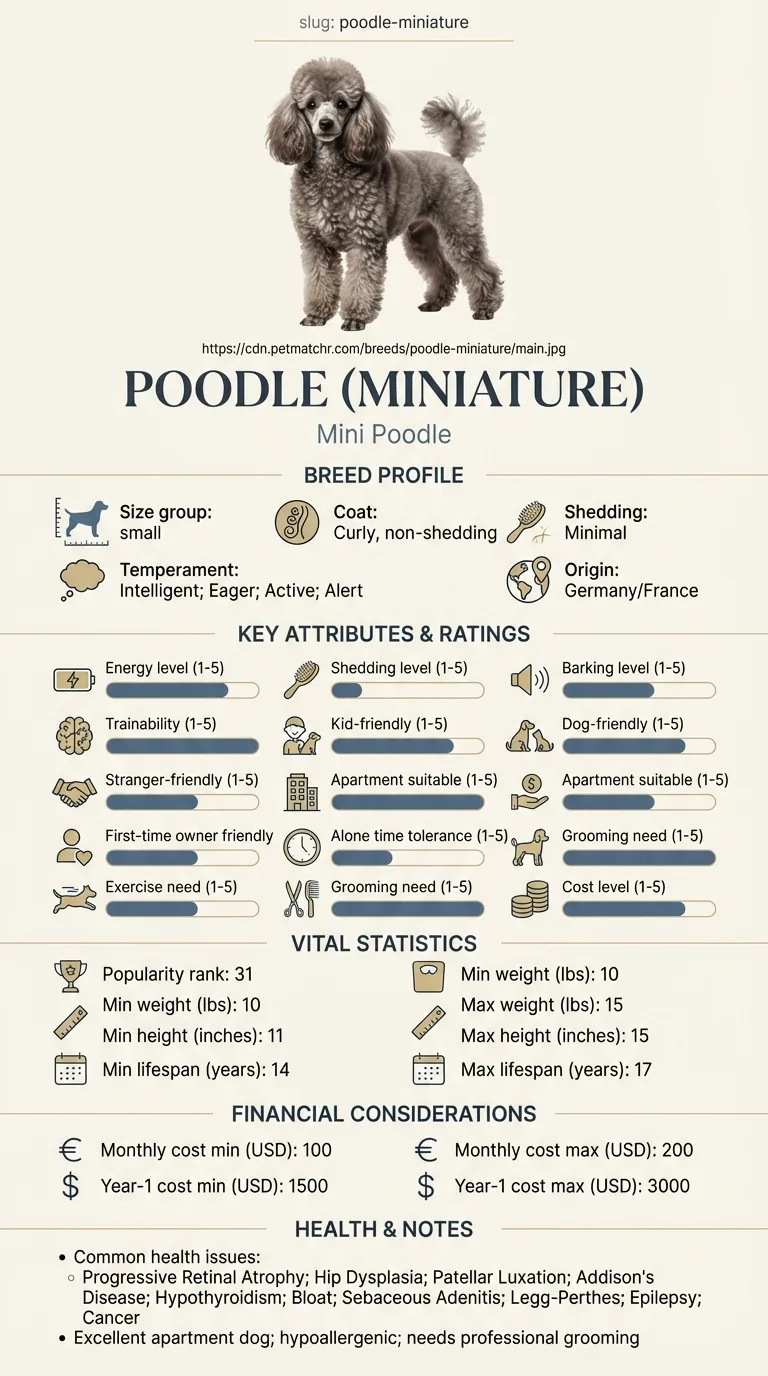
See all Poodle Miniature health problems, which breeds are prone to eye problems, or the full Poodle Miniature breed guide for temperament, exercise needs and ownership costs.
You can expect to see improvements in your Poodle (Miniature) eye problems within 4 to 8 weeks of consistent care and follow-up with your vet.
Success means your dog shows reduced symptoms, such as less tearing and fewer signs of discomfort. Regular vet check-ups will help ensure their eyes remain healthy.
Linda, a busy nurse in Chicago, adopted Bella, a spirited Mini Poodle. Shortly after bringing her home, Linda noticed Bella had excessive tearing and seemed uncomfortable. After a vet visit, she learned these were common Poodle (Miniature) eye problems, often related to their sensitive nature. Armed with information, Linda started a regimen of regular eye cleaning and opted for a specialized diet that promoted eye health. She also implemented training techniques to help Bella feel more relaxed during grooming sessions. Within weeks, Bella's symptoms improved significantly, and their bond deepened through the training process.
Key takeaway: With the right care and patience, owners can effectively manage Poodle (Miniature) eye problems, enhancing both the dog's comfort and the owner's experience.
Look for signs like squinting, excessive tearing, or redness around the eyes. If your Mini Poodle is rubbing their eyes frequently or shows reluctance to play, it may indicate discomfort. Prompt veterinary attention is crucial if you notice these signs.
To prevent eye problems in your Mini Poodle, ensure they have a safe environment free from hazards. Regular grooming helps keep their fur away from their eyes, and routine vet visits allow for early detection of issues. Training them to avoid rough play can also reduce injury risks.
Caring for a Mini Poodle with eye problems involves regular cleaning of their eyes and administering prescribed medications. Monitor their behavior for changes and keep their environment safe. Always consult your vet for specific care instructions.
Yes, some breeds, including Poodles (Miniature), are more susceptible to genetic eye conditions. These can include progressive retinal atrophy and cataracts. It's important to be aware of your dog's breed-specific health risks.
Treatments vary based on the specific eye issue. Options may include medications, surgery, or special diets. Always consult with your vet for the best treatment plan tailored to your Mini Poodle's needs.
Yes, many eye problems in Poodles (Miniature) can be hereditary. Conditions like progressive retinal atrophy are often passed down through genes. Responsible breeding practices can help minimize these risks.
Look for signs like excessive tearing, redness, or pawing at the eyes. If your Poodle (Miniature) seems to bump into things or avoids bright light, it's time to consult a vet.
You should see a vet if your Poodle (Miniature) shows any persistent symptoms like swelling, discharge, or changes in behavior related to vision. Early intervention can prevent more severe issues.
Treatments vary depending on the specific eye problem. Options may include medication, surgery, or ongoing management strategies. Always consult your veterinarian for the best course of action.
Ensure regular vet check-ups and keep your Poodle's eyes clean. Avoid rough play that might lead to injury. Monitor their eyes for any signs of discomfort or changes.
Treatment costs can vary widely, ranging from $100 to over $1,000 depending on the condition and required procedures. Regular vet visits are essential for early detection.
While not all eye problems are preventable, maintaining a safe environment and regular grooming can help reduce risks. Stay proactive with vet visits for early detection.
Take your Mini Poodle to the vet if you notice signs like squinting, redness, or unusual tearing. Early intervention is key to managing eye health.
A one-page prep sheet for this condition: the signs, the questions to ask, what to get priced. Unlocks here.
You get: Vet visit prep sheet
No spam. One-click unsubscribe. See our privacy policy.
See a sample page before you decide.
Early access list
The free prep sheet covers the same-day warning signs, a symptom log and the questions to ask. We are considering a fuller kit that adds a cost worksheet for the usual tests and treatments (US price ranges with their sources) and a plain-English guide to ways of covering the bill. It is not built yet; this list tells us whether it is worth building.
One email, no spam, unsubscribe anytime. Information only, not veterinary advice.