Behavior
What are quick tips for German Shepherd excessive barking?
Provide plenty of exercise and mental stimulation to reduce barking. Use positive reinforcement techniques to reward quiet behavior.

Quick answer
What are quick tips for German Shepherd excessive barking?
Provide plenty of exercise and mental stimulation to reduce barking. Use positive reinforcement techniques to reward quiet behavior.
German Shepherd excessive barking can drive you and your neighbors crazy. It's important to address this behavior to maintain peace and harmony in your home.
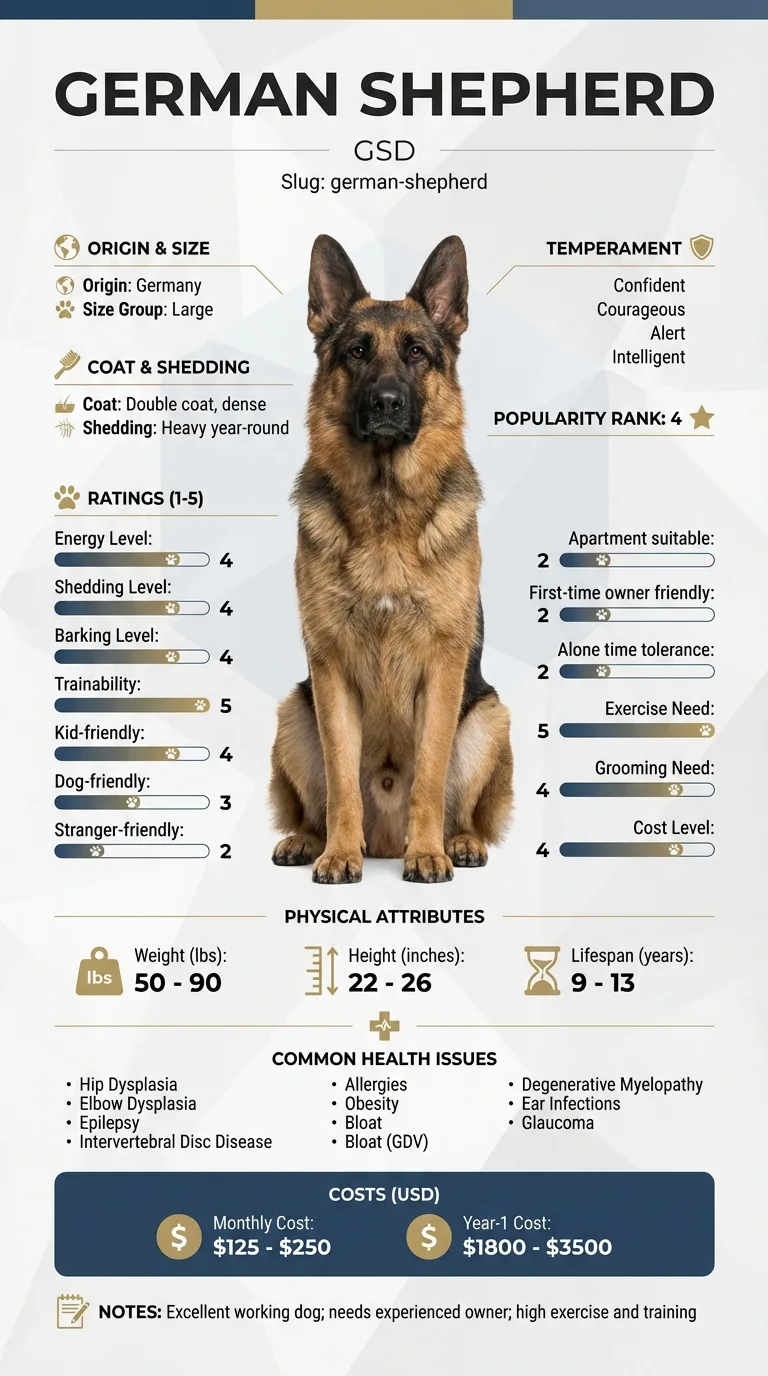
New owners or those living in close quarters often struggle the most. Busy families, city dwellers, and anyone who values a quiet home environment may find excessive barking particularly frustrating.
This guide is not medical advice. If your dog shows pain, sudden behavior change, or worsening symptoms, consult a licensed veterinarian.
Some links may be affiliate links. We may earn a commission at no extra cost to you. We only suggest products we believe are helpful for dog owners.
We research and check what we publish, but we do not warrant that any figure, date, price, or statement is accurate, complete, or current, and we accept no liability for any loss, cost, injury, or other harm arising from the use of this site. Use it as one reference among several. You remain responsible for your own decisions and for your dog's care - confirm anything that matters with a licensed veterinarian or another qualified professional before you act on it. Full disclaimer.
German Shepherd excessive barking can be a frustrating issue for owners. This breed tends to bark at various stimuli, such as strangers, other animals, or even sounds. This behavior can quickly become overwhelming, especially in urban settings where noise can amplify the barking.
Excessive barking is quite common among German Shepherds due to their alert nature and high energy levels. Many owners report this behavior, particularly in younger dogs or those that haven't received proper training. However, with consistent training and attention, the barking can be managed effectively.
German Shepherds are naturally alert and protective. This can lead to excessive barking, especially if they perceive a threat. Their intelligence also means they may bark to express boredom or seek attention.
If your German Shepherd is left alone for long periods, they may bark out of loneliness or anxiety. Lack of physical and mental stimulation can lead to frustration, resulting in barking. Additionally, a noisy environment can trigger barking as they react to sounds outside.
If your German Shepherd's barking continues despite your efforts, it may be time to consult a professional trainer. They can assess the situation and provide personalized training strategies.
If your dog suddenly starts barking excessively or shows signs of distress, consult your vet. It may indicate a health issue or anxiety that requires professional help.
Start here: German Shepherd Most Common Genetic Disorders: Screening
See all German Shepherd health problems, which breeds are prone to excessive barking, or the full German Shepherd breed guide for temperament, exercise needs and ownership costs.
With consistent training, you can see improvements in your German Shepherd's excessive barking within 4 to 6 weeks.
Success means your dog barks less frequently and appropriately, responding better to commands and showing reduced anxiety.
Here are some common mistakes that can worsen your German Shepherd's excessive barking, along with safer alternatives.
Excessive barking in German Shepherds can sometimes point to serious issues. It’s crucial to know when to act quickly versus when you can patiently monitor the situation. Here are some red-flag signs that indicate you should call your vet immediately.
If your German Shepherd is barking excessively and also showing signs of distress, such as pacing, panting, or refusal to eat, these can be urgent indicators. Other emergencies include sudden changes in barking patterns, especially if they start barking at night or during quiet times. If your dog seems to be in pain or is barking in response to what appears to be a medical issue, immediate veterinary attention is necessary.
On the other hand, if your dog's barking seems to be triggered by boredom or anxiety but isn’t accompanied by distress, you may take a more measured approach. For cases where the barking feels excessive but doesn't seem to cause harm, observe the triggers. Often, these can be addressed through training, exercise, or enrichment activities.
A consistent plan for managing excessive barking can help alleviate the problem without emergency intervention.






Laura, a busy nurse living in a small apartment, struggled with her German Shepherd, Max, who barked excessively at everything from passing cars to the mailman. After researching how to stop German Shepherd excessive barking, she enrolled in a local training class focusing on positive reinforcement. With patience and practice, Max learned to respond to cues and relax when stimuli appeared, and within a month, both Laura and her neighbors enjoyed a quieter environment.
Key takeaway: Understanding your dog's triggers and committing to consistent training can significantly reduce excessive barking.
German Shepherds may bark excessively for various reasons, including boredom, anxiety, or as a way to alert you to potential threats. They are naturally protective and alert dogs, so understanding their triggers is crucial. Identifying the root cause will help you find the right solutions.
To stop German Shepherd excessive barking, start by providing plenty of physical and mental stimulation. Engage them in daily exercise, training sessions, and interactive toys. Consistent training techniques, like positive reinforcement for quiet behavior, can also help reduce barking.
Yes, training is highly effective for controlling excessive barking in German Shepherds. Teaching commands like 'quiet' or 'enough' can help manage their barking. Be patient and consistent with your training efforts for the best results.
If your German Shepherd barks at strangers, socialization is key. Gradually expose them to different people and environments, rewarding calm behavior. This can help reduce anxiety and improve their confidence around unfamiliar faces.
Yes, excessive barking can sometimes signal a health issue or discomfort. If your German Shepherd's barking is sudden or accompanied by other unusual behaviors, consult your veterinarian. They can help determine if there's an underlying health concern.
Excessive barking is generally considered to be barking that lasts a long time or occurs frequently, especially when there’s no apparent reason. If your dog barks during quiet times or disturbs neighbors, it may be excessive. Monitoring their barking patterns can help you assess the situation.
German Shepherds may bark excessively due to boredom, anxiety, or territorial instincts. They are also alert dogs, so they might bark at unfamiliar sounds or movements. Understanding the root cause is essential for effective training.
If your German Shepherd's barking seems excessive or out of character, it might be a sign of stress or discomfort. Look for other signs of anxiety, like pacing or destructive behavior, which can indicate a need for intervention. Consulting with a vet or trainer can help determine the issue.
Yes, older German Shepherds may bark more due to changes in their environment or health issues. They might also bark out of confusion or frustration. It's important to monitor their behavior and consult a vet if you notice significant changes.
If your German Shepherd barks excessively while you're away, it may indicate separation anxiety. Consider using calming aids or interactive toys to keep them occupied. Training sessions before you leave can also help reduce anxiety and barking.
Absolutely! Training can significantly reduce German Shepherd excessive barking. Consistent commands and positive reinforcement can teach them when it's appropriate to bark and when to be quiet. Consider seeking professional help if needed.
Provide plenty of exercise and mental stimulation to reduce barking. Use positive reinforcement techniques to reward quiet behavior.
Introduce your German Shepherd to new people and environments gradually, rewarding calm behavior. Consistency is key for successful socialization.
Common triggers include boredom, perceived threats, or anxiety. Understanding their triggers can help you address excessive barking.
Behaviour changes often start with pain. The prep sheet for this page covers what to rule out, and what to ask.
You get: Vet visit prep sheet
No spam. One-click unsubscribe. See our privacy policy.
See a sample page before you decide.