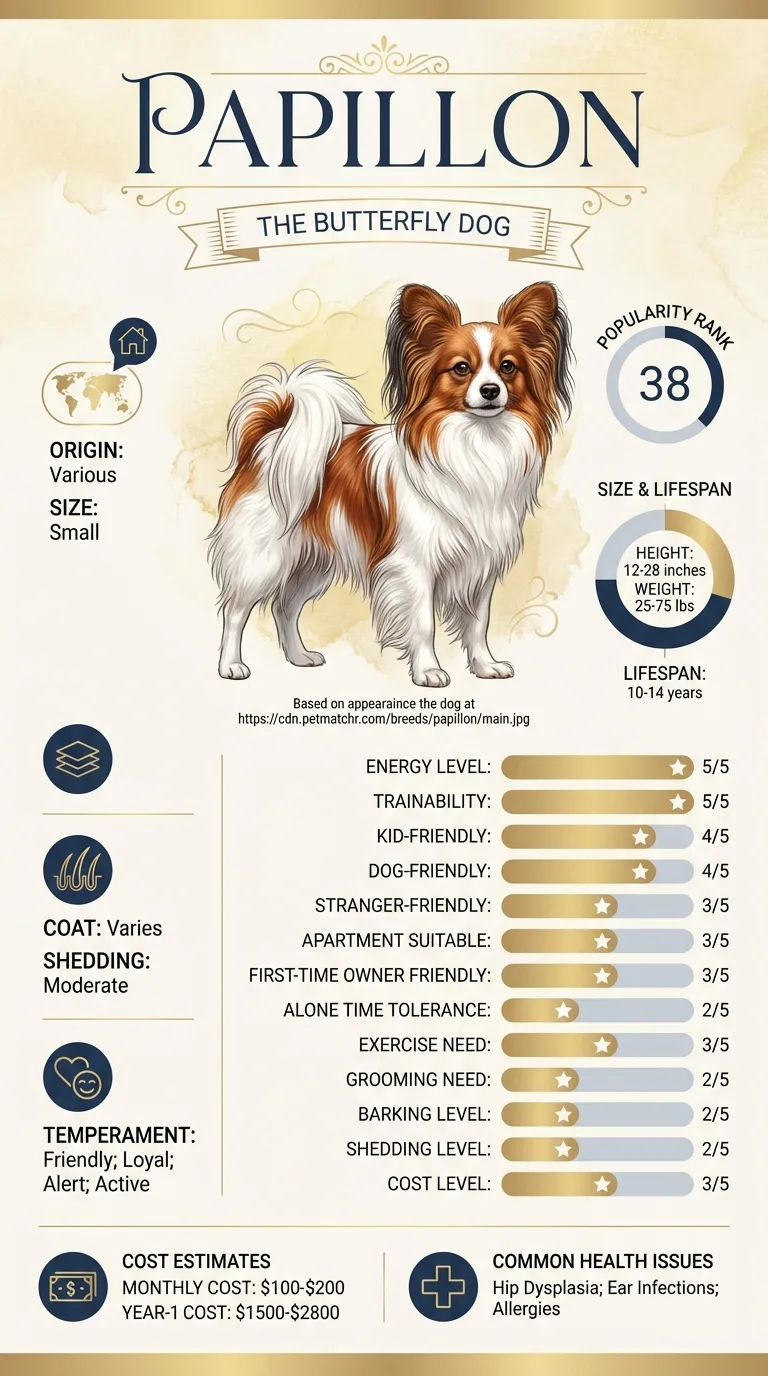
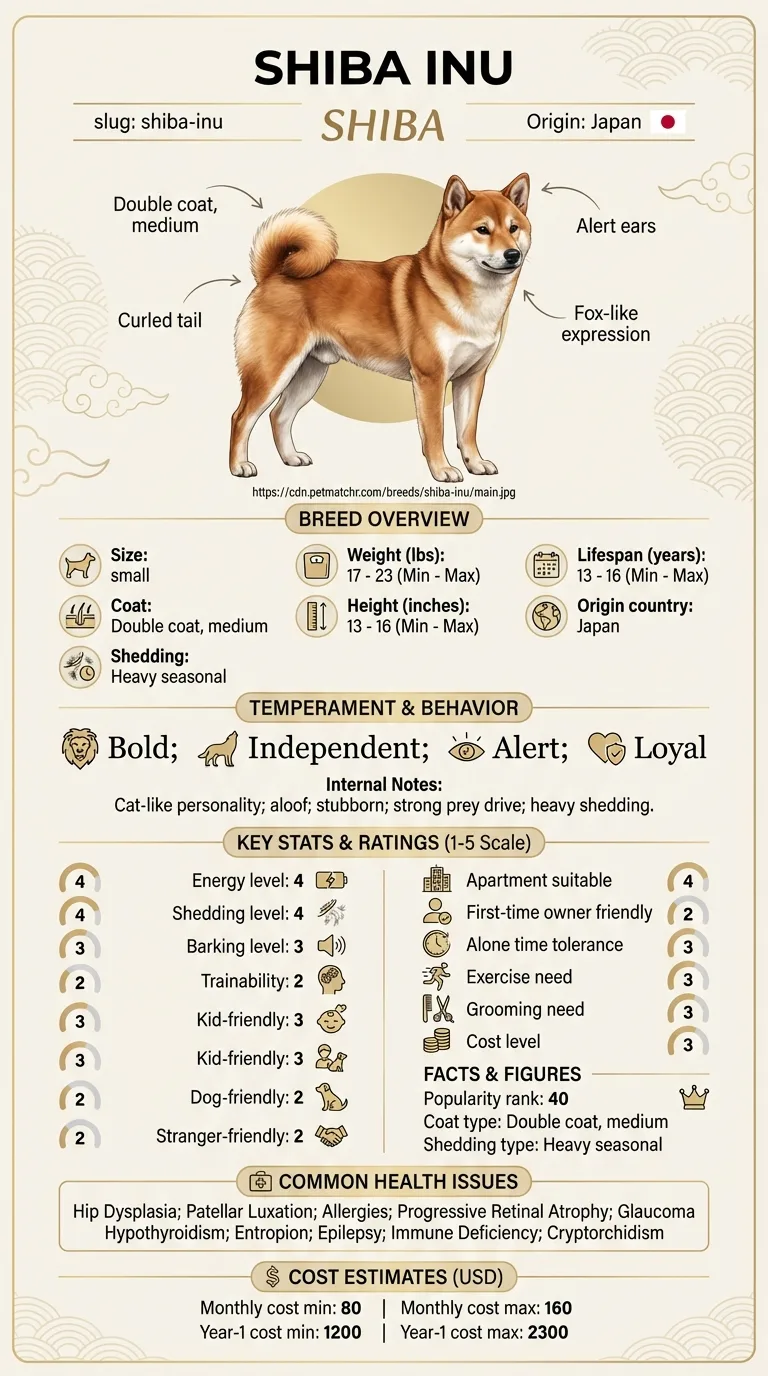
If you want a dog that's easy to train and sociable with other dogs and strangers, the papillon is the clear pick. The shiba suits an experienced owner who wants an independent dog with real personality.
Papillon or Shiba Inu? On paper they differ most on trainability, and on the scales Shiba Inu is the heavier at 17–23 lbs. Here is how the two compare on everything that shapes an ordinary week.
This is for someone already down to Papillon and Shiba Inu and deciding between them. For this pair the decision usually turns on trainability and shedding, so those are covered first and in most detail. Anyone choosing from a flat has a clear answer here: Papillon rates 5/5 against 4/5. Breed history is left out; what follows is what you will actually live with.
Quick verdict
Between Papillon and Shiba Inu, trainability is what separates them, and Papillon is the lower-effort dog of the two to keep.
Choose papillon if...
Choose Papillon if you are in a flat or a smaller home, this is your first dog and you do not want a standing grooming appointment.
Choose shiba inu if...
Choose Shiba Inu if the dog will be alone during the working day and you want a dog that is more watchful with visitors.
Head-to-head comparison
Feature
papillon
shiba inu
Winner
Size class
small
small
Equal
Weight
5–10 lbs
17–23 lbs
Equal
Height
8–11 in
13–16 in
Equal
Lifespan
14–16 years
13–16 years
papillon
Exercise need
Moderate (3/5)
Moderate (3/5)
Equal
Grooming need
Low (2/5)
Moderate (3/5)
papillon
Shedding
Low (2/5)
High (4/5)
papillon
Energy level
High (4/5)
High (4/5)
Equal
Barking
High (4/5)
Moderate (3/5)
shiba inu
Apartment suitability
Very high (5/5)
High (4/5)
papillon
Good for first-time owners
High (4/5)
Low (2/5)
papillon
Tolerates being alone
Low (2/5)
Moderate (3/5)
shiba inu
Trainability
Very high (5/5)
Low (2/5)
papillon
Good with kids
Moderate (3/5)
Moderate (3/5)
Equal
Good with other dogs
High (4/5)
Low (2/5)
papillon
Friendly to strangers
High (4/5)
Low (2/5)
papillon
Cost level
Low (2/5)
Moderate (3/5)
papillon
Coat
Long, silky single coat
Double coat, medium
Equal
Origin
Various
Japan
Equal
Typical monthly cost
$80–$150
$80–$160
Equal
Typical first-year cost
$1,100–$2,300
$1,200–$2,300
Equal
Deep dive
Size and build
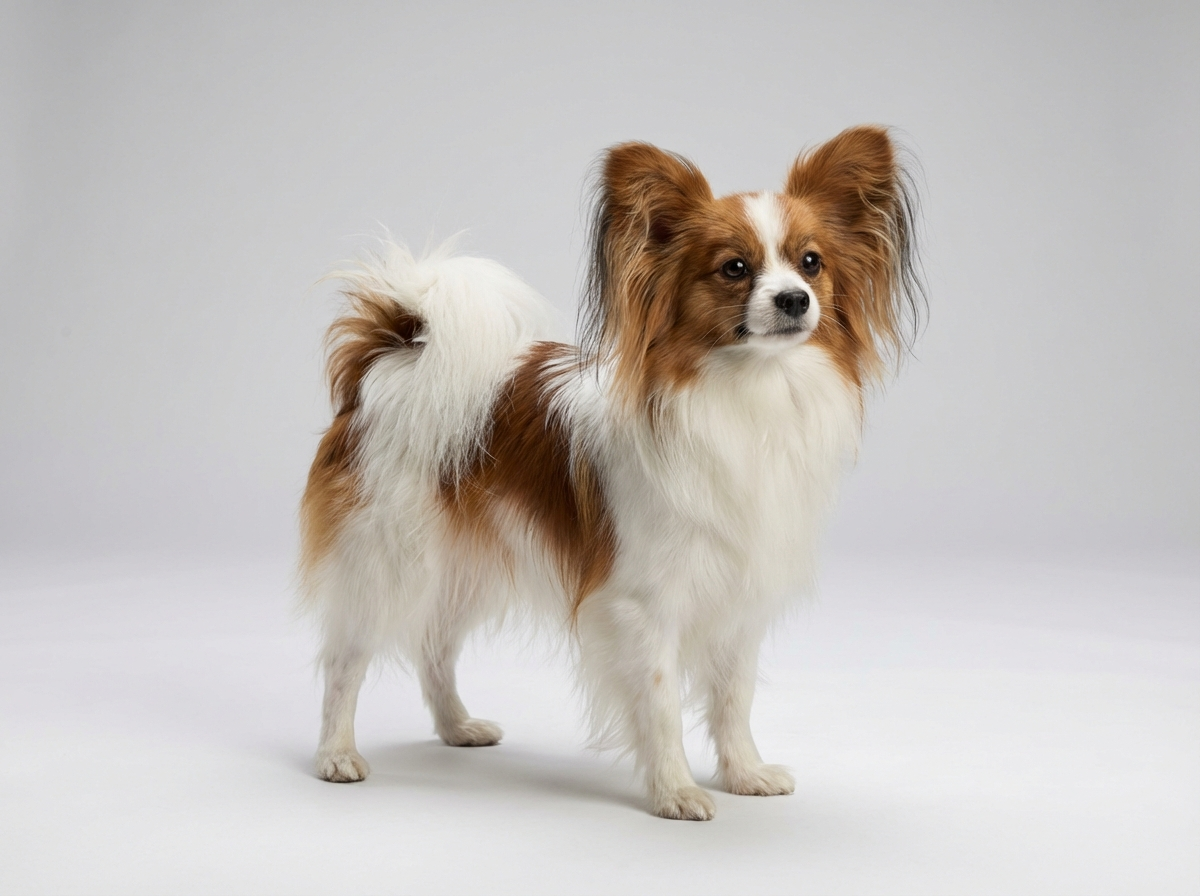
Weight is the main gap: the papillon runs 5 to 10 pounds, the shiba inu 17 to 23 -- roughly double to quadruple, even though both stand in a similar 8-to-16-inch height range and share the small size class. The shiba has the sturdier, fox-like build; the papillon is finer-boned throughout. Neither breed reaches medium-dog territory, but the shiba's heavier frame and thicker coat give it a noticeably more substantial presence in a room than the papillon's toy-sized build.
Energy and exercise
Exercise need actually ties at moderate (3/5) for both breeds, and both rate high (4/5) on energy level -- a closer match than the papillon usually gets in this batch. Don't mistake the shiba's compact size for low activity needs; it's an alert, athletic breed that wants daily movement just as much as the papillon does.
Grooming and shedding
Grooming favors the papillon slightly, low (2/5) against the shiba's moderate (3/5). Shedding is the bigger gap -- low (2/5) for the papillon, high (4/5) for the shiba, which famously blows its dense double coat twice a year in heavy seasonal sheds that a moderate grooming rating doesn't fully warn you about. Owners who've lived through a shiba's coat blow often say it's less about daily brushing and more about a two-week stretch of near-constant vacuuming, a pattern the papillon's steadier, lighter shedding never produces.
Apartment living, noise and time alone
Both breeds handle apartments well -- very high (5/5) for the papillon, high (4/5) for the shiba. Barking favors the shiba, moderate (3/5) against the papillon's high (4/5), though shiba owners often note their dogs make up for less frequent barking with an unmistakable high-pitched scream when startled or unhappy, something this rating alone doesn't capture.
Training and owner experience
This is the widest trainability gap in the whole batch: very high (5/5) for the papillon against low (2/5) for the shiba, a breed famous for independence bordering on stubbornness. First-time-owner suitability follows the same pattern, high (4/5) for the papillon versus low (2/5) for the shiba -- this is not a forgiving first dog.
Kids, other dogs and visitors
Kids rate as a tie, moderate (3/5) for both. Everything else favors the papillon: high (4/5) with other dogs against the shiba's low (2/5), and high (4/5) with strangers against the shiba's low (2/5). Shibas are frequently described as cat-like in their selective sociability, and these numbers back that reputation up. None of this points to aggression on the shiba's part -- it's closer to genuine indifference toward dogs and people it doesn't already know.
Health and lifespan
Lifespans run close, 14 to 16 years for the papillon against 13 to 16 for the shiba. The shiba's health list is long -- hip dysplasia, patellar luxation, allergies, progressive retinal atrophy, glaucoma, hypothyroidism, entropion, epilepsy, immune deficiency, and cryptorchidism, ten conditions against the papillon's five, with patellar luxation and PRA overlapping between the two breeds.
Cost to keep
Cost level rates low (2/5) for the papillon and moderate (3/5) for the shiba, with dollar ranges close but not identical: $80 to $150 monthly for the papillon against $80 to $160 for the shiba, and $1,100 to $2,300 versus $1,200 to $2,300 first-year. This is one of the smaller cost gaps in the batch -- the real difference between these two breeds isn't money, it's trainability.
Papillon vs Shiba Inu at a glance
Papillon weighs 5–10 lbs and lives 14–16 years; Shiba Inu weighs 17–23 lbs and lives 13–16 years. The two diverge most on trainability, shedding and good for first-time owners and 2 other rated axes. They are level on energy level, exercise need and good with kids, so those cannot decide it. The comparison marks an easier option only where one exists. Facts like weight and country of origin are not scored. Both dogs are rated from the same dataset, which is what makes the numbers comparable with each other even though any individual dog sits somewhere inside its breed's range.
Papillon vs Shiba Inu: Which Suits Your Home? - Papillon vs Shiba Inu at a glance
Frequently asked questions
Is a shiba inu hard to train compared to a papillon?
Considerably harder, per this data -- the shiba rates low (2/5) for trainability against the papillon's very high (5/5), the biggest training gap in this entire comparison set.
Which is bigger?
The shiba inu, at 17 to 23 pounds against the papillon's 5 to 10, though both are considered small breeds.
Is a shiba inu good for a first-time owner?
Not really -- it rates low (2/5) in that category, against the papillon's high (4/5). Its independence takes an experienced handler to manage well.
Which sheds more?
The shiba, by a lot -- high (4/5) against the papillon's low (2/5), plus a heavy seasonal coat blow twice a year.
How do their costs compare?
They're close -- $80-150 monthly for the papillon, $80-160 for the shiba, one of the smaller cost gaps in this batch.
Do they share health risks?
Yes -- both lists include patellar luxation and progressive retinal atrophy, though the shiba's list runs considerably longer overall at ten conditions versus the papillon's five.
Which gets along better with other dogs?
The papillon, rated high (4/5) against the shiba's low (2/5). Shibas can be selective, sometimes even confrontational, with unfamiliar dogs.
If you want a dog that's easy to train and sociable with other dogs and strangers, the papillon is the clear pick. The shiba suits an experienced owner who wants an independent dog with real personality.
Costs
How do monthly costs compare?
Nearly identical -- $80-150 for the papillon, $80-160 for the shiba.
Behavior
How much exercise does a shiba inu need?
Moderate (3/5), the same rating as the papillon, despite its more athletic build.
Health
Which breed lives longer?
They're close -- the papillon averages 14-16 years, the shiba 13-16.
Related DogBreedCompass guides
Papillon breed guide – Readers comparing the two usually want the full profile of Papillon before deciding.
Shiba Inu breed guide – The same for Shiba Inu, so the comparison can be checked against the detail.
Papillon vs Maltese – Maltese is the closest breed to Papillon on the measured axes, so it is the natural next comparison.
Shiba Inu vs Pomeranian – Pomeranian sits closest to Shiba Inu, which makes it the alternative worth ruling out.
Papillon vs Pomeranian – Pomeranian is the other breed Shiba Inu is most often weighed against.
Shiba Inu health problems – The health pages set out what each breed is actually screened for.
Health information here is general and is not veterinary advice. If your dog shows pain, sudden behaviour change, or worsening symptoms, consult a licensed veterinarian.
Some links on this site are affiliate links. We may earn a commission at no extra cost to you, and we only suggest products we believe are helpful for dog owners.
We research and check what we publish, but we do not warrant that any figure, date, price, or statement is accurate, complete, or current, and we accept no liability for any loss, cost, injury, or other harm arising from the use of this site. Use it as one reference among several. You remain responsible for your own decisions and for your dog's care - confirm anything that matters with a licensed veterinarian or another qualified professional before you act on it. Full disclaimer.