Behavior
What are some quick tips for managing Golden Retriever pregnancy complications?
Monitor her health closely, provide a nutritious diet, and schedule regular vet check-ups. Early detection of issues can significantly improve outcomes.

Quick answer
What are some quick tips for managing Golden Retriever pregnancy complications?
Monitor her health closely, provide a nutritious diet, and schedule regular vet check-ups. Early detection of issues can significantly improve outcomes.
Golden Retriever pregnancy complications can pose serious risks for both mother and puppies. Understanding these issues is crucial for any dog owner.
First-time Golden Retriever owners, busy families, and anyone new to dog breeding may struggle with recognizing and managing pregnancy complications. These owners often feel overwhelmed by the responsibility of ensuring their dog's health and the safety of the puppies.
This guide is not medical advice. If your dog shows pain, sudden behavior change, or worsening symptoms, consult a licensed veterinarian.
Some links may be affiliate links. We may earn a commission at no extra cost to you. We only suggest products we believe are helpful for dog owners.
We research and check what we publish, but we do not warrant that any figure, date, price, or statement is accurate, complete, or current, and we accept no liability for any loss, cost, injury, or other harm arising from the use of this site. Use it as one reference among several. You remain responsible for your own decisions and for your dog's care - confirm anything that matters with a licensed veterinarian or another qualified professional before you act on it. Full disclaimer.
Check this first
Knowing when to call your vet about Golden Retriever pregnancy complications can be a lifesaver. Some signs indicate a serious issue that needs immediate attention, while others can be monitored at home. Here’s how to differentiate between emergencies and less severe cases.
If any of these apply, call your vet or an emergency clinic now. The rest of this page is for the cases that are not an emergency.
Golden Retriever pregnancy complications can manifest as various health issues during gestation. Common signs include lethargy, lack of appetite, and abnormal discharge. These complications occur in around 20% of pregnancies for this breed, making it essential for owners to recognize the warning signs.
Golden Retriever pregnancy complications are notably prevalent, with studies showing a 419% higher risk compared to other breeds. This makes awareness and proactive care crucial for expecting Golden Retriever owners.
Golden Retrievers can face specific pregnancy complications due to their size and inherent health issues. Larger breeds often have higher risks during pregnancy, including difficulty birthing and complications related to their overall health. Health conditions like hip dysplasia and obesity can further complicate pregnancy.
Environmental factors play a significant role in pregnancy complications as well. Stress, lack of proper nutrition, and inadequate prenatal care can lead to serious issues. Additionally, if the mother is not in a safe, calm environment, this can affect her health and the health of her puppies.
Always consult your vet if you notice unusual symptoms, such as excessive vomiting, lethargy, or difficulty breathing. If your Golden Retriever has had previous pregnancy complications, it's wise to keep your vet informed and schedule regular check-ups throughout her pregnancy.
Avoiding common mistakes can significantly improve your Golden Retriever's pregnancy experience. Here are some behaviors to watch out for that could lead to more complications.
Start here: Golden Retriever Most Common Genetic Disorders: Screening
See all Golden Retriever health problems, which breeds are prone to pregnancy complications, or the full Golden Retriever breed guide for temperament, exercise needs and ownership costs.
Expect to see progress within a few weeks of implementing management strategies and veterinary support. Full resolution may take several months, depending on the complications.
Success looks like a healthy, stable pregnancy for your Golden Retriever, with minimal complications. Your dog should feel comfortable and show fewer signs of distress as you provide appropriate care.
If your Golden Retriever shows any of the following signs, it’s essential to seek veterinary care immediately: - Severe bleeding or discharge from the vagina - Loss of appetite or inability to keep food down - Excessive panting or restlessness - Signs of distress, such as whining or pacing - Abdominal swelling or pain - Signs of labor lasting more than a few hours without delivery

In less severe cases, you might not need to rush to the vet. Instead, observe your dog closely and follow a monitoring plan: - Mild vomiting or nausea that lasts less than a day - Slightly decreased energy levels - Occasional discomfort but no severe pain or distress

Sarah, a first-time Golden Retriever owner, faced challenges when her dog Bella experienced pregnancy complications. Bella showed signs of distress, and Sarah was unsure how to help her. After consulting with a vet, Sarah learned how to manage Bella's condition with proper nutrition and stress reduction techniques. Slowly, Bella's health improved, and she had a successful delivery, bringing joy to Sarah and her family.
Key takeaway: With the right veterinary guidance and support, managing Golden Retriever pregnancy complications can lead to a positive outcome.
If your Golden Retriever experiences pregnancy complications, immediate veterinary attention is necessary. Your vet can provide treatments or interventions to help ensure the health of both the mother and her puppies.
To reduce the risk of pregnancy complications, ensure your Golden Retriever has a healthy diet and regular vet check-ups during pregnancy. Proper prenatal care is vital to identify and manage potential issues early on.
If your Golden Retriever shows signs like excessive panting, lethargy, or difficulty giving birth, contact your veterinarian immediately. Timely intervention can be critical for the health of both the mother and the puppies.
While training won't eliminate pregnancy complications, it can help your Golden Retriever remain calm during the process. Basic obedience training can be beneficial in reducing stress and anxiety.
Signs of pregnancy complications in Golden Retrievers include excessive vomiting, lethargy, unusual discharge, and loss of appetite. If you notice any of these symptoms, it's crucial to consult your vet as soon as possible.
Older Golden Retrievers can face increased risks during pregnancy. It's generally recommended to avoid breeding dogs over the age of 6, as complications are more likely, impacting the health of both the mother and puppies.
Monitor her health closely, provide a nutritious diet, and schedule regular vet check-ups. Early detection of issues can significantly improve outcomes.
Create a comfortable space for her to rest, maintain a healthy diet, and reduce stress. This will help her stay relaxed and healthy throughout her pregnancy.
Prepare a whelping box, gather supplies like clean towels, and keep your vet's contact information handy. Being ready can make the birthing process smoother.
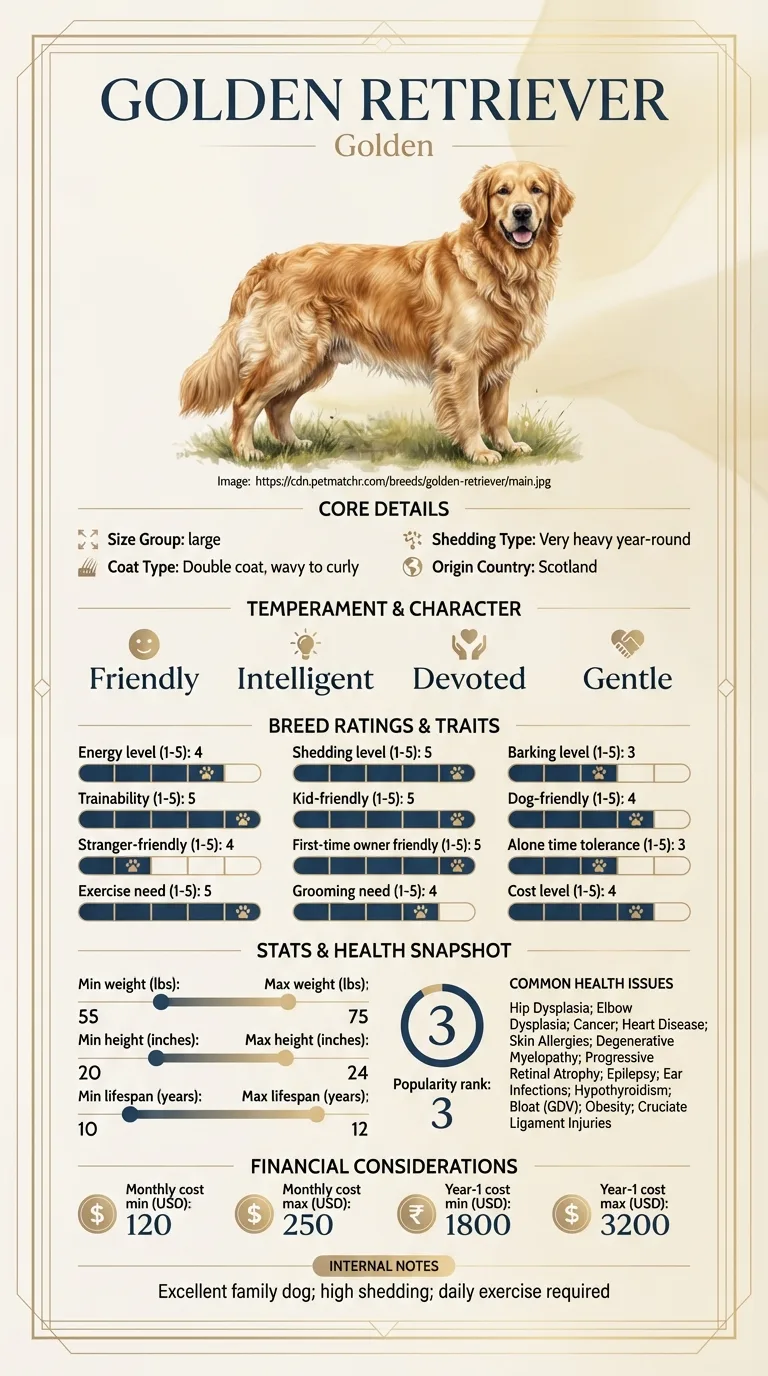
Expect to spend between $120 to $250 monthly on care, including vet visits and special food. Overall, the first year can range from $1,800 to $3,200.
A one-page prep sheet for this condition: the signs, the questions to ask, what to get priced. Unlocks here.
You get: Vet visit prep sheet
No spam. One-click unsubscribe. See our privacy policy.
Preview page 1 before you decide.