Health
Why is dental disease more common in this breed?
A shortened jaw crowds the same number of teeth into less space, trapping bacteria and accelerating disease.

Quick answer
Why is dental disease more common in this breed?
A shortened jaw crowds the same number of teeth into less space, trapping bacteria and accelerating disease.
Persistent bad breath isn't just a minor annoyance in this breed — it's often the earliest sign that crowded teeth are trapping bacteria in ways a more typically spaced mouth wouldn't.
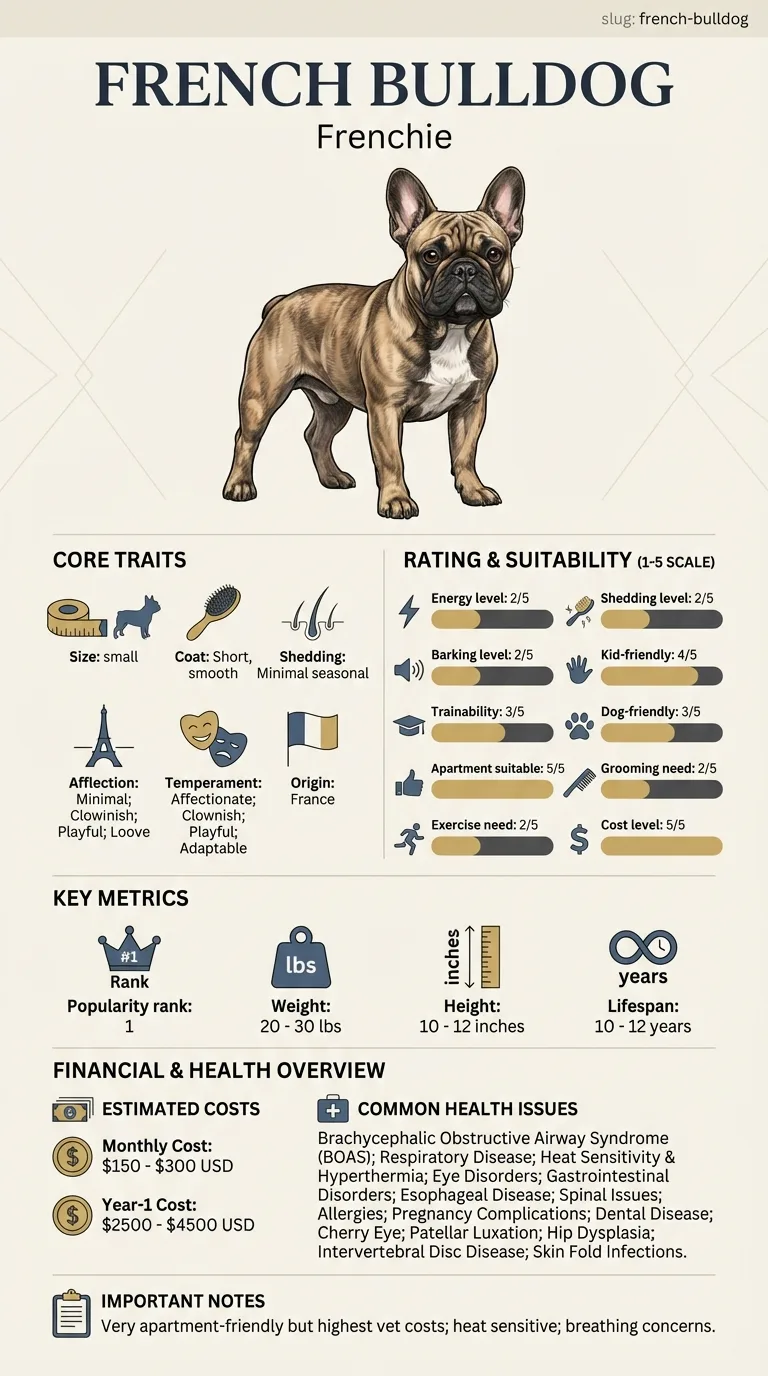
This affects essentially every French Bulldog owner over the dog's lifetime, since dental disease is cumulative and progressive, meaning even diligent owners are managing an ongoing process rather than a one-time fix.
This guide is not medical advice. If your dog shows pain, sudden behavior change, or worsening symptoms, consult a licensed veterinarian.
Some links may be affiliate links. We may earn a commission at no extra cost to you. We only suggest products we believe are helpful for dog owners.
We research and check what we publish, but we do not warrant that any figure, date, price, or statement is accurate, complete, or current, and we accept no liability for any loss, cost, injury, or other harm arising from the use of this site. Use it as one reference among several. You remain responsible for your own decisions and for your dog's care - confirm anything that matters with a licensed veterinarian or another qualified professional before you act on it. Full disclaimer.
Dental disease in French Bulldogs is driven primarily by tooth crowding, a direct structural consequence of the breed's shortened jaw fitting a normal number of teeth into less space than a longer-muzzled dog would have. This crowding traps food debris and bacteria more readily, accelerating plaque buildup, gingivitis, and eventually periodontal disease if not consistently managed through both daily home care and periodic professional cleanings.
Dental disease is extremely common in French Bulldogs and small breeds generally, with tooth crowding making this breed particularly susceptible to accelerated plaque buildup and periodontal disease compared to breeds with more typically spaced teeth.
The selective breeding that produced the French Bulldog's shortened, flattened jaw didn't reduce the number of teeth the breed has, creating a structural mismatch where a normal complement of teeth must fit into meaningfully less space, resulting in crowding, overlap, and tight gaps that trap bacteria far more readily than normally spaced teeth.
Home dental care habits — how consistently teeth are brushed, whether dental chews or additives are used, and how often professional cleanings are scheduled — significantly influence how much this underlying structural crowding actually translates into visible disease and tooth loss over a dog's lifetime.
Schedule a dental exam if you notice persistent bad breath, visible tartar, red or bleeding gums, or reluctance to eat or chew, and discuss anesthesia precautions specific to your dog before any planned professional cleaning.
Because crowding already stacks the odds against this breed's teeth, a few common habits let things progress further than necessary.
See all French Bulldog health problems, which breeds are prone to dental issues, or the full French Bulldog breed guide for temperament, exercise needs and ownership costs.
Daily brushing shows benefits in plaque control within weeks, though it's a lifelong routine rather than a temporary fix. Professional cleanings address accumulated tartar and are typically needed on a recurring basis throughout the dog's life.
Success means a consistent daily brushing habit combined with appropriate professional cleanings that keep dental disease at bay — not the elimination of the underlying crowding, which can't be changed, but effective management of its consequences.
A shortened jaw doesn't reduce the number of teeth a dog has — it just gives them less room to sit in their ideal position, often resulting in overlapping, rotated, or tightly packed teeth. Those tight spaces between crowded teeth trap food debris and bacteria far more readily than teeth with normal spacing, accelerating plaque and tartar buildup.
Once plaque hardens into tartar along the gumline, it creates an environment for bacteria to cause gingivitis, and left untreated, this progresses to periodontal disease — a more serious condition involving bone and tissue loss around the tooth roots that can eventually lead to tooth loss and, in some cases, contribute to broader systemic inflammation.
This is why dental care in this breed benefits from starting early and staying consistent throughout life, since the structural crowding that drives the whole process doesn't change or improve with age — only the daily care habits built around it can meaningfully slow the disease's progression.

Chomper's family started daily tooth brushing from the time he was a young puppy, on their vet's recommendation given how consistently dental disease shows up in the breed. It took a couple of weeks of short, positive practice sessions before he tolerated it calmly. At his three-year dental checkup, his vet noted remarkably minimal tartar buildup compared to many Frenchies his age, crediting the consistent home routine. Chomper still needs periodic professional cleanings, but far less frequently than dogs without an established brushing habit.
Key takeaway: Starting the daily brushing habit early, before it became a fight, meant Chomper's family was managing his breed-typical crowding proactively rather than catching up after disease had already progressed.
Their shortened jaw, a result of selective breeding for the breed's flat-faced look, leaves less room for a normal number of teeth, causing crowding, misalignment, and tight spaces that trap bacteria and accelerate dental disease.
Daily brushing is the ideal standard for effective plaque control, though even three to four times a week provides meaningful benefit compared to no brushing at all.
They can help reduce plaque to some degree but don't replace the mechanical cleaning brushing provides, especially in tightly crowded areas a chew may not effectively reach.
This varies by individual dog, but many benefit from a professional cleaning under anesthesia annually or every one to two years, depending on how quickly tartar builds up and the current state of their gum health.
It requires real precaution given the breed's airway-related anesthesia sensitivity, but it's a well-established, regularly performed procedure, and discussing specific precautions with your vet is more productive than avoiding needed dental care.
Baby teeth that don't fall out on schedule as adult teeth emerge, potentially crowding the new tooth further; these often need to be extracted, typically at the same time as a spay or neuter procedure.
Yes, untreated periodontal disease can contribute to broader systemic inflammation and has been linked to effects on other organs, making dental care relevant to overall health, not just the mouth.
A shortened jaw crowds the same number of teeth into less space, trapping bacteria and accelerating disease.
Daily is ideal, though a few times a week still provides meaningful benefit.
No, they help but don't replace the mechanical cleaning brushing provides.
Often annually or every one to two years, depending on the individual dog.
Baby teeth that don't fall out on schedule, often needing extraction to prevent further crowding.
A one-page prep sheet for this condition: the signs, the questions to ask, what to get priced. Unlocks here.
You get: Vet visit prep sheet
No spam. One-click unsubscribe. See our privacy policy.
Preview page 1 before you decide.