Behavior
What are quick tips for English Cocker Spaniel genetic predisposition to obesity?
Limit treats, ensure regular exercise, and feed measured portions to manage your English Cocker Spaniel's weight effectively.

Quick answer
What are quick tips for English Cocker Spaniel genetic predisposition to obesity?
Limit treats, ensure regular exercise, and feed measured portions to manage your English Cocker Spaniel's weight effectively.
English Cocker Spaniels can have a genetic predisposition to obesity, making weight management a real challenge.
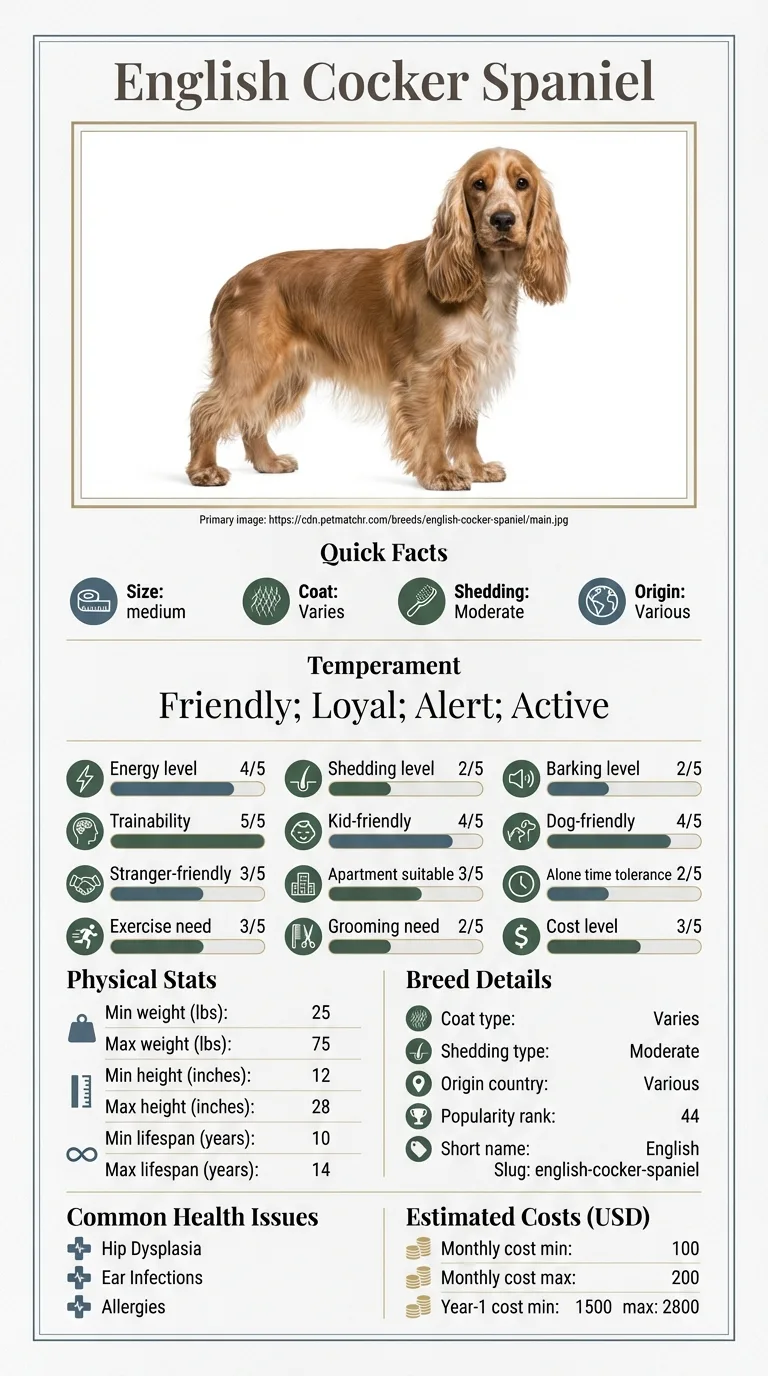
Owners of English Cocker Spaniels, especially those with busy lifestyles, often grapple with this issue. It can be particularly tough for first-time dog owners or families who may not know how to manage their dog’s weight effectively.
This guide is not medical advice. If your dog shows pain, sudden behavior change, or worsening symptoms, consult a licensed veterinarian.
Some links may be affiliate links. We may earn a commission at no extra cost to you. We only suggest products we believe are helpful for dog owners.
We research and check what we publish, but we do not warrant that any figure, date, price, or statement is accurate, complete, or current, and we accept no liability for any loss, cost, injury, or other harm arising from the use of this site. Use it as one reference among several. You remain responsible for your own decisions and for your dog's care - confirm anything that matters with a licensed veterinarian or another qualified professional before you act on it. Full disclaimer.
Check this first
Understanding when your English Cocker Spaniel's weight issue becomes an emergency is crucial. If you notice sudden weight gain, lethargy, or difficulty breathing, it’s time to call your vet immediately. These could be signs of serious health complications related to obesity.
You should seek immediate help if your dog exhibits the following red-flag signs: - Rapid weight gain or loss in a short time - Severe lethargy or refusal to eat - Breathing difficulties or excessive panting - Persistent vomiting or diarrhea
On the other hand, if your English Cocker Spaniel is simply overweight but still active and eating normally, you might not need to panic. Monitor their weight changes and consider a structured diet and exercise plan. A gradual approach can often help manage their weight effectively without immediate vet intervention.
Consider these mild signs that you can monitor: - Slow weight gain over weeks - Slight decrease in energy without other symptoms - Occasional digestive issues that resolve quickly
In these cases, a healthy diet and regular exercise can often make a big difference over time. However, always consult your vet to create a tailored plan to help your dog manage its weight effectively.
If any of these apply, call your vet or an emergency clinic now. The rest of this page is for the cases that are not an emergency.
English Cocker Spaniels can be prone to obesity due to a genetic predisposition linked to a POMC gene mutation. This condition often leads to an increased appetite, making it a daily challenge for owners. You may notice your English Cocker Spaniel constantly seeking food or not feeling satisfied after meals.
Obesity is a common issue among English Cocker Spaniels, particularly if their diet and exercise aren't closely monitored. Many owners report struggling with this problem, especially as their dogs age and activity levels decline.
English Cocker Spaniels may have a genetic predisposition to obesity due to a mutation in the POMC gene. This affects their appetite regulation, making them more likely to overeat. Consequently, they can easily gain weight if not monitored closely.
Environmental factors also play a significant role. A sedentary lifestyle, lack of exercise, and high-calorie treats can contribute to weight gain. Additionally, inconsistent feeding schedules or overindulgence from loving owners can exacerbate the issue.
Consult your veterinarian if your English Cocker Spaniel is gaining weight unexpectedly or if you need help with a dietary plan. They can rule out any underlying health issues and offer tailored advice for managing weight effectively.
Addressing the English Cocker Spaniel's genetic predisposition to obesity requires careful management. Here are some common mistakes owners make that can worsen the problem.
Start here: English Cocker Spaniel Most Common Genetic Disorders
See all English Cocker Spaniel health problems, which breeds are prone to genetic predisposition to obesity, or the full English Cocker Spaniel breed guide for temperament, exercise needs and ownership costs.
You can expect to see changes in your English Cocker Spaniel's weight and behavior within 3 to 6 months of implementing a structured diet and exercise plan.
Success means your dog maintains a healthy weight, has increased energy levels, and enjoys regular exercise without showing signs of distress or excessive hunger.
Sarah, a busy nurse in Chicago, noticed that her English Cocker Spaniel, Max, was gaining weight rapidly. After a vet visit confirmed that Max had a genetic predisposition to obesity due to a POMC gene mutation, she felt overwhelmed. Determined to help Max, Sarah started tracking his food intake and incorporated daily walks into their routine. She also consulted an online training course focused on managing obesity in dogs. Over the next few months, she gradually adjusted Max's diet and increased his playtime. With consistent efforts, Max lost weight and became more energetic, transforming their daily life.
Key takeaway: With a solid plan and commitment, you can effectively manage your English Cocker Spaniel's genetic predisposition to obesity and improve their overall health.
English Cocker Spaniels may inherit a mutation in the POMC gene, which can lead to increased appetite. This genetic factor makes them more prone to gaining weight if their diet and exercise are not carefully managed. This answer relates to English Cocker Spaniel genetic predisposition to obesity.
To manage your English Cocker Spaniel's weight, focus on a balanced diet and regular exercise. Monitor their food intake, avoid overfeeding, and provide daily walks or play sessions to keep them active.
Positive reinforcement training works well for English Cocker Spaniels. Reward them for completing exercises and obeying commands, which can motivate them to engage in physical activity and maintain a healthy weight.
Consult with your veterinarian to create a tailored diet plan for your English Cocker Spaniel. High-quality dog food that is low in calories and high in nutrients can help manage their weight effectively.
If you notice difficulty in feeling their ribs, a lack of defined waist, or decreased agility, these could be signs of weight gain. Regular vet check-ups can help monitor their weight and overall health.
Common signs include difficulty feeling the ribs, a noticeable belly, and reduced energy levels. If your dog seems less eager to play or take walks, it may be time to assess their weight.
Consider feeding a high-quality, low-calorie diet that meets their nutritional needs without excess calories. Consulting with your vet can help you create a tailored feeding plan.
Absolutely! Regular exercise helps maintain a healthy weight and improves overall health. Aim for daily walks and playtime to keep your English Cocker Spaniel active.
It's wise to start monitoring for obesity as early as their first year. Keeping an eye on their weight and body condition throughout their life can prevent health issues later on.
Yes, weight gain can be more pronounced in older dogs due to decreased metabolism and activity levels. Regular vet check-ups and adjusted diets can help manage their weight effectively.
Limit treats, ensure regular exercise, and feed measured portions to manage your English Cocker Spaniel's weight effectively.
Aim for at least 30 minutes of exercise daily, mixing walks with playtime to keep your dog engaged and healthy.
Reevaluate their diet and increase their physical activity. Consult your vet for specific recommendations tailored to your dog's needs.
A one-page prep sheet for this condition: the signs, the questions to ask, what to get priced. Unlocks here.
You get: Vet visit prep sheet
No spam. One-click unsubscribe. See our privacy policy.
Preview page 1 before you decide.