Health
What are quick tips for managing English Cocker Spaniel heart conditions?
Maintain a healthy weight, provide regular vet check-ups, and ensure a balanced diet. Exercise should be moderate and consistent.

Quick answer
What are quick tips for managing English Cocker Spaniel heart conditions?
Maintain a healthy weight, provide regular vet check-ups, and ensure a balanced diet. Exercise should be moderate and consistent.
English Cocker Spaniel heart conditions can be serious and require careful attention.
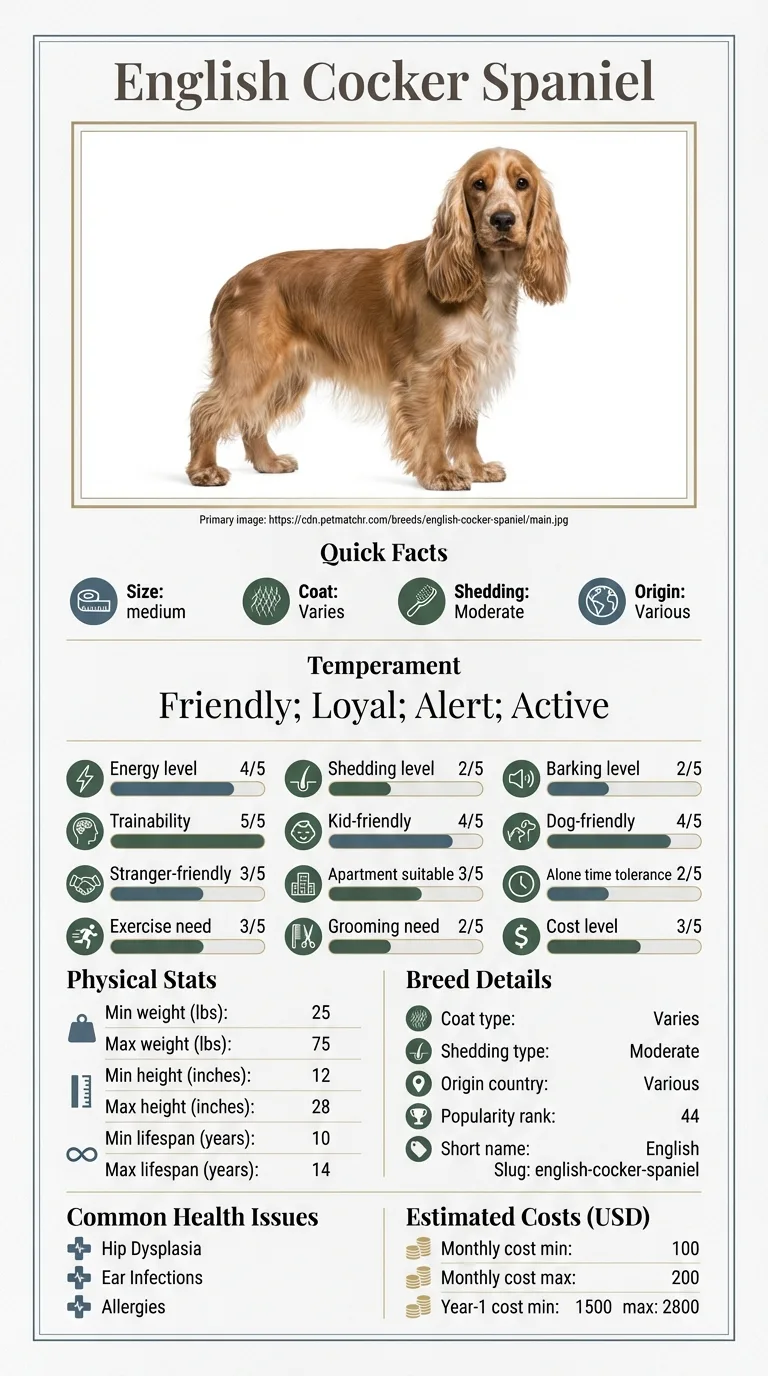
Owners of English Cocker Spaniels, especially those who may notice changes in their dog's behavior or energy levels, often face this challenge. New dog owners or those unfamiliar with breed-specific health issues may also find this particularly concerning.
This guide is not medical advice. If your dog shows pain, sudden behavior change, or worsening symptoms, consult a licensed veterinarian.
Some links may be affiliate links. We may earn a commission at no extra cost to you. We only suggest products we believe are helpful for dog owners.
We research and check what we publish, but we do not warrant that any figure, date, price, or statement is accurate, complete, or current, and we accept no liability for any loss, cost, injury, or other harm arising from the use of this site. Use it as one reference among several. You remain responsible for your own decisions and for your dog's care - confirm anything that matters with a licensed veterinarian or another qualified professional before you act on it. Full disclaimer.
Check this first
Recognizing when your English Cocker Spaniel has heart conditions that require immediate attention is crucial. Some signs indicate you should call your vet right away. These include difficulty breathing, excessive coughing, or signs of fainting.
If your dog is lethargic and shows no interest in activities they usually enjoy, it's time to act.
On the other hand, there are milder symptoms you can monitor at home. If your dog has occasional coughing or seems a bit tired but still engages in play, keep a close watch. You can start by tracking their energy levels and appetite.
Make a note of any changes in behavior, and if they persist or worsen, consult your vet.
Monitoring your dog's heart health is essential, especially if they are prone to heart conditions. Keep an eye on their weight, diet, and exercise routine. Regular check-ups can also help catch issues early.
Always be proactive about heart health to ensure your English Cocker Spaniel stays happy and active.
If any of these apply, call your vet or an emergency clinic now. The rest of this page is for the cases that are not an emergency.
English Cocker Spaniel heart conditions can manifest as lethargy, coughing, or difficulty breathing. These symptoms can be alarming and may lead to frequent vet visits. Unfortunately, heart conditions are not uncommon in this breed, making it essential for owners to recognize the signs early.
Heart conditions are relatively common among English Cocker Spaniels, often appearing as they age. Regular check-ups can help detect issues early, ensuring your pup gets the care they need.
English Cocker Spaniels can be prone to heart conditions due to their genetic makeup. Certain breeds, including the English Cocker Spaniel, have a higher likelihood of developing heart diseases like dilated cardiomyopathy. This can be exacerbated by age, as older dogs often face more health issues.
Environmental factors such as obesity, lack of exercise, and poor diet can contribute to heart conditions. Stressful situations or inadequate socialization may also lead to anxiety, which can impact heart health.
Schedule a vet visit if you notice any concerning symptoms like shortness of breath, persistent coughing, or lethargy. Regular check-ups can help catch heart issues early and ensure your dog receives the best care.
Improper care can worsen English Cocker Spaniel heart conditions. Here are common mistakes to avoid.
Start here: English Cocker Spaniel Most Common Genetic Disorders
See all English Cocker Spaniel health problems, which breeds are prone to heart conditions, or the full English Cocker Spaniel breed guide for temperament, exercise needs and ownership costs.
You can expect to see changes in your English Cocker Spaniel's heart health within a few months of consistent care and follow-up with your vet. Regular vet check-ups are essential.
Success means your dog shows improved energy levels, less fatigue, and a better response to exercise. Regular vet visits indicate stable heart health.
Emily, a dedicated owner of a 5-year-old English Cocker Spaniel named Bella, noticed her dog was often tired and unwilling to play. After a vet visit, they discovered Bella had early signs of heart conditions. Determined to help Bella, Emily worked closely with her vet to create a tailored exercise plan, focusing on short walks and low-impact activities. She also adjusted Bella's diet to support heart health. Over three months, Bella regained her energy and was able to enjoy longer walks, much to Emily's relief.
Key takeaway: With the right care and veterinary support, managing English Cocker Spaniel heart conditions is possible, leading to a happier, healthier dog.
English Cocker Spaniel heart conditions can arise due to genetics, age, or other health issues. Regular vet check-ups can help catch problems early. Look out for signs like coughing, fatigue, or difficulty breathing.
Keeping your dog at a healthy weight is crucial. Ensure they get moderate exercise and a balanced diet. Always follow your vet's recommendations for managing heart conditions.
Common signs include persistent coughing, lethargy, difficulty exercising, and rapid breathing. If you notice any of these symptoms, take your dog to the vet promptly for an evaluation.
Yes, many heart conditions can be managed with medication, diet changes, and lifestyle adjustments. Your vet will help you create a tailored treatment plan for your dog's needs.
Yes, some lines of English Cocker Spaniels may have a higher genetic predisposition to heart issues. Responsible breeding practices can help reduce these risks, so choose a reputable breeder.
Yes, certain heart conditions can be inherited in English Cocker Spaniels. If you have a family history of heart problems in your dog, discuss it with your vet for preventive measures.
For older dogs with heart conditions, it's crucial to manage their diet, maintain a healthy weight, and provide regular but gentle exercise. Always consult your vet for the best care plan tailored to your dog's needs.
Yes, some breeds, including the English Cocker Spaniel, are more susceptible to heart conditions due to genetic factors. Regular check-ups can help catch issues early.
Encouraging a balanced diet, ensuring regular exercise, and maintaining a healthy weight are essential. Regular vet visits for heart health assessments are also critical to prevention.
Maintain a healthy weight, provide regular vet check-ups, and ensure a balanced diet. Exercise should be moderate and consistent.
Regular check-ups every six months can help catch any developing issues early. Your vet can advise on the best schedule based on your dog's age and health.
Treatment costs can vary widely, typically ranging from $100 to $500 monthly, depending on medication and other care needs. Consider budgeting for unexpected vet visits.
A one-page prep sheet for this condition: the signs, the questions to ask, what to get priced. Unlocks here.
You get: Vet visit prep sheet
No spam. One-click unsubscribe. See our privacy policy.
See a sample page before you decide.
Early access list
The free prep sheet covers the same-day warning signs, a symptom log and the questions to ask. We are considering a fuller kit that adds a cost worksheet for the usual tests and treatments (US price ranges with their sources) and a plain-English guide to ways of covering the bill. It is not built yet; this list tells us whether it is worth building.
One email, no spam, unsubscribe anytime. Information only, not veterinary advice.