Health
What are quick tips for managing English Cocker Spaniel heart problems?
Ensure regular vet check-ups, maintain a balanced diet, and provide consistent, moderate exercise. Monitor for any changes in behavior or health.

Quick answer
What are quick tips for managing English Cocker Spaniel heart problems?
Ensure regular vet check-ups, maintain a balanced diet, and provide consistent, moderate exercise. Monitor for any changes in behavior or health.
Heart problems in English Cocker Spaniels can be serious and concerning for owners.
Typically, first-time dog owners or families with busy lifestyles may find it challenging to recognize and manage these heart problems. Owners who might not be prepared for the emotional and financial aspects of pet healthcare can also struggle.
This guide is not medical advice. If your dog shows pain, sudden behavior change, or worsening symptoms, consult a licensed veterinarian.
Some links may be affiliate links. We may earn a commission at no extra cost to you. We only suggest products we believe are helpful for dog owners.
We research and check what we publish, but we do not warrant that any figure, date, price, or statement is accurate, complete, or current, and we accept no liability for any loss, cost, injury, or other harm arising from the use of this site. Use it as one reference among several. You remain responsible for your own decisions and for your dog's care - confirm anything that matters with a licensed veterinarian or another qualified professional before you act on it. Full disclaimer.
Check this first
Some signs of heart problems in your English Cocker Spaniel may mean it's time for an immediate vet visit. Red flags include persistent coughing, difficulty breathing, or extreme lethargy. If your dog collapses or shows signs of confusion, call your vet right away.
Less urgent cases can often be monitored at home. For example, if your dog occasionally coughs but seems otherwise healthy, keep track of their behavior. You can create a plan to monitor symptoms, noting any changes in appetite, energy levels, or behavior.
If your English Cocker Spaniel is showing mild symptoms like a slight cough or decreased activity, it’s essential to observe them closely. Maintain a calm environment and ensure they stay hydrated. Regular vet check-ups can help catch issues early, especially if there's a family history of heart disease.
If any of these apply, call your vet or an emergency clinic now. The rest of this page is for the cases that are not an emergency.
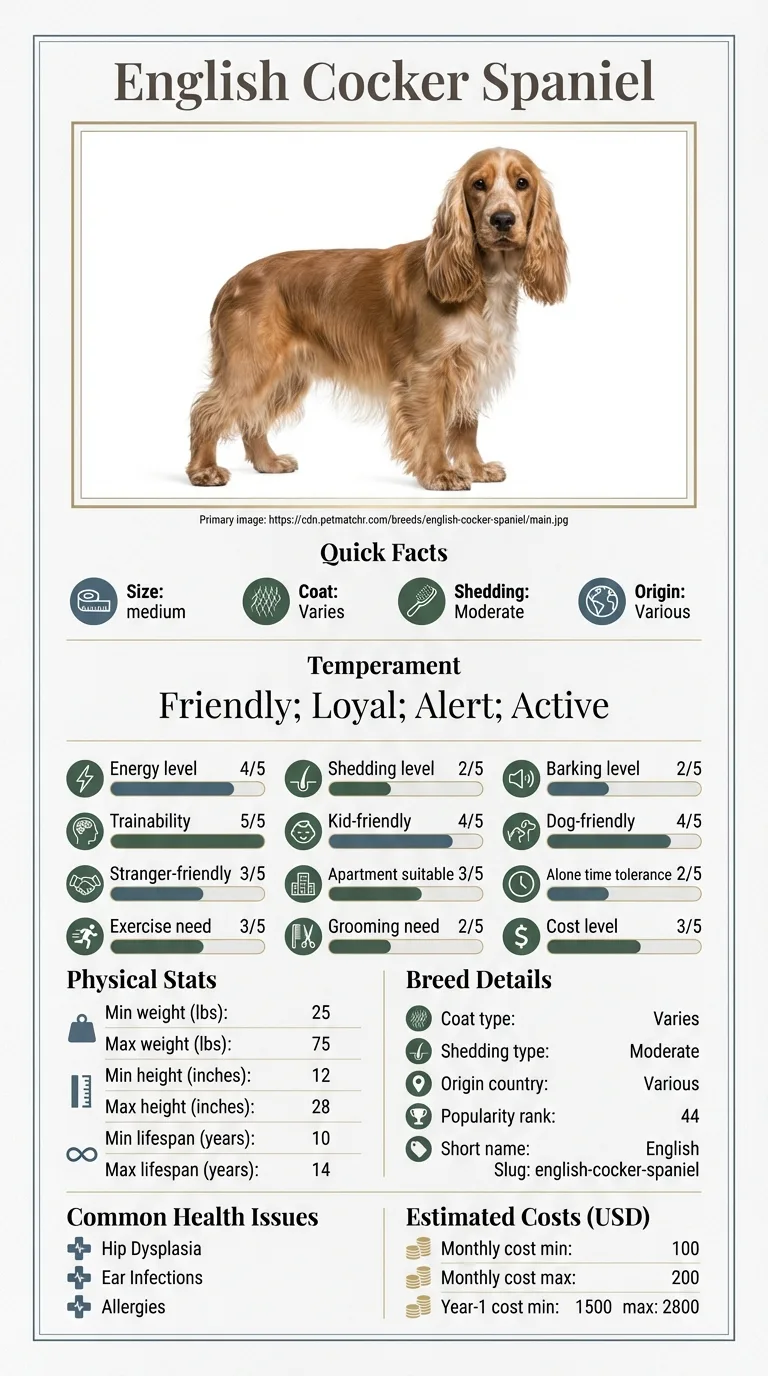
English Cocker Spaniel heart problems can manifest as difficulty breathing, lethargy, or even fainting. These symptoms can vary in severity, making it crucial for owners to be vigilant. Common heart conditions in this breed include subvalvular aortic stenosis and cardiomyopathy, which can lead to serious health issues if not monitored. In English Cocker Spaniels specifically this sits alongside ear infections, progressive retinal atrophy, hip dysplasia, in a dog that weighs 26–34 lb and typically lives 12–14 years — which is what sets both the screening schedule and the realistic cost of managing it.
Heart problems are relatively common in English Cocker Spaniels, with studies showing that around 10-15% may experience significant heart issues during their lifetime. Regular vet check-ups can help catch these problems early.
English Cocker Spaniels can be prone to specific heart conditions, like subvalvular aortic stenosis and cardiomyopathy. These issues often stem from hereditary factors, meaning that some dogs may be genetically predisposed to develop heart problems as they age. Regular health screenings can help catch these conditions early.
Environmental factors such as obesity, lack of exercise, and high-stress situations can also contribute to heart problems. If your English Cocker Spaniel is not getting enough physical activity or is frequently stressed, it may increase the risk of heart issues. A balanced diet and a stable environment are key to promoting heart health.
If you notice any symptoms such as coughing, fatigue, or difficulty breathing, contact your vet immediately. Regular check-ups are also essential to monitor your dog's heart health and catch any potential issues early.
When dealing with English Cocker Spaniel heart problems, some common mistakes can unintentionally worsen the situation. Here are key behaviors to avoid.
Start here: English Cocker Spaniel Most Common Genetic Disorders
See all English Cocker Spaniel health problems, which breeds are prone to heart problems, or the full English Cocker Spaniel breed guide for temperament, exercise needs and ownership costs.
For an English Cocker Spaniel, expect the first veterinary opinion within days, a working diagnosis inside two to four weeks, and a management routine that runs for the rest of a 12–14 year life rather than for a course of treatment.
Success with an English Cocker Spaniel is not a cure. It is a 26–34 lb dog holding a steady weight, keeping its normal routine, and being seen before a flare rather than during one.
Read this page against the rest of the English Cocker Spaniel health picture. We document 5 conditions for the breed, and the ones that most often share symptoms with this page are ear infections, progressive retinal atrophy, hip dysplasia.
Two numbers set the screening schedule for an English Cocker Spaniel: a typical lifespan of 12–14 years, and an adult weight of 26–34 lb. Together they put senior screening at roughly 8 years — earlier than most owners of a medium breed expect, and the point at which annual bloodwork stops being optional.
Ask the breeder or the vet about familial nephropathy, adult-onset neuropathy alongside the condition on this page: they appear in the same English Cocker Spaniel records and are cheaper to screen for together than separately.
| Breed context | Figure |
|---|---|
| Documented conditions on file | 5 |
| Typical lifespan | 12–14 years |
| Senior screening from | about 8 years |
| Adult weight | 26–34 lb |
| Size class | Medium |
Emma, a first-time dog owner, noticed her English Cocker Spaniel, Max, was lethargic and had trouble keeping up during their walks. After a vet visit, she learned that Max had subvalvular aortic stenosis, a common heart problem in his breed. Emma felt overwhelmed but committed to helping Max. She followed the vet's advice on medication and adjusted his diet to include heart-healthy foods. They also started low-impact exercises to keep him active without overexerting him. Over time, Max regained his energy and began enjoying their daily strolls again. Emma learned the importance of consistent care and communication with her vet.
Key takeaway: With the right care and support, managing English Cocker Spaniel heart problems can lead to a happier, healthier dog.
English Cocker Spaniels can develop heart problems due to genetic factors or age. Common issues include subvalvular aortic stenosis and cardiomyopathy. Regular vet check-ups are essential to catch these issues early.
To help prevent heart problems, maintain a healthy diet and ensure regular exercise. Regular vet visits can help identify risk factors early. Keeping your dog at a healthy weight is also crucial.
Watch for signs like coughing, fatigue, difficulty breathing, or swelling in the abdomen. If your dog shows any of these symptoms, consult your vet for a thorough evaluation. Early detection can lead to better outcomes.
Treatments may include medication to manage symptoms or surgery for severe cases. Your vet will recommend the best course of action based on your dog's specific condition. Regular monitoring will be essential.
While training doesn’t directly address heart problems, it can help reduce stress and anxiety in your dog. A calm dog is less likely to exhibit heart-related symptoms. Focus on gentle, positive reinforcement techniques.
Early signs of heart problems in an English Cocker Spaniel can include lethargy, coughing, and difficulty breathing. You might also notice a decrease in their exercise tolerance. If you observe these symptoms, it's important to consult your vet promptly.
Yes, heart problems like subvalvular aortic stenosis can be hereditary in English Cocker Spaniels. If your dog has a family history of heart issues, it's wise to monitor them closely and discuss any concerns with your vet.
Managing heart problems at home involves providing a balanced diet, ensuring regular, gentle exercise, and keeping stress levels low. Always consult your vet before making any changes to their care or treatment plan.
If you suspect your English Cocker Spaniel is having a heart attack, contact your vet or an emergency animal clinic immediately. Quick action is crucial, and they can provide the necessary treatment to stabilize your dog.
Yes, older English Cocker Spaniels are generally more prone to heart problems. As dogs age, their heart health can decline, so regular veterinary check-ups are important to catch any issues early.
Ensure regular vet check-ups, maintain a balanced diet, and provide consistent, moderate exercise. Monitor for any changes in behavior or health.
Treatment costs can vary widely, ranging from $500 for medications to several thousand dollars for surgery. Always consult your vet for specific estimates.
If you notice symptoms like coughing or fatigue, contact your vet immediately. Early intervention is key for managing heart problems effectively.
Yes, some may experience anxiety due to health issues. Addressing their emotional well-being is just as important as their physical health.
A one-page prep sheet for this condition: the signs, the questions to ask, what to get priced. Unlocks here.
You get: Vet visit prep sheet
No spam. One-click unsubscribe. See our privacy policy.
Preview page 1 before you decide.