Behavior
What can I do for Doberman Pinscher bone & growth issues?
Ensure your Doberman has a balanced diet and regular vet check-ups to monitor growth. Controlled exercise is also key to preventing issues.

Quick answer
What can I do for Doberman Pinscher bone & growth issues?
Ensure your Doberman has a balanced diet and regular vet check-ups to monitor growth. Controlled exercise is also key to preventing issues.
Doberman Pinschers can face bone and growth issues, especially during their rapid growth phases. These problems can lead to severe health complications if not addressed early.
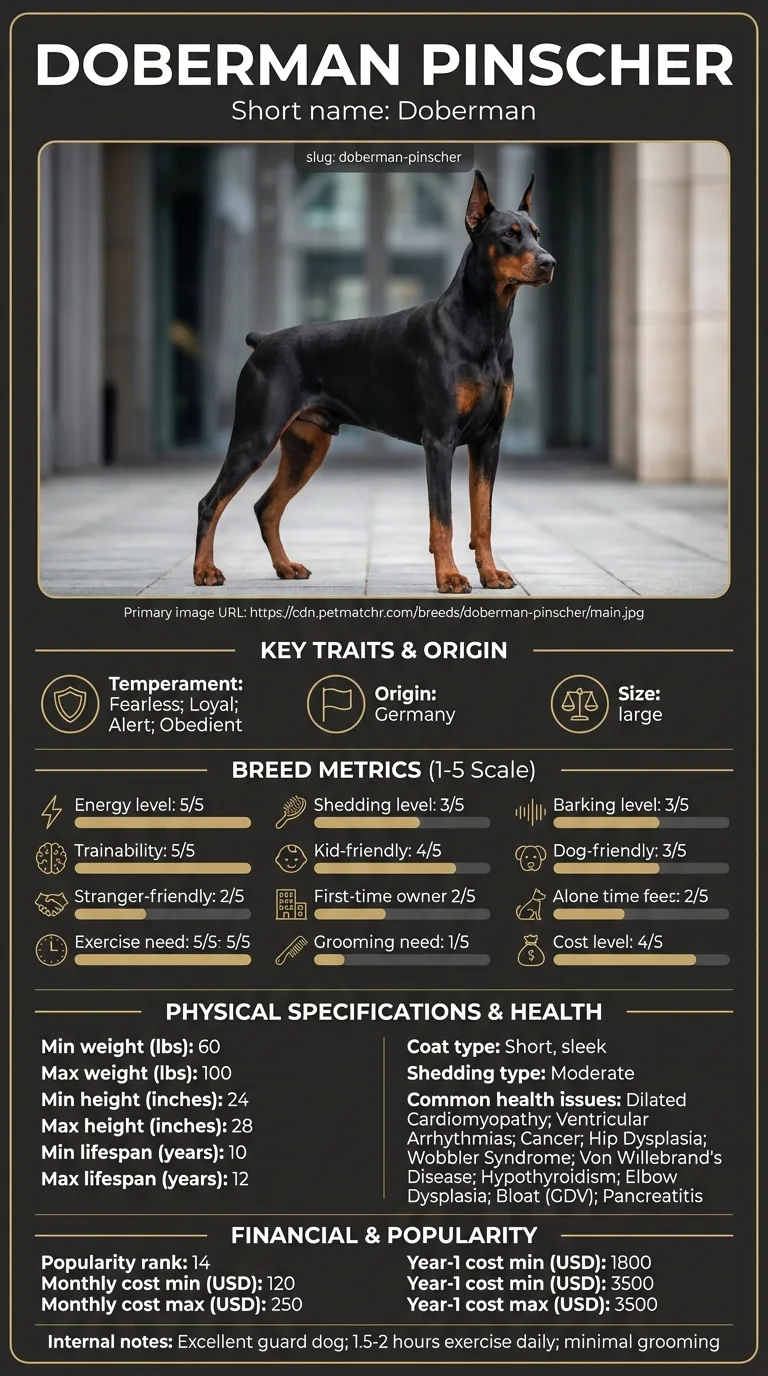
Owners of Doberman Pinschers, particularly first-time dog parents or those unfamiliar with large breed care, may struggle with these bone and growth issues. Knowing how to identify and manage these challenges is crucial for their dog's health.
This guide is not medical advice. If your dog shows pain, sudden behavior change, or worsening symptoms, consult a licensed veterinarian.
Some links may be affiliate links. We may earn a commission at no extra cost to you. We only suggest products we believe are helpful for dog owners.
We research and check what we publish, but we do not warrant that any figure, date, price, or statement is accurate, complete, or current, and we accept no liability for any loss, cost, injury, or other harm arising from the use of this site. Use it as one reference among several. You remain responsible for your own decisions and for your dog's care - confirm anything that matters with a licensed veterinarian or another qualified professional before you act on it. Full disclaimer.
Check this first
Emergencies include sudden limping, severe swelling, or a noticeable deformity in the bones. If your Doberman is in intense pain, unable to bear weight, or if you see any signs of distress, these are clear signs to seek help immediately. Additionally, if your dog shows difficulty breathing or refuses to eat or drink, it's time to act quickly.
On the other hand, milder issues can often be monitored at home. For example, if your Doberman has slight stiffness after exercise or seems a bit slower to get up after resting, these may not be emergencies. Keeping an eye on these symptoms and noting any changes can help you determine if further action is needed.
In summary, trust your instincts. If something feels off or if your Doberman Pinscher exhibits multiple concerning symptoms, don’t hesitate to reach out to your veterinarian. It's better to be cautious when it comes to your dog's health.
If any of these apply, call your vet or an emergency clinic now. The rest of this page is for the cases that are not an emergency.
Doberman Pinscher bone & growth issues can manifest as pain, limping, or difficulty in movement. These issues often arise due to their large size and rapid growth during puppyhood. Owners may notice their Doberman struggling with everyday activities like jumping or running, which can be concerning.
Bone and growth issues are relatively common in Doberman Pinschers. Many dogs experience some form of these problems, especially during their first year. Close monitoring during growth spurts is essential to catch any potential issues early.
Doberman Pinschers are large dogs that grow quickly. This rapid growth can lead to bone and joint issues, especially if their diet or exercise routine isn't properly managed. Additionally, genetic factors may predispose them to certain orthopedic problems.
Environmental factors such as inadequate exercise or poor nutrition can exacerbate bone growth issues. For example, limited physical activity can lead to obesity, putting extra strain on their joints. If they don't get the right nutrients, particularly calcium and phosphorus, their bone health may suffer.
If your Doberman shows signs of pain, stiffness, or if you have concerns about their growth, it's essential to talk to a vet. Regular check-ups can help catch any underlying issues early and adjust their care plan accordingly.
Avoiding common mistakes can help address Doberman Pinscher bone and growth issues more effectively. Here are some missteps to watch out for.
Start here: Doberman Pinscher Most Common Genetic Disorders: Screening
See all Doberman Pinscher health problems, which breeds are prone to bone growth issues, or the full Doberman Pinscher breed guide for temperament, exercise needs and ownership costs.
It typically takes a few months to see noticeable improvements in your Doberman's bone and growth issues. Consistent care and veterinary guidance are essential throughout this period.
Success means your Doberman is growing at a healthy rate, maintaining a good weight, and showing fewer signs of discomfort. They should be able to engage in regular activities without pain.
Jessica, a first-time dog owner, noticed her Doberman, Max, was limping and hesitant to play. After a vet visit, she learned that Max had bone growth issues common in large breeds. With the vet's advice, she adjusted his diet, introduced gentle exercise, and started training sessions focused on building his strength without overexertion. Over three months, Max became more active and confident, enjoying walks and playtime. Jessica's commitment to Max's health made all the difference.
Key takeaway: With proper care and attention, you can help your Doberman manage bone and growth issues effectively.
Doberman Pinschers are prone to bone and growth issues due to their large size and rapid growth rate. Genetic factors, nutrition, and exercise also contribute to these problems. It's essential to monitor their growth closely and consult a vet if you notice any abnormalities. This answer relates to Doberman Pinscher bone & growth issues.
To help prevent bone and growth issues in your Doberman, provide a balanced diet specifically formulated for large breeds. Regular, controlled exercise is also vital; aim for 1.5 to 2 hours daily. Consult a vet for personalized guidance on maintaining healthy growth.
Signs of bone and growth issues include limping, difficulty standing or walking, and swelling in the joints. If your Doberman is hesitant to exercise or shows signs of pain, it's crucial to visit a veterinarian. Early detection can help manage these issues effectively.
Training your Doberman to follow commands and control their movements can prevent injury during their rapid growth phase. Focus on obedience training and avoid high-impact activities until they are fully grown. Gradually introduce them to different exercises as they develop.
Yes, Dobermans with bone and growth issues require a diet rich in calcium and phosphorus but balanced to avoid over-supplementation. Look for foods designed for large breeds that support healthy growth. Always check with your vet for recommendations tailored to your dog's needs.
Doberman Pinschers can experience bone growth issues during their rapid growth phase, usually between 4 and 12 months. However, some may show signs earlier or later. Regular vet check-ups during this period can help monitor their growth.
Yes, bone growth issues in Doberman Pinschers can often be managed with proper veterinary care. Treatment may include medication, weight management, and controlled exercise. Always consult with your vet to develop a plan tailored to your dog's needs.
A balanced diet rich in calcium and phosphorus is essential for preventing bone growth issues in Doberman Pinschers. High-quality puppy food designed for large breeds is a good choice. Consult your vet for specific dietary recommendations.
If you notice any signs of pain, limping, or difficulty in mobility, it's important to see a vet immediately. Early diagnosis can prevent long-term complications. Regular check-ups are also vital for monitoring growth in large breeds like Dobermans.
Ensure your Doberman has a balanced diet and regular vet check-ups to monitor growth. Controlled exercise is also key to preventing issues.
A Doberman requires about 1.5 to 2 hours of exercise daily to stay healthy and manage their growth effectively.
Look for limping, reluctance to move, and swelling in joints. These can indicate potential bone growth issues.
Regular vet visits are crucial, especially during their growth phase. Aim for at least twice a year for check-ups.
Avoid over-supplementing with calcium and phosphorus, as this can lead to bone growth issues. Stick to high-quality dog food formulated for large breeds.
A one-page prep sheet for this condition: the signs, the questions to ask, what to get priced. Unlocks here.
You get: Vet visit prep sheet
No spam. One-click unsubscribe. See our privacy policy.
See a sample page before you decide.
Early access list
The free prep sheet covers the same-day warning signs, a symptom log and the questions to ask. We are considering a fuller kit that adds a cost worksheet for the usual tests and treatments (US price ranges with their sources) and a plain-English guide to ways of covering the bill. It is not built yet; this list tells us whether it is worth building.
One email, no spam, unsubscribe anytime. Information only, not veterinary advice.