Behavior
What are quick tips for managing obesity in Dobermans?
Monitor food portions and provide regular exercise to manage weight. Avoid giving table scraps and treats that are high in calories.

Quick answer
What are quick tips for managing obesity in Dobermans?
Monitor food portions and provide regular exercise to manage weight. Avoid giving table scraps and treats that are high in calories.
The Doberman Pinscher is known for its strength and loyalty, but many owners face a serious challenge: genetic predisposition to obesity. This issue can lead to health problems and reduced quality of life for your dog.
Owners of Doberman Pinschers, especially those who are first-time dog parents or live in more sedentary environments, often find it hard to control their dog's weight. Busy families and individuals may not realize how quickly their dog can gain weight, leading to further complications.
This guide is not medical advice. If your dog shows pain, sudden behavior change, or worsening symptoms, consult a licensed veterinarian.
Some links may be affiliate links. We may earn a commission at no extra cost to you. We only suggest products we believe are helpful for dog owners.
We research and check what we publish, but we do not warrant that any figure, date, price, or statement is accurate, complete, or current, and we accept no liability for any loss, cost, injury, or other harm arising from the use of this site. Use it as one reference among several. You remain responsible for your own decisions and for your dog's care - confirm anything that matters with a licensed veterinarian or another qualified professional before you act on it. Full disclaimer.
Check this first
Recognizing when your Doberman Pinscher's weight issue becomes an emergency is crucial. If your dog shows signs of rapid weight gain, lethargy, or unusual behavior like excessive thirst or urination, it's time to call your vet immediately. These may indicate serious underlying health issues, such as diabetes or thyroid problems, which require prompt attention.
On the other hand, if your Doberman is slightly overweight but still energetic and playful, you can monitor the situation with a plan. Regular weigh-ins and adjustments to diet and exercise can help manage their weight effectively. Watching for gradual changes rather than drastic ones can often be a sign that your dog is responding well to a weight management strategy.
If any of these apply, call your vet or an emergency clinic now. The rest of this page is for the cases that are not an emergency.
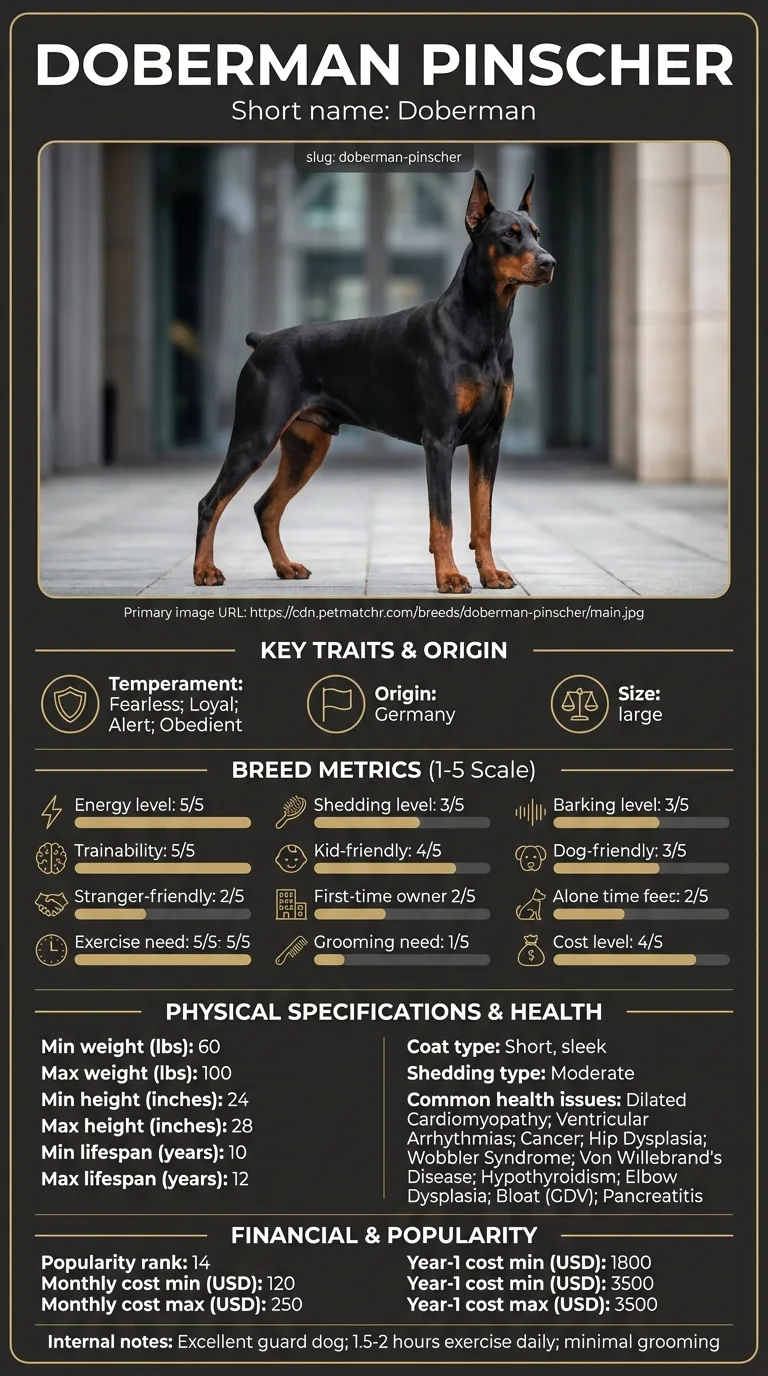
The Doberman Pinscher genetic predisposition to obesity often manifests in increased appetite and weight gain, especially if they are overfed or not exercised enough. This breed is already large, weighing between 60 and 100 pounds, and their tendency to gain weight can lead to serious health issues. Owners may notice their Doberman becoming less active or having difficulty with regular activities, which can be frustrating and alarming.
This problem is relatively common among Doberman Pinschers, especially if they are not monitored closely for diet and exercise. With proper management, owners can significantly reduce the risk of obesity.
Doberman Pinschers can have a genetic predisposition to obesity due to a mutation in the POMC gene. This mutation affects their appetite regulation, leading to increased hunger and weight gain. As large breeds, they are also more susceptible to obesity-related health issues if not properly managed.
Environmental factors play a significant role in a Doberman's risk of obesity. Lack of exercise, unhealthy diet, and inconsistent feeding schedules can all contribute to weight gain. Additionally, a sedentary lifestyle due to owner habits or limited space can exacerbate the issue.
If your Doberman is rapidly gaining weight despite your efforts, or if you notice other health issues, it's crucial to consult a veterinarian. They can check for underlying health problems and recommend a specialized diet or treatment plan.
Avoiding common pitfalls can help manage your Doberman Pinscher's genetic predisposition to obesity. Here are some mistakes to look out for and safer alternatives.
Start here: Doberman Pinscher Most Common Genetic Disorders: Screening
See all Doberman Pinscher health problems, which breeds are prone to genetic predisposition to obesity, or the full Doberman Pinscher breed guide for temperament, exercise needs and ownership costs.
Expect to see improvements in your Doberman's weight management within 3 to 6 months. Consistent care and dietary changes are key.
Success means your Doberman maintains a healthy weight, shows increased energy levels, and responds well to training focused on managing their appetite.
Tammy, a first-time Doberman owner from Dallas, noticed that her dog Max was gaining weight despite regular walks. After a vet visit, she learned about Max's genetic predisposition to obesity due to a POMC gene mutation. Determined to help Max, Tammy created a structured feeding schedule and incorporated more playtime into their daily routine. She also enrolled in an obedience class specifically addressing behavioral issues related to food motivation. Over six months, Max lost 10 pounds and became much more active, transforming their bond into a joyful partnership.
Key takeaway: With the right approach, managing a Doberman's genetic predisposition to obesity is possible. Consistency in training and diet is crucial for success.
The Doberman Pinscher can have a genetic predisposition to obesity due to a mutation in the POMC gene, which is linked to increased appetite. This means they may feel hungrier than other dogs, making it essential to monitor their food intake closely.
To manage your Doberman's risk of obesity, focus on a balanced diet and controlled portions. Regular exercise, ideally 1.5 to 2 hours daily, can also help maintain a healthy weight and reduce excessive hunger.
Signs of obesity include difficulty in movement, fatigue during walks, and an inability to feel the ribs easily through the skin. Regular vet check-ups can help monitor their weight and overall health.
Yes, training can be beneficial. Positive reinforcement for good behavior can help regulate their eating habits. Incorporate activities like agility training or obedience classes to keep their mind engaged and encourage physical activity.
A high-quality dog food that's appropriate for their age and energy level is crucial. Look for options that are high in protein and fiber but low in fillers like corn and wheat.
Yes, activities like jogging, playing fetch, and swimming are excellent for burning calories. Aim for varied exercise routines to keep them interested and active.
Regularly weigh your Doberman and keep a journal of their weight changes. Work with your vet to set realistic goals and track their body condition score.
A Doberman Pinscher may have a genetic predisposition to obesity due to a mutation in the POMC gene, which is linked to increased appetite. This genetic factor can make it harder for them to regulate their food intake, leading to weight gain.
To manage your Doberman's weight, focus on a balanced diet and regular exercise. Implement portion control and consult your vet for a suitable weight management plan that considers their specific needs.
Yes, older Doberman Pinschers may be more likely to struggle with obesity due to decreased activity levels and metabolic changes. Regular vet check-ups can help monitor their weight and health as they age.
If your Doberman is gaining weight despite a controlled diet and exercise, it's time to consult your vet. They can check for underlying health issues or recommend a tailored weight management strategy.
Yes, training can play a significant role in managing your Doberman's weight. Implementing regular exercise routines and engaging them in physical activities can help combat their genetic predisposition to obesity.
Monitor food portions and provide regular exercise to manage weight. Avoid giving table scraps and treats that are high in calories.
Aim for 1.5 to 2 hours of exercise daily to help manage their weight and energy levels.
Choose high-protein, low-carbohydrate dog food to help maintain a healthy weight.
Yes, but choose low-calorie treats and limit the quantity to avoid excess weight gain.
Yes, obesity can lead to serious health issues. Consult your vet for guidance on weight management.
A one-page prep sheet for this condition: the signs, the questions to ask, what to get priced. Unlocks here.
You get: Vet visit prep sheet
No spam. One-click unsubscribe. See our privacy policy.
See a sample page before you decide.
Early access list
The free prep sheet covers the same-day warning signs, a symptom log and the questions to ask. We are considering a fuller kit that adds a cost worksheet for the usual tests and treatments (US price ranges with their sources) and a plain-English guide to ways of covering the bill. It is not built yet; this list tells us whether it is worth building.
One email, no spam, unsubscribe anytime. Information only, not veterinary advice.