Behavior
What are quick tips for managing Doberman Pinscher obesity?
To manage Doberman Pinscher obesity, limit high-calorie treats, ensure daily exercise, and feed measured portions. Regular vet visits help monitor weight and health.

Quick answer
What are quick tips for managing Doberman Pinscher obesity?
To manage Doberman Pinscher obesity, limit high-calorie treats, ensure daily exercise, and feed measured portions. Regular vet visits help monitor weight and health.
Doberman Pinscher obesity is a growing concern for many dog owners. It can lead to serious health issues and impact your dog's quality of life.
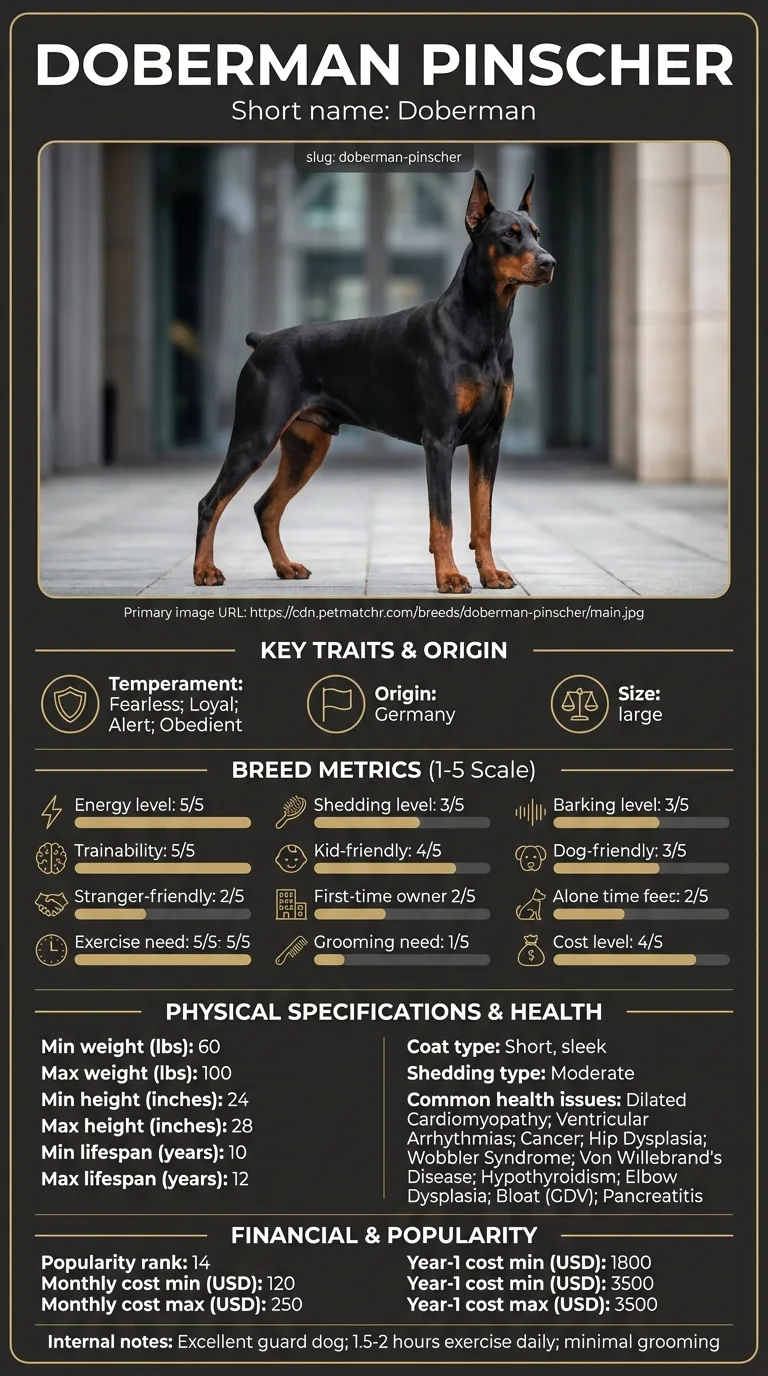
Owners of Doberman Pinschers, especially those who may not have enough time for daily exercise, often face this issue. Busy professionals, families with changing schedules, or first-time dog owners may find it challenging to manage their dog's weight effectively.
This guide is not medical advice. If your dog shows pain, sudden behavior change, or worsening symptoms, consult a licensed veterinarian.
Some links may be affiliate links. We may earn a commission at no extra cost to you. We only suggest products we believe are helpful for dog owners.
We research and check what we publish, but we do not warrant that any figure, date, price, or statement is accurate, complete, or current, and we accept no liability for any loss, cost, injury, or other harm arising from the use of this site. Use it as one reference among several. You remain responsible for your own decisions and for your dog's care - confirm anything that matters with a licensed veterinarian or another qualified professional before you act on it. Full disclaimer.
Check this first
Not all cases of obesity in Doberman Pinschers require immediate action, but some signs indicate it may be time to call your vet. If your Doberman shows any of the following red-flag symptoms, don’t wait. Call your vet immediately:
1. Sudden weight gain or loss in a short period. 2. Difficulty breathing, excessive panting, or lethargy. 3. Signs of pain, such as whining or reluctance to move. 4. Vomiting, diarrhea, or significant changes in appetite.
These symptoms can indicate serious underlying health issues related to obesity, including heart disease or diabetes, which need prompt attention.
On the other hand, if your Doberman is slightly overweight but doesn't show severe symptoms, you can monitor the situation. Consider these mild signs that can be managed with a plan:
- Gradual weight gain without sudden changes. - Slight decrease in energy but still playful. - Occasional difficulty with exercise but not severe.
In these cases, work on a weight management plan involving diet and exercise. A balanced diet and regular exercise can help your Doberman shed extra pounds safely. Keep track of their weight weekly and adjust their food intake as needed. If you’re unsure, consult your vet for tailored advice on how to stop Doberman Pinscher obesity effectively. Monitoring your dog’s condition regularly can prevent more serious health issues down the line.
If any of these apply, call your vet or an emergency clinic now. The rest of this page is for the cases that are not an emergency.
Doberman Pinscher obesity is a growing concern for many owners. This issue often manifests as excessive weight gain, making it difficult for your Doberman to engage in daily activities. It can lead to reduced energy levels, increased lethargy, and a higher risk of health problems, like heart disease and joint issues.
Obesity is quite common among Doberman Pinschers, particularly in those that are not exercised regularly. Many owners may not realize their dog is overweight until health issues arise, which can make addressing the problem more challenging.
Doberman Pinschers are large, muscular dogs that require a significant amount of exercise. If they don't get enough physical activity, they can easily gain weight. Their loyal and obedient nature may lead them to overeat if their owners give them treats or food as rewards.
The environment can greatly influence a Doberman's weight. Limited space for exercise, lack of structured activity, or easy access to high-calorie treats can contribute to obesity. Additionally, a busy lifestyle may result in less time for regular walks or play.
If you're concerned about your dog's weight or eating habits, consult your vet. They can assess your Doberman's overall health and suggest a tailored weight management plan. If you notice symptoms like lethargy or difficulty breathing, seek help immediately.
Here are common mistakes owners make that can worsen Doberman Pinscher obesity, along with safer alternatives.
Start here: Doberman Pinscher Most Common Genetic Disorders: Screening
See all Doberman Pinscher health problems, which breeds are prone to obesity, or the full Doberman Pinscher breed guide for temperament, exercise needs and ownership costs.
You can expect to see initial changes in your Doberman Pinscher's weight within 4 to 8 weeks of implementing a new diet and exercise plan.
Success means your Doberman reaches a healthy weight, has more energy, and enjoys increased mobility, making playtime and walks more enjoyable.
When Sarah adopted Max, her 3-year-old Doberman Pinscher, she noticed he had a bit of a weight problem. Max weighed 95 pounds, which is significantly above the recommended weight for his size. Sarah learned about the importance of proper diet and exercise for Dobermans, who are naturally active. After consulting with her vet, she switched Max to a healthier dog food and committed to daily walks and playtime. Slowly, the pounds began to drop. After six months, Max was down to 75 pounds and could run around the park with more enthusiasm than ever.
Key takeaway: With dedication to a balanced diet and regular exercise, it is possible to help a Doberman Pinscher overcome obesity and improve their overall well-being.
Doberman Pinscher obesity can stem from overeating, lack of exercise, or underlying health issues. These dogs are high-energy, so insufficient physical activity can lead to weight gain. It's essential to monitor their diet and ensure they get at least 1.5 to 2 hours of exercise daily.
To stop Doberman Pinscher obesity, adjust their diet by measuring food portions and avoiding excessive treats. Incorporate regular exercise into their daily routine, aiming for a mix of walks, playtime, and training sessions. Consulting your vet for a tailored weight management plan can also help.
Signs of obesity in Doberman Pinschers include difficulty feeling their ribs, sluggishness, and excessive panting. You may also notice difficulty in performing normal activities, like playing or going up stairs. Regular weigh-ins can help track their weight changes.
Yes, obesity can lead to serious health issues for Doberman Pinschers, including heart disease, joint problems, and diabetes. Keeping your dog at a healthy weight is vital for their overall well-being. Regular vet check-ups can help catch any potential health issues early.
Training techniques for managing Doberman Pinscher obesity include positive reinforcement and structured exercise routines. Engage them in activities like agility training or fetch, which are not only fun but also effective in burning calories. Consistency and patience are key.
Obesity in Doberman Pinschers can lead to serious health issues, including heart disease, diabetes, and joint problems. These conditions can significantly impact your dog's quality of life and lifespan. It's crucial to monitor their weight and consult a vet for a tailored diet plan.
A simple way to check if your Doberman is overweight is to feel their ribcage. You should be able to feel the ribs without excessive pressure. Also, look for a noticeable waist when viewed from above. If you're unsure, a vet can help assess their weight.
Yes, older Doberman Pinschers can lose weight, but it should be done gradually and carefully. Their metabolism may slow down with age, requiring adjusted exercise and diet. Always consult your vet before starting a weight loss program for your senior dog.
If your Doberman Pinscher shows signs of food obsession, such as begging or guarding food, it's essential to establish a feeding routine. Use measured portions and avoid giving in to begging. Training can also help redirect their focus away from food.
Yes, stress can lead to weight gain in Doberman Pinschers. Changes in environment, separation anxiety, or lack of exercise can contribute to emotional eating. It's important to address any underlying stressors and provide positive outlets for your dog’s energy.
To manage Doberman Pinscher obesity, limit high-calorie treats, ensure daily exercise, and feed measured portions. Regular vet visits help monitor weight and health.
Doberman Pinschers need at least 1.5 to 2 hours of exercise daily to maintain a healthy weight. Engage them in active play or vigorous walks.
Yes, a balanced diet with controlled portions and low-fat options can help manage obesity in Doberman Pinschers. Consult your vet for diet recommendations.
You can tell if your Doberman is overweight by checking for visible waist and feeling their ribs. If you can't feel their ribs easily, consult your vet.
A one-page prep sheet for this condition: the signs, the questions to ask, what to get priced. Unlocks here.
You get: Vet visit prep sheet
No spam. One-click unsubscribe. See our privacy policy.
Preview page 1 before you decide.